What Happens to Your Body in Everest's Death Zone?
Above 8,000 metres on Everest, thin air starves the body of oxygen, clouds judgment, and can flood the brain and lungs. Here is what the death zone does.
Key takeaways
- The death zone begins above 8,000 metres, where low air pressure leaves each breath carrying far less oxygen than at sea level.
- On Everest, 849 metres of the climb lie in the death zone, from 8,000 metres to the 8,849-metre summit.
- Low oxygen can swell the brain (HACE) or fill the lungs with fluid (HAPE), and both can kill without a fast descent.
- Climbers are generally advised to spend no more than 16 to 20 hours in the death zone, even with bottled oxygen.
- Bottled oxygen helps but does not restore sea-level conditions, and no amount of acclimatisation removes the risk.
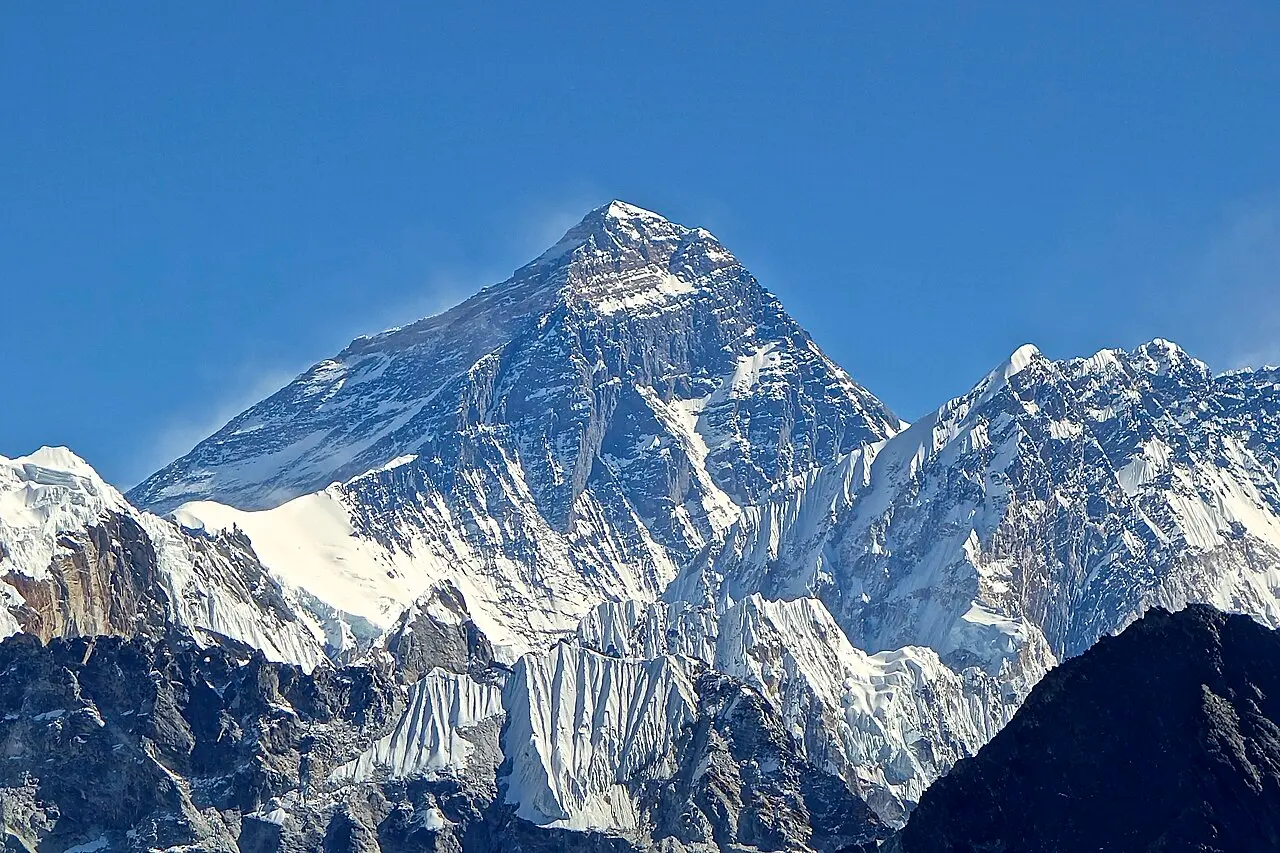
Above 8,000 metres on Mount Everest, your body stops coping and starts running down. The air is so thin that no amount of fitness or willpower can make up the oxygen shortfall, and the longer you stay, the worse the damage gets. That is why climbers treat the final stretch to the summit as a race against their own physiology, not just against the mountain. Everest rises to 8,849 metres, which means 849 metres of its upper slope lie inside this zone. The name is not poetic exaggeration. It describes a measurable limit: above roughly 8,000 metres, the oxygen pressure in the air is too low for a human body to sustain itself beyond a short stay. The Swiss doctor Edouard Wyss-Dunant, who led the 1952 Swiss Everest expedition, first called this band the lethal zone, and the grimmer label stuck.
Why does the air up there carry so little oxygen?
The trick is that the air itself does not lose its oxygen. At sea level, oxygen makes up about 21 percent of the air, and that share stays roughly the same all the way up. What changes is pressure. As altitude rises, the atmosphere thins, so each breath pulls in fewer gas molecules overall, and therefore fewer oxygen molecules with them. By the time a climber reaches Everest's summit, the air pressure is only about a third of its sea-level value, so a breath delivers roughly a third of the oxygen it would at the beach. The body notices immediately. Breathing quickens and the heart beats faster as both systems strain to move what little oxygen there is into the blood and onward to muscles and brain. At lower altitudes those responses buy time. Up here, they are a stopgap that cannot close the gap. That is also why bottled oxygen, while essential for most summit attempts, is not a cure. It raises the amount of oxygen a climber inhales, but it does not recreate the conditions of a lowland valley. Climbers still tire quickly, still think more slowly, and still face cold and wind that would be dangerous on their own. Equipment adds its own risk: a regulator that freezes or a bottle that runs empty can turn a managed climb into an emergency in minutes.
What does thin air do to the brain and lungs?
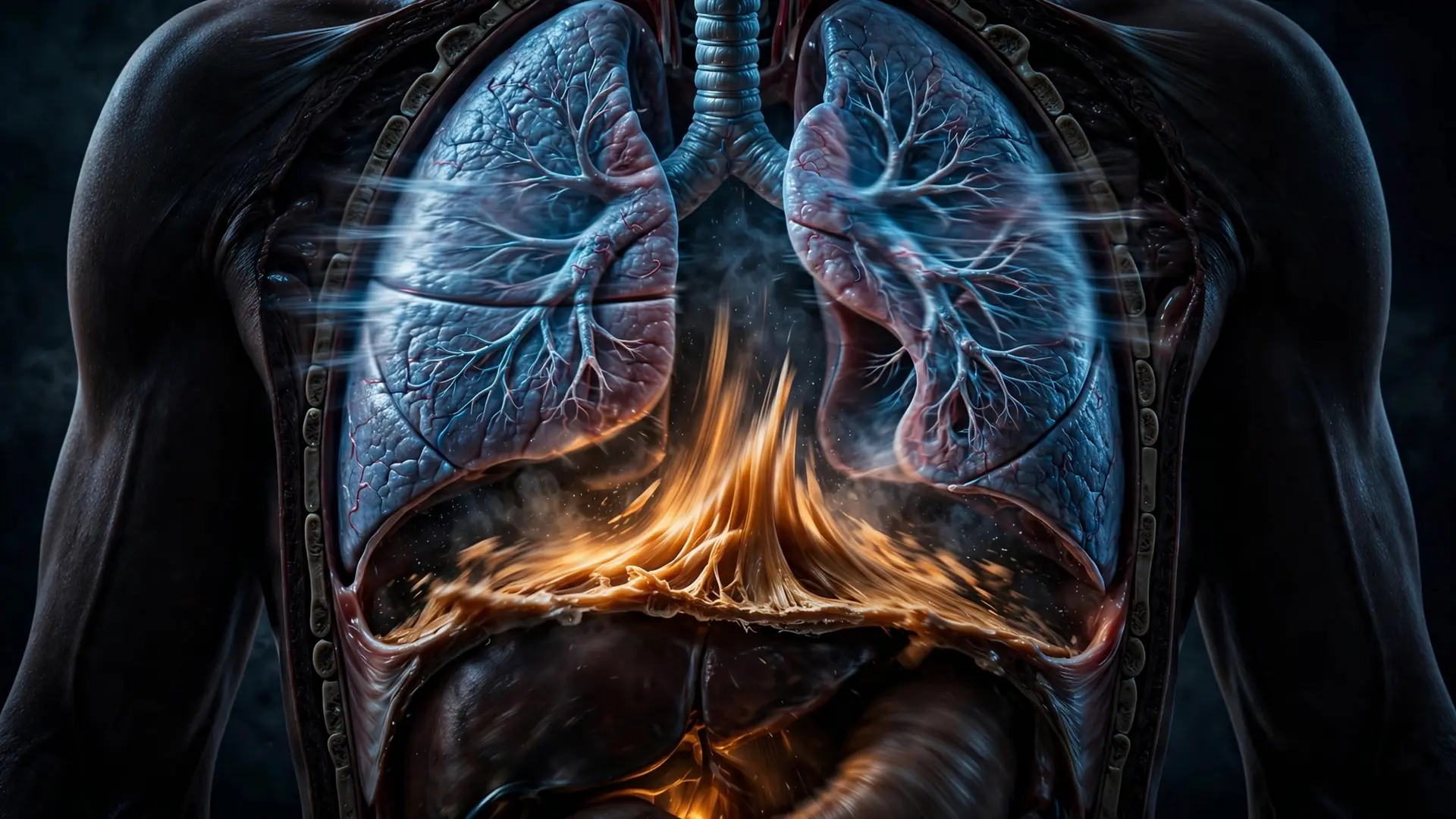
The first signs are often ordinary-looking: headache, tiredness, nausea, poor sleep and a loss of appetite. Those are the marks of acute mountain sickness, the mildest form of altitude illness. The danger is what comes next if a climber pushes on instead of descending. In high-altitude cerebral edema, known as HACE, the oxygen-starved brain swells inside a skull that cannot expand to make room. Pressure builds, and the symptoms escalate to confusion, clumsiness, slurred thinking and, if untreated, seizures, coma and death. A climber who can no longer walk in a straight line or follow a simple instruction is in serious trouble, even if they insist they feel fine. Impaired judgment is itself one of the symptoms, which is why partners watch each other closely and why the urge to keep climbing at all costs, sometimes called summit fever, becomes more dangerous the higher you go. High-altitude pulmonary edema, or HAPE, attacks from the other direction. Fluid leaks into the lungs, so breathing grows harder with every hour. A dry cough may turn wet, breathlessness appears even at rest, and in severe cases the cough produces pink, frothy fluid. The lungs can no longer pass enough oxygen into the blood, so every other organ begins to starve as well. Both conditions are medical emergencies, and the first treatment for either is the same: get lower, fast, and add oxygen if it is available. Drugs such as dexamethasone and acetazolamide can help buy time, but they are not a substitute for descent. Cold multiplies all of this. Summit temperatures commonly sit between about minus 20 and minus 35 degrees Celsius, winds over 100 miles per hour are commonplace, and gusts far stronger have been recorded. Frostbite can take hold in exposed skin within minutes, and the dry, frantic breathing of high altitude drains water from the body even as melting snow for drinking water eats into precious time and fuel.
Why can't the body just get used to it?
Lower down, it can, and that is the cruel contrast of an Everest expedition. Climbers spend weeks moving up and down the mountain, following the principle of climbing high and sleeping low. Given days and weeks, the body responds to thinner air by breathing more deeply, making extra red blood cells and growing more of the tiny blood vessels that deliver oxygen to muscle. That slow adaptation is what lets people live and work at high altitude at all.
But adaptation has a ceiling. Above about 6,000 metres the body never fully settles, and above 8,000 metres it stops adapting altogether. Instead of rebuilding itself, it breaks down: strength fades, appetite vanishes, sleep becomes almost impossible, and simple tasks demand enormous effort. That is why summit pushes are planned around narrow weather windows, usually in May before the monsoon arrives, and why the plan is always to get in and out of the zone as quickly as possible. Some populations cope better than others. Highland peoples of Tibet, for example, carry adaptations built over thousands of years, including wider blood vessels and faster resting breathing, that let them work at altitudes where a newcomer struggles. Even those advantages, though, do not make the death zone safe. They shift the odds; they do not remove the limit.
What actually helps climbers survive?
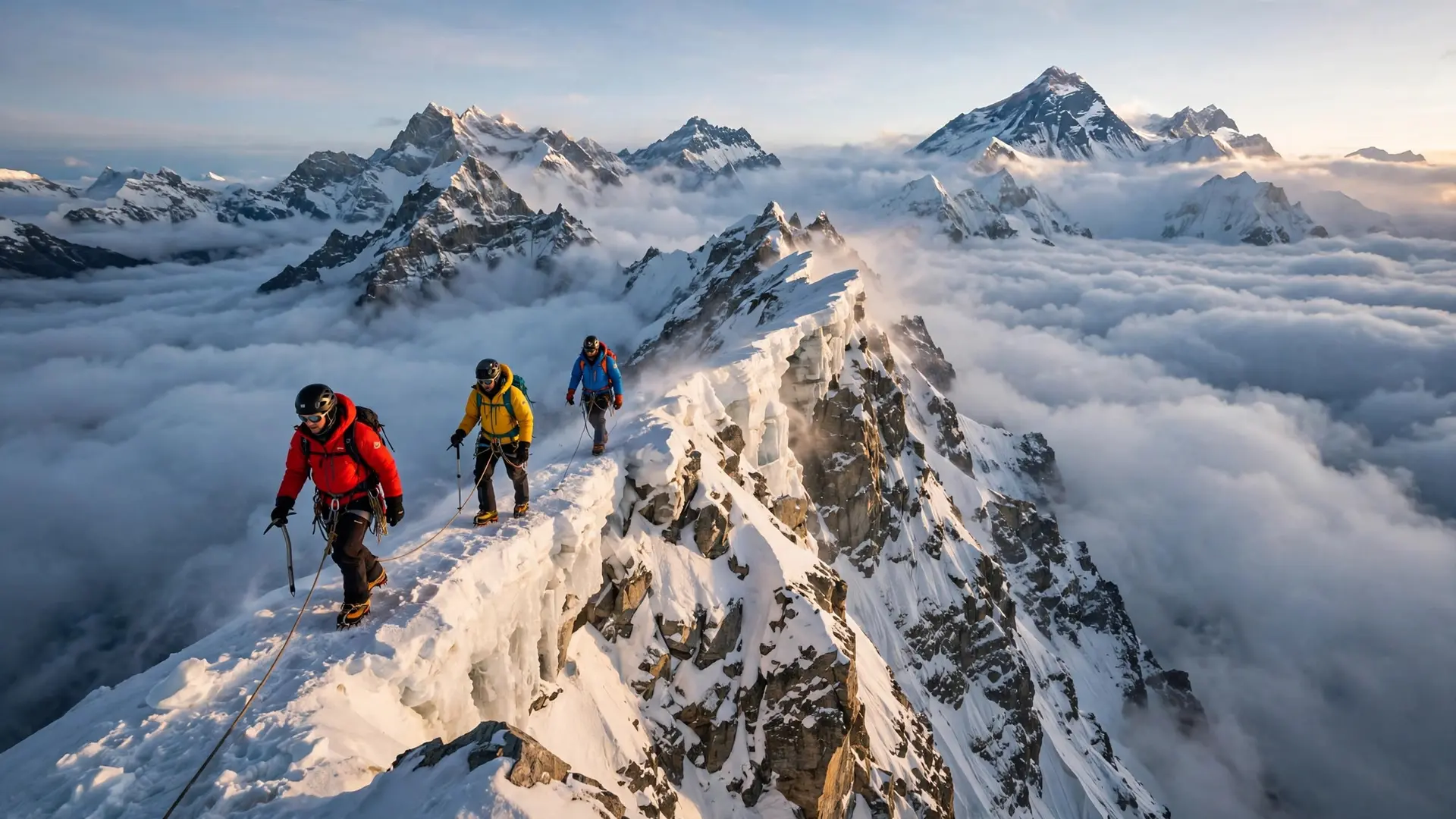
Time discipline helps most. The general advice given to climbers is to spend no more than 16 to 20 hours in the death zone, with about 48 hours considered the upper limit for most people even with supplementary oxygen. The records show what exceptional bodies can endure: Babu Chiri Sherpa spent 21 hours in the zone without supplementary oxygen in May 1999, and Pemba Gyalje holds the record with supplementary oxygen at 90 hours. Those feats are celebrated precisely because they sit so far outside what anyone should plan for. The rest is preparation and restraint. Climbers acclimatise for weeks before their summit bid, carry oxygen and spare equipment, travel with partners who can recognise confusion or a stumbling gait, and agree in advance on a turnaround time. When weather closes in or a teammate deteriorates, the right decision is often the one that feels like failure: turn around, descend at least 1,000 metres below where the illness appeared, and live to try again. The death zone is best understood as a place where the usual rules of endurance stop applying. Training, courage and experience all matter on the way up, but above 8,000 metres the body is living on borrowed time. Everest's summit is only 849 metres above that line, yet those metres contain the whole difference between a mountain that can be climbed and a height at which human life, unaided, cannot last. The Grand Canyon shows the opposite vertical extreme, a mile-deep cut carved by a river, while the Himalayas explain how the collision that raised Everest is still pushing the range upward today.
Frequently asked questions
What is Everest's death zone?
It is the part of the mountain above 8,000 metres, where the air pressure is so low that the body cannot take in enough oxygen to sustain itself for long. On Everest that means the final 849 metres to the summit.
How long can a person survive in the death zone?
General advice is no more than 16 to 20 hours, with about 48 hours considered an upper limit for most people even with supplementary oxygen. Record stays are far longer, but they are exceptional feats, not a safe plan.
Does bottled oxygen make the death zone safe?
No. It eases the strain and lowers the risk, but it does not recreate sea-level air, equipment can fail, and cold, wind and exhaustion remain. The only reliable escape from serious altitude illness is to descend.
Why can't climbers just acclimatise to the death zone?
Acclimatisation works lower down, where the body makes more red blood cells over days and weeks. Above 8,000 metres the oxygen shortfall is too severe: the body deteriorates instead of adapting, however fit the climber is.
Sources
- What is the death zone on the world's highest mountains?, Advnture
- Quick Facts: Altitude Sickness, MSD Manual
- Biology: A Human Approach, CCCOnline Pressbooks