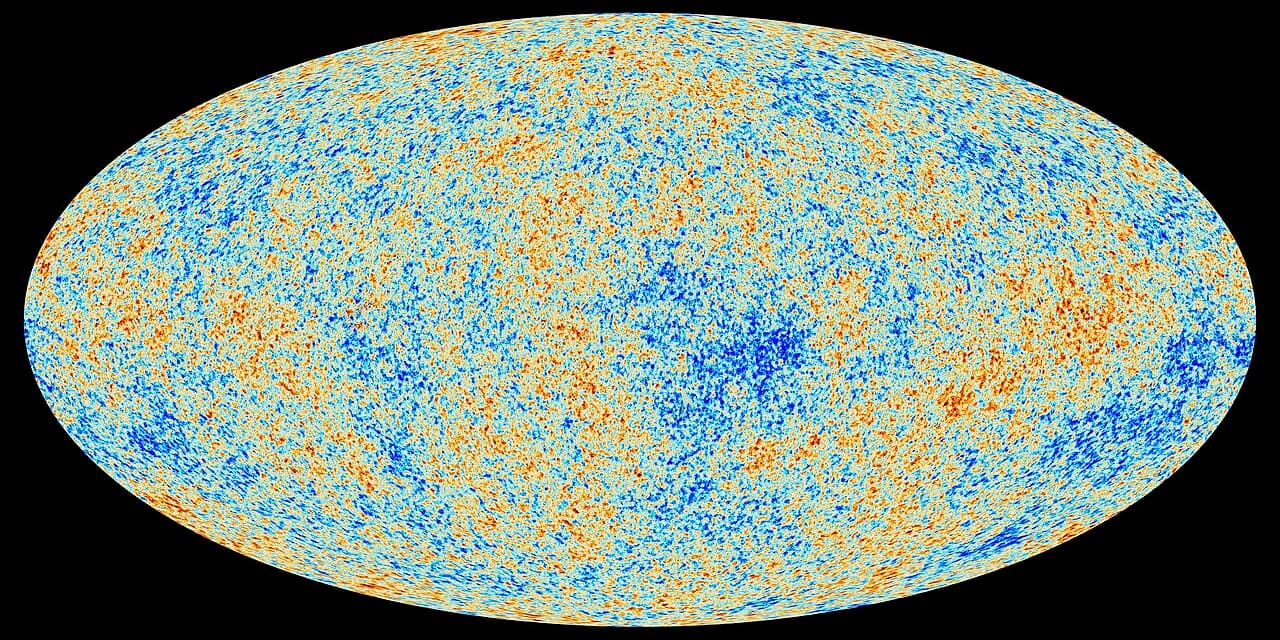
JWST Finds Galaxies Too Old for the Early Universe
Webb's telescope found massive, mature galaxies far earlier than theory allows. Explore the discovery challenging what we thought we knew about cosmic dawn.
For decades, astronomers have pieced together the early universe like a puzzle missing its edges. We knew the timeline: the Big Bang occurred, the universe cooled, and slowly, over hundreds of millions of years, the first stars and galaxies ignited. But the James Webb Space Telescope (JWST) just found some pieces that don't quite fit the box.
Looking deeper into space—and thus further back in time—than ever before, JWST has identified a population of massive, fully formed galaxies that existed just 500 million years after the Big Bang. This isn't just a slight anomaly; it's a profound challenge to standard cosmological models.
The Cosmic Dawn Problem
Imagine walking into a nursery and finding toddlers reading Shakespeare. That's essentially what astronomers are experiencing. According to our current understanding of cosmic evolution, galaxies in the early universe should be small, chaotic collections of newly forming stars. They take time to accumulate mass and structure.
Yet, JWST is revealing galaxies with masses comparable to our Milky Way, packed with mature stars, existing at a time when the universe was only 3% of its current age.
"We expected to find small, young, baby galaxies at this point in time, but we've discovered galaxies as mature as our own in what was previously understood to be the dawn of the universe." — Dr. Ivo Labbé, Lead Researcher
How Did They Grow So Fast?
The discovery forces a fundamental rethink of galactic assembly. How could these cosmic behemoths form so quickly? There are a few working hypotheses:
- Supercharged Star Formation: Perhaps the conditions in the very early universe allowed stars to form at a much higher efficiency than they do today.
- Exotic Dark Matter: Dark matter is the invisible scaffolding upon which galaxies are built. If dark matter clumps together differently than our models predict, it could rapidly accelerate the pooling of normal matter.
- Flaws in the Model: The standard model of cosmology (Lambda-CDM) has survived many tests, but these findings might indicate it needs a significant revision.
What This Means for the Future
Science thrives on the unexpected. When a new instrument breaks our models, it isn't a failure—it's an invitation to deeper understanding. JWST's findings mean theorists are heading back to the whiteboards, running new simulations, and questioning long-held assumptions.
We are living in a golden age of astronomy. The darkness of the early cosmos is finally being illuminated, and it turns out to be far more crowded, complex, and beautiful than we ever imagined.
Key Takeaways
- JWST has discovered incredibly massive, mature galaxies existing just 500 million years after the Big Bang.
- These findings contradict standard models of galaxy formation, which suggest such massive structures should take much longer to form.
- The discovery may require significant revisions to our understanding of the early universe, dark matter, or star formation efficiency.
References
- Labbé, I., et al. (2023). "A population of red candidate massive galaxies ~600 Myr after the Big Bang." Nature.
- NASA/ESA/CSA James Webb Space Telescope (JWST) Science Bulletins.