Mary Celeste: The Ghost Ship Found Without a Crew
In 1872 the Mary Celeste was found adrift and seaworthy with not a soul aboard. Uncover the leading theories behind maritime history's greatest vanishing.
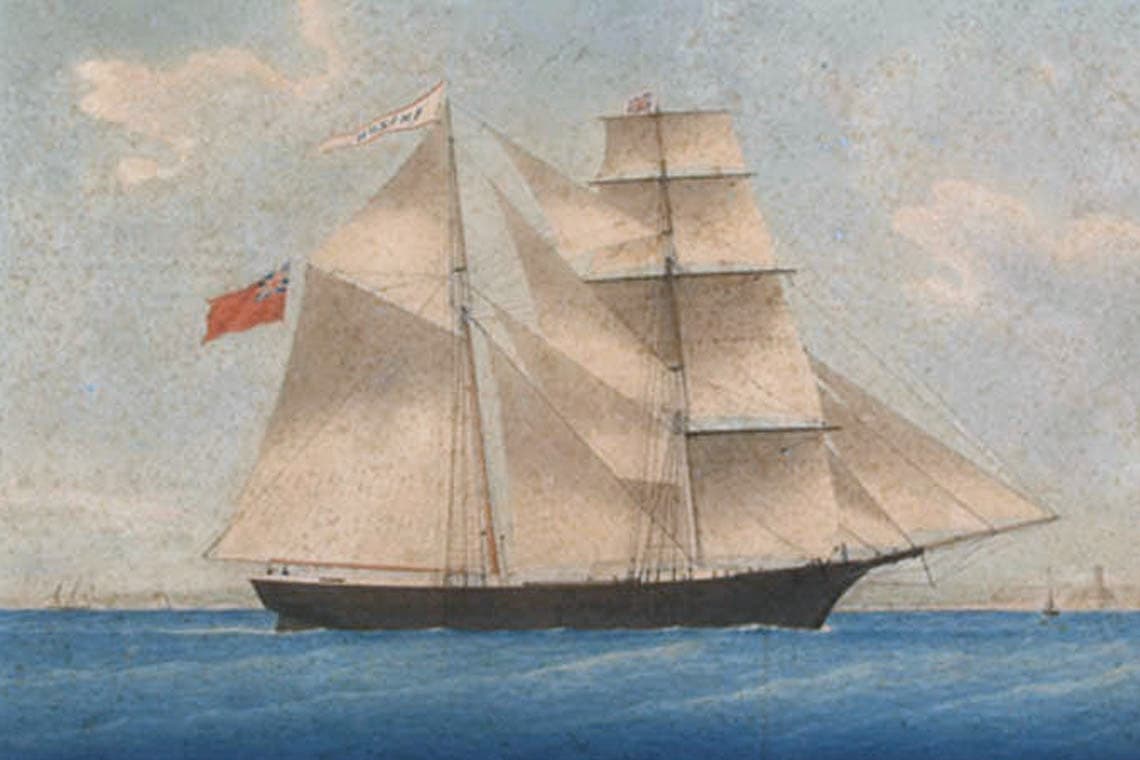
Mary Celeste (, often erroneously referred to as Marie Celeste) was a Canadian-built, American-registered, merchant brigantine that was discovered adrift and deserted in the Atlantic Ocean off the Azores on December 4, 1872. The Canadian brigantine Dei Gratia found the Mary Celeste in a dishevelled but seaworthy condition under partial sail and with the lifeboat missing. The last entry in the log was dated 10 days earlier. The ship had left New York City for Genoa on November 7 and was still amply provisioned when found. The cargo of alcohol was intact, and the captain's and crew's personal belongings were undisturbed. None of those who had been on board were ever seen or heard from again. Mary Celeste was built in Spencers Island, Nova Scotia, and launched under British registration as Amazon in 1861. The ship was transferred to American ownership and registration in 1868, when given a new name. Thereafter, Mary Celeste sailed uneventfully until the 1872 voyage. At the salvage hearings in Gibraltar following the ship's recovery, the court's officers considered various possibilities of foul play, including mutiny by Mary Celeste's crew, piracy by the Dei Gratia crew or others, and conspiracy to carry out insurance or salvage fraud. No convincing evidence supported these theories, but unresolved suspicions led to a relatively low salvage award. The inconclusive nature of the hearings fostered continued speculation as to what had happened to the ship's occupants, and the story has repeatedly been complicated by false detail and fantasy. Hypotheses that have been advanced include the effects on the crew of alcohol fumes rising from the cargo, submarine earthquakes, waterspouts, attack by a giant squid, and paranormal intervention. After the Gibraltar hearings, Mary Celeste continued in service under new owners. In 1885, the captain deliberately wrecked her off the coast of Haiti as part of an attempted insurance fraud. The story of the ship's 1872 abandonment has been recounted and dramatized many times in documentaries, novels, plays, and films, and the name of the ship has become a byword for unexplained desertion. In 1884, Arthur Conan Doyle wrote "J. Habakuk Jephson's Statement", a short story based on the mystery. The story's popularity led to the "Marie Celeste" spelling becoming more common than the original in everyday use.