Beyond Bits: How Quantum Computing is Reshaping our Reality
An exploration into the mechanics of quantum computing, its potential to solve complex global challenges, and what it means for the future of technology.
For decades, the computer on your desk—and the phone in your pocket—has operated on a simple, binary logic. Everything you read, watch, or interact with digitally is translated into a sequence of ones and zeros. It is a system that has carried us to the moon, mapped the human genome, and connected the globe. But we are reaching the physical limits of this classical computing architecture. Enter quantum computing: a paradigm shift that promises to solve problems that would take today’s most powerful supercomputers millennia to crack.
Thinking Outside the Binary Box
To understand why quantum computing is such a massive leap forward, it helps to look at how these machines actually process information. Classical computers use bits, which can only exist in one of two states: a 1 or a 0. Think of it like a light switch—it is either on or off.
Quantum computers, however, use quantum bits, or qubits. Thanks to a principle of quantum mechanics known as superposition, a qubit can be a 1, a 0, or both at the exact same time. If a classical bit is a coin sitting on a table showing heads or tails, a qubit is a coin spinning in mid-air. Until you stop it to look (or measure it), it embodies both states simultaneously.
"Quantum computation is not just a faster version of what we have today; it is an entirely different way of processing reality."
When you combine multiple qubits, they become entangled. This means the state of one qubit is instantly linked to the state of another, no matter how far apart they are. This exponential increase in processing power allows quantum computers to analyze vast numbers of possibilities all at once, rather than one by one.
Real-World Problems, Quantum Solutions
Why does this matter outside the laboratory? The applications are staggering, particularly in fields that rely on complex molecular simulations and optimization.
Drug Discovery and Medicine Currently, developing a new pharmaceutical drug takes an average of ten years and costs billions of dollars. Much of this time is spent simulating how different molecules interact. Classical computers struggle with this because molecular interactions are inherently quantum mechanical. A quantum computer could accurately simulate these interactions in days, potentially leading to rapid breakthroughs in treating diseases like Alzheimer’s and cancer.
Climate Change and Materials Science We urgently need better batteries for renewable energy storage and more efficient ways to capture carbon from the atmosphere. Quantum computers could simulate new materials at the atomic level, discovering catalysts that make carbon capture financially viable or designing battery materials that far outstrip today's lithium-ion technology.
Financial Modeling and Logistics From routing thousands of delivery trucks through traffic to optimizing global supply chains, quantum algorithms can sift through millions of variables to find the most efficient path. Major financial institutions are already experimenting with quantum tech to better assess risk and optimize investment portfolios.
The Road Ahead: Challenges and Skepticism
Despite the immense promise, we are still in the early days—often referred to as the Noisy Intermediate-Scale Quantum (NISQ) era. Qubits are incredibly fragile. Slight changes in temperature or electromagnetic interference can cause them to lose their quantum state, a problem known as decoherence.
To keep qubits stable, companies like IBM and Google have to house their quantum processors in massive, chandelier-like dilution refrigerators that operate at temperatures colder than deep space. We are likely years, if not decades, away from a fault-tolerant quantum computer that can run without these intense environmental controls.
There is also the looming security question. The same processing power that can cure diseases could, theoretically, break the cryptographic encryption that secures our banking systems and personal data. This has sparked a simultaneous race in "post-quantum cryptography" to develop new security protocols before quantum computers become powerful enough to break current ones.
Embracing the Unknown
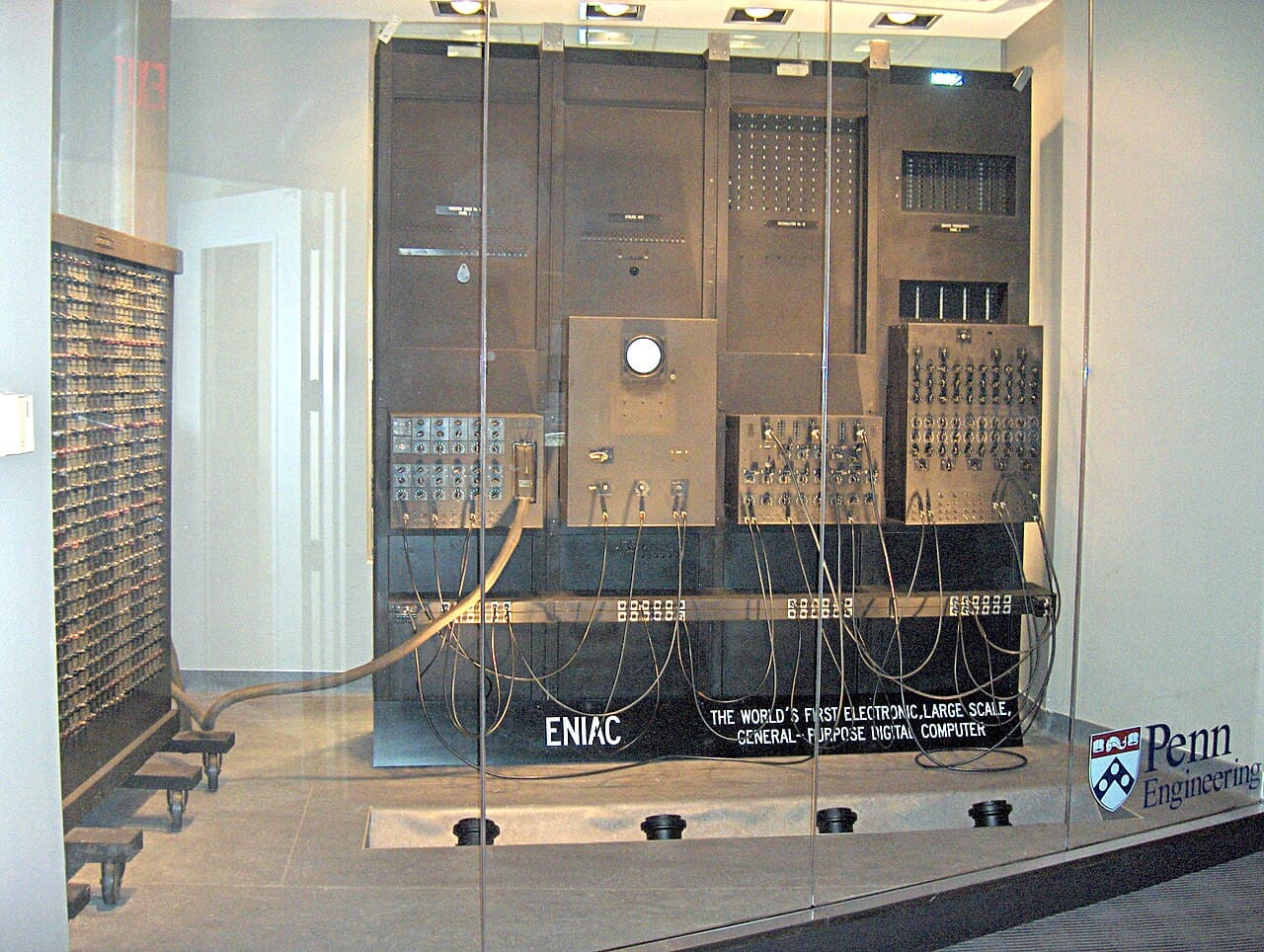
We stand on the edge of a new frontier. Just as the creators of the first room-sized vacuum tube computers couldn't have predicted the smartphone, we can barely begin to grasp how quantum computing will weave itself into the fabric of our daily lives over the next fifty years.
What we do know is that the tools we use to build the future are fundamentally changing. We are no longer just coding logic; we are coding nature itself.
Key Takeaways
- Superposition and Entanglement: Qubits process information exponentially faster by existing in multiple states simultaneously and linking their states together.
- Revolutionary Applications: Quantum computing holds massive potential for drug discovery, materials science, and complex logistical optimization.
- Current Limitations: The technology is still in its infancy, struggling with hardware stability and the need for extreme cooling infrastructure.
- Security Implications: The tech industry is already developing post-quantum encryption to protect data from future quantum-powered codebreaking.
References
- National Academies of Sciences, Engineering, and Medicine. (2019). Quantum Computing: Progress and Prospects.
- Preskill, J. (2018). Quantum Computing in the NISQ era and beyond. Quantum, 2, 79.
- IBM Quantum. "What is Quantum Computing?" IBM Research.