The Seven-Day Week: Why Seven, and Why It Stuck
The seven-day week outlasted empires, revolutions, and one Soviet attempt to replace it. Its roots: moon phases, seven visible planets, and sacred rest.
Key takeaways
- A week has seven days because ancient Babylonian astronomers combined a roughly 29.5-day lunar month with seven visible celestial bodies, dividing the month into four seven-day chunks.
- The day names descend from Roman planetary gods — dies Solis, dies Lunae — later swapped for Norse equivalents in English, which is why Tuesday honors Tiw and Wednesday honors Woden.
- The weekday order comes from an ancient planetary-hours system: each hour was ruled by a planet, and the planet ruling the first hour of a day named that day.
- Judaism turned the seven-day span into a continuous cycle independent of the Moon, centered on the Sabbath; Emperor Constantine's AD 321 decree spread it across Rome.
- The week survived attempts to replace it, including a Soviet five-day week in 1929 and a six-day week in 1931 — both were abandoned by 1940.
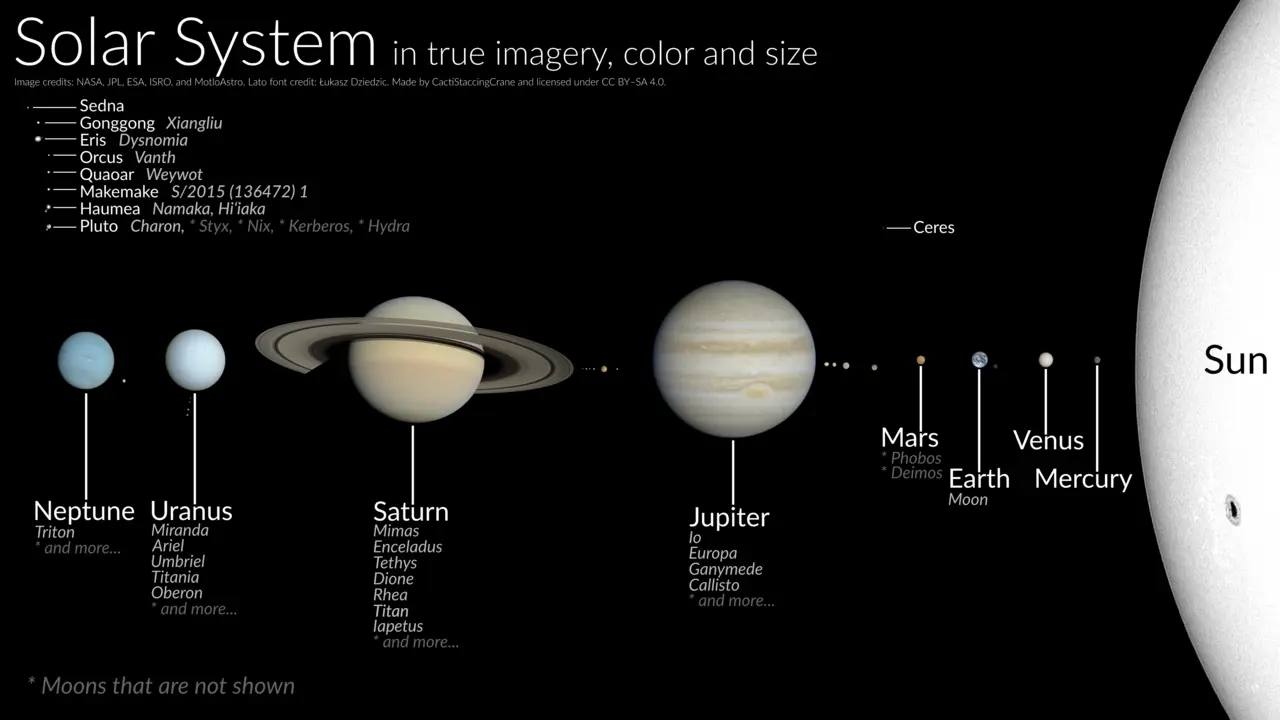
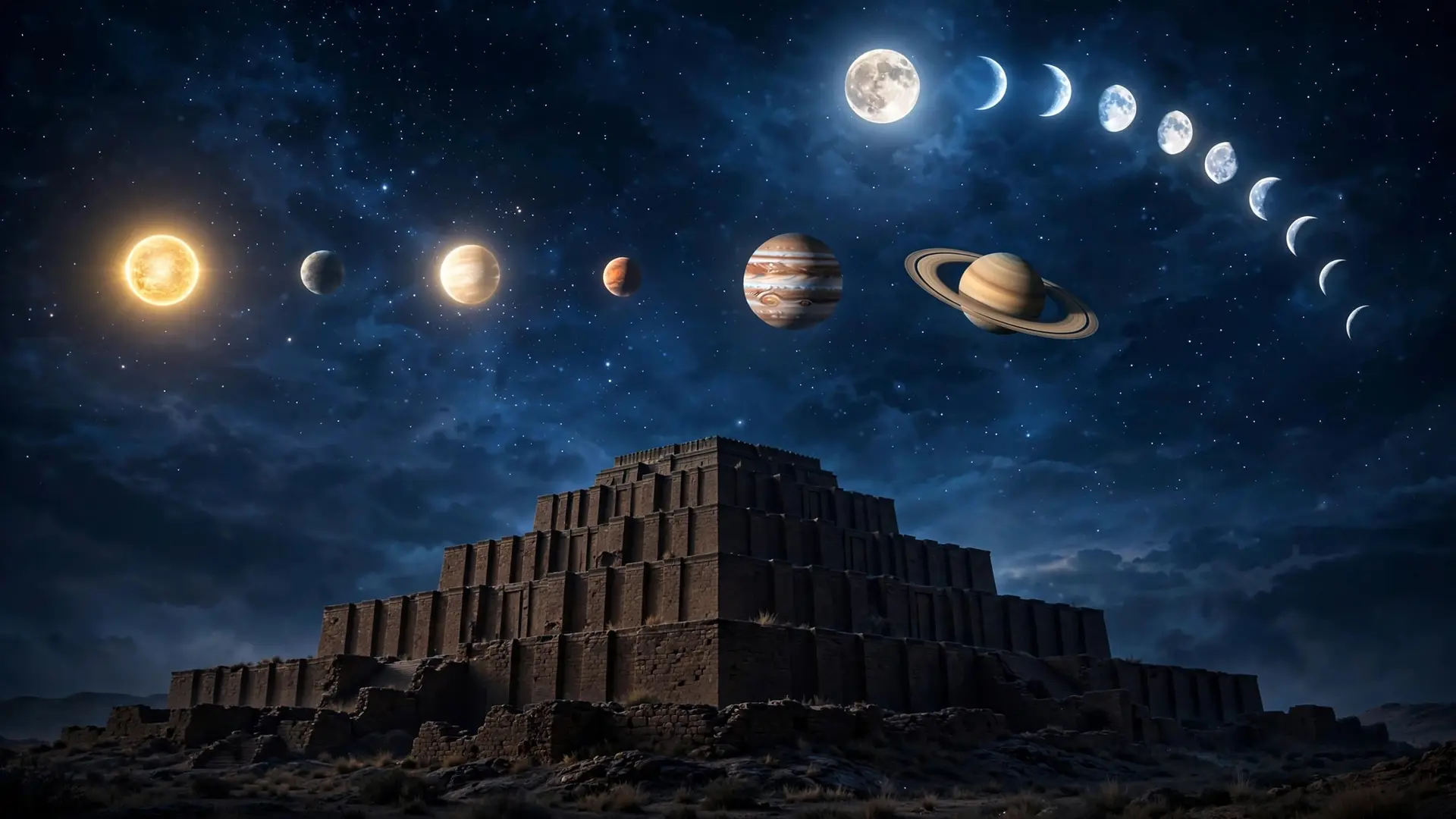
A week has seven days because ancient Babylonian astronomers looked at the night sky and saw exactly seven wandering lights: the Sun, the Moon, Mercury, Venus, Mars, Jupiter, and Saturn. They then split the roughly 29.5-day lunar month into four chunks of about seven days each, and the resulting rhythm proved so useful — for markets, for worship, for rest — that it outlasted every empire that ever tried to change it.
How Did the Moon and Seven Planets Shape the Week?
Unlike the day, the month, and the year, the week is not pinned to a physical event. A day is one spin of the Earth; a month roughly follows the Moon; a year is a trip around the Sun. But no heavenly motion demands a seven-day cycle. The week is a cultural invention wearing astronomical clothes. The clothes fit well, though. In Mesopotamia, in what is now Iraq, Babylonian sky-watchers treated the Moon's cycle as the natural unit of time: about 29.5 days from one set of phases to the next. For everyday use, nearly a month is unwieldy, so they rounded it down to 28 days and cut it into four periods of seven days, adding leap days now and then to stay aligned with the actual phases. Seven also carried sacred weight for the Babylonians, because they counted exactly seven non-fixed bodies moving across the sky — the Sun and Moon plus the five naked-eye planets. Nobody at the time knew the Sun and Moon were not planets in the modern sense; all seven simply looked like wanderers among the fixed stars. The Babylonians gave the seventh day of each quarter special religious duties. Historical records show the 7th, 14th, 21st, and 28th days of the lunar month treated as holy days, when officials had to suspend certain activities and common people were forbidden certain wishes. The 28th day, at least, was explicitly a day of rest — an early ancestor of the weekend. Why seven, though, and not five or ten? A market-based explanation comes from sociologist Eviatar Zerubavel, who studied the week in his book on its history: a fixed cycle of about this length gave traders and buyers an agreed, unbroken rhythm, meeting roughly four times per lunar month, never derailed by the Moon's drift. In a world of bazaars and temple festivals, that reliability was worth more than astronomical precision.
How Did the Seven-Day Week Spread Around the World?
From Babylon, the idea traveled. Around the 6th century BC, Jewish communities encountered the seven-day cycle during the Babylonian captivity and made it their own — with a decisive innovation. Judaism turned the week into a continuous repeating cycle that ran forever, independent of the Moon's phases, and anchored it to the Sabbath: six days of work, rest on the seventh, echoing the creation narrative in Genesis. The Babylonians had reset their count with each lunar month; the Jewish week never reset. That continuity is the week we live by. Greeks carried the seven-day pattern eastward with Alexander's conquests, from Persia to India and eventually, through trade contacts, to China. Meanwhile the Romans, who had been using their own eight-day cycle, adopted the seven-day week around the time of the Julian calendar reforms in 45 BC. Both cycles ran side by side for a while, but in AD 321 Emperor Constantine formally decreed the seven-day week across the Roman Empire and made Sunday — the day of the Sun — a public holiday. From there it spread across Europe and, with European colonization, to nearly the entire planet. Even the Bahá'í calendar, with its 19-month year, and the Bengali calendar, with its six two-month seasons, bowed to the seven-day week. Not everyone surrendered at once. The Egyptians had long used ten-day weeks, the Etruscans and early Romans an eight-day one. Yet the seven-day version conquered them all — a triumph of shared habit over mathematical elegance, since seven divides neither the month nor the year evenly.
Why Do the Days Run in This Odd Order?
The day names still carry their planetary passport stamps. Around the first century BC, the Romans named each day after a pagan god linked to one of the seven classical planets: dies Solis for the Sun, dies Lunae for the Moon, dies Martis for Mars, dies Mercurii for Mercury, dies Iovis for Jupiter, dies Veneris for Venus, and dies Saturni for Saturn. In English, most of those gods were swapped for their Norse or Germanic counterparts: Tuesday honors Tiw (Mars's counterpart), Wednesday honors Woden (Mercury), Thursday honors Thor (Jupiter), Friday honors Frige (Venus). Only Saturday kept its Roman name outright. Similar planetary names survive across Latin-based languages — a fossil record of the heavens. But why does Sunday come before Monday and Saturday come last? The order was not set by the planets' positions. Ancient sky-watchers ranked the seven bodies by their apparent speed, assuming the fastest was nearest Earth and the slowest farthest. The sequence, from farthest to nearest, ran: Saturn, Jupiter, Mars, Sun, Venus, Mercury, Moon.
Then came the "planetary hours" system: each hour of the day was ruled by a deity in that distance order, cycling endlessly. With 168 hours in a week, the planet ruling the first hour of each day gave that day its name — and the math lands exactly on our modern order. The Moon ruled the first hour of the first day (Monday), Mars the second day's first hour (Tuesday), Mercury the third (Wednesday), Jupiter the fourth (Thursday), Venus the fifth (Friday), Saturn the sixth (Saturday), and the Sun the seventh (Sunday). An old piece of astrological bookkeeping quietly froze the weekday order we still recite.
Has Anyone Ever Tried to Replace the Week?
Plenty of reformers have looked at the week and seen a bug. The most serious attempt came from the Soviet Union: in 1929 it switched the calendar to 72 five-day weeks (with national holidays filling the gap), designing a continuous work schedule so factories would never idle. The scheme was a social disaster — families, spouses, and friends ended up with different rest days, and machines broke down because there was never downtime for maintenance. In 1931 the USSR tried a six-day week instead. That fared no better, and in 1940 the Soviet Union surrendered and restored the seven-day week. The two-day weekend, meanwhile, is far younger than the week itself. In the United States, factories with many Jewish workers began granting both Saturday and Sunday off starting in 1908; Henry Ford's adoption gave the idea momentum, and labor unions pressed the case until the 1938 Fair Labor Standards Act set a five-day, 40-hour workweek for most American workers. For most of history, one rest day in seven was the norm. There is a common misconception that the seven-day week must be natural because it feels so inevitable. It is not. As the writer Witold Rybczynski pointed out in the Atlantic, nothing in nature actually repeats on a seven-day schedule. The week persists not because the cosmos requires it, but because roughly four thousand years of human routine — markets, worship, wages, weekends — are built on top of it. The week is humanity's oldest surviving app: launched by Babylonian star-gazers, debugged by Jewish tradition, shipped globally by Roman emperors, and updated by Soviet engineers who rolled back their own patch. It survives for the same reason it was invented: seven days is close enough to a quarter of the Moon to feel cosmic, and close enough to a market interval to feel human. Ancient sky-watchers marked similar celestial rhythms, and like other everyday conventions — from why traffic lights are red, yellow, and green to why Friday the 13th unsettles us — it endures because everyone simply agreed to keep using it.
Frequently asked questions
Is the seven-day week based on nature or was it invented?
It is a human invention, though inspired by nature. A day, a month, and a year are set by Earth's rotation, the Moon, and the Sun, but nothing in the sky requires a seven-day cycle. The number came from dividing the lunar month into four parts and honoring seven celestial bodies.
Why do the days of the week have their names and order?
The names come from the seven classical planets — Sun, Moon, Mars, Mercury, Jupiter, Venus, Saturn — each tied to a Roman god, later Germanized in English (Thor gives Thursday, Saturn kept Saturday). The order comes from a planetary-hours scheme in which the planet governing the first hour of a day lent that day its name.
Did anyone ever try to change the week?
Yes. In 1929 the Soviet Union introduced a five-day continuous work week, shifted to a six-day week in 1931, and gave up and returned to seven days in 1940. Earlier, Egyptians used ten-day weeks and early Romans used eight-day weeks.