The Outback: Australia's Vast and Empty Heart
Why Australia's empty heart stays empty: a high-pressure lid starves it of rain, while stations and mines work at enormous scale. 85% hug the coast.
Key takeaways
- About 85 percent of Australians live within 50 kilometres of the coast, leaving the vast interior extraordinarily thinly populated.
- The Outback sits under the subtropical high-pressure belt, where sinking air creates clear skies and very little rain — the same mechanism behind most world deserts.
- Aboriginal peoples have lived in Australia for at least 50,000 years, and between 30,000 and 18,000 years ago they were already thriving as desert dwellers.
- Anna Creek Station in South Australia, the world's largest cattle station at 24,000 square kilometres, shows why outback life only works at enormous scale.
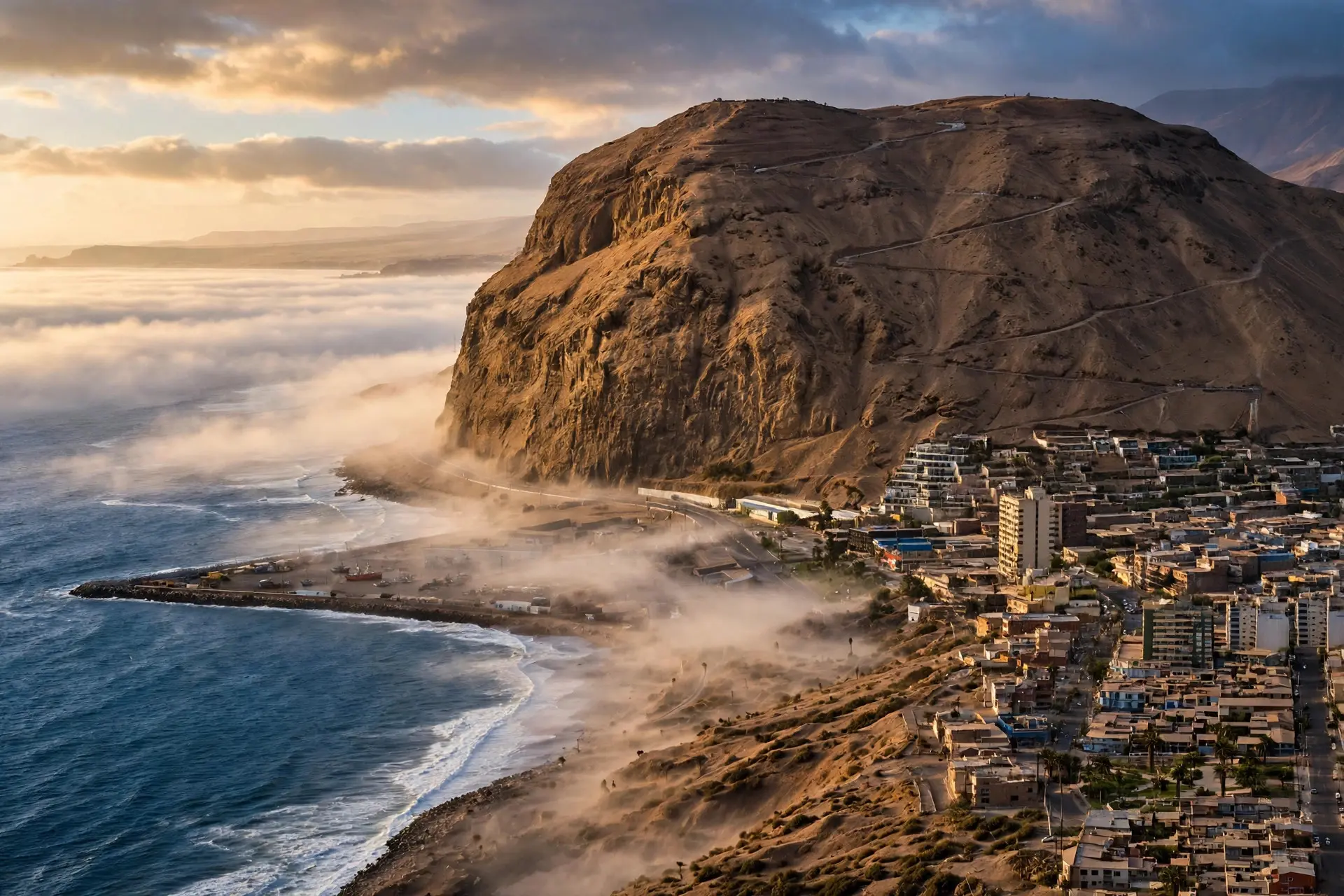
Look at a population map of Australia and the pattern is startling: a thin necklace of cities hugging the coastline, and then almost nothing for thousands of kilometers inland. About 85 percent of Australians live within 50 kilometers of the coast. The middle of the continent — the Outback — is one of the emptiest inhabited places on Earth, and it stays that way for one overriding reason: the sky refuses to rain on it.
What exactly is the Outback?
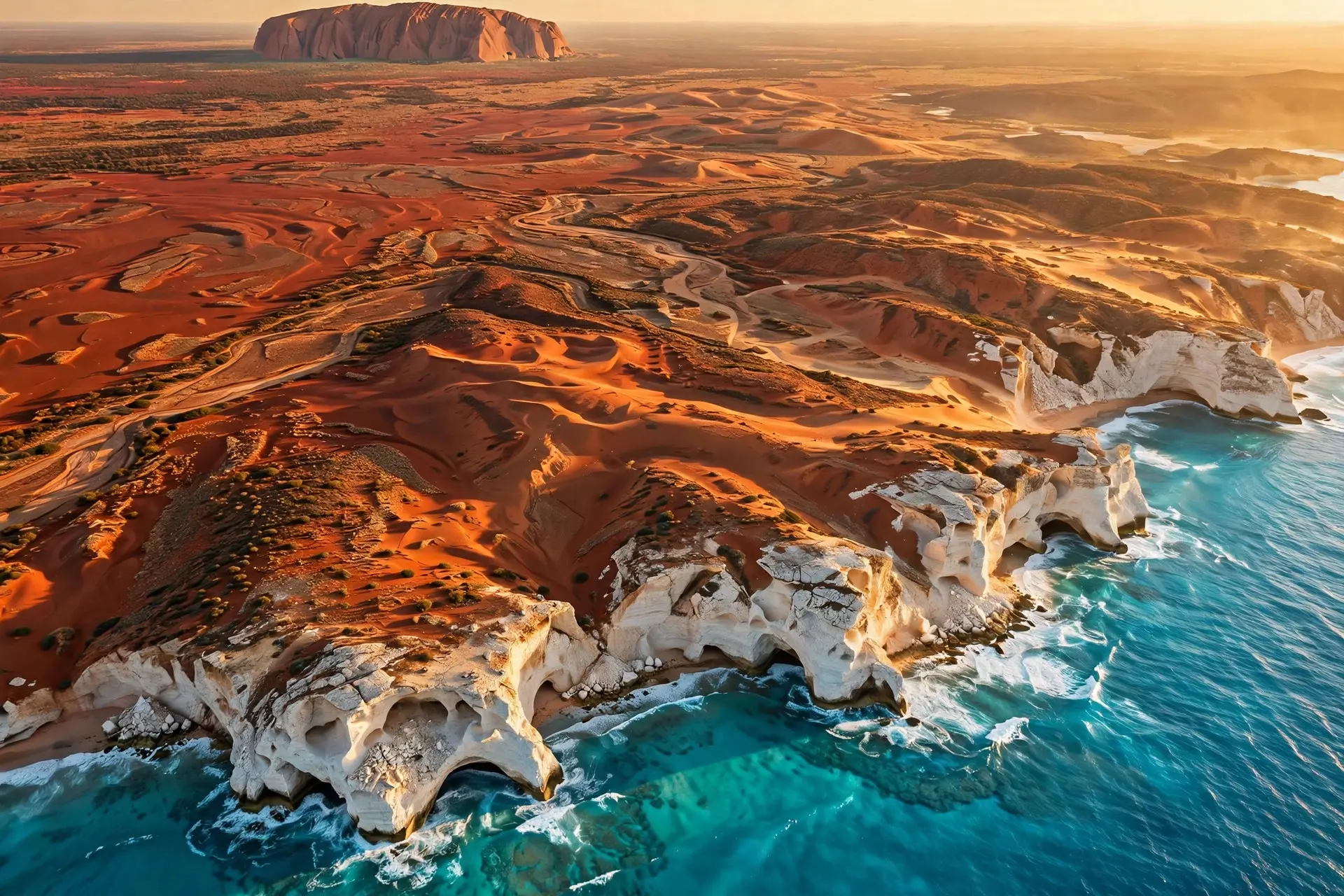
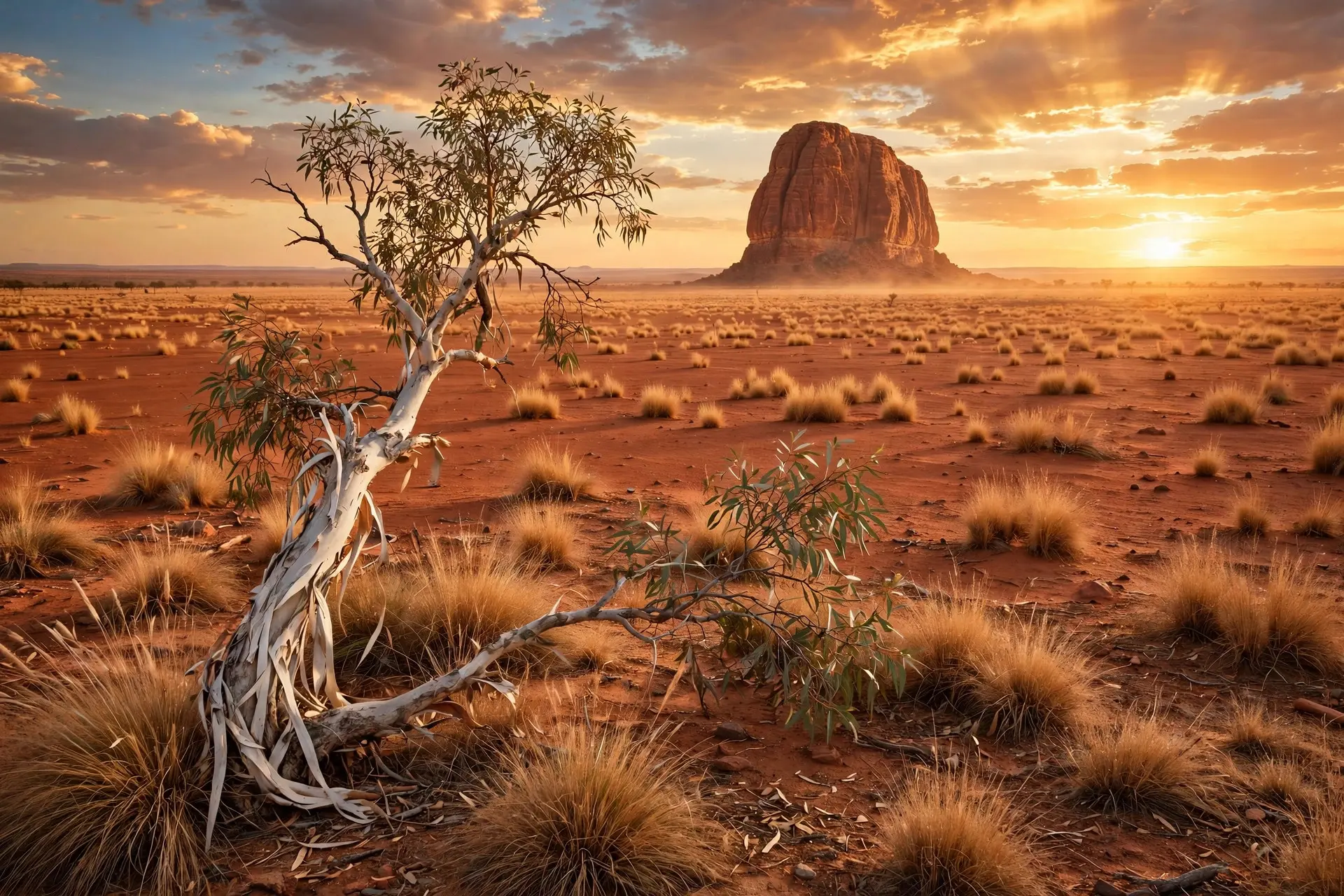
The Outback is not a single desert, though it is often imagined as one. It is the remote interior of Australia, stretching across the continent's middle, and it spans several climate zones: tropical and monsoonal country in the north, the arid red centre in the middle, and semi-arid and temperate stretches to the south. What it shares across all those zones is very few people, mostly untouched landscapes, and land used gently — above all for pastoralism, the grazing of cattle and sheep on native grasses. The red centre gets its color from iron oxide coating the sand grains, and its most famous landmark is Uluṟu, the great sandstone monolith in Uluṟu-Kata Tjuṯa National Park. The park covers 1,325 square kilometres in the Northern Territory, about 450 kilometres southwest of Alice Springs by road. It is Aboriginal land, jointly managed by its Aṉangu traditional owners and Parks Australia, and the deeds were formally handed back to the Aṉangu in 1985 — an event celebrated every year as handback. The park is World Heritage listed for both its natural wonders and its living culture. Alongside Uluṟu stand the domes of Kata Tjuṯa, and the whole region sits within a network of desert ranges, dry riverbeds, and salt lakes that make the red centre one of the most recognizable landscapes on the planet.
Why does so little rain fall here?
The answer starts with the planet's circulation, not with anything uniquely Australian. Warm, moist air rises near the equator, travels toward the poles high in the atmosphere, and then sinks back down in the subtropics. Sinking air warms as it compresses, creating zones of high pressure and stubbornly clear skies. Australia's Bureau of Meteorology puts it plainly: the subtropical zone is where you find most of the world's deserts. Australia sits squarely in that zone. Much of the continent lies under the subtropical high-pressure belt, which presses air downward and suppresses the uplift rain needs. The interior is also far from reliable moisture sources in every direction, so even the rain-bearing systems that do exist — tropical lows in the north, winter fronts in the south — mostly exhaust themselves before reaching the center. The result is an arid core in a country that is, overall, the driest inhabited continent — a landmass whose interior climate was essentially decided by latitude long before humans ever arrived.
Who actually lives out there?
Calling the Outback empty is a convenient shorthand, but it erases the people who have been there longest. Aboriginal peoples have called Australia home for at least 50,000 years — the National Museum of Australia puts the figure at 65,000 years or more. During the harshest stretch of the last ice age, between 30,000 and 18,000 years ago, when deserts were spreading across the continent, people kept living in the arid zone. The Western Australian Museum describes them as some of the earliest and most successful desert dwellers in the world. Aboriginal communities remain across the Outback today, with deep and legally recognized connections to their traditional country.
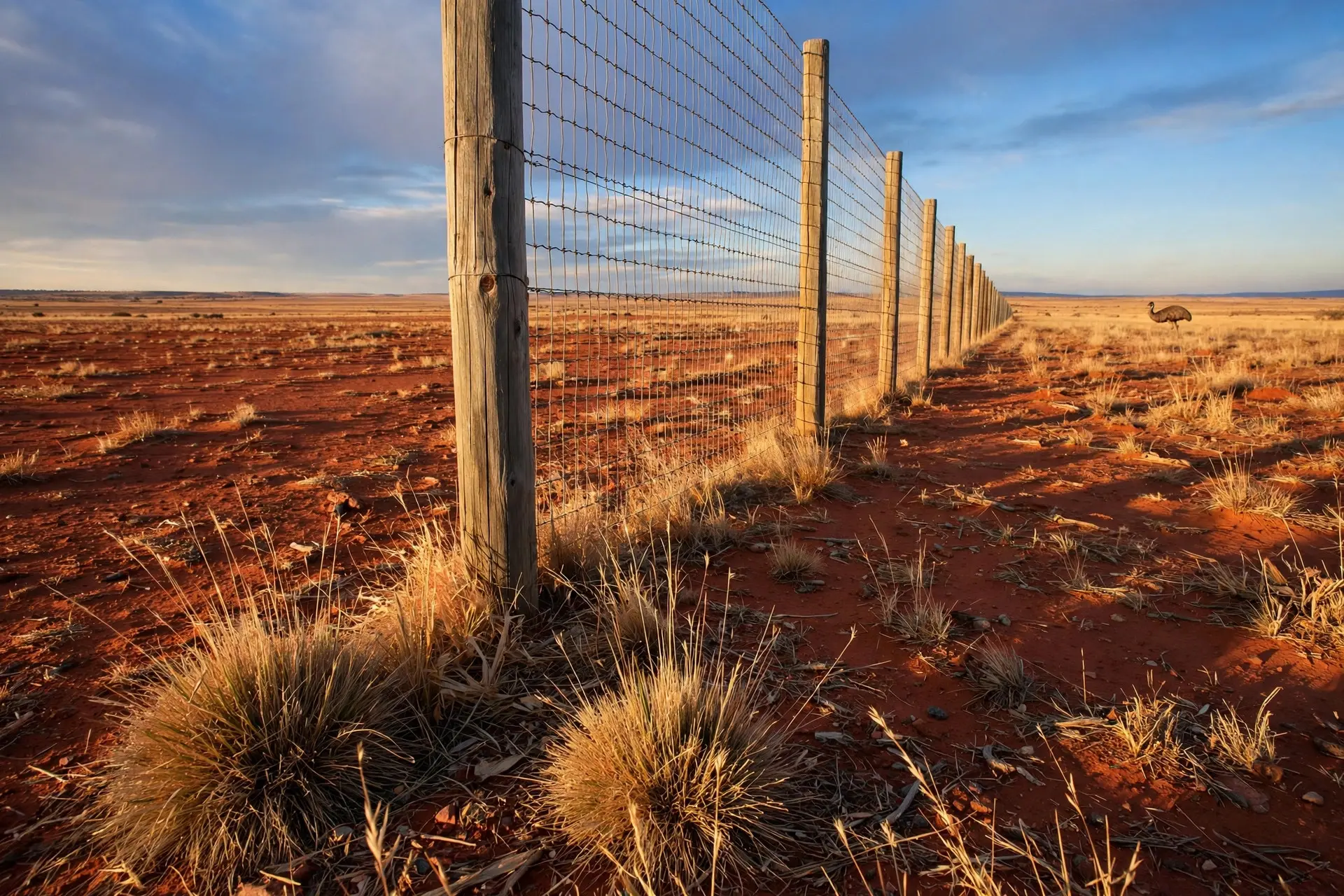
The rest of the Outback's population is a study in adaptation to scale. Cattle and sheep stations cover thousands of square kilometres each, because sparse desert feed means each animal needs an enormous patch of ground — in poor years, graziers must destock altogether. Towns like Coober Pedy in South Australia exist around mining, and many modern mines run on fly-in, fly-out crews who live on-site in rotations rather than settling permanently. Supplies arrive by road train, and remote communities can sit thousands of kilometres from the nearest city. Even the distances between neighbors are continental: a station's nearest town can be a full day's drive away. It is a working landscape, just a very thinly spread one.
How do you run a farm the size of a country?
The purest expression of Outback scale is Anna Creek Station in South Australia. At 24,000 square kilometres — larger than some countries, and dwarfing even the biggest American and Canadian ranches — it is the largest cattle station in the world. The property is so large that workers camp out on distant sections for days at a time, sleeping in swags under the stars and driving out for the week. Where stockmen once rode horses, mustering is now done by motorbike and light aircraft, because the distances are simply too great for anything else. Anna Creek's size is not extravagance; it is arithmetic. In country this dry, running a viable herd requires vast grazing land, because the land yields so little feed per hectare. The station's nearest town for freight is Coober Pedy, and the isolation shapes everything from schooling — historically by correspondence and the School of the Air — to medical care, which arrives by the Royal Flying Doctor Service. The Outback's emptiness, then, is not a mystery or a failure. It is the honest result of geography: a continent sitting under a high-pressure lid, an interior too dry for farming and too vast for towns, settled instead by the world's oldest continuous culture and an economy built for enormous distances. Most Australians chose the coast because the coast chose them — the interior never offered the same deal. The Sahara and other great deserts tell their own versions of this story, but few places on Earth pair such emptiness with such deep human history. To understand Australia's empty heart, start with Australia itself — a continent that is almost entirely coastline-dwelling, with a red, ancient interior beating quietly in the middle.
Frequently asked questions
Why is the middle of Australia a desert?
Australia sits under the subtropical high-pressure belt, where air that rose at the equator sinks back down as dry air. Sinking air means high pressure and clear skies, so rain rarely forms over the interior.
Is the Outback really empty?
No — it has cattle stations, mines, small towns, and Aboriginal communities. But the population density is extremely low: most of Australia's people hug the coast, where the climate is kinder.
How long have people lived in the Outback?
Aboriginal peoples have called Australia home for at least 50,000 years, and archaeological evidence shows people living in the arid zone between 30,000 and 18,000 years ago.