The Discovery of Neptune: Found With Mathematics
On September 23, 1846, astronomers found Neptune within a degree of a position calculated on paper — the only planet ever predicted before it was seen.
Key takeaways
- Neptune was found on September 23, 1846, within one degree of the position Urbain Le Verrier had calculated with pen and paper.
- Uranus's wobbling orbit betrayed an unseen planet's gravity — John Couch Adams and Le Verrier worked out its location independently.
- Galileo recorded Neptune as a star in 1612–1613 but never recognized it; Johann Galle and Heinrich d'Arrest made the first confirmed sighting.
- The find proved Newton's gravity could reveal unseen worlds — and discredited Bode's law, since Neptune sits at 30.1 AU, not the predicted 38.8.
Neptune was found on September 23, 1846, because two mathematicians calculated where it had to be before anyone ever saw it. Urbain Le Verrier of France and John Couch Adams of England independently worked out the position of a hidden planet pulling on Uranus, and when Johann Galle aimed his telescope at Le Verrier's predicted spot, the new world was there — within a single degree of the calculated position.
How could math point to a planet nobody had ever seen?
The trail began with Uranus. After William Herschel discovered that planet in 1781, astronomers tracked its path around the Sun for decades and found something wrong: Uranus refused to follow the orbit that Newton's laws of motion and gravity said it should. By 1821 the French astronomer Alexis Bouvard was openly suggesting that an undiscovered planet might be tugging on Uranus and bending its course. The idea was simple in principle. If an unknown mass was pulling on Uranus, its gravity would leave fingerprints — small, systematic deviations in the timing and position of the seventh planet. Working backward from those deviations, a mathematician could estimate how heavy the hidden world was and where it should be circling. That is exactly what Adams and Le Verrier did. Adams began his serious study in 1843 and sent his results to George B. Airy, the astronomer royal at Greenwich, but his figures were judged too rough to justify a telescope search. In 1845 Le Verrier started the same investigation on his own, unaware of Adams's work across the Channel, and produced a far more precise prediction.
Le Verrier had trouble persuading French astronomers that hunting the skies on the strength of equations was a sensible use of telescope time. So he wrote to the German astronomer Johann Gottfried Galle at the Berlin Observatory. Galle's observatory had a decisive advantage: fresh, detailed star maps drawn up to help hunt for asteroids. Galle's assistant Heinrich Louis d'Arrest proposed comparing the region Le Verrier had marked with one of those charts. Anything shining where the chart showed no star would have to be new — and possibly the predicted planet. On the very night Le Verrier's letter arrived, they spotted exactly such an object, uncharted and out of place. The next night they watched it shift against the background stars, the telltale sign of a planet. Neptune had been found where the numbers said it would be.
Who really deserves the credit for the discovery?
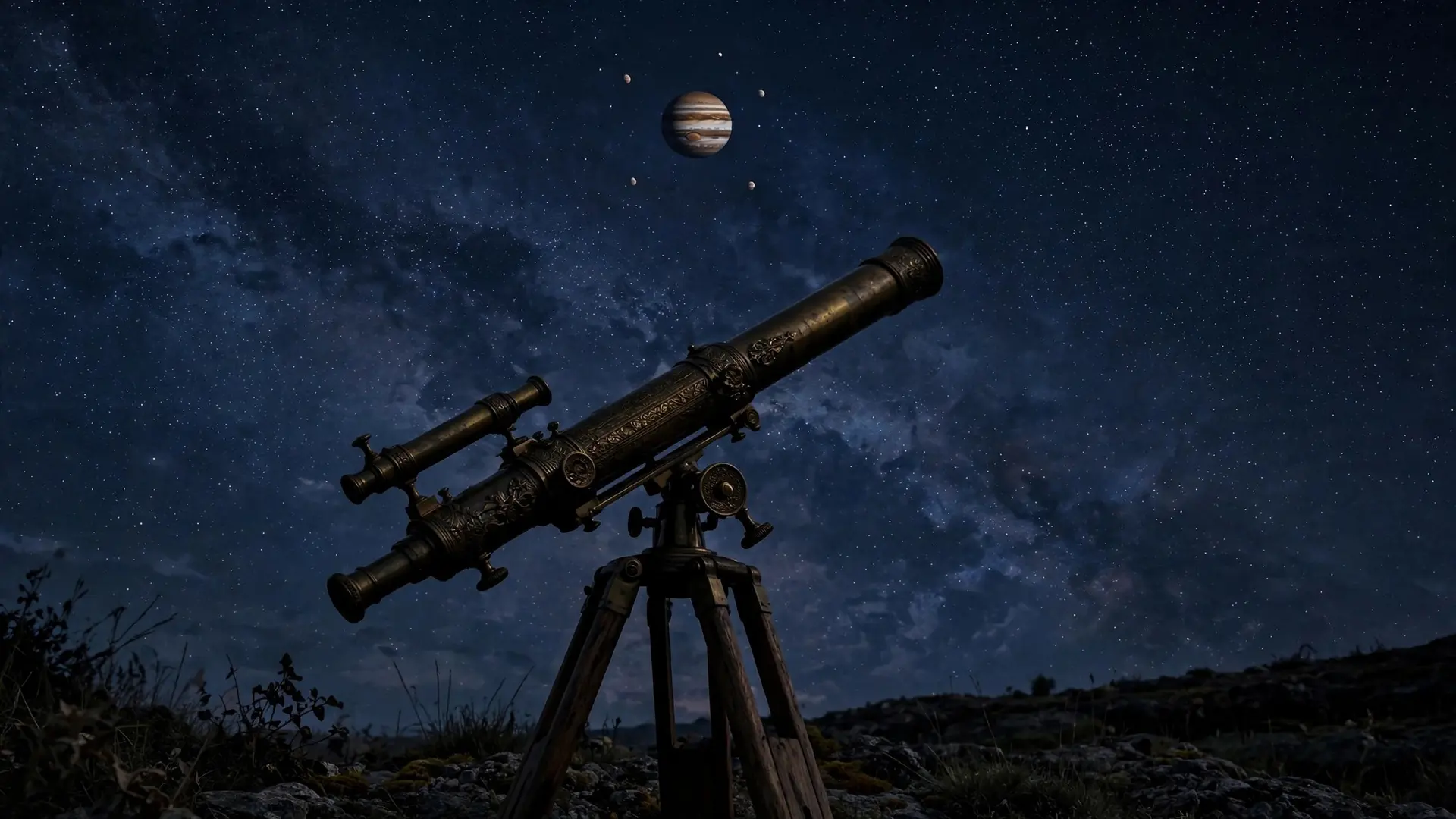
The answer depends on whether you prize calculation or confirmation. Le Verrier supplied the prediction that directly led to the sighting; Adams supplied an independent calculation that never triggered an effective search. Britain did eventually mount one: in mid-1846, after John Herschel argued the mathematics might genuinely reveal a planet, Airy asked James Challis at Cambridge Observatory to hunt the region Adams had indicated. Challis laboriously drew his own star charts and compared them night after night — but he had no up-to-date maps and recognized nothing. In August he unknowingly recorded Neptune twice without recognizing it, and dismissed it. The French initially tried to claim Le Verrier as the sole discoverer and even suggested naming the planet after him. The idea of naming a major planet for a living man found little favor outside France, and the older practice of drawing planetary names from ancient mythology carried the day: the new world became Neptune, for the Roman god of the sea. Credit was eventually shared between Adams and Le Verrier, though historians who later re-examined the documents concluded that Adams's contribution was less substantial than early accounts suggested. There is a ghost in this story too. In December 1612 and January 1613, Galileo Galilei recorded Neptune while observing Jupiter with his small telescope, but logged it as an ordinary fixed star and never followed up. More than two centuries passed before anyone pointed a telescope at it deliberately — and that pointing was guided by mathematics, not chance. Galileo's telescope changed what humans could see; Neptune changed how humans searched.
What did the discovery prove?
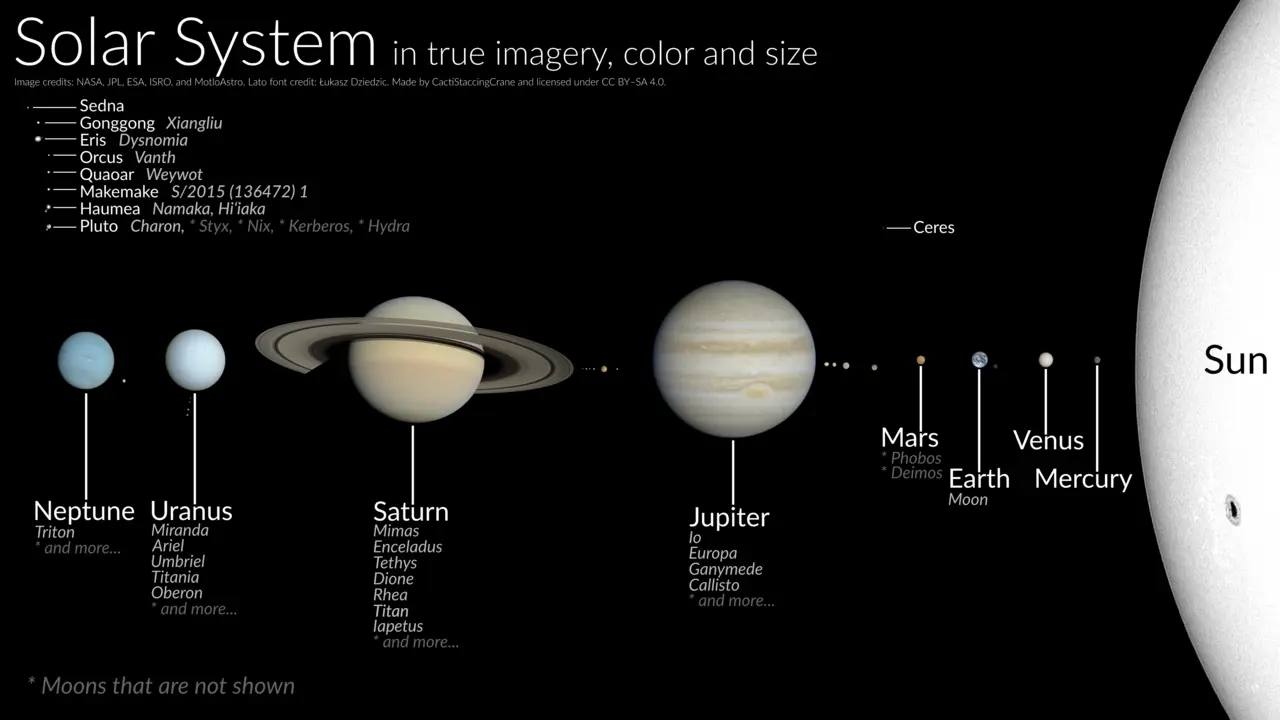
First, it was a triumph for Newton's theory of gravity. The discovery was hailed as proof that the laws worked not only on falling apples and the Moon but on unseen worlds billions of kilometers away — inferred from a wobble and found exactly where predicted. To this day it is the only planet located through mathematical prediction rather than routine sky observation. Second, it killed a fashionable theory. Many astronomers believed in Bode's law, a neat formula predicting planetary distances. It suggested a planet should sit about 38.8 astronomical units from the Sun, beyond Uranus. Neptune turned up at only 30.1 AU — a miss big enough to destroy the law's credibility. The planet itself rewarded the effort. Neptune is the only giant planet invisible to the naked eye, with an apparent magnitude of 7.8 — about one-fifth as bright as the faintest stars visible without help. It circles the Sun at thirty times Earth's distance, taking about 165 years per orbit; in 2011 it completed its first full circuit since the night it was found. Sunlight takes four hours to reach it, so high noon on Neptune looks like dim twilight to human eyes, and just seventeen days after the planet's discovery William Lassell found its largest moon, Triton, on October 10, 1846. Triton circles Neptune backward — the only large moon in the solar system with a retrograde orbit — hinting it may be a captured world. Neptune also turned out to be the solar system's windiest planet, with frozen-methane clouds racing at more than 1,200 miles per hour. The larger lesson endures. Every time astronomers today infer an unseen exoplanet from a star's wobble, they are repeating the method that found Neptune: trust the anomaly, do the math, and point the telescope where the numbers say to look. Edwin Hubble's discovery that the universe itself was expanding would later reshape cosmology entirely, but in 1846 the most shocking revelation was simpler — that the universe could be read, like a puzzle, before it was ever seen.
Frequently asked questions
When was Neptune discovered?
On September 23, 1846, Johann Galle and his assistant Heinrich d'Arrest identified Neptune at the Berlin Observatory, following the calculations of Urbain Le Verrier. They confirmed it was a planet the next night by watching it move against the background stars.
Why is Neptune called the mathematical planet?
NASA notes it is the only planet located through mathematical prediction rather than regular sky-watching. Its position was computed from Uranus's unexplained orbital wobbles before any telescope pointed at the right spot.
Did Galileo see Neptune?
Yes — in December 1612 and January 1613 he recorded it as a fixed star near Jupiter. He never realized it was a planet, so the discovery credit went to the 19th-century astronomers instead.
How accurate was Le Verrier's prediction?
Galle found Neptune within about one degree of the predicted position — roughly twice the apparent width of the full Moon — after a single night of searching.