Finding the Titanic: The 1985 Wreck Discovery
On September 1, 1985, a towed camera found the Titanic at 12,500 feet. How a secret Navy submarine mission, 12 days, and a debris-field gamble solved the hunt.
Key takeaways
- On September 1, 1985, Robert Ballard's towed camera Argo spotted the Titanic's bow about 12,500 feet down in the Atlantic.
- The expedition had only about twelve days of ship time left after Ballard first used Argo on a secret Navy mission to two sunken nuclear submarines.
- Ballard bet the search on the debris field instead of the hull, after the Scorpion survey showed lighter debris drifts into a trail pointing back to the wreck.
- The find settled a great argument: the ship had broken in two, the bow resting upright and intact while the shattered stern lay some distance away.
- The success proved towed-camera telepresence could methodically hunt targets in total darkness, launching modern underwater archaeology.
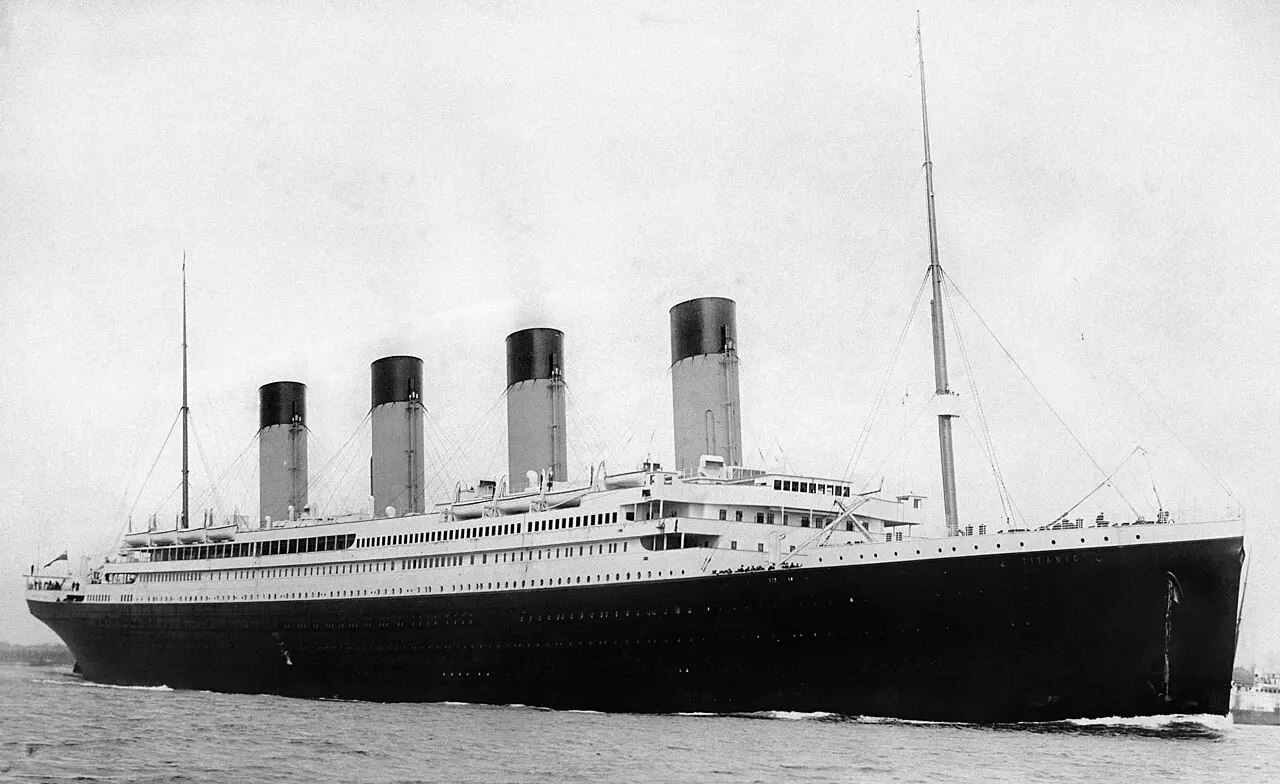
For 73 years, the wreck of the Titanic sat on the Atlantic floor while the world argued about exactly where it was. Dozens of expeditions had tried and failed to find it. Then, in the early hours of September 1, 1985, a remote-controlled camera towed nearly 12,500 feet below the surface drifted over a debris field — and the bow of the most famous ship in history materialized out of the darkness. The discovery was made possible by a secret U.S. Navy mission to two sunken nuclear submarines, a twelve-day window of borrowed ship time, and a gamble that paid off: stop looking for the ship, and start looking for its garbage.
The mission that wasn't really about the Titanic
The story begins with oceanographer Robert Ballard of the Woods Hole Oceanographic Institution. Ballard had been hunting the Titanic since the late 1970s — his first attempt, in 1977, ended when the drilling pipe on his sonar vessel snapped. In 1982 he approached the U.S. Navy with a proposal: let him test Argo, a deep-towed underwater vehicle with cameras, lights, and sonar that could transmit live video from the abyss, by searching for the Titanic. The Navy wasn't interested in the liner. It was very interested in two of its own lost nuclear submarines: the USS Thresher, which sank during deep-diving tests in 1963, and the USS Scorpion, lost in 1968. The Navy struck a deal. Ballard could develop and test Argo with Navy funding, but only if he first used it to inspect the two submarine wrecks — assessing the condition of their nuclear reactors and checking whether the Scorpion showed any sign of Soviet involvement in its loss. Only with whatever ship time remained could he go looking for the Titanic. The submarine work was classified; the Titanic hunt, Ballard later explained, made useful cover for ships and cameras operating in the mid-Atlantic under military sponsorship. The Navy got its answers: the reactors were sitting safely on the ocean floor with no environmental impact, and the survey data pointed to a piping failure on the Thresher and a flooding-and-implosion sequence on the Scorpion — with no evidence of external attack.
The submarine surveys also gave Ballard the insight that would crack the Titanic search. Studying the Scorpion site, he noticed how a wreck spreads: heavy sections sink straight down, while lighter debris drifts on deep currents, leaving a long trail. Find the trail, and it points back to the source.
Twelve days and a debris-field gamble
By the time the Navy missions wrapped up, Ballard had roughly twelve days of ship time left to find a ship that had eluded everyone for seven decades. The search area was enormous, defined only by the Titanic's approximate distress coordinates from 1912 — a box of seafloor hundreds of miles off Newfoundland that earlier hunters had swept with no luck. This time the expedition had an edge: a joint American-French operation. The French vessel Le Suroît, led by oceanographer Jean-Louis Michel, spent weeks scanning the seafloor with side-scan sonar, ruling out vast tracts of empty bottom. Then the American research ship Knorr arrived on August 22, towing Argo just above the ocean floor, and began mowing back and forth in tight lanes across the most promising ground. Crucially, Ballard changed tactics. Rather than sweeping for the hull itself — a single target a few hundred meters long on a seafloor the size of a small country — his team swept for the debris field. His bet was that the Titanic had broken apart as it sank (survivor accounts had suggested as much), scattering boilers, coal, crockery, and fittings across miles of bottom. That trail would be far bigger and more detectable than the ship alone — exactly as the submarine surveys had taught him. The Argo skimmed the abyssal plain at walking pace, its floodlights cutting through absolute darkness, video feeding live to monitors aboard the Knorr.
September 1, 1985: the boiler, then the bow
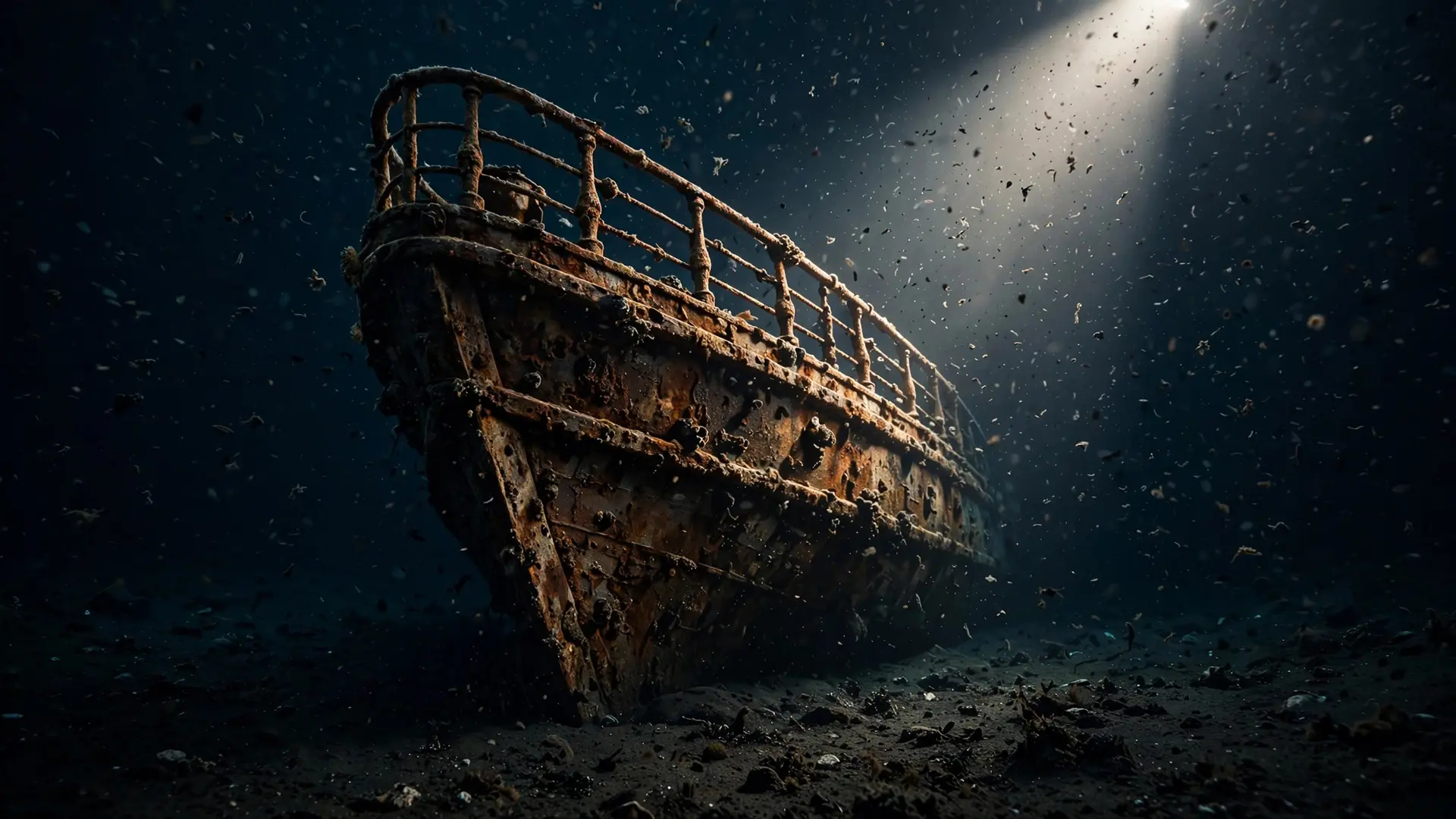
At around 12:48 a.m. on September 1, the debris started appearing on the monitors — small objects scattered across the silt. Then Argo passed over a large, unmistakable shape: one of the Titanic's massive boilers, identical to those photographed aboard the ship in 1911. A short time later, the cameras revealed the ship itself — the bow, upright and remarkably intact, its forward railings still standing, looming out of the dark at roughly 3,800 meters (12,500 feet) down.
The discovery settled one of the great arguments about the disaster in a single night. The ship had indeed broken in two: the bow sat in one piece, while the stern lay shattered from its violent descent some distance away, with a debris field of personal effects — shoes, suitcases, bottles, furnishings — strewn between them. For a full account of the night the ship went down, see the story of the Titanic itself; for the 1985 expedition, what matters is that the wreck was no longer a legend. It was a documented site. Ballard tried to keep the exact coordinates secret, hoping to protect the wreck from scavengers, but the position leaked quickly. He himself treated the site as a cemetery and refused to remove artifacts. A year later he returned in the manned submersible Alvin and descended to the wreck in person. Salvage expeditions by others soon followed, recovering thousands of artifacts — a controversy Ballard opposed for years, arguing that a mass grave should not be strip-mined. In 2012, exactly a century after the sinking, the wreck gained formal protection under a UNESCO convention on underwater cultural heritage.
What the discovery actually changed
The finding of the Titanic is often told as a romance: the lost ship, the explorer, the ghostly bow. The deeper story is technological. Before Argo, the deep ocean was effectively opaque — shipwrecks were found by accident or by divers at shallow depths, and the abyssal plains were blank space. The Titanic search proved that a towed camera system could methodically hunt a target in total darkness under crushing pressure, across a search box hundreds of miles wide. It was a proof of concept for underwater archaeology as a discipline, and it launched Ballard's career as the century's most famous deep-sea explorer: the German battleship Bismarck, the passenger liner Lusitania, John F. Kennedy's PT-109, and the aircraft carrier Yorktown all followed. It also rewrote what the deep sea is. Argo was built on a principle Ballard called "telepresence" — being there without being there, through live video from the bottom. That principle now underpins everything from deep-ocean mapping and the hidden water systems beneath Earth's surface to modern remotely operated vehicles that explore trenches no human could ever visit. The Titanic was found because a machine learned to see in the dark, and the machine stayed behind to become an industry. Forty years on, the wreck is slowly dissolving — iron-eating bacteria are consuming the hull, and expeditions race the decay to document what's left. But the deeper legacy endures: on September 1, 1985, humanity proved it could reach down nearly four kilometers through black water and find a single ship. The ocean has been hiding things ever since. We just got much better at asking it questions.
Frequently asked questions
Why was a secret Navy mission involved in finding the Titanic?
The Navy funded Ballard's deep-towed camera Argo only if he first inspected the sunken nuclear submarines Thresher and Scorpion. The Titanic hunt ran on the leftover ship time.
How did Ballard decide to search for debris instead of the ship itself?
Surveying the Scorpion wreck taught him that heavy sections sink straight down while lighter debris drifts on deep currents, leaving a long trail that points back to the source.
What did the discovery prove about how the Titanic sank?
It confirmed survivor accounts that the ship had broken in two: the bow sat in one piece while the shattered stern lay some distance away, with a debris field of personal effects strewn between them.