Hessdalen Lights: Norway's 40-Year Unexplained Sky Mystery
Glowing orbs have drifted through Norway's Hessdalen valley for 40 years, tracked by radar and spectrometers. What four decades of data actually found.
Key takeaways
- The Hessdalen lights are glowing orbs seen along a 12-kilometre stretch of central Norway's Hessdalen valley, reported since at least the 1930s.
- Sightings peaked between December 1981 and mid-1984 at 15–20 per week, prompting the launch of the scientific Project Hessdalen in 1983.
- Radar has tracked the lights at speeds up to 30,000 km/h; spectrometers and magnetometers confirm they are real physical phenomena.
- Leading theories include dusty plasma from radon decay, combustion of metallic dust such as scandium, and piezoelectric stress in quartz-rich rock.
- An automatic measurement station has monitored the valley continuously since 1998, yet no single explanation has achieved consensus.
For more than four decades, glowing orbs have drifted, hovered, and occasionally shot across a remote valley in central Norway — and unlike almost every other unexplained phenomenon on Earth, this one has been watched the entire time by scientists armed with radar, cameras, magnetometers, and spectrometers. The Hessdalen lights are real, they are measured, and they remain unexplained.
What exactly are the Hessdalen Lights?
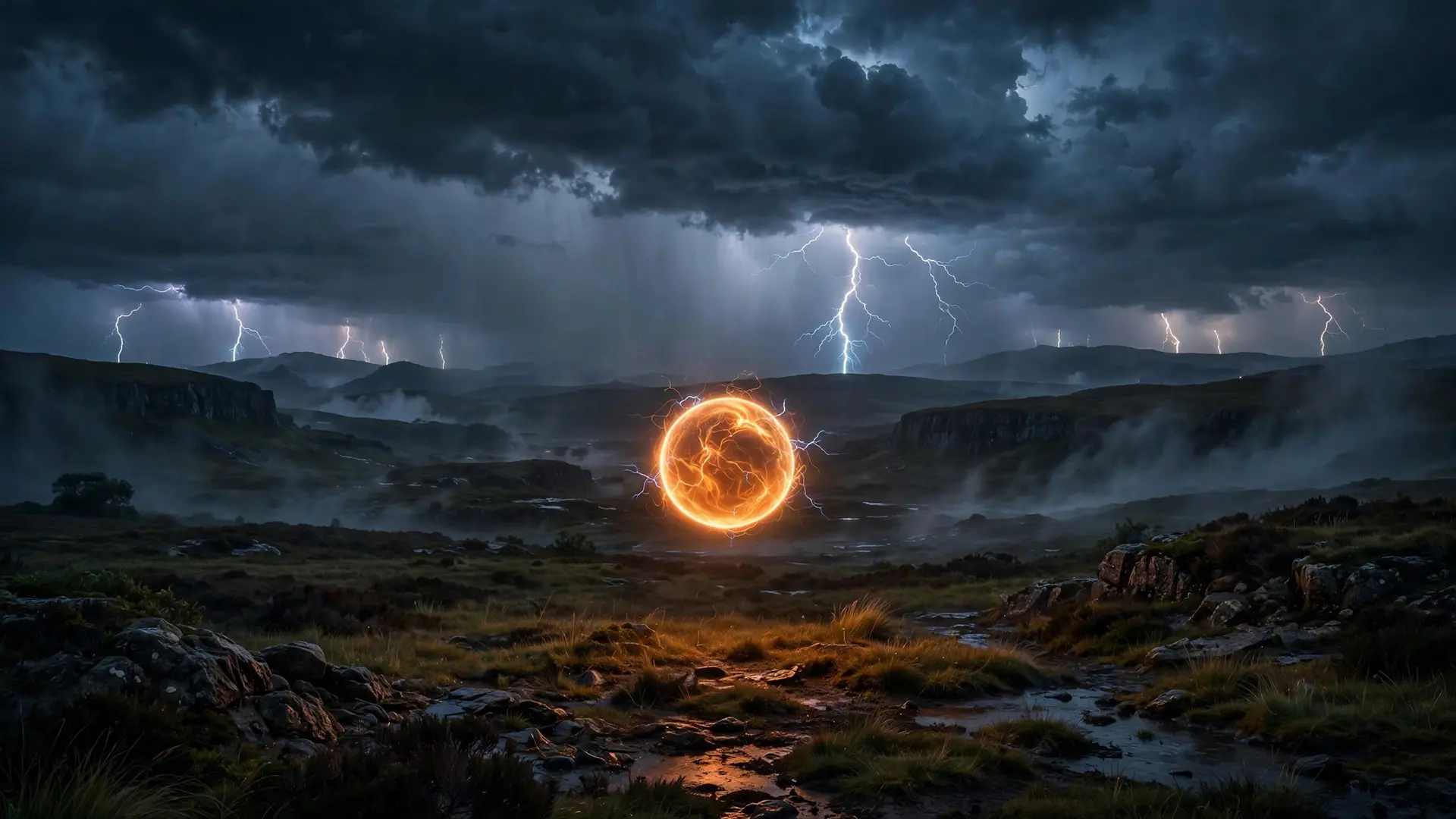
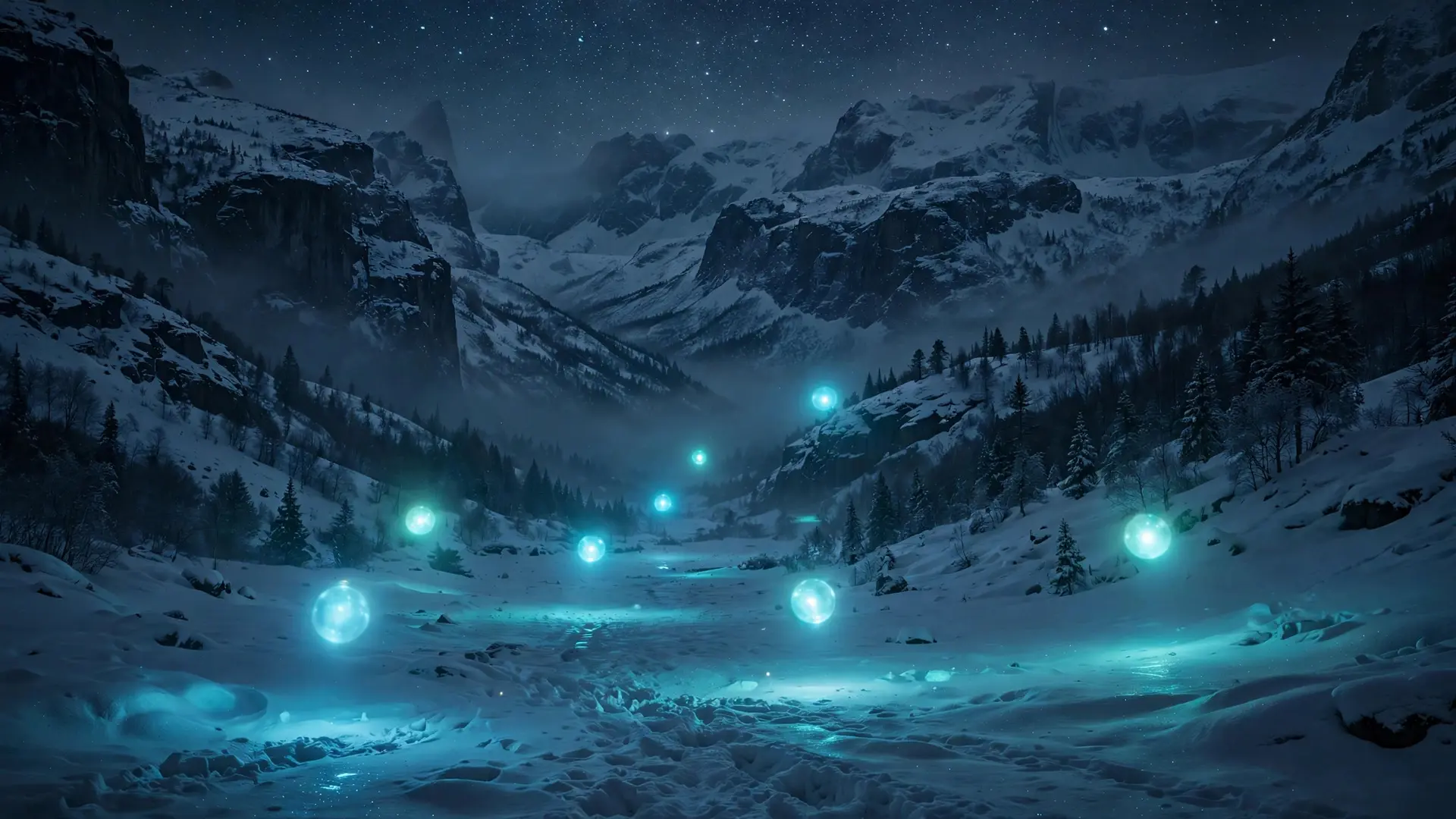
The lights appear along a roughly 12-kilometre (7.5-mile) stretch of the Hessdalen valley in Holtålen municipality, in rural central Norway. They typically show up as bright white, yellow, or red glowing orbs, though blue flashes have also been reported, and they can appear by day as well as by night. Some are brief flashes lasting only a few seconds; others hover or drift slowly for well over an hour. Sometimes the lights move with astonishing speed; at other times they sway gently back and forth or hang motionless in mid-air. They have been known to split into smaller lights, merge back together, and appear in formations holding fixed distances from one another. Unusual lights were reported in the region as far back as at least the 1930s — decades before anyone thought to point instruments at them.
When did the valley become famous for them?
Everything changed in the winter of 1981. From December 1981 through mid-1984, the valley experienced an extraordinary wave of activity: locals reported sightings 15 to 20 times per week. The phenomenon drew overnight tourists, journalists, and — crucially — scientists. In 1983, the Norwegian research organizations UFO-Norge and UFO-Sverige founded Project Hessdalen, a systematic scientific investigation rather than a skywatching hobby. The first major field campaign ran from January 21 to February 26, 1984, and logged 53 confirmed sightings in just 35 days. Researchers from the University of Oslo, the University of Bergen, and Østfold University College ran the campaign with an unusually complete arsenal for the era: radar, infrared viewers, spectrum analyzers, magnetometers, seismographs, and high-resolution cameras. As project founder Erling Strand later put it, the instruments left no room for doubt — the lights show up on radar, they carry measurable electromagnetic signatures, and they are real physical phenomena, not something people are imagining. The project's long-time driving force has been Erling Strand, an electrical engineering researcher at Østfold University College, who has kept the scientific program alive for decades.
What have the instruments actually measured?
This is what sets Hessdalen apart from nearly every other unexplained-lights story on the planet: the data. Radar systems have recorded solid returns — meaning something physical is genuinely up there — and tracked targets accelerating to speeds of up to 30,000 kilometres per hour (about 8,500 metres per second). Spectrum analyzers captured unusual emission signatures; magnetometers registered fluctuations in the local magnetic field during appearances; radio receivers picked up emissions in the very-low-frequency range. And no correlation was found with aircraft, satellites, or any known light source. The monitoring only grew more sophisticated. A volunteer effort called the Triangle Project recorded the lights in 1997–1998, at one point capturing them arranged in a pyramid shape that bounced up and down. Then, in 1998, the valley gained the Hessdalen Automatic Measurement Station (AMS), which watches the sky around the clock with cameras, magnetometers, and radio sensors. A programme called EMBLA later brought together scientists and students from Østfold University College and the Italian National Research Council. By 2010 the sighting rate had dwindled to just 10 to 20 per year — but the station keeps watching, making Hessdalen one of the longest-running instrumented studies of an unexplained phenomenon anywhere in the world.
What do scientists think causes them?
No single theory has won scientific consensus, but the serious hypotheses are all geophysical rather than extraterrestrial:
- Dusty plasma. Italian physicist Massimo Teodorani proposed that radon gas decaying naturally in the valley ionizes mineral dust in the air, letting charged particles self-organize into glowing plasma structures known as Coulomb crystals.
- Metallic dust combustion. Researchers analyzing valley air samples identified traces of the rare metal scandium, leading to a hypothesis — developed by Jader Monari and colleagues — that the lights are tiny combustion events involving airborne metallic dust.
- Piezoelectricity. The valley's rocks are rich in quartzite, and quartz generates electric charges when placed under mechanical stress. Some researchers think tectonic pressure in the valley could produce discharges visible as light.
- The "natural battery." In 2014, Monari proposed that the two sides of the valley act like giant electrodes separated by the Hesja river, forming a natural battery that periodically discharges as light.
Each idea explains part of the data — the spectra, the magnetic fluctuations, the hovering — but none comfortably explains all of it, especially those extreme radar speeds.
Are the Hessdalen Lights just UFOs?
It is a fair question, and the history makes it awkward for skeptics: the scientific investigation was founded by UFO organizations. Project Hessdalen was launched in 1983 by UFO-Norge and UFO-Sverige, Norwegian and Swedish UFO research groups. But what their instruments found points toward geology, not visitors. Four decades of radar tracks, spectra, and magnetometer readings describe something physical and local: lights that hover for an hour, split and merge, and carry electromagnetic signatures tied to the valley itself. Every leading hypothesis is geophysical. Ionized dust from radon decay, combusting metallic dust, quartz piezoelectricity, a valley-scale natural battery. As project founder Erling Strand put it, the instruments leave no room for doubt that the lights are real physical phenomena. So the UFO question is what brought scientists into the valley, but the data they carried home belongs to earth science. The mystery is genuine; visitors from elsewhere are not required to explain it.
Why hasn't science solved it yet?
Partly, it is a numbers game: with only a handful of sightings a year, catching a full event with every instrument running is genuinely hard. Partly, the behavior itself resists tidy categories — lights that hover motionless for an hour and then accelerate to hypersonic speeds don't fit neatly into any single chapter of a physics textbook. And partly, the phenomenon may simply be waiting for better tools: as all-sky cameras, drone-based sensors, and automated detection get cheaper and more sensitive, the valley may yet give up its secret. But the most remarkable thing about Hessdalen is that the mystery is being measured rather than mythologized. While most unexplained phenomena live on in anecdote and blurry photographs, the Hessdalen lights live on in radar logs, spectra, and magnetometer traces — four decades of calibrated data still waiting for a theory that fits. It makes Norway's valley of light the strangest natural laboratory on Earth: quieter than the famous aurora that dances across the same northern skies, more methodical than the lore of the Bermuda Triangle, and — like the Wow! signal or the Tunguska explosion — a reminder that the universe still keeps a few files marked unsolved even now.
Frequently asked questions
How fast do the Hessdalen Lights move?
Radar has recorded returns moving at up to 30,000 km/h (about 8,500 metres per second). But many lights simply hover or drift slowly for minutes or even hours, so the behavior varies enormously.
Can I still see the Hessdalen Lights today?
Yes, though they are much rarer than during the 1980s peak: by 2010 sightings had fallen to roughly 10–20 per year, mostly in the winter months. The automatic measurement station still monitors the valley around the clock.
What is the most likely scientific explanation?
There is no consensus. The leading hypotheses are all geophysical: dusty plasma formed from radon decay, combustion of airborne metallic dust, piezoelectric discharges from quartz-rich rock, and a 'natural battery' model of the valley itself.
Why do scientists take this phenomenon seriously?
Because unlike most unexplained sightings, the Hessdalen lights have been recorded on radar, spectrometers, and magnetometers. The instruments prove they are real physical phenomena with measurable properties, not misperceptions.
Sources
- Project Hessdalen, Project Hessdalen (official site)
- Contribution of VLF electromagnetic survey to the investigation of Hessdalen lights (Norway), Journal of Applied Geophysics
- Identifying the Unidentified - The Hessdalen Light Phenomenon, Norway, NaturPhilosophie
- Hypothesis to explain the Hessdalen Phenomenon - Hessdalen Germany, Hessdalen Germany research site