Why Flamingo Feathers Turn Pink: Diet, Carotenoids, Color
Flamingos hatch in drab gray and white; their famous pink comes from carotenoid pigments in algae and brine shrimp - without that diet, they fade back to white.
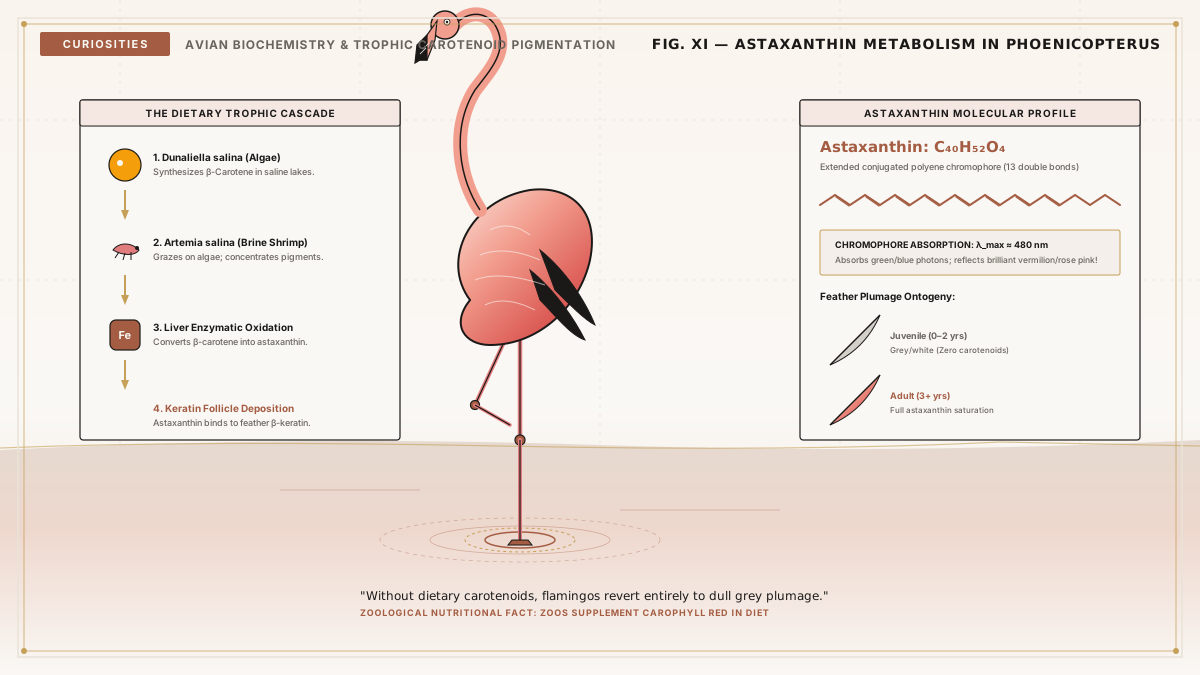
Among the animal kingdom's visual spectacles, few sights rival the breathtaking pink expanse of a flamingo flamboyance wading across an African soda lake or an Andean salt flat. The radiant salmon, crimson, and coral hues of their plumage are so distinctive that the bird's scientific genus—Phoenicopterus—derives from the ancient Greek for "crimson-feathered."
Yet, if you observe a newly hatched flamingo chick nestled in its volcanic mud mound, you will find no trace of coral or pink.
Flamingo chicks emerge from the egg covered in drab, downy feathers of muted dove-gray and chalky white. If a flamingo were raised in a sterile laboratory on a conventional avian diet of grains, seeds, and insects, it would remain dull white and grayish-brown for its entire forty-year life.
The flamingo's brilliant coloration is not written into its structural plumage genetics. It is a striking example of exogenous pigmentation: a biochemical transformation where toxic aquatic prey is metabolized into radiant cosmetic plumage.
"A flamingo is quite literally what it eats: an elegant biological filter turning microscopic red algae into pink feathers through liver metabolism." — Dr. Alan Feduccia, The Origin and Evolution of Birds (1999)
Hypersaline Sanctuaries: Thriving in Caustic Waters
To understand why flamingos turn pink, one must first understand where they live. Flamingos do not inhabit tranquil freshwater ponds. They congregate in some of the most hostile, extreme aquatic environments on planet Earth: alkaline soda lakes and hypersaline lagoons (such as Lake Natron in Tanzania or Laguna Colorada in Bolivia).
These volcanic lakes possess caustic chemical profiles:
- pH levels exceeding 10.5—concentrations of sodium carbonate strong enough to burn human skin and blind mammals.
- Water temperatures frequently exceeding 50°C (122°F).
- Salinity levels up to twice as salty as the open ocean.
Virtually no fish or predatory birds can survive in these caustic cauldrons. Flamingos evolved specialized thick, scaly skin on their legs that resists chemical burns, and specialized salt glands near their beaks that excrete excess sodium. By colonizing an environment where competitors die, flamingos unlocked an exclusive, inexhaustible food supply.
Caustic Soda Lake (pH > 10)
  └── Cyanobacteria & Dunaliella Salina Algae (Synthesize Beta-Carotene)
       └── Brine Shrimp & Insect Larvae (Graze on Algae, Concentrate Pigment)
            └── Flamingo Ingestion (Filter-Feeding Beak)
                 └── Liver Enzyme Cleavage (Transforms to Canthaxanthin)
                      └── Deposition into Growing Feather Follicles
The Carotenoid Cascade: The Chemistry of Color
The primary organisms capable of flourishing in caustic soda lakes are photosynthetic microalgae (particularly the single-celled green alga Dunaliella salina) and dense mats of purple cyanobacteria (Arthrospira platensis, commonly known as spirulina).
To protect their delicate internal organelles from intense solar ultraviolet radiation reflected off the shallow salt pans, these microscopic algae synthesize massive quantities of organic pigments called carotenoids—primarily beta-carotene (the identical red-orange pigment that colors carrots and pumpkins).
Small brine shrimp (Artemia salina) and aquatic fly larvae graze on the algae, absorbing and concentrating the carotenoids into their own translucent bodies.
When flamingos wade through the water, they tilt their curved heads upside down, pumping water through their specialized lamellar beaks. The comb-like keratin lamellae act as microscopic sieves, straining thousands of brine shrimp, larvae, and algae filaments from the water each minute.
Liver Metabolism: From Dietary Carotene to Canthaxanthin
Once ingested, the flamingo's internal biochemistry takes command:
- Digestive Breakdown: In the gastrointestinal tract, digestive lipids dissolve the lipid-soluble carotenoids.
- Hepatic Enzymatic Cleavage: The pigments travel to the flamingo's liver, where specialized liver enzymes metabolize beta-carotene into complex keto-carotenoid derivatives:
- Canthaxanthin (a deep crimson keto-carotenoid)
- Astaxanthin (a brilliant scarlet-pink pigment)
- Phoenicoxanthin
- Follicle Deposition: The liver secretes these synthesized pink pigments into the bloodstream. When a flamingo molts and grows new feathers, the developing feather follicles are supplied with rich blood vessels. The hydrophobic pigments dissolve directly into the liquid keratin structure of the growing feather shafts and barbs.
- Permanent Solidification: As the feather reaches maturity, the blood vessels wither away, leaving the keratinized matrix permanently dyed in salmon-pink tones.
The intensity of a flamingo's plumage correlates directly with species and diet. The American flamingo (Phoenicopterus ruber), which consumes a rich diet of brine shrimp in the Caribbean, displays intense, radiant vermilion feathers. The Lesser flamingo (Phoeniconaias minor) of East Africa, which feeds primarily on microscopic spirulina, displays a delicate, powdery rose-pink.
Feather Bleaching and the Avian Cosmetic Routine
The coloration of a flamingo's plumage is not a permanent, static state.
Carotenoid pigments are unstable organic molecules. Exposed to the blazing equatorial sun and harsh ultraviolet rays of open soda lakes, the pigments oxidize and degrade over time. If a flamingo stops consuming carotenoid-rich prey, its feathers gradually fade to dull white.
Remarkably, evolutionary biologists have discovered that flamingos actively engage in avian cosmetic makeup application:
- At the base of the tail sits the uropygial gland (the preen gland), which secretes an oily protective wax used to waterproof feathers.
- Flamingos concentrate high volumes of canthaxanthin directly into their preen wax.
- During courtship season, flamingos rub their heads and necks over the preen gland, and then deliberately smear the rich reddish-orange oil across their neck and chest feathers to artificially enhance their coloration.
Color as a Signal of Evolutionary Fitness
Why did evolutionary natural selection favor such a calorically intensive pigmentation pathway?
In flamingo society, vibrant coloration serves as an honest biological billboard of health and genetic fitness:
- A brightly colored flamingo proves that it is an efficient, skilled filter-feeder capable of acquiring superior nutrition in harsh lakes.
- A vibrant bird demonstrates a robust liver capable of neutralizing caustic toxins and processing complex metabolic pathways without illness.
- Birds weakened by parasites, avian diseases, or malnutrition exhibit pale, faded plumage.
During the breeding season, flamingos perform synchronized courtship dances involving thousands of individuals marching in unison. Pale flamingos are systematically rejected by prospective mates. Only individuals with saturated, radiant plumage are selected for nesting partnerships, ensuring that only the most resilient genes are passed to the next generation.
Key Takeaways
- Dietary Origin: Flamingos are born gray and white; their pink coloration is acquired entirely by metabolizing carotenoid pigments from algae and brine shrimp.
- Caustic Habitats: Flamingos thrive in alkaline soda lakes (pH > 10.5) that exclude predators, where microalgae produce carotenoids to shield themselves from UV radiation.
- Hepatic Alchemy: Flamingo liver enzymes metabolize dietary beta-carotene into specialized keto-carotenoids (canthaxanthin and astaxanthin) deposited into growing feather keratin.
- Cosmetic Grooming: Flamingos apply carotenoid-rich preen gland oil to their feathers like cosmetic makeup, using intense plumage to advertise health and secure mates.
Zoological Studies & Biochemical Literature
- Fox, Denis L. Animal Biochromes and Associated Biochemical Colors. University of California Press, 1976.
- Amat, Juan A., et al. "Greater flamingos use preen gland secretions as make-up." Behavioral Ecology and Sociobiology, vol. 65, no. 4, 2011, pp. 665–673.
- Britton, George, et al., editors. Carotenoids: Volume 5: Nutrition and Health. Birkhäuser Basel, 2009.
- Brown, Leslie H. The Mystery of the Flamingos. East African Publishing House, 1973.