Why Are Manhole Covers Round? The Engineering Answer
A round cover cannot slip through its own opening, which keeps workers and drivers safe. The full story adds lathes, heavy lids and a clever geometry trick.

Key takeaways
- The main reason is safety: a round cover cannot fall through its own round opening, no matter how it is tilted.
- A circle fits its frame at every rotation, and a heavy lid can be tipped onto its edge and rolled away.
- Cylindrical tunnels resist the squeeze of surrounding soil better than box-shaped shafts, which is why the hole itself is round.
- Round covers are not universal — square, rectangular and even triangular covers exist in a few places.
Manhole covers are round because a round cover cannot fall through its own round opening, which is the single most important reason. Beyond that safety answer, the circle is cheaper to cast, easier to move, and fits its frame at any rotation. Together these add up to one of the most quietly sensible designs in any city.
Why can't a round cover fall into the hole?
Picture a square lid sitting over a square hole. If someone tilts the lid and turns it corner-first, the diagonal of the square is longer than the side, but the geometry works against you: angled and rotated, a square lid can become narrower than the opening and drop straight down the shaft. The same problem applies to rectangles and ovals. A circle has no such weak angle. It is the same width in every direction, so no matter how you twist, tilt or flip a round cover, it stays wider than the circular opening beneath it. Each cover rests on a slightly smaller ring — a lip — built into the frame, and the lid simply cannot pass through. A contact at the New York City Department of Environmental Protection summed it up this way: "The principal reason that manhole covers are round is so they won't fall into the manhole." That matters more than it sounds. A falling lid means an open shaft in the middle of traffic, and a cover that tips into the hole leaves a pit deep enough to swallow a car wheel or a pedestrian. Given that these lids weigh roughly 200 to 300 pounds, anything that keeps them from going anywhere they shouldn't is worth having.
Is the circle the only shape that can't fall in?
No, and this is where the question gets interesting. Mathematicians point out that any shape of constant width — one that measures the same across no matter which direction you measure — shares the circle's best trick. The Reuleaux triangle, a rounded three-sided figure, would also be unable to drop through its own opening.
The catch is manufacturing. A triangle with bulging sides is far more awkward to cast, machine and finish than a simple disc. The round cover wins not because it is the only shape that works, but because it is the easiest shape that works. The lip under the cover adds another layer of forgiveness: since the opening is smaller than the lid itself, other shapes could be made safe too — but none of them are as cheap and simple to produce at scale. This nuance is exactly why Microsoft used the question in interviews in the first place. It was never a test of knowing the answer; it was a psychological assessment of how a candidate reasons through a problem with several valid answers.
Why is the hole itself round?
The round lid follows the round hole, and the hole is round for reasons buried underground. A cylindrical tunnel handles the pressure of the surrounding earth better than a square or rectangular shaft. The soil pushes inward from all sides, and a curve distributes that compression evenly around the ring instead of concentrating it at corners. Engineers sometimes compare it to an eggshell, which is famously hard to crush precisely because its curve has no weak point. Digging helps too. Boring or excavating a circular shaft is simply more natural than carving out square corners underground, so utility tunnels, sewers and access shafts have been round since long before anyone thought to interview software engineers about them. The earliest ancestors of the manhole cover tell the same story in reverse. Before modern sewers, buildings burned coal delivered through coal holes in the sidewalk — and those covers came in all shapes: square, rectangular, hexagonal. But coal-hole covers were small, because no person ever needed to fit through them. Once cities needed openings a worker could climb down, the round shaft became standard, and the round cover followed.
What do workers and builders get from the circle?
Start with weight. At several hundred pounds, a cast-iron lid is not something you carry — it is something you manage. A round cover can be tipped onto its edge and rolled a short distance, which is far easier than dragging a square plate with corners that catch. Most covers have small pick holes: a worker inserts a hooked tool into the patterning and levers the lid up.
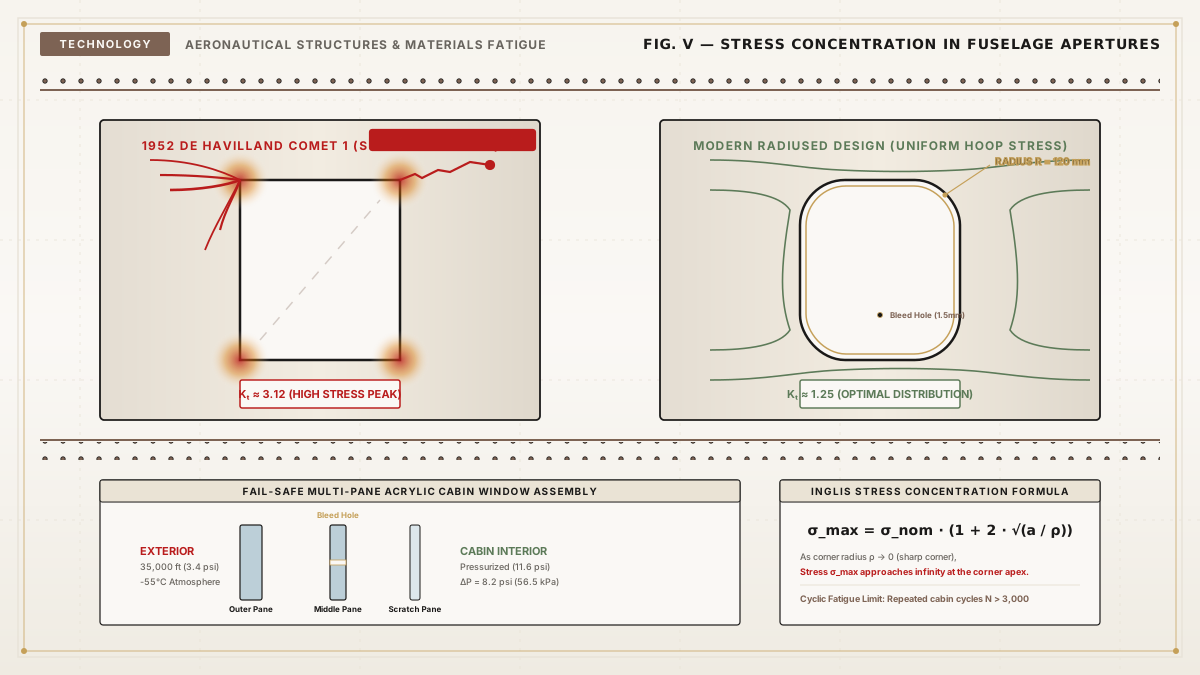
Then there is fitting it back. A round lid drops into its frame at any rotation, while a square or hexagonal one has to be lined up corner to corner. That saves real effort when a crew is closing a shaft in the rain at midnight. Manufacturing favors the circle as well. The frame and the cover both need flat, true contact surfaces, or traffic rumbling overhead will rattle the lid loose. Machinists can true up a round casting on a lathe, spinning it to a precise flat surface — something far harder to do evenly with a many-sided plate. And because a circle encloses the most area for the least perimeter, a round lid uses less cast iron than any other shape that still lets a person pass through. Less metal means lower cost, which matters when a city like New York maintains on the order of 600,000 covers across its agencies. There is one more quiet advantage: no corners means no stress points. Traffic loads spread around the ring instead of hammering at sharp edges, which is a cousin of the reason airplane windows are rounded instead of square.
Do any covers break the rules?
Yes, and they prove the rule. Square and rectangular covers exist in many cities, usually where the frame beneath is already rectangular for equipment access. And for a time, Nashua, New Hampshire was famous for triangular covers, with each triangle's point indicating the direction of flow in the pipes below. The city is phasing them out, though, because the triangles were made by a local foundry and are not large enough for modern safety standards — and no manufacturer can be found to make bigger ones. Heavy as they are, covers do occasionally go missing. When scrap metal prices climb, thieves pry them up for the cast iron, leaving open shafts behind — one more argument for a shape that is hard to tip, hard to lose, and impossible to drop through its own hole. The round manhole cover looks like a habit, but it is really an accumulation of good decisions: geometry that refuses to fail, a tunnel shape that handles the earth's weight, and a lid that any crew can roll, drop and forget. Sometimes the best engineering answer is the one that has been sitting underfoot the whole time — much like the colors of the traffic light overhead, which encode a long history of trial and error of their own.
Frequently asked questions
Why can't a round manhole cover fall through the hole?
A circle has the same width in every direction, so a round lid is always wider than its round opening. A square lid turned diagonally can be narrower than its hole and slip through.
Who first asked why manhole covers are round?
Microsoft made the question famous by using it in job interviews, originally as a psychological assessment of how candidates handle a question with more than one correct answer.
Are all manhole covers round?
No. Many covers are square or rectangular, and the city of Nashua, New Hampshire once used triangular covers that pointed in the direction of the flow below.