CRISPR Explained: The Gene-Editing Tool Rewriting Life
From a bacterial immune system to the first approved gene-editing medicine, here is how CRISPR rewrites DNA — and what it still cannot do today.
Key takeaways
- CRISPR/Cas9 began as a bacterial immune system that cuts viral DNA; in 2012 it was reprogrammed to cut any chosen DNA sequence.
- Casgevy, the first CRISPR therapy approved in late 2023, edits patients' blood stem cells outside the body to treat sickle cell disease.
- The FDA extended Casgevy to children as young as 2 in July 2026, since earlier treatment can prevent lasting organ damage.
- CRISPR still struggles with delivering edits to whole-body tissues, off-target effects, and the roughly $2.2 million price tag.
CRISPR is a gene-editing tool that lets scientists rewrite the code of life with a precision that was unthinkable a decade ago. It already underpins an approved medicine that can free young children with sickle cell disease from a lifetime of pain. Yet for all its power, CRISPR cannot fix every disease — and the gap between what it can do in a lab and what it can do in a living human is one of the defining stories of modern medicine.
What Exactly Is CRISPR, and Where Did It Come From?
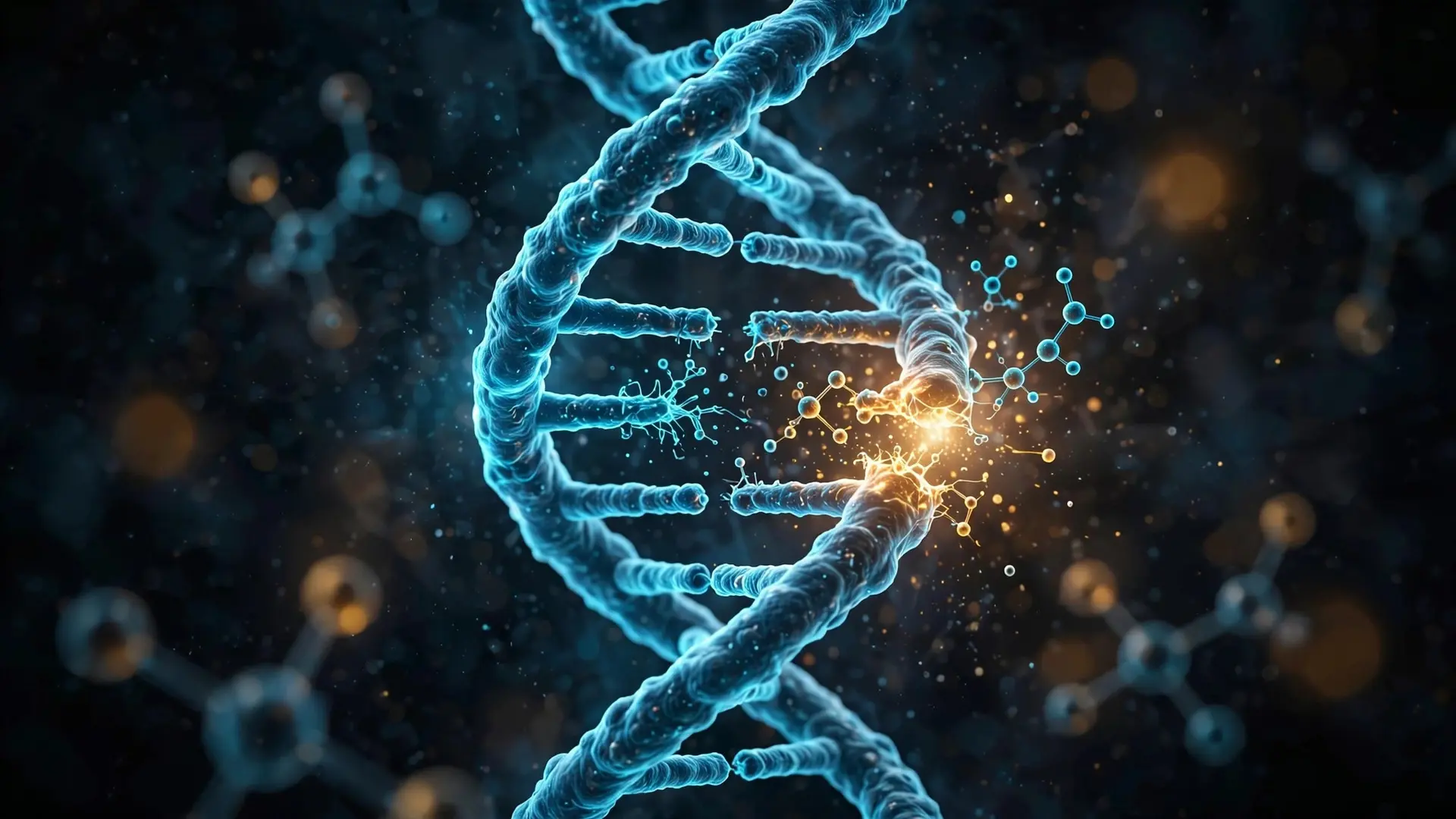
CRISPR is short for "clustered regularly interspaced short palindromic repeats," which is a mouthful that describes repeating DNA patterns found in bacteria. These patterns are part of an ancient immune system: when a virus attacks a bacterium, the microbe snips a piece of the invader's DNA and files it in the CRISPR array like a most-wanted poster. If that virus ever returns, the bacterium uses the stored fragment to recognize and shred the viral genome. Nature, in other words, invented programmable DNA scissors more than a billion years before humans got the idea. Turning that bacterial trick into a tool took two decades of detective work, from odd DNA repeats in a salt-marsh microbe to a 2012 test-tube experiment by Emmanuelle Charpentier and Jennifer Doudna that showed the scissors could be reprogrammed to cut any DNA at a chosen site. That story, and the 2020 Nobel Prize in Chemistry it earned them, is told in how CRISPR was discovered. This article is about the tool itself.
How Do the "Genetic Scissors" Actually Cut DNA?
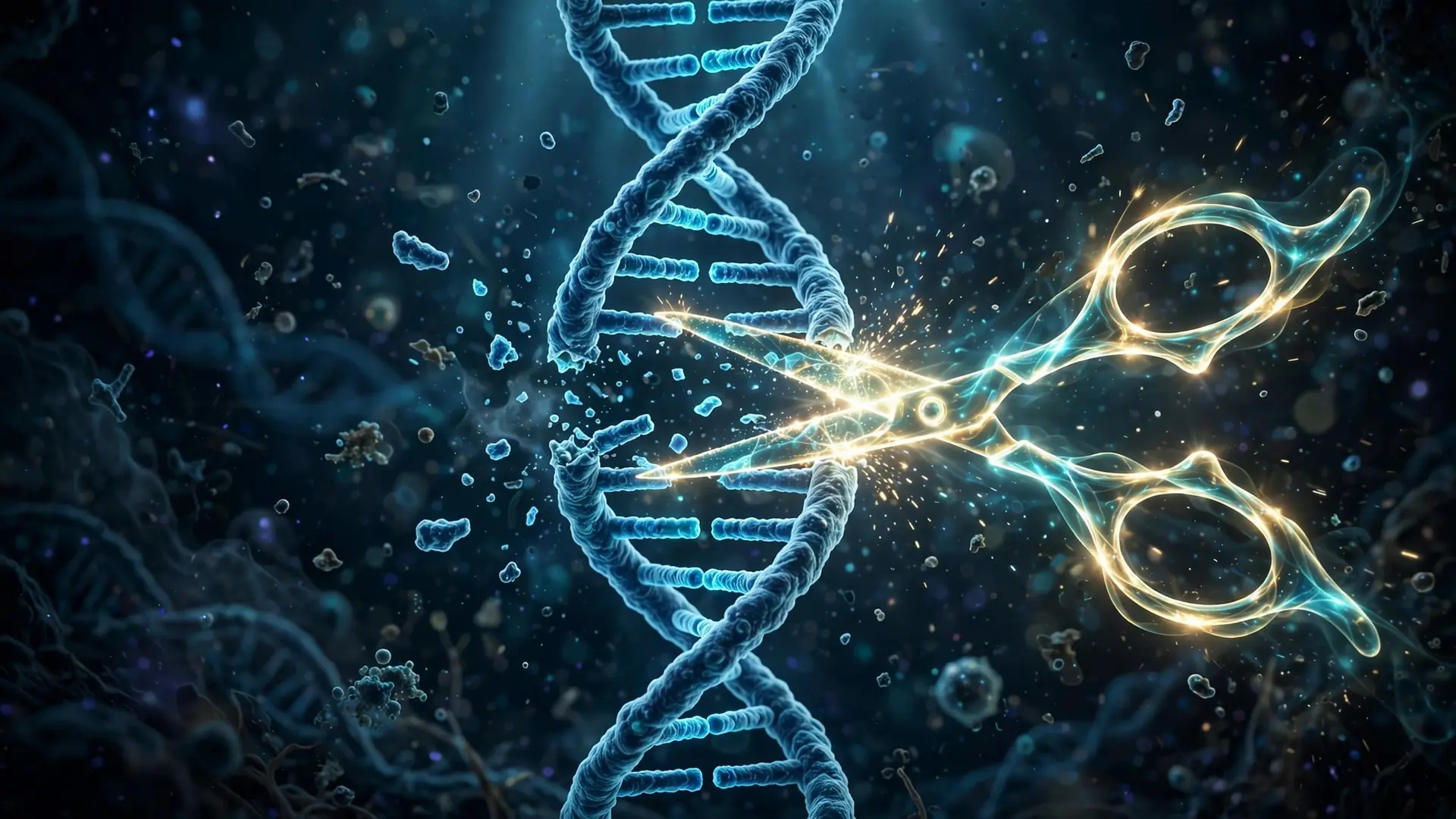
The core of the system has two parts. The first is the Cas9 protein, an enzyme that cuts both strands of a DNA molecule. The second is a short "guide RNA," a 20-letter sequence scientists can design to match any target in the genome. The guide RNA steers Cas9 to the matching spot, Cas9 makes a clean double-strand break, and the cell's own repair machinery takes over from there.
What happens next depends on the intent. Sometimes the goal is simply to disable a gene: the cell repairs the cut sloppily, introducing a small error that switches the gene off. Other times scientists supply a DNA template so the cell repairs the break by copying in a corrected sequence — effectively rewriting a typo in your genetic code. It is cut-and-paste for the genome, and the elegance is in its simplicity: one protein plus one programmable guide replaces the custom-built, month-long engineering that older editing methods required.
What Can CRISPR Do Right Now?
The headline answer is medicine. In late 2023, regulators approved Casgevy, the first CRISPR-based therapy, developed by Vertex Pharmaceuticals with CRISPR Therapeutics. It treats sickle cell disease and transfusion-dependent beta-thalassemia — conditions where a single inherited mutation warps hemoglobin and causes lifelong pain, organ damage, and transfusions. Casgevy's approach is clever. Rather than fixing the sickle mutation directly, CRISPR disrupts a genetic switch called BCL11A that normally shuts down fetal hemoglobin after birth. Lifting that brake lets the body produce fetal hemoglobin again, which does not sickle, compensating for the faulty adult version. The editing happens outside the body: the patient's own blood stem cells are collected, edited in the lab, and reinfused as a one-time dose after chemotherapy clears the bone marrow. In July 2026, the FDA expanded approval to children as young as 2, grounded in evidence that earlier treatment reduces the risk of lasting organ damage — children in the trials went a full year without severe pain crises. Beyond sickle cell, CRISPR is a standard laboratory workhorse. It has transformed basic research by letting scientists probe the function of genes at will, helped breed crops that withstand pests, mold, and drought, and powered clinical trials of new cancer therapies and treatments for inherited blindness. The pipeline of therapies approaching approval has grown steadily since 2023.
What Can't CRISPR Do Yet?
Here is where the hype meets the hard parts. First, delivery. Casgevy works because blood stem cells can be edited outside the body and put back. Editing cells inside a living person — in the brain, heart, or muscle — remains a formidable challenge, because the editing machinery has to reach its targets without triggering the immune system or wandering elsewhere.
Second, precision. Cas9 is accurate, but the genome is three billion letters long, and "off-target" cuts — edits in the wrong place — remain a real concern. Because an edit is permanent, any mistake rides along in every descendant of that cell for life. Long-term monitoring continues precisely because subtle risks might not surface for years. Third, cost and complexity. Casgevy's treatment process takes weeks to months in a medical facility, including harsh chemotherapy, and the total cost approaches $2.2 million per patient in the United States — among the most expensive therapies ever approved. CRISPR can also do nothing for diseases caused by dozens of genes acting together, like most heart disease or diabetes. And then there is the brightest ethical line: germline editing, changes to eggs, sperm, or embryos that would be inherited by all future generations. A 2018 experiment in China that produced gene-edited babies drew swift international condemnation, and the scientific community has largely drawn a boundary there. How vaccines train the immune system shows one thing clearly: borrowing the body's defenses is powerful medicine — but rewriting the instructions themselves demands extraordinary caution.
What Comes Next for Gene Editing?
The field is not standing still. Newer techniques like base editing and prime editing promise to change single DNA letters without making the full double-strand breaks that Cas9 relies on, potentially cutting both off-target damage and delivery problems down to size. Researchers are racing to build better delivery vehicles — from engineered viruses to lipid nanoparticles — that can carry editors to organs the current tools cannot reach. The arc so far is worth stepping back to appreciate. A curiosity of bacterial immunity, noticed in an obscure microbe, became within fourteen years the basis of a medicine given to toddlers. CRISPR will not rewrite everything, and it should not — but as a tool for fixing the spelling errors written into our genes, it has already moved from the lab bench to the bedside faster than any genetic technology in history. The question now is not whether gene editing will change medicine, but how carefully we steer it.
Frequently asked questions
What does CRISPR stand for?
It stands for clustered regularly interspaced short palindromic repeats — repeating DNA sequences bacteria use to remember viruses, paired with the Cas9 cutting protein.
Is CRISPR gene therapy approved for real patients?
Yes. Casgevy was approved in late 2023 for sickle cell disease and beta-thalassemia, and in July 2026 the FDA expanded it to children as young as 2.
What can CRISPR not do yet?
It cannot easily edit cells throughout a living body, fix diseases caused by many genes at once, or change traits inherited by future children without crossing a hard ethical line.