Why Do Humans Age? The Biology of Growing Old
Aging is damage accumulating across our cells: telomeres shorten, DNA takes hits, retired cells linger. Scientists map it as nine interlocking hallmarks.
Key takeaways
- Aging is best understood as damage accumulating across cells faster than the body can repair it — the 'general cause' of aging in modern biology.
- Telomeres cap our chromosomes and shorten with each cell division; critically short telomeres push cells into permanent retirement (senescence).
- A 2013 landmark review defined nine 'hallmarks of aging', from DNA damage and mitochondrial decline to stem cell exhaustion.
- Senescence is a trade-off: it stops damaged cells from becoming cancerous, but lingering senescent cells inflame and degrade surrounding tissue.
- Aging is the primary risk factor for cancer, diabetes, heart disease and neurodegeneration — not a disease itself, but the backdrop for them.
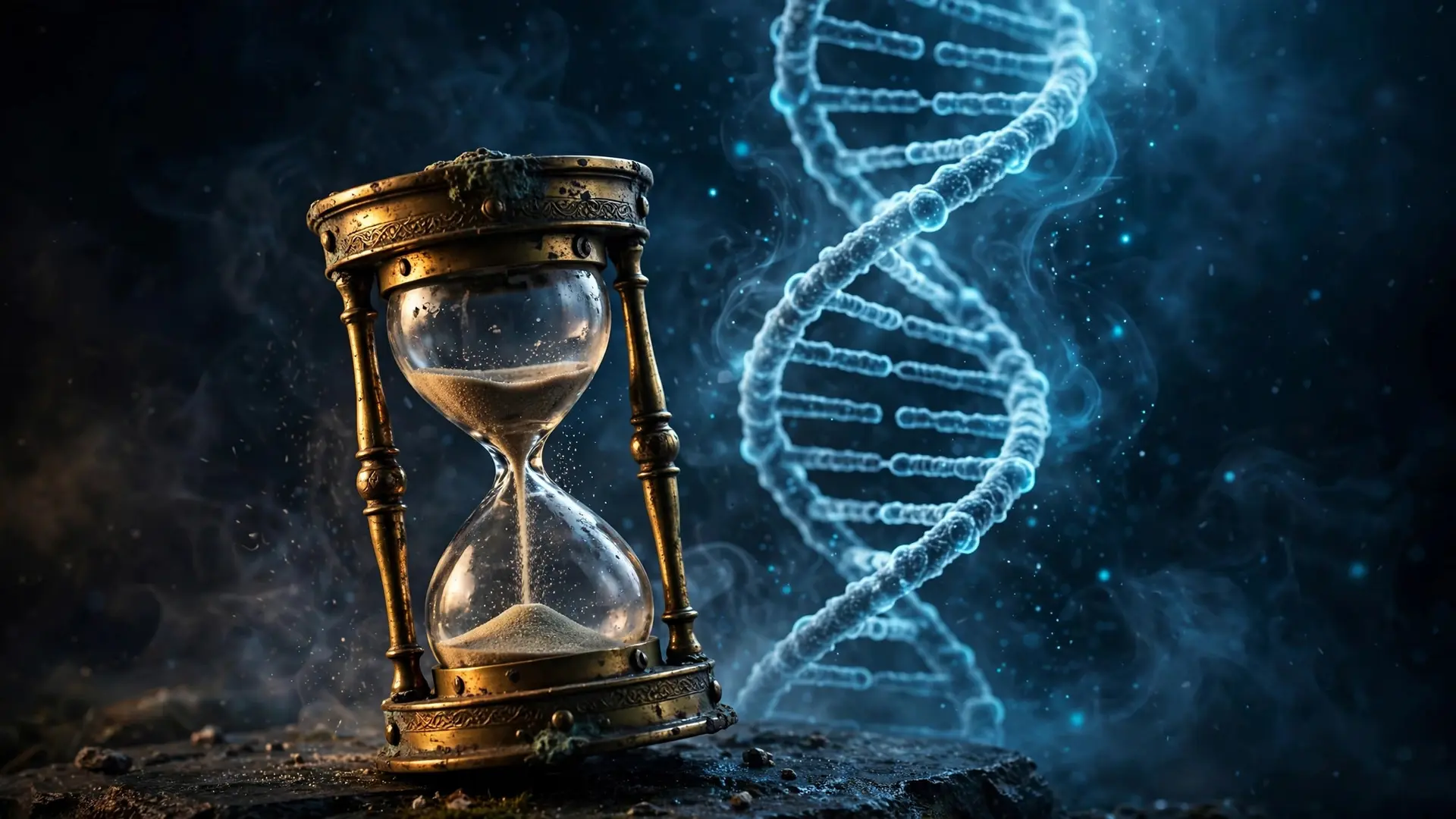
We age because damage accumulates faster than our bodies can repair it. With every cell division, the protective caps on our chromosomes grow a little shorter; our DNA collects hits faster than repair crews can fix them; and worn-out cells stop dividing but refuse to die, lingering in our tissues like retired workers who never leave the building. Together, these slow failures are what we experience as growing old. There is no single clock, and no single reason. In 2013 a team led by Carlos López-Otín published a landmark review in the journal Cell that gave the field its organizing map: nine "hallmarks of aging," from fraying chromosomes to failing power plants inside our cells. The framework stuck because it captures the central insight — aging is not one process but many, all running at once.
What is aging, biologically?
Biologists define aging as the progressive loss of physiological integrity: tissues work less well, bounce back more slowly, and become more vulnerable to breakdown. It is the primary risk factor for most of the diseases that kill us — cancer, diabetes, cardiovascular disorders, neurodegenerative diseases — not because aging is itself a disease, but because it is the backdrop against which those diseases become likely. The unifying idea behind the hallmarks is disarmingly simple: damage builds up over a lifetime, and most researchers now treat that slow accumulation as aging's root cause. Damage comes from everywhere. DNA copying makes occasional errors. Ordinary chemistry nicks and breaks the genome spontaneously. The reactive oxygen species thrown off by our own metabolism — the famous free radicals — batter proteins, fats and genes. Our cells run impressive repair networks, but the repairs are never perfect, and the unrepaired remainder compounds over decades. That compounding is the whole story. Aging is what it looks like when maintenance falls permanently behind.
Why do our cells eventually stop dividing?
Start with the most intuitive hallmark: telomere attrition. Every chromosome ends in a stretch of repetitive DNA called a telomere — a protective cap, like the plastic tip on a shoelace, that keeps the chromosome's ends from fraying or fusing. The machinery that copies DNA cannot fully replicate these tips, so telomeres shorten a little with each cell division. When a telomere grows critically short, the cell reads it as damaged DNA and pulls the emergency brake: it stops dividing permanently. This state is called cellular senescence, and researchers at the National Institute on Aging describe it as a natural condition cells typically reach after a few dozen divisions. The logic is defensive — a cell that can no longer copy its genome faithfully is a cell that should not be making copies of itself. But senescence has a catch: senescent cells do not die. They sit in our tissues, alive but retired, no longer dividing and no longer functioning like young, healthy cells. And the older we get, the more of them accumulate — in skin, in blood vessels, in organs — quietly changing the character of the tissue around them.
What other damage piles up?
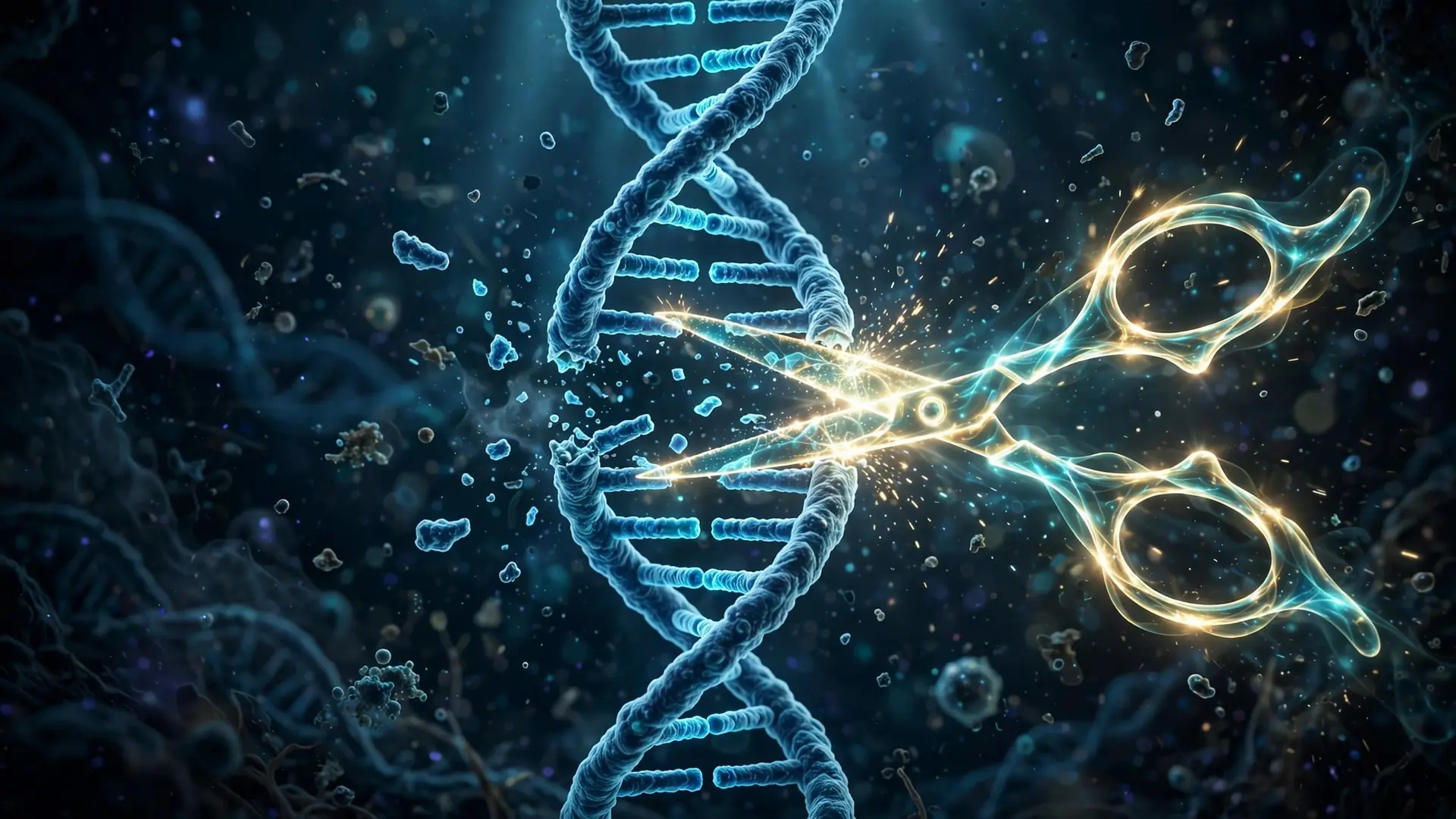
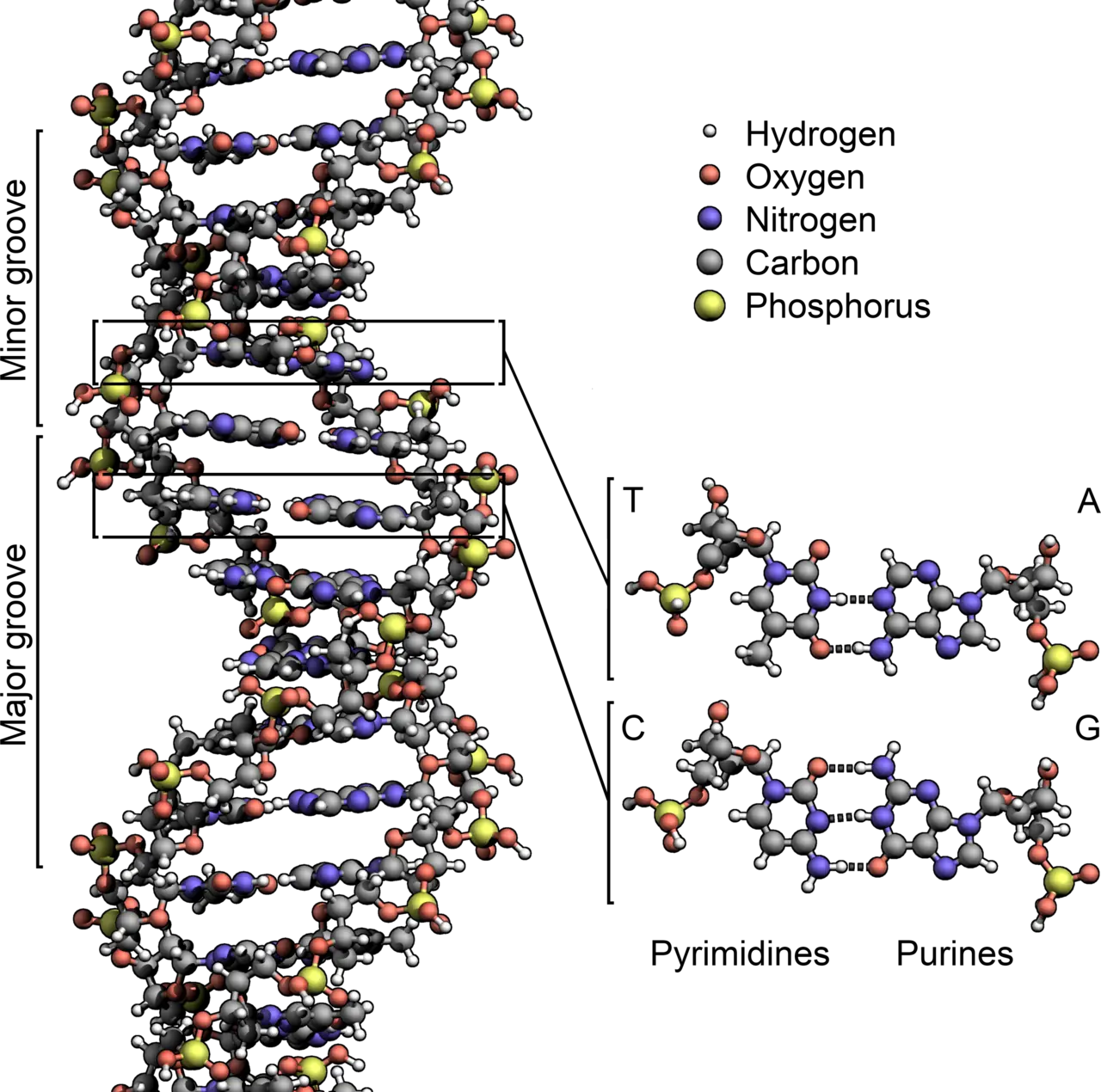
Telomeres are only one entry on the list. Genomic instability means exactly what it sounds like: mutations, broken and reshuffled chromosomes, and copying errors accumulate in our nuclear DNA over a lifetime. People born with defective DNA-repair systems develop premature-aging syndromes, which is about as direct as evidence gets that unrepaired genetic damage drives aging. Then there is the damage inside our cells' power plants. Mitochondria carry their own small loop of DNA, and it lives a rough life: bathed in the oxidative chemistry of energy production, with no protective histones and weaker repair than the nucleus enjoys. Mice engineered with a faulty mitochondrial DNA-copying enzyme age prematurely and die young, their tissues full of mitochondrial mutations — strong evidence that this particular damage matters.
The remaining hallmarks fill out the picture. Proteins misfold and clump because the quality-control systems lose their edge (loss of proteostasis). The chemical marks that switch genes on and off drift with time, scrambling the cell's operating instructions (epigenetic alterations). The stem cells that rebuild our tissues divide less and less eagerly (stem cell exhaustion). And cells increasingly miscommunicate, partly because senescent cells broadcast inflammatory signals that disturb their neighbors (altered intercellular communication). Each hallmark feeds the others: damage in one system accelerates damage in the rest.
If senescence protects us, why does it make us old?
This is the deepest irony in aging biology, and it has a name: antagonistic pleiotropy — a trait that helps early in life and hurts late in life. Cellular senescence is, first and foremost, a cancer defense. A damaged cell that permanently stops dividing cannot become a tumor. In youth, that trade is pure win. But evolution optimizes for reproduction, not for comfortable eighties. Nobody selected for a cleanup crew to remove senescent cells once their protective job was done, so they pile up. Their inflammatory chatter degrades surrounding tissue, the immune system — the same immune system that learns to fight infections — grows less efficient at clearing them, and the balance tips from protection to pathology. The result is the familiar landscape of later life: stiffer vessels, slower healing, organs that regulate less crisply. Researchers at the National Institute on Aging point to blood-sugar control as a relatable example — as we move through our fifties, sixties and seventies, the body's ability to respond to changing glucose levels gradually degrades, which is one reason diabetes becomes more common with age. So why do humans age? Because we are built to last long enough, not forever. Every system in the body runs on maintenance, every maintenance system is imperfect, and the imperfections compound. There is no master switch to flip — which is also why serious researchers are skeptical of any single "cure" for aging. The realistic frontier is the hallmarks themselves: understanding how they connect, and learning to ease more than one of them at a time. We may never stop the clock. But we are finally learning to read its face.
Frequently asked questions
What are the hallmarks of aging?
Nine biological processes defined in a landmark 2013 review: genomic instability, telomere attrition, epigenetic alterations, loss of proteostasis, deregulated nutrient-sensing, mitochondrial dysfunction, cellular senescence, stem cell exhaustion and altered intercellular communication.
Do our cells have a built-in limit on dividing?
In effect, yes. Most human cells stop dividing permanently after a few dozen divisions, largely because their telomeres grow critically short — a state called cellular senescence.
Can aging be reversed?
Not currently. Researchers can slow aspects of aging in laboratory animals, but no intervention is proven to reverse human aging. It remains an active area of research.