How Vaccines Train Your Immune System to Remember
Vaccines stage a safe dress rehearsal for your immune system: harmless antigens trigger memory B and T cells, so the real infection is stopped before it starts.
Key takeaways
- Vaccines present harmless antigens — weakened germs, inactivated pathogens, or genetic instructions — so the immune system can rehearse without any risk.
- Memory B cells and memory T cells persist for years, ready to launch a faster, stronger response when the real pathogen shows up.
- Long-lived plasma cells settle in the bone marrow and keep producing protective antibodies long after the vaccination.
- Booster shots refresh fading immune memory, keeping defenses primed against pathogens that evolve over time.
A vaccine is a dress rehearsal for war. It introduces your body to a harmless stand-in for a dangerous pathogen — a weakened virus, an inactivated bacterium, or even just the genetic instructions for one of its proteins — and lets your immune system fight that phantom enemy safely. When the real pathogen arrives later, the defenses already know its face. No battlefield experience required. That "memory" is not a metaphor. It is carried by real cells that persist in your body for years, sometimes decades, waiting to recognize the invader they were trained on. Understanding how vaccines create them explains everything from why boosters exist to why you feel a little sick after a shot.
What Exactly Is a Vaccine Showing Your Body?
At the heart of every vaccine is an antigen — a molecule, or fragment of one, that marks a pathogen as foreign. Different vaccine technologies deliver the antigen in different ways: some use a live but weakened version of the germ, some use a killed or inactivated one, some use only a purified piece of it, and modern mRNA vaccines deliver lipid nanoparticles carrying genetic instructions that prompt your own cells to manufacture one harmless piece of the virus, such as a spike protein. None of these can cause the disease itself. All of them look enough like the real thing to trigger recognition. Once the antigen arrives, your immune system runs a two-act response. First, the innate immune system — the fast, generalist front line of macrophages and other defenders — detects something foreign and sounds the alarm through inflammatory signals. Dendritic cells then capture the antigen and carry it to the lymph nodes, where they present it to the specialists of the adaptive immune system: B cells and T cells. This handoff from generalist to specialist is the pivotal moment of every vaccination, much like the moment a cell first learned to read its genetic code.
How Do Memory B and T Cells Form?
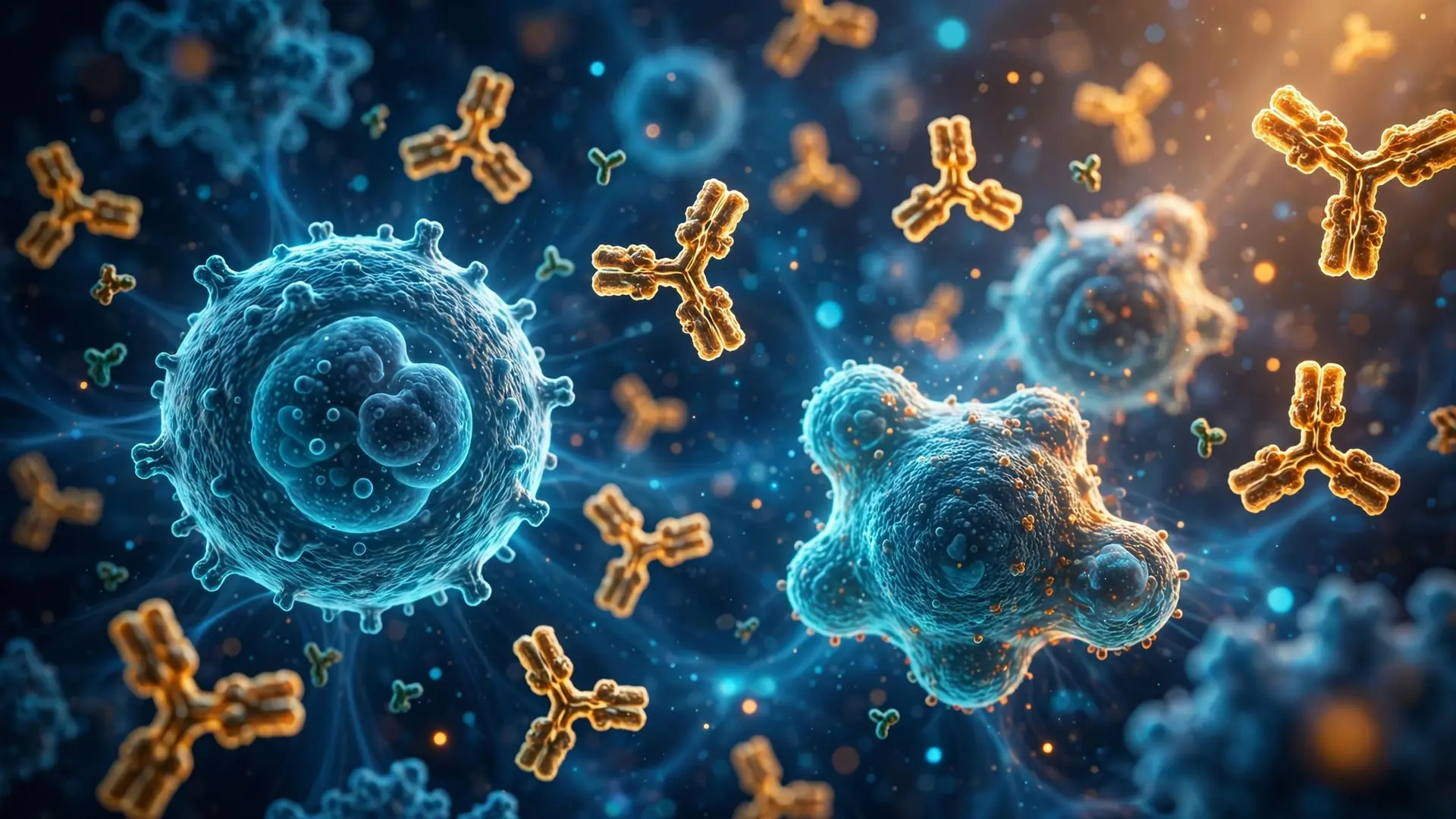
The adaptive response is where the training happens, and it unfolds over days. B cells that recognize the antigen multiply and transform into two things: plasma cells, which immediately flood the blood with antibodies — Y-shaped proteins custom-built to latch onto the invader — and memory B cells, which take up long-term posts in the lymph nodes and bone marrow. T cells follow a parallel track: helper T cells coordinate the whole operation, killer T cells learn to destroy infected cells, and memory T cells join the same long-lived garrison. After the antigen is cleared, most of the activated fighters die off — but the memory cells remain, along with a special elite: long-lived plasma cells, which settle into the bone marrow and quietly keep producing protective antibodies for years. Together, memory B cells, memory T cells, and these plasma cells form a triad of protection. Vaccination-generated immune memory can last for decades, though some pathogens and some vaccines produce shorter-lived memory, which is why immunity is not one-size-fits-all. It is worth noting that no vaccine technology has a monopoly on this process. Whether the antigen arrives as a weakened virus, an inactivated bacterium, or an mRNA-encoded protein, the endpoint is the same: dendritic cells present, B and T cells activate, memory forms. The elegance is in the convergence — different starting roads, identical trained army.
Why Is the Second Response So Much Faster?
The payoff of vaccination becomes visible only when the real pathogen shows up. On first encounter with a new threat, the adaptive immune system needs days to a week or more to ramp up — studying the antigen, cloning the right B and T cells, and producing antibodies. That delay is exactly when a virulent pathogen does its worst damage. The second time around, there is no learning curve. Memory B cells recognize the antigen immediately and rapidly differentiate into antibody-producing plasma cells; memory T cells activate within hours, unleashing a stronger, better-targeted attack. Scientists call this the secondary immune response, and it is faster, more potent, and more precise than the first. Infections that might have overwhelmed you are stopped before they gain a foothold — often before you notice any symptoms at all.
This is also the mechanism behind boosters. Over time, antibody levels naturally wane and some memory cells fade. A booster shot re-exposes the immune system to the antigen, and because the memory cells are already there, they mount a vigorous secondary response that refreshes and strengthens protection. Boosters are not a sign that vaccines failed; they are the scheduled maintenance of an otherwise long-lived system, especially against pathogens that evolve, like influenza and coronaviruses. The parallel with antibiotics is instructive: where penicillin kills bacteria directly, vaccines build the body's own standing army to do the job preemptively.
How Did Humanity Learn to Train Immunity?
The idea of rehearsal immunization is older than germ theory. The earliest forms — variolation against smallpox in China and India, later adopted and refined in 18th-century Europe — were crude and risky, deliberately infecting people with smallpox material to induce a (usually milder) case. Edward Jenner's 1796 demonstration that cowpox exposure protected against smallpox gave the practice its first safe, systematic form, and Louis Pasteur later built the framework for attenuating pathogens in the laboratory, creating vaccines for rabies and anthrax in the 1880s. Since then, the roster of triumphs has been long. Smallpox — which once killed hundreds of millions — was declared eradicated in 1980, the first and so far only human disease eliminated by vaccination. Polio has been driven to near-extinction, and routine childhood immunizations prevent millions of deaths each year. The mRNA platforms that carried the world through the COVID-19 pandemic represent the newest chapter: instead of manufacturing the antigen in a factory, scientists ship the instructions and let the body's own cells make it. There is even a stranger frontier ahead. Researchers are studying how life's chemistry couples with quantum effects in quantum biology, and immunologists are exploring how those fine-grained insights might one day inform vaccine design — a reminder that the science of training immunity is still advancing. Vaccines are the only medical technology that works by making itself unnecessary for most recipients — a silent rehearsal, a standing memory, and a war most people never know was won inside them.
Frequently asked questions
Can a vaccine give you the disease it is meant to prevent?
No. Vaccines use harmless components — weakened or inactivated germs, or just genetic instructions for a single protein — that cannot cause the disease. They teach recognition, not infection.
Why do some vaccines need boosters while others last a lifetime?
Immune memory can fade over time, and some pathogens mutate quickly. Boosters re-expose the immune system to the antigen, refreshing memory cells and raising antibody levels back to protective strength.
Why do I sometimes feel sick after a vaccination?
What you feel is the immune response, not an infection. The fever, soreness, or fatigue are signs of inflammation and immune activation as your body builds its defenses.