Where Is the Darkest Place on Earth for Stargazing?
Where is the darkest place on Earth? No single site holds the title, but places like Namibia's NamibRand and Chile's Atacama rank among Earth's darkest skies.
Key takeaways
- No single place is officially crowned the darkest on Earth; several sites share the top rating.
- The Bortle scale runs from Class 1 (darkest) to Class 9 (brightest urban skies).
- NamibRand in Namibia holds Gold Tier dark-sky status with readings above 22 magnitudes per square arcsecond.
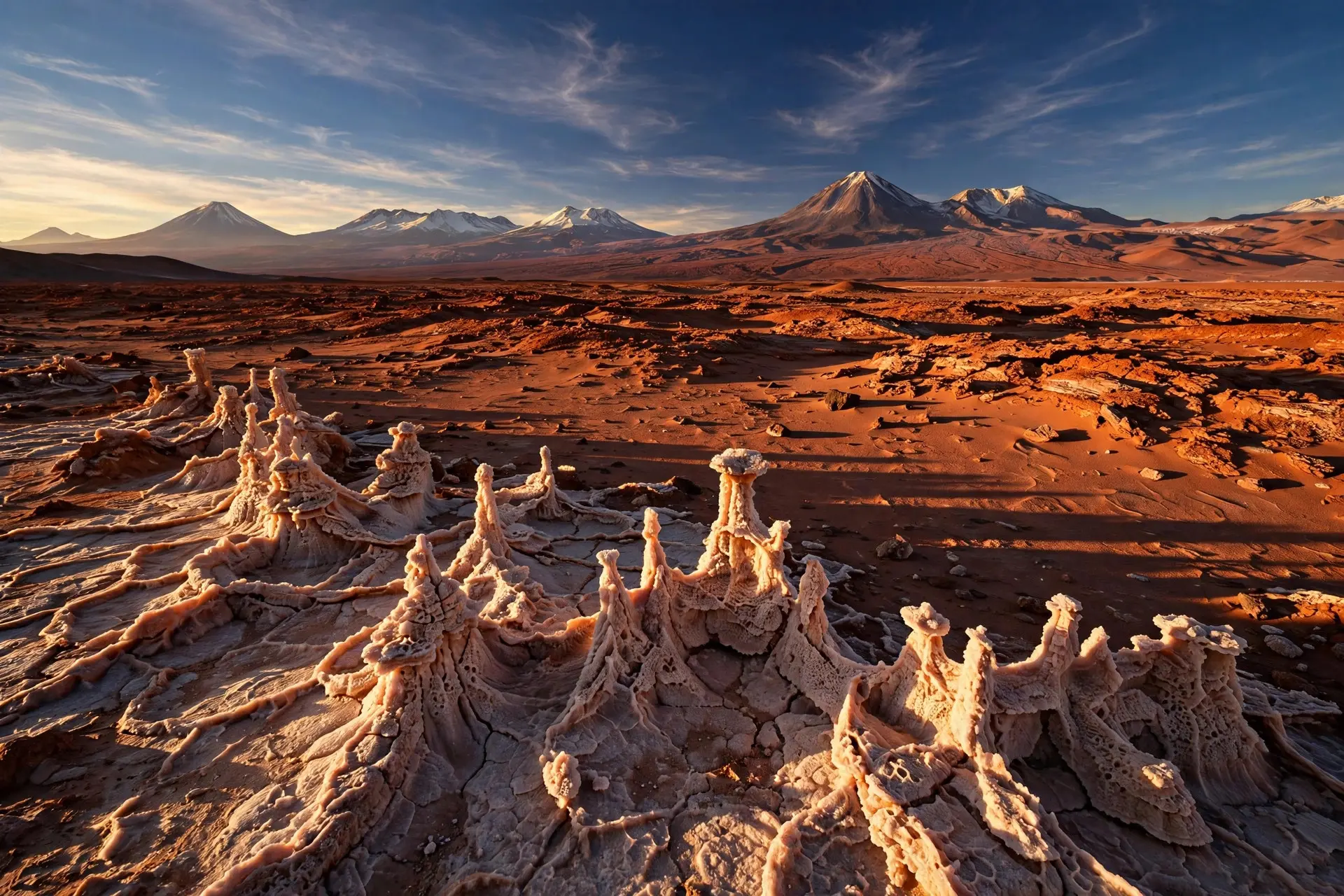
- Chile's Atacama Desert offers some of the driest, clearest observing conditions on Earth.
There is no single officially crowned darkest place on Earth. Astronomers rate skies on the Bortle scale from 1 to 9, and the darkest measured sites, from Namibia's NamibRand Nature Reserve to Chile's Atacama Desert, share a Class 1 rating: essentially zero artificial light. Key facts
- The Bortle scale, created by John E. Bortle in 2001, runs from Class 1, the most natural skies, to Class 9, the brightly lit skies of large cities (National Park Service).
- Namibia's NamibRand Nature Reserve was inscribed as a Gold Tier International Dark Sky Reserve in 2012, the first such reserve in Africa (NaDEET).
- Retired physics professor George Tucker measured NamibRand's sky with a sky quality meter for eight years and consistently recorded readings above 22 magnitudes per square arcsecond, where a natural unpolluted sky is about 21.6 (Supernews).
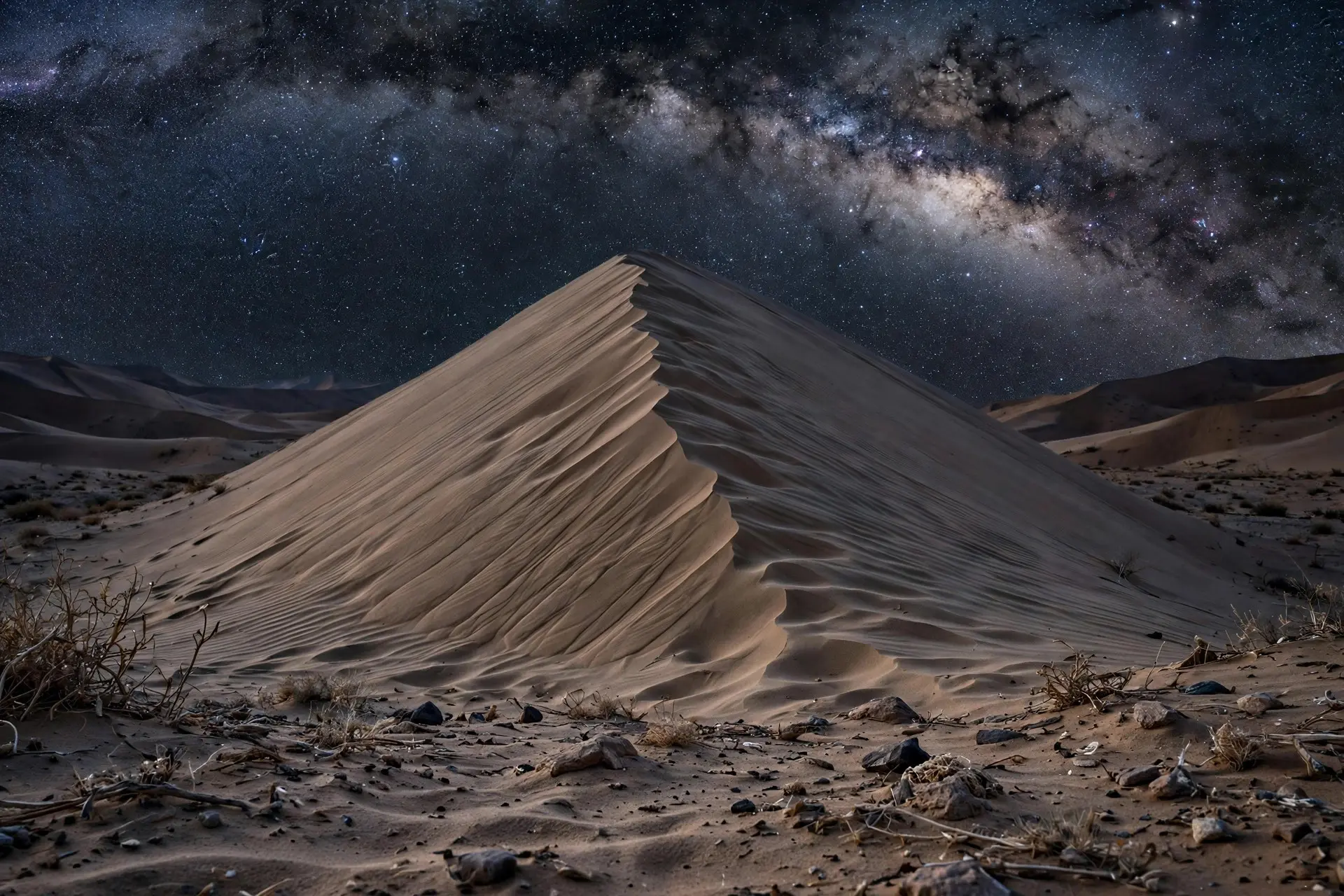
- NamibRand rates Bortle Class 1, dark enough for zodiacal light and faint shadows cast by the Milky Way (Supernews).
- Nearly 80 percent of Americans can no longer see the Milky Way from where they live, and 4 out of 5 children born today may never see it if light pollution keeps growing (National Park Service).
- The European Southern Observatory describes its Cerro Paranal site in the Atacama as having "some of the driest and clearest observing conditions on Earth," with a total lack of light pollution and weather stations that have never recorded rainfall (ESO).
How do astronomers measure darkness?
Two tools dominate the work. The Bortle scale is the observational one: nine classes based on what the naked eye can see, from the Triangulum Galaxy in Class 1 to nothing but the Moon and planets in Class 9. The Sky Quality Meter is the instrumental one: a handheld device that reads sky brightness in magnitudes per square arcsecond, where higher numbers mean darker skies. A reading near 21.6 marks a natural, unpolluted sky. Anything above 22 is exceptional. The U.S. National Park Service has measured park skies with calibrated all-sky cameras since 1999 through its Night Sky Team, and those measurements feed into International Dark Sky Park certifications. A park earns that status by retrofitting its lights to be night-sky friendly, educating visitors, and inspiring others to address light pollution, a standard Grand Canyon itself meets. Certification is about how a place manages its lights, which is a different question from which sky is darkest.
Which places have the darkest measured skies?
Namibia's NamibRand Nature Reserve makes the strongest documented case. Set in the oldest desert on Earth, the privately owned reserve covers just over 170,000 hectares in southwestern Namibia. Its application to the International Dark-Sky Association went in February 2012, championed by Tucker, who had spent eight years metering the sky and whose readings never changed. The nearest town lies more than 100 kilometers away, and the closest major city, Windhoek, is some 400 kilometers distant. Reserve staff audited every external light fixture and retrofitted them to dark-sky standards, and a sky quality meter installed on the reserve headquarters roof in July 2012 still streams readings through the night, with annual measurements taken across the reserve (DarkSky). On moonless nights, thousands of stars, the Magellanic Clouds, zodiacal light, and the elusive gegenschein are all visible to the naked eye (NaDEET). Chile's Atacama Desert is the other great contender. The driest place on Earth combines extreme dryness with high altitude and remoteness, which is why the European Southern Observatory built its Very Large Telescope on Cerro Paranal there. The desert's dry air matters: water vapor absorbs starlight and scatters city glow, so dry skies stay darker. ESO notes that the site offers observing conditions with practically no cloud cover and no light pollution at all.
Why is there no single official winner?
Because the question has no single answer to crown. Darkness varies with the Moon's phase, the season, weather, and even solar activity, so a meter reading from one clear night does not settle the matter permanently. The Bortle scale itself allows ties: any number of locations can legitimately claim Class 1. And no scientific body runs a "darkest place" competition. DarkSky International certifies how places protect their skies, not which one wins. The honest answer, then, is a shortlist rather than a champion: NamibRand in Namibia, the Atacama in Chile, and a handful of other Class 1 deserts and mountain plateaus share the darkest skies anyone has measured. The differences between them sit below what the instruments can meaningfully rank on a given night.
What do people get wrong about dark skies?
| Myth | Fact |
|---|---|
| The darkest place on Earth is one official spot. | No organization awards that title. Several sites share the Bortle Class 1 rating, the darkest the scale has. |
| A dark-sky certificate means the darkest sky. | Certification, like the NPS program, judges how a place manages its lighting and educates visitors. It is a management standard, not a darkness contest. |
| Once the Milky Way disappears over a city, it is gone for good. | Light pollution is one of the few pollutants that is fully reversible. The National Park Service notes it cleans up at literally the speed of light once wasted light is switched off. |
| The reserve's education center, NaDEET, hosts about 1,000 schoolchildren each year for stargazing programs, teaching the next generation what a natural night looks like. The deeper mistake is assuming the sky we grew up with is the normal one. For most of human history, a Class 1 sky was simply the night. Today it survives only where distance, dryness, and deliberate protection keep artificial light out. Finding it means traveling to a desert or a mountain plateau on a moonless night, waiting 30 minutes for full dark adaptation, and looking up. The reward is the sky our ancestors took for granted, and most of us have never seen. | |
| How we made this article: FactSpire researched and drafted it with AI assistance and checked every fact against the sources listed above. |
Frequently asked questions
Is the Atacama Desert the darkest place on Earth?
It is one of the darkest. The European Southern Observatory describes its Cerro Paranal site there as having some of the driest and clearest observing conditions on Earth with a total lack of light pollution. But there is no official single winner; several sites share a Bortle Class 1 rating.
What is a Bortle Class 1 sky?
The darkest rating on the nine-class Bortle scale, created by John E. Bortle in 2001. Class 1 skies are the most natural: observers can see zodiacal light and faint shadows cast by the Milky Way, while Class 9 describes brightly lit cities.
What does a sky quality meter measure?
It measures night-sky brightness in magnitudes per square arcsecond, where higher numbers mean darker skies. A natural unpolluted sky reads about 21.6, and readings at Namibia's NamibRand have consistently come in above 22, taken after moonset on clear, cloudless nights.
Can the Milky Way really cast a shadow?
Under Class 1 skies, yes. The astronomer who nominated Namibia's NamibRand as a dark-sky reserve reported moving around in the dark there by the light of the Milky Way alone, a phenomenon the Bortle scale uses to define its darkest class.
Sources
- Night Skies - Grand Canyon National Park (U.S. National Park Service), U.S. National Park Service
- International Dark Sky Reserve | NaDEET, Namib Desert Environmental Education Trust
- Africa is the place to see stars | Supernews, Supernews
- NAMIBRAND NATURE RESERVE INTERNATIONAL DARK SKY RESERVE Annual report and light audit 2015, DarkSky International
- A Twilight Tour of Paranal | ESO United Kingdom, European Southern Observatory