How Were Egypt's Obelisks Carved and Raised?
No cranes, no iron tools: Egyptian workers pounded, floated and tilted single granite blocks into towering obelisks. Here is how each step worked.
Key takeaways
- Every Egyptian obelisk was carved from a single block of red granite, usually quarried at Aswan, which made each one an all-or-nothing project.
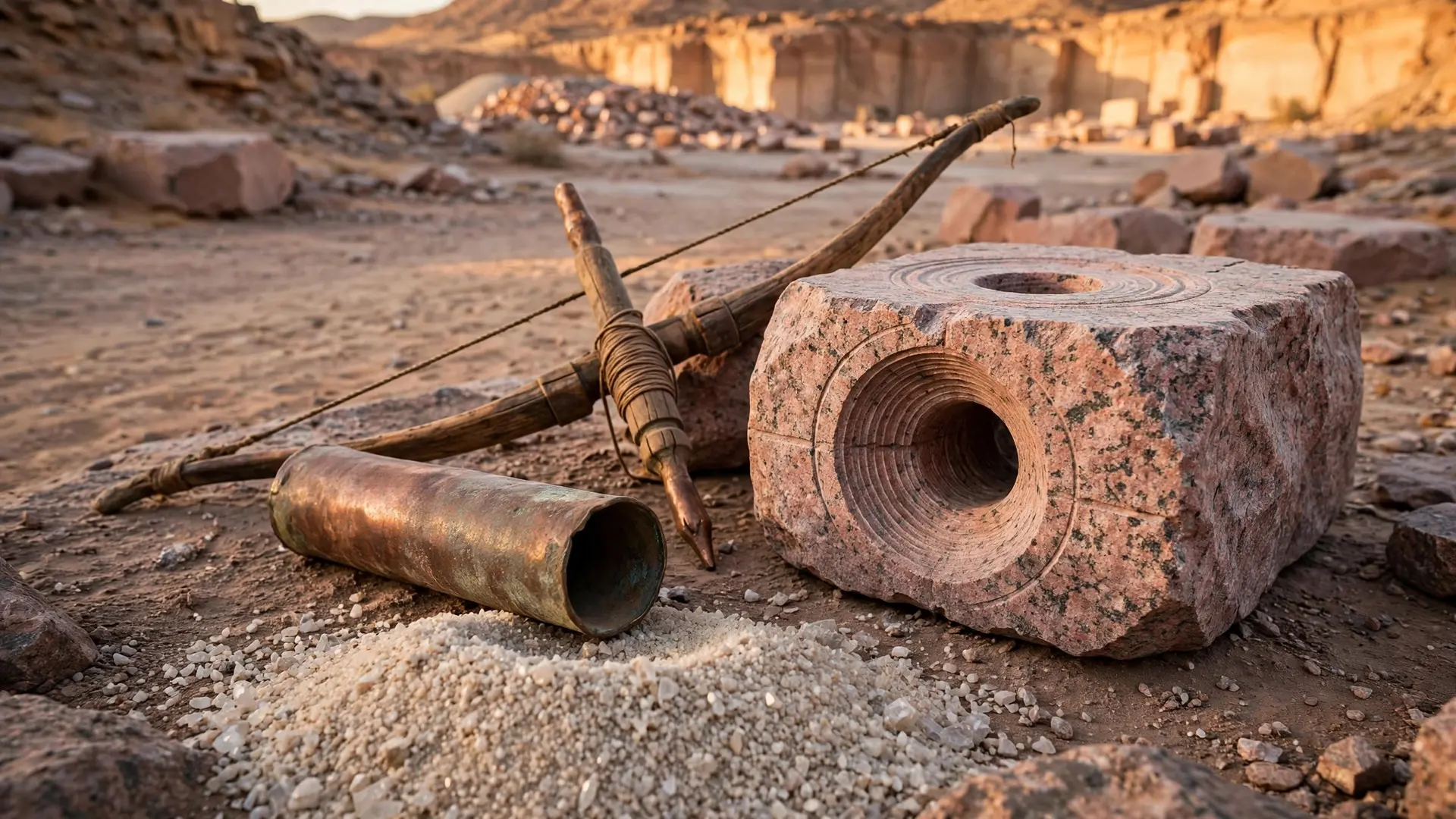
- Without iron tools, workers pounded trenches around the block with rounded dolerite hammerstones, a harder stone than the granite itself.
- Finished obelisks travelled by sledge to the Nile and then by specially built barge, often during the annual flood when high water eased the journey.
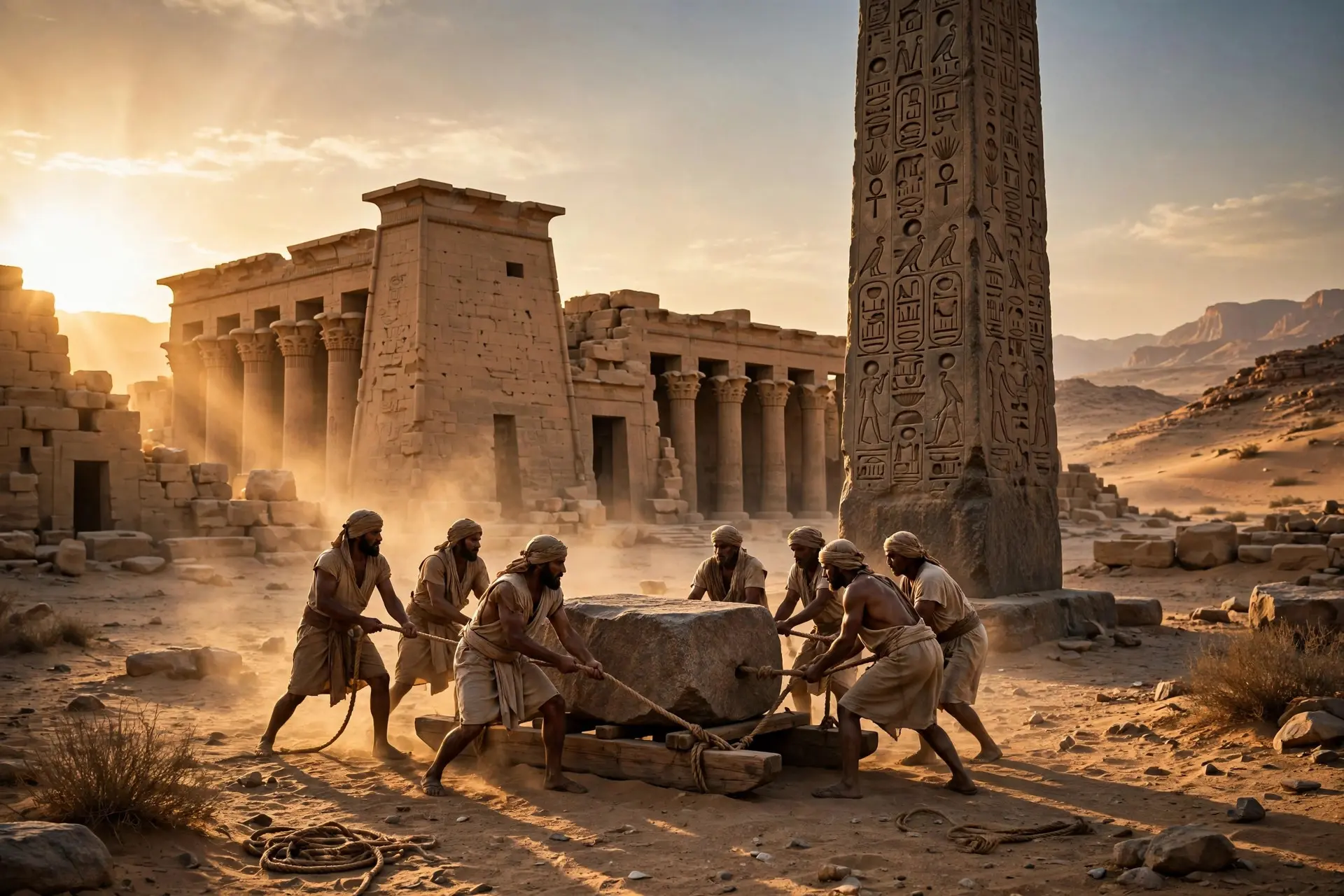
- At the temple, workers hauled the shaft up an earthen ramp and tilted it onto its base, where gravity alone has held it ever since.
- The Unfinished Obelisk at Aswan, abandoned when its granite cracked, shows the whole quarrying process frozen mid-step.
Stand before an Egyptian obelisk and the first question is not why it was built but how it could possibly have been built at all. It is a single stone, tens of metres tall, weighing as much as a loaded freight train, balanced on its end in front of a temple. It was shaped without iron tools, moved without wheels or cranes, and raised without a machine. The answer is a chain of patient, unforgiving steps, each of which had to succeed, because a single crack anywhere in the chain ruined the whole monument. That single-block constraint is the key to the story. An obelisk was not assembled from pieces. It was quarried, transported, and erected as one unbroken piece of red granite, and every technique the Egyptians used was shaped by that refusal to compromise.
Why did a temple need a single stone?
Obelisks were erected in pairs at the entrances of ancient Egyptian temples, most often dedicated to the sun god. Their four sides carried hieroglyphs recording religious dedications and the reigning ruler's titles and deeds, and their pyramidal tops, called pyramidions, were often covered with electrum, an alloy of gold and silver, so that they would catch the first light of dawn. To the Egyptians, the tapered pillar echoed the benben, the primeval mound of creation in the sun god's mythology, and the monument's very name in Egyptian, tekhenu, carried the sense of piercing the sky. The political message was inseparable from the religious one. Commissioning an obelisk announced that a ruler could command the labour, planning, and engineering needed to free a granite giant from the earth and set it upright hundreds of kilometres away. Hatshepsut, the female pharaoh of the Eighteenth Dynasty, understood this especially well: her tallest surviving obelisk at Karnak, standing roughly 30 metres high, proclaimed her legitimacy at a moment when her rise to power was unconventional, and the inscription on its base records that cutting it from the quarry took seven months, a claim she herself acknowledged would be hard to believe. The earliest surviving obelisk belongs to a much earlier ruler: Sesostris I, who reigned from 1918 to 1875 BCE, left one standing at Heliopolis, near modern Cairo. Later rulers went bigger. One of a pair erected at Karnak by Thutmose I measured 80 feet high, six feet square at the base, and 143 tons in weight. The largest ancient obelisk still standing, the Lateran Obelisk now in Rome, was erected by Thutmose III at Karnak, stands 105 feet tall, and weighs approximately 230 tons.
How do you cut granite without iron?
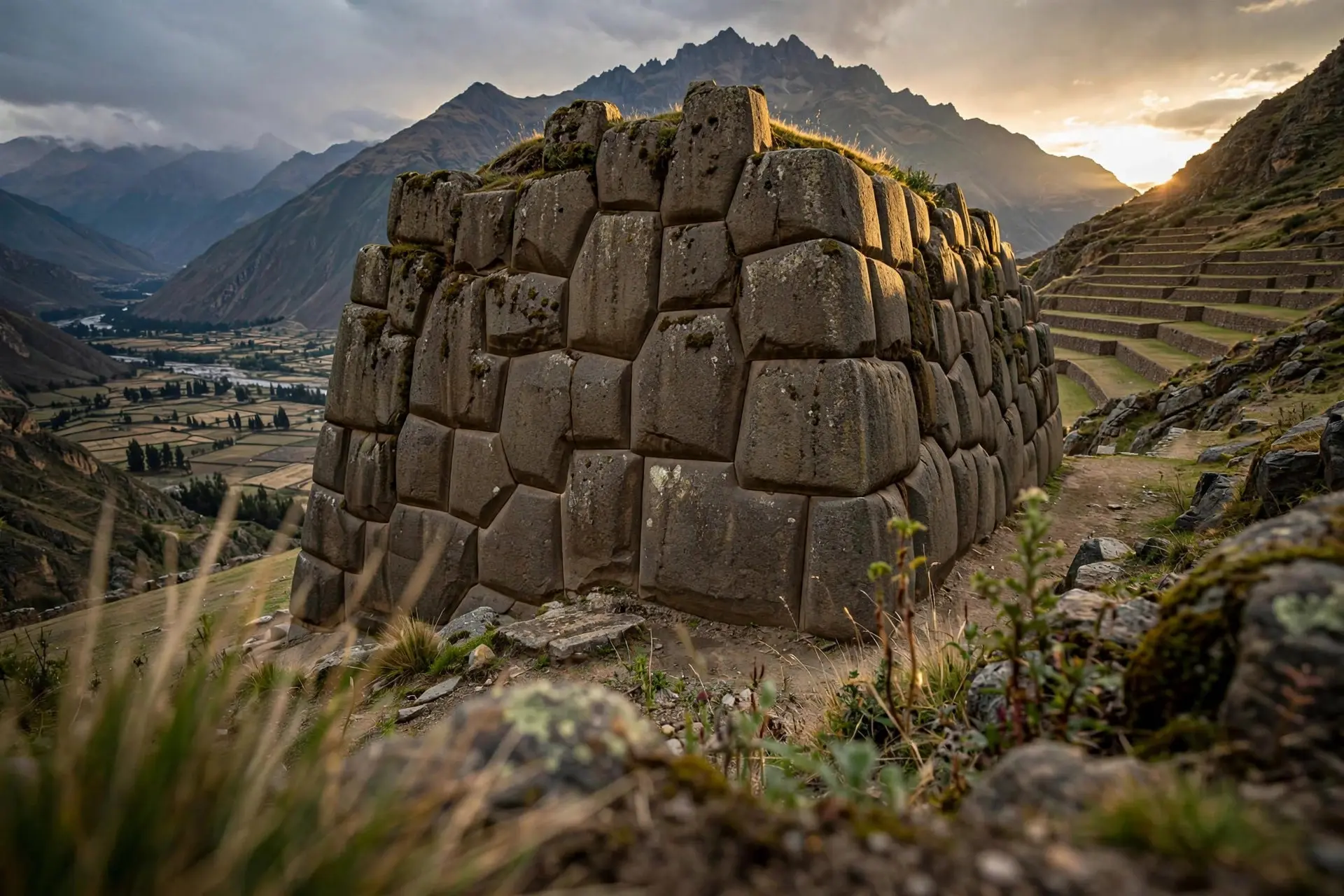
Almost all major Egyptian obelisks came from the red granite quarries at Aswan, on the east bank of the Nile near its first cataract. The stone was chosen for its hardness and durability, the very qualities that made it a nightmare to work. For most of the pharaonic period, Egyptians had no iron tools, and copper and bronze could not bite into granite the way they could cut limestone or sandstone. The solution was pounding, not cutting. Workers used rounded hammerstones of dolerite, a dark, dense rock harder than granite, and struck the granite surface again and again, pulverising a little stone with each blow and clearing away the crushed debris before starting again. Over weeks and months, this patient abrasion dug trenches around the outline of the intended obelisk until its four sides stood free from the surrounding rock, still joined to the bedrock along its underside. Freeing that underside was the most dangerous step. A flaw discovered late could condemn the entire project, because a cracked block could neither be repaired nor joined to another piece. The proof still lies in the quarry at Aswan: the Unfinished Obelisk, probably commissioned by Hatshepsut, was meant to be the largest ever built, an estimated 42 metres long and about 1,200 tonnes in weight, but a fracture appeared in the granite during quarrying and the workers abandoned it where it lay, still attached to the bedrock. The Metropolitan Museum of Art's description of the Aswan quarry notes the same scene: most of Egypt's colossi and obelisks were cut from that quarry, and the unfinished obelisk in its centre was abandoned when a crack travelled down its length. Once a block was freed, workers polished it in place. Finishing the stone at the quarry reduced the weight that had to be moved and revealed any hidden flaw before the long journey began. Only then was the obelisk ready to travel. Egypt was not alone in mastering monumental stonework without modern machinery: the Inca, too, fitted massive stones with extraordinary precision, as shown by their mortarless walls.
How did a stone giant reach its temple?
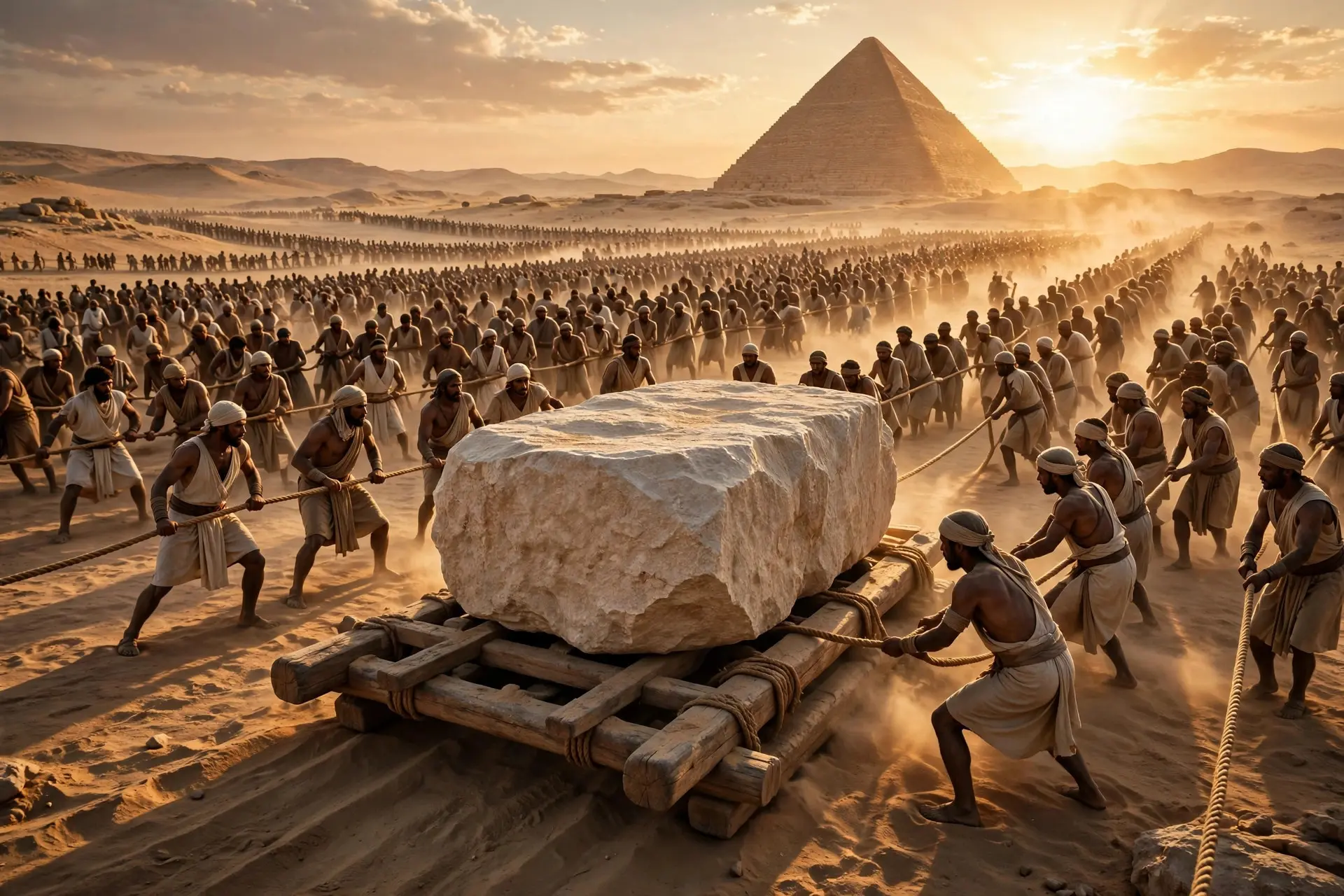
The overland leg was a haul, not a roll. The freed obelisk was dragged on wooden sledges over lubricated sand tracks toward a canal connecting the quarry to the Nile. Teams of workers pulled with ropes, and the sledge's runners slid over prepared ground, a method echoed in the transport of the great stones used for Egypt's pyramids, where the same combination of sledges, lubrication, and massed human effort moved blocks of comparable ambition. At the river, the obelisk was loaded onto a specially constructed barge. Scenes carved in the Temple of Hatshepsut at Thebes show this river journey directly: obelisks travelling down the Nile by barge toward their temple. The annual flood season was the favoured window, because higher water shortened the overland haul and let deep-laden barges float over shallows that would otherwise have blocked them. A barge carrying a single shaft of granite was a vessel built around one cargo, and the loading itself, sliding hundreds of tonnes of stone aboard without cracking it, was an engineering feat in its own right. At the destination, the final act began: raising the shaft. Workers hauled the obelisk up a ramp made of earth and tilted it onto its detached base, using ropes and coordinated teams to control a fall that had to end in exactly the right place. Once upright, nothing held the monument but gravity and the precision of its base, yet many have stood for three thousand years and more. The exact choreography of that last tilt remains debated. Historians agree on the broad outline, ramp, ropes, and massed labour, but the details are uncertain, and modern engineers have been unable to repeat the raising successfully using only ancient methods. That failure is a useful warning against tidy reconstructions: we know the Egyptians did it, and we know roughly how, but the precise sequence of levers, scaffolding, and sand or earthworks at each site is still partly a matter of informed guesswork. The story did not end in Egypt. Roman emperors carried many obelisks to Italy, and at least a dozen reached Rome alone. In the nineteenth century, Egypt divided a pair dedicated by Thutmose III at Heliopolis between Britain and the United States: one now stands on the Thames embankment in London, the other in Central Park in New York. Both are known as Cleopatra's Needles, though they have no historical connection with the queen, having been carved more than a thousand years before her reign. The obelisk's afterlife is a tribute to the original achievement. Conquerors prized these stones enough to steal them, and modern cities still display them as trophies of antiquity. But the real marvel is not that obelisks survived. It is that they were ever made: a single stone, pounded free grain by grain, dragged to a river, floated on a flood, and tilted upright by rope and ramp, standing today on nothing but its own weight and the patience of the people who raised it.
Frequently asked questions
Why did Egyptians carve obelisks from a single stone?
The obelisk was a sacred monument, usually raised in pairs at a temple entrance and dedicated to the sun god. Carving it from one block of granite was part of its meaning, and it is also what made quarrying and moving it so difficult.
How did workers cut granite without iron tools?
They pounded the granite with rounded balls of dolerite, a stone harder than granite, striking trenches around the outline of the block again and again and clearing away the crushed debris until the block stood free on its sides.
How was an obelisk raised upright?
Workers hauled the shaft up a ramp of earth and tilted it onto its detached base, using ropes and coordinated teams. The exact details are still debated, and modern attempts to repeat the feat with ancient methods have not fully succeeded.
Sources
- Obelisk, Encyclopaedia Britannica
- Why did the ancient Egyptians build obelisks?, History Skills
- Assouan (Syène), Carrières de Granit - Ancien Système d'Extraction, The Metropolitan Museum of Art