How the Incas Built Ollantaytambo's Mountain Fortress
How did the Incas build Ollantaytambo? They shaped 50-tonne rhyolite blocks with hammers, hauled them 5 km across the Urubamba, and fitted walls without mortar.
Key takeaways
- Ollantaytambo rose from the mid-1400s as Pachacuti's royal estate: town, farms, and a hilltop temple complex, not just a fortress.
- The Temple of the Sun's six monoliths are rose rhyolite, about 50 tonnes (110,000 lb) each, quarried roughly 5 km (3.1 miles) away across the Urubamba.
- Workers shaped stone with hammerstones and moved blocks with ropes, log rollers, and ramps. They used no wheels, draft animals, or mortar.
- Abandoned 'tired stones,' quarry faces, and roadbeds preserve the whole construction process, caught mid-job.
- Work stopped in the 1530s; scholars debate whether the Spanish invasion or the Huascar-Atahualpa succession war halted it.
How Did the Incas Build Ollantaytambo's Fortress?
How did the Incas build Ollantaytambo? With stone hammers, ropes, and log rollers, they hauled 50-tonne (110,000 lb) blocks of pink rhyolite from a quarry 5 km (3.1 miles) away across the Urubamba River. The surprise: the Temple of the Sun was never finished, so abandoned "tired stones," quarry faces, and rollers still show how the work was done. Key facts:
- Construction began in the mid-1400s, when the ninth Sapa Inca, Pachacuti (1418-1471), rebuilt Ollantaytambo as his royal estate with a town, terraces, and a ceremonial hill complex (machupicchut.com).
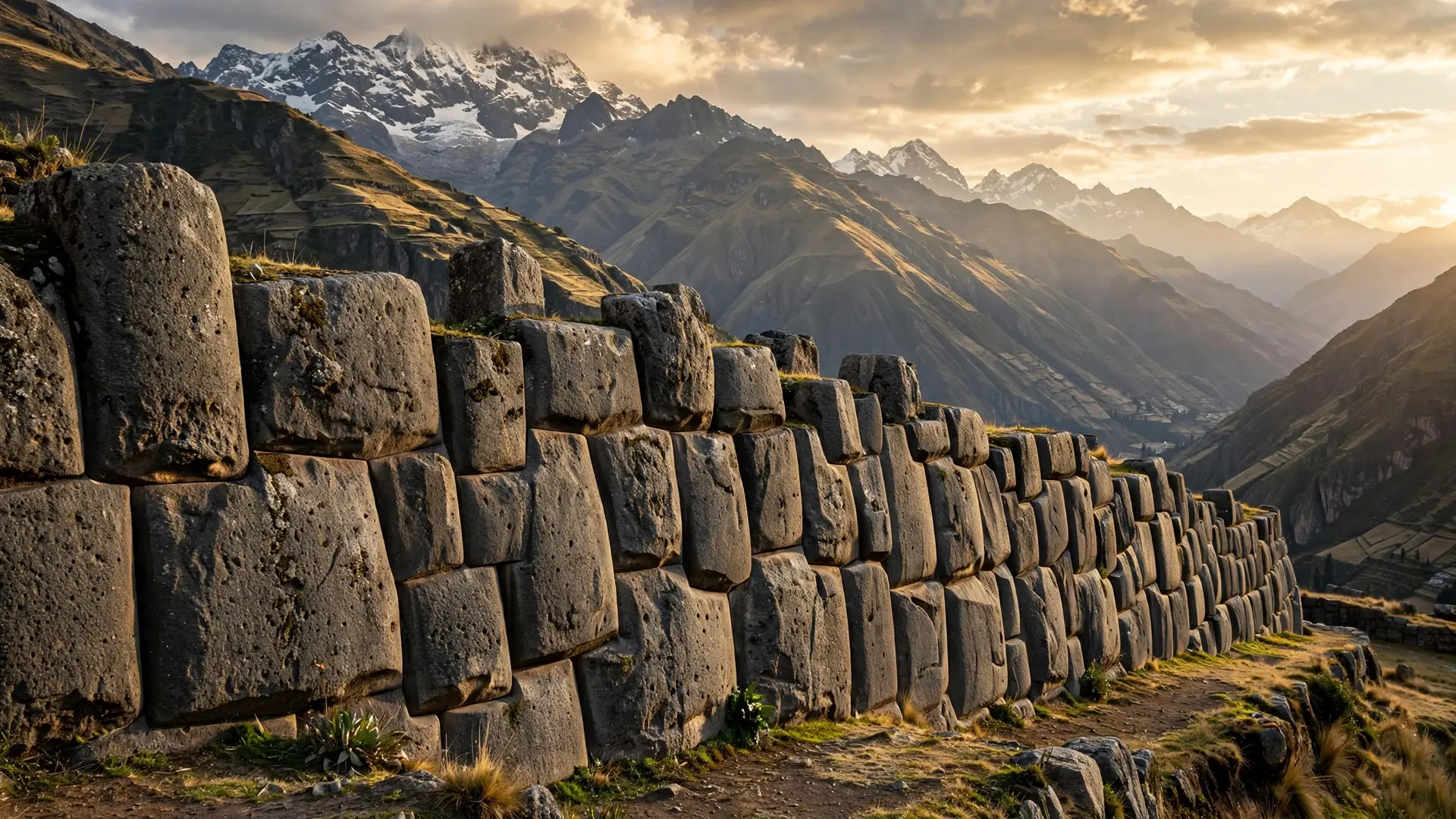
- The unfinished Temple of the Sun centers on the Wall of the Six Monoliths: six rose rhyolite blocks, each roughly 4 meters (13 feet) tall, 1.5 to 2 meters wide, and commonly estimated at about 50 tonnes (WonderHow).
- The rhyolite came from the Kachiqhata quarries roughly 5 km (3.1 miles) away on the far side of the Urubamba River. Beneath at least one abandoned megalith, archaeologists found wooden rollers still in place (WonderHow).
- Masons shaped the stone by pounding with hard hammerstones and fitted blocks through repeated test-fitting, without mortar, draft animals, or wheeled transport (WonderHow).
- The temple stood unfinished when the Spanish arrived in the 1530s. On January 6, 1537, Manco Inca used the terraces to defeat Hernando Pizarro's force, reportedly flooding the plain to bog down Spanish cavalry (History Skills).
Who Ordered the Fortress Built, and When?
Ollantaytambo sits in Peru's Sacred Valley, northwest of Cusco, at about 2,792 meters (9,160 feet) above sea level and roughly 72 km (44.7 miles) by road from the old Inca capital. The Killke people had terraced and farmed its slopes between roughly 900 and 1200 AD, before the Inca arrived. Its transformation into a monument, however, belongs to the reign of Pachacuti, the ninth Sapa Inca, who made it a royal estate. That status was distinct from an ordinary provincial town: a royal estate combined a residence, religious center, and productive farmland under imperial control (machupicchut.com; WonderHow). The town below still follows its original Inca plan: straight streets, walled family compounds called kanchas, and stone-lined water channels. Above it, stepped terraces climb the mountainside toward the Temple Hill, where the most celebrated stonework stands. The town also served as a tambo, a supply station on the Qhapaq Nan, the Inca road system that linked Cusco with the provinces. So while modern guides call Ollantaytambo a fortress, its builders designed it as an estate, a ceremonial center, and a working piece of the empire's supply network (History Skills).
Then came the conquest. In 1536, Manco Inca made Ollantaytambo his headquarters after retreating from Cusco, and in January 1537 his forces turned the terraces into a defensive position, flooding the plain below and driving off a Spanish column led by Hernando Pizarro. It was one of the few clear Inca victories of the conquest era, but the Spanish pressure did not relent, and Manco eventually withdrew toward Vilcabamba. What that interruption meant for the Temple of the Sun is still argued over. Scholars debate whether the Huascar-Atahualpa succession war of the 1520s and early 1530s, the disruption of the Spanish invasion, or a combination of the two pulled labor and attention away from a project only the Inca state could sustain (History Skills; WonderHow).
Where Did the Stones Come From, and How Were They Moved?
The most demanding structure, the Temple of the Sun, was built from rose-colored rhyolite, a volcanic stone different from the grey andesite and limestone used elsewhere at the site. The Inca could have built with local stone; instead they chose pink stone from across the river, which suggests the color and the quality mattered to them. The source was Kachiqhata, a set of quarries on the slopes of Yana Urqu mountain, roughly 5 km (3.1 miles) from the temple and on the far side of the Urubamba River (WonderHow). Getting a block from Kachiqhata to the temple was a five-stage logistics operation, and Ollantaytambo is rare among Inca sites because every stage left physical traces:
| Stage | What happened | Evidence on the ground |
|---|---|---|
| 1. Quarrying | Blocks were split from the mountainside using the rock's natural fracture planes, then roughed into shape to cut hauling weight | Quarry faces at Kachiqhata still show where blocks were split and roughly dressed |
| 2. Downhill descent | Roughed blocks were moved down the mountain slope toward the valley floor | Transport roads leading away from the quarry faces |
| 3. River crossing | Blocks were gotten across the Urubamba, possibly by fording at low water, a temporary causeway, or a channel diversion | No settled answer: scholars note the method is not conclusively established |
| 4. Uphill haul | Blocks were dragged up a steep incline to the temple terraces on prepared roadbeds with ropes, log rollers, and sledges | Clay-and-gravel roadbeds, ramp remains, and wooden rollers found under an abandoned megalith |
| 5. Final fitting | Each block was pounded into shape and test-fitted against its neighbors until joints closed, with no mortar | Pitted tool marks on unfinished blocks; mortarless joints on the standing wall |
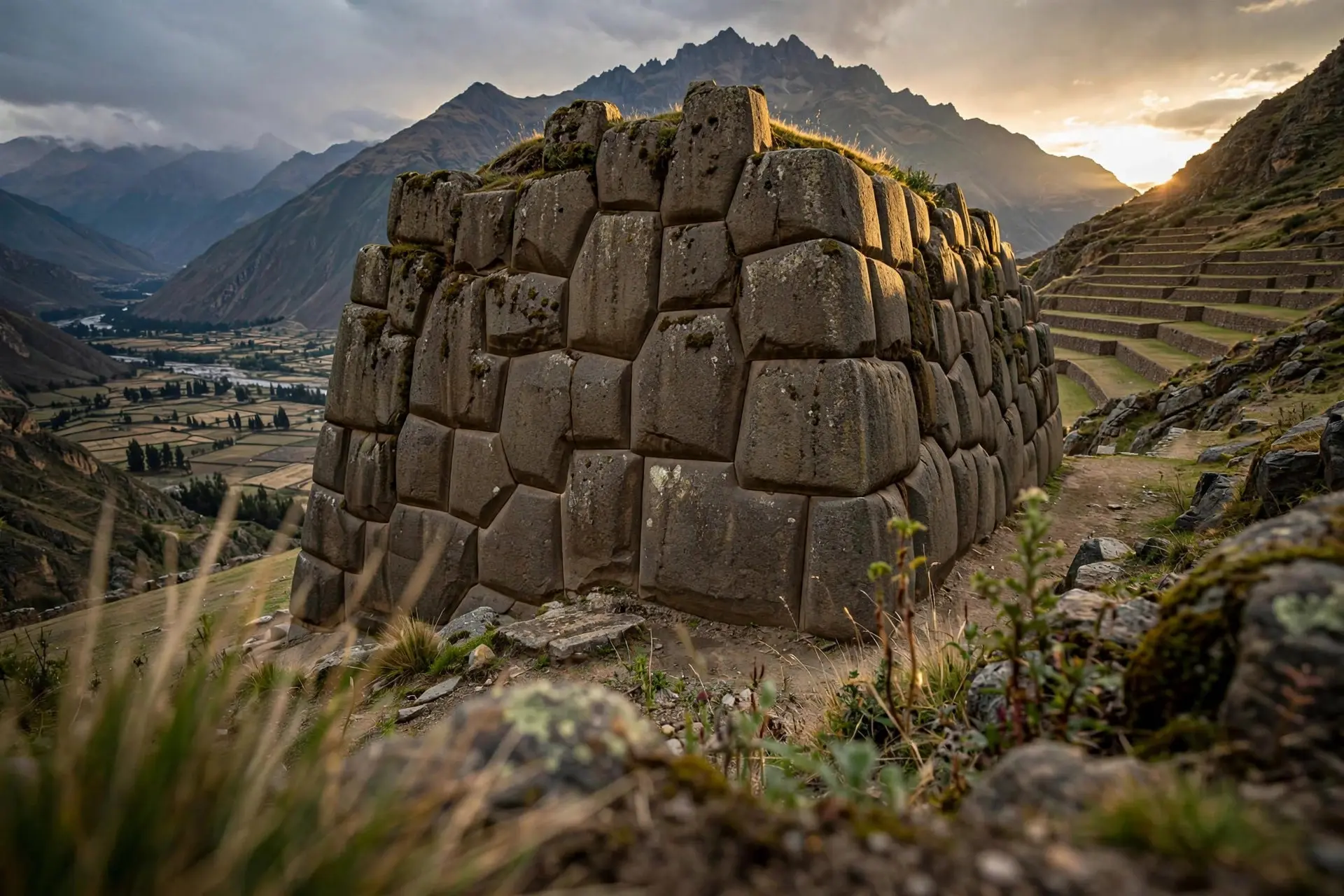
| The fitting itself is what made the masonry famous. Ashlar masonry means blocks cut with squared faces and set edge to edge without mortar, so the fit has to be exact. At Ollantaytambo, researchers led by Jean-Pierre Protzen, who carried out extensive on-site studies of Inca quarrying and dressing methods, found that masons did the work with hard stone hammerstones rather than metal tools, crushing the rhyolite away a few millimeters at a time and setting each block in place to check the fit before pounding it further. It was slow, repetitive, and entirely possible with materials the Inca had: stone, rope, timber, and organized human labor (WonderHow). |
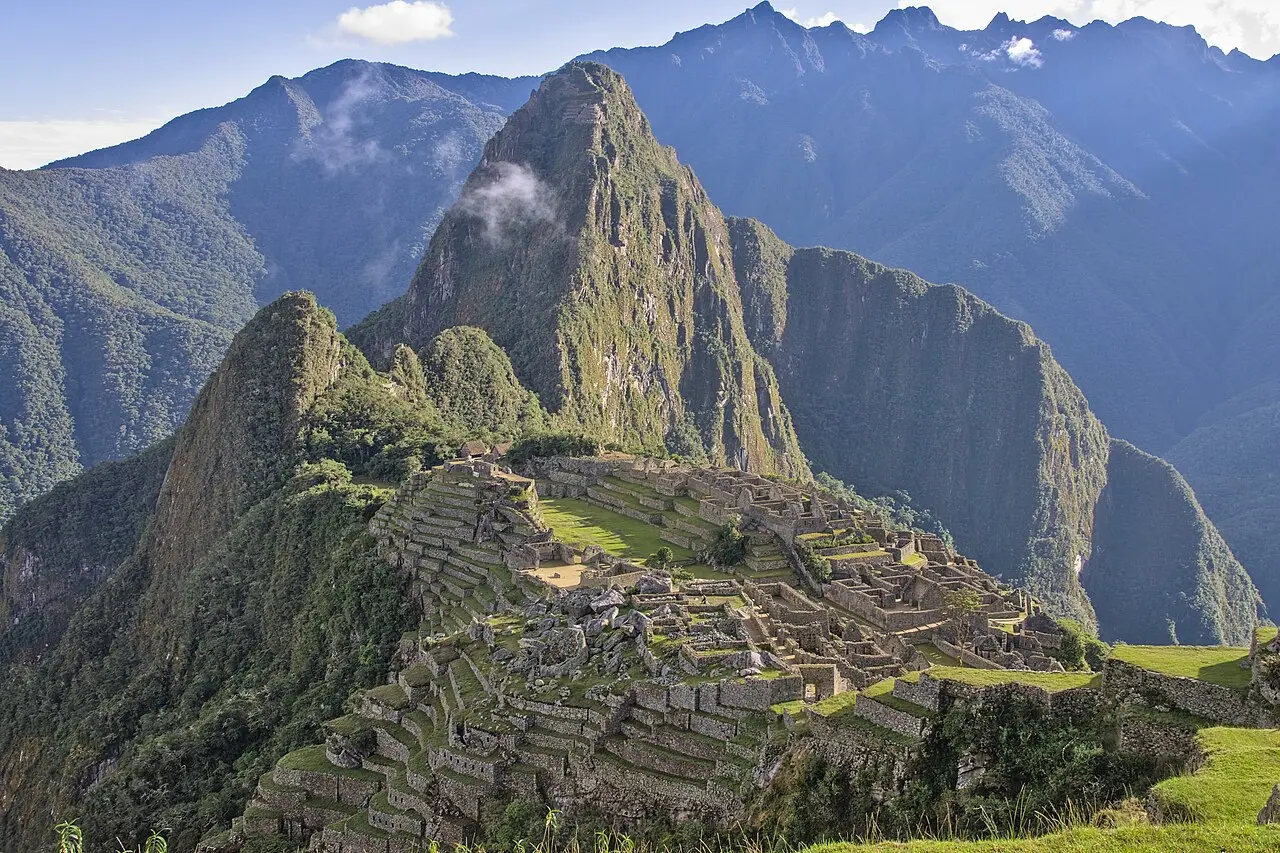
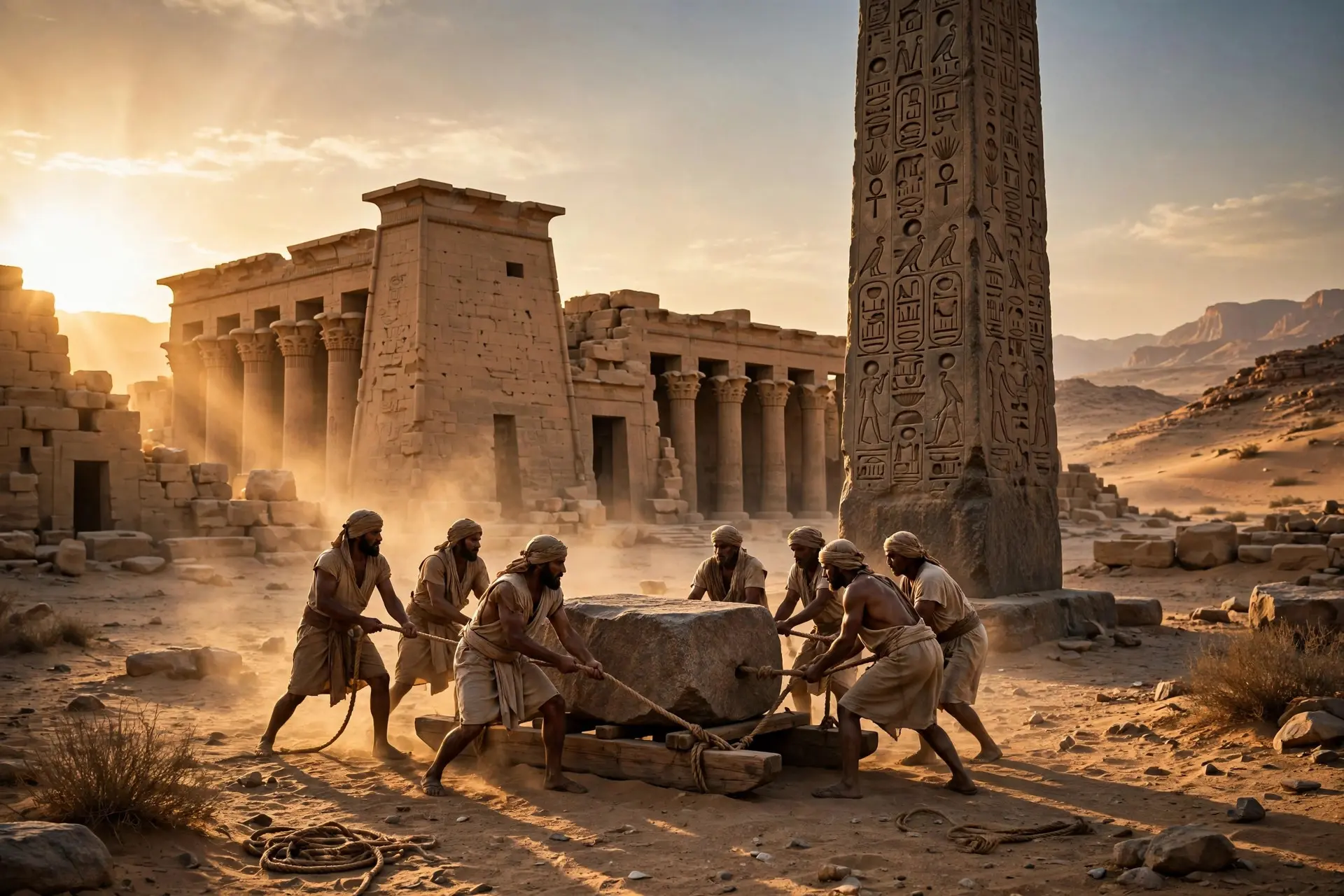
That labor came through the mit'a system, a rotational tribute under which able-bodied subjects owed periods of work on roads, terraces, and monumental building instead of tax. Mainstream archaeology reads Ollantaytambo as a large state project sustained by this system: thousands of workers mobilized, fed, and directed over months or years. The blocks that failed to make it tell the same story. Along the transport route, several massive stones were abandoned exactly where the effort stopped, known locally as piedras cansadas, the "tired stones." One still rests at the base of a ramp leading up to the temple (WonderHow). The scale recalls the broader Inca building world. The same organizational muscle raised the mortarless stonework of Inca sites across the Andes and the mountaintop estate of Machu Picchu, built by the same imperial system a generation earlier. And the hauling problem was not unique to Peru: the Egyptians solved comparable moves with sledges and ropes, as seen in how the Egyptians moved pyramid stones and the raising of Egyptian obelisks.
What Most People Get Wrong About Inca Engineering
The first mistake is the "impossible mystery" framing. Ollantaytambo actually undercuts that reading, because it is the clearest record anywhere in the Inca world of a megalithic project caught mid-process. A finished wall hides how it was made; an unfinished one preserves it. The quarry faces, the roadbeds, the rollers under the abandoned block, and the tired stones along the route document a thoroughly human construction method, not a vanished technology (WonderHow). The second mistake is assuming the pink stone came from nearby. The six wall blocks are rose rhyolite, entirely unlike the local andesite and limestone elsewhere at the site, which means the builders deliberately crossed a river and climbed a mountain for their material. Choosing pink stone from across the river, rather than building from local stone, suggests appearance and prestige drove the decision. (WonderHow). The third mistake is treating the famous facts as settled when they are not. Exactly how the blocks crossed the Urubamba is not conclusively established: proposals include a temporary causeway, a partial river diversion, or fording at a dry-season low point. The largest monolith is reported at more than four meters (13 feet) high and two meters wide, but weight estimates vary across sources, so "about 50 tonnes each" is the commonly cited figure rather than a measured one. The stepped, zigzag relief carved into the Wall of the Six Monoliths is usually linked to Inca solar ritual, though its precise meaning is not confirmed. Honest archaeology separates these three categories: what the ground proves, what scholars infer, and what remains open (WonderHow; machupicchut.com). Ollantaytambo deserves its reputation. The reason is less mysterious than it is impressive: a state that could feed and direct thousands of workers, masons who spent days pounding a single joint, and a project interrupted so completely that the tools, roads, and abandoned stones still lie where the work stopped. How we made this article: FactSpire researched and drafted it with AI assistance and checked every fact against the sources listed above.
Frequently asked questions
Did the Incas really move 50-tonne blocks without wheels?
The physical evidence says yes. Archaeologists have documented clay-and-gravel roadbeds, ramps, and even wooden rollers still lying beneath one abandoned megalith at Ollantaytambo. Masons shaped the blocks with hard hammerstones, then crews hauled them with ropes, sledges, and log rollers, since the Inca had neither wheeled transport nor draft animals.
Why was the Temple of the Sun never finished?
Work stopped in the 1530s, and scholars still debate the cause. Some point to the Spanish invasion, others to the Huascar-Atahualpa succession war that convulsed the empire in the 1520s and 1530s, or to a combination of the two. Roughly cut blocks still sit at the quarry and along the transport route where labor was interrupted.
What is the Wall of the Six Monoliths?
It is the unfinished ceremonial wall at the center of Ollantaytambo's Temple of the Sun: six upright blocks of pink rose rhyolite, each roughly 4 meters (13 feet) tall and about 50 tonnes, set edge to edge with narrow spacer stones between them. A stepped, zigzag relief carved across its face probably relates to Inca solar ritual, but its precise meaning remains unsettled.
Was Ollantaytambo actually a fortress?
Only partly. It was built as a royal estate for the emperor Pachacuti, with a living town, farming terraces, and a ceremonial complex on the hill above. It also worked as a tambo, a supply station on the Inca road network. The 'fortress' label comes from its defensive terraces and its famous role as Manco Inca's stronghold against the Spanish in 1537.
Sources
- Ollantaytambo — WonderHow, WonderHow
- The last Inca fortress: Ollantaytambo and the resistance against the Spanish conquistadors, History Skills
- Ollantaytambo: history, ruins, all you need to know before visiting, machupicchut.com
- Masonry Techniques of the Inca's Master Builders, Earth As We Know It