Why Does an Hour Have 60 Minutes? The Sumerian Answer
Why does an hour have 60 minutes? The Sumerians' base-60 counting system still runs our clocks. The math, the myths, and the 5,000-year story.
Key takeaways
- The Sumerians counted in base 60 before 3500 BC; the Babylonians turned it into a positional system around 2000 BC.
- 'Minute' is short for pars minuta prima, the first small part of an hour; 'second' is the second small part, 1/3,600 of an hour.
- Mesopotamia used a luni-solar calendar: 12 lunar months of 354 days, with a 13th month added by the king's decree.
- Greek astronomers adopted Mesopotamian sexagesimal arithmetic, which is why it still divides our hours and degrees.
A "second" is short for pars minuta secunda, Latin for "the second small part" of an hour: one sixtieth of a sixtieth, or 1/3,600 of an hour. The Sumerians never used the word. They built the counting system behind it: base-60 arithmetic invented some 5,000 years ago in southern Mesopotamia, and your phone's clock still runs on it today.
- The Sumerians of southern Mesopotamia were counting in base 60 before 3500 BC, and when the Babylonians replaced them around 2000 BC, the system survived in cuneiform mathematics. MacTutor
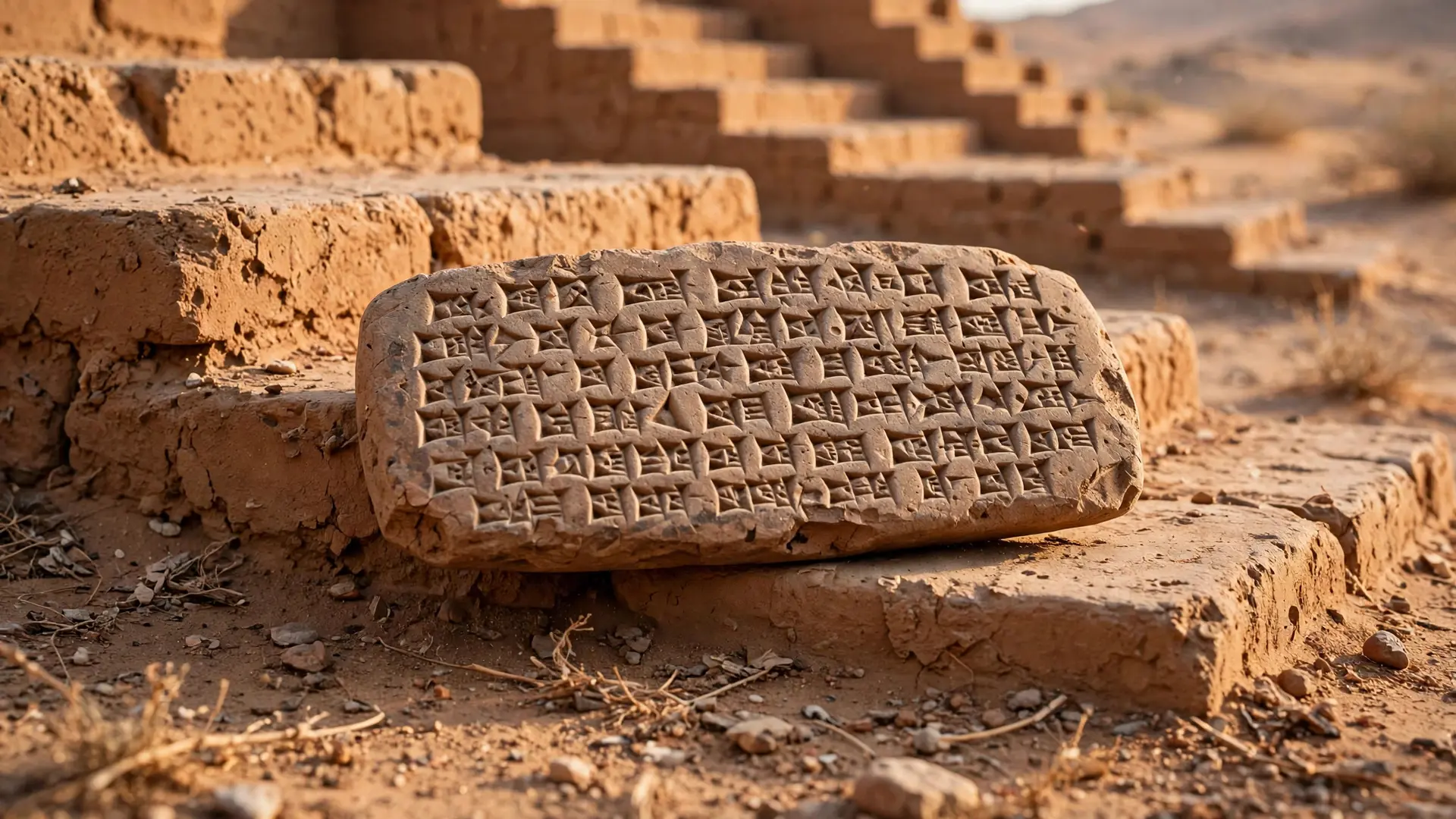
- Babylonian scribes wrote every number with just two wedge symbols, one for a unit and one for ten, then let position do the rest: 1s, 60s, 3,600s (60²), and 216,000s (60³). Penn Museum
- In base 60, the number 1,57,46,40 means 1×60³ + 57×60² + 46×60 + 40, which equals 424,000 in decimal: a true place-value system, with no zero at first. MacTutor
- Theon of Alexandria, writing in the 4th century AD, argued that 60 was special because it is the smallest number divisible by 1, 2, 3, 4, and 5. MacTutor
- The Mesopotamian year held 12 lunar months of 29 or 30 days, 354 days in all, leaving an 11-day gap against the 365-day solar year. Kings closed it by decreeing a 13th month based on observation. University of Hamburg
- When the first practical clocks arrived in medieval Europe, their subdivisions were named in Latin: the pars minuta prima, our minute, and the pars minuta secunda, our second, exactly 1/3,600 of an hour. BBC Science Focus
Why does an hour have 60 minutes, not 100?
Because 60 divides cleanly. A Sumerian administrator splitting a harvest into thirds, quarters, or sixths needed whole numbers, and 60 delivers: 60/3 = 20, 60/4 = 15, 60/6 = 10. In base 10, dividing by 3 gives a repeating decimal; in base 60, the common fractions all come out neat. Theon of Alexandria noticed this in the 4th century AD, calling 60 the smallest number divisible by 1, 2, 3, 4, and 5. The historians of mathematics at the University of St Andrews point out that 60 has another quiet advantage: its prime divisors are 2, 3, and 5, so far more fractions end cleanly in base 60 than in base 10, which only manages 2 and 5. A Babylonian scribe could write 0;7,30 (7/60 + 30/3,600) and land exactly on 1/8, a fraction that refuses to terminate in decimals the way we write them.
Britannica is honest about the limits of this story: the reasons for choosing 60 are obscure, but its many divisors would have greatly eased division. That is probably close enough. The Sumerians needed arithmetic that worked for grain accounts, canal digging, and land division, and sixty kept splitting without breaking.
How did the Sumerians count in base 60?
They wrote on clay, and clay shaped the system. Pressing a reed stylus into wet tablets could not make curved lines, so everything was built from two wedge marks: a small wedge for one and a wider wedge for ten. By stacking these, scribes formed every number from 1 to 59. Then position took over: the next column left was sixties, then 3,600s, then 216,000s, exactly as our columns are ones, tens, hundreds, and thousands. That made it the first place-value system in history, and it had one famous flaw: no zero. The number 1 and the number 60 looked identical, and only context told them apart. Later Babylonian scribes invented a placeholder symbol for empty positions, but the Sumerian original just carried on by context. It was more than clever notation. Tablets found at Senkerah on the Euphrates in 1854, dated to around 2000 BC, carry tables of squares for every number up to 59 and cubes up to 32. The Babylonians even compiled reciprocal tables stretching to numbers of several billion, which let them divide by multiplying, since they never developed long division. Their mathematics went far beyond arithmetic: surviving tablets show Babylonian scribes approximating the square root of two in base 60 to remarkable precision.
How did the Sumerians keep track of days, months, and years?
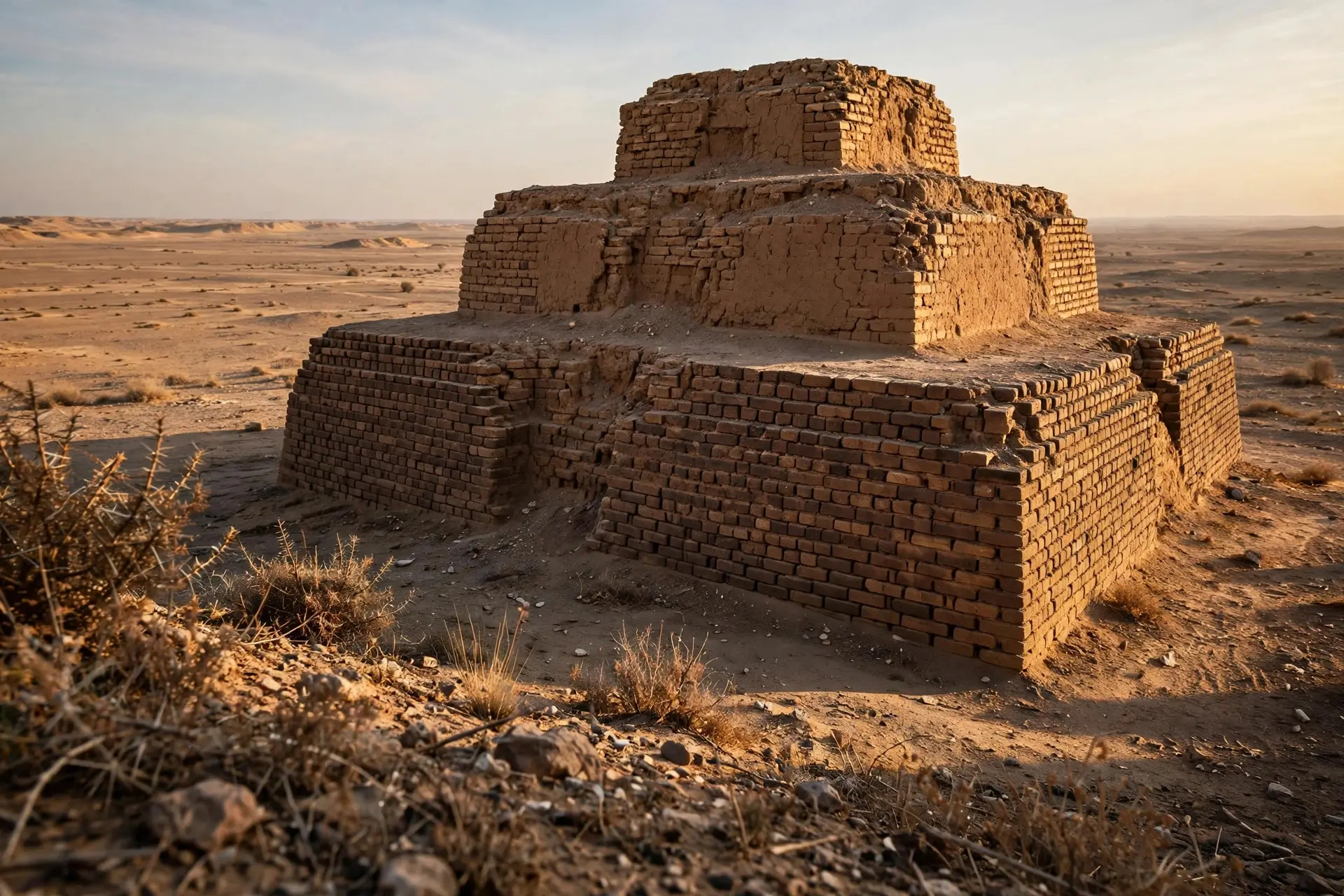
The Moon was their calendar. A month began when the first sliver of the new crescent appeared low in the western sky just after sunset, and each month lasted 29 or 30 days, depending on observation. Twelve of these lunar months made 354 days, which left an 11-day shortfall against the 365-day solar year and its seasons. The fix was a 13th month, added whenever the drift became obvious. The decision belonged to the king, based on observation of the sky and the harvest. It stayed that way for over a thousand years: only around 400 BC did Mesopotamian astronomers formalize the pattern that 19 solar years equal 235 lunar months, so seven extra months were inserted over each 19-year cycle. Months were named for what happened in them, agricultural work or religious festivals, and the names varied from city to city. Years had no numbers the way we use them; in the third millennium BC a year was named for a great event, a military victory or a temple built, glorifying the king. The priest-astronomers who watched the sky worked in the great temple complexes, like the mud-brick ziggurats of Sumer, and their observations kept the whole farming economy aligned with the seasons.
How did base 60 reach your phone?
The Sumerian invention survived every empire that followed. Here is the chain:
| Era | What happened |
|---|---|
| Before 3500 BC | The Sumerians of southern Mesopotamia count in base 60 |
| Around 2000 BC | Tablets at Senkerah record squares up to 59 and cubes up to 32 |
| Around 1900 BC | Babylonian scribes make the system fully positional, with fractions |
| Around 400 BC | The 19-year cycle of 235 lunar months with seven extra months is formalized |
| Hellenistic era | Greek astronomers adopt the Mesopotamian sexagesimal method for angles and time |
| Medieval Europe | Clockmakers name the first and second small parts of an hour in Latin |
| Today | Hours, minutes, seconds, and 360-degree circles still run on sixty |
| Britannica notes that the Greeks adopted the Mesopotamian sexagesimal method in arithmetic, and it survives in the standard units for angles and time used to this day. The Babylonian city of the Hanging Gardens carried the system forward, Greek astronomy spread it west, and medieval Europe gave its subdivisions the names we still say aloud every day. |
Did the Sumerians really invent the 60-minute hour?
No, and that is the twist. They invented the grammar of sixties, not the clock face. The Sumerians divided days by the sun and the Moon, months by the Moon, and years by kings' decrees. The minute and the second as named units arrived thousands of years later, when medieval astronomers following the Babylonian tradition cut the hour into sixty parts and cut those again. Some other things people get wrong:
| Myth | What the evidence says |
|---|---|
| Someone clever "chose" 60 as the base | Historians of mathematics doubt anyone ever chose a base; it grew out of how Sumerians counted, and no single theory for why is fully convincing |
| The Sumerians had 60-minute hours | The hour-and-minute clock face came millennia later; ancient days were also divided into 12 longer "double-hours" |
| Base 60 died with cuneiform | Greek astronomers kept it for angles and time, and it still divides our circles into 360 degrees |
| Why 60 and not something else? The theories compete. Theon liked the divisors. Another theory counts to 60 on two hands: twelve finger segments on one hand, counted off with five fingers of the other. The most widely accepted theory says two counting traditions, one base-12 and one base-5, merged as peoples mixed, and sixty was the number everyone understood. As the MacTutor historians put it, the honest answer is that we do not have to go further back: the sexagesimal system originated with the Sumerians, and the exact reason may never be pinned down. | |
| The takeaway. The Sumerians did not leave us a clock. They left us something stranger: a way of counting so practical that it outlived their civilization, their language, and their clay tablets. Just as Inca masons fitted stones without mortar, Sumerian scribes fitted numbers together without a zero, and the structure held. From harvest accounts pressed into wet clay to the seconds ticking on your screen, from the mysterious Baghdad Battery to Greek star catalogs, Mesopotamia's sixties never left. Every time you say "give me a minute," you are speaking a little Latin that is really a little Babylonian, which is really Sumerian. | |
| How we made this article: FactSpire researched and drafted it with AI assistance and checked every fact against the sources listed above. |
Frequently asked questions
Why is a minute called a minute?
Because it is the pars minuta prima, Latin for the first small part of an hour. Medieval clockmakers divided the hour into sixty parts, then divided those parts by sixty again. That second division, the pars minuta secunda, is what we call the second: 1/3,600 of an hour.
Did the Sumerians have clocks with 60-minute hours?
No. The Sumerians invented the base-60 counting system, not the modern clock face. They tracked time with lunar calendars and observed the sky, while the minute and second as named units came thousands of years later through Greek astronomers and medieval Latin clockmakers working in the Babylonian tradition.
How do you write numbers in base 60?
Sumerian and Babylonian scribes used two cuneiform symbols, a wedge for one and a wedge for ten, to build every number from 1 to 59. Each position then stood for powers of sixty: 1s, 60s, 3,600s, and 216,000s. So 1,57,46,40 in base 60 equals 424,000 in our decimal notation.
Why is a circle 360 degrees?
Because 360 is six sixties, and the Greek astronomers who set our angular measures inherited their arithmetic from Mesopotamia. They divided the circle the same way they divided the hour: into sixty parts, then sixty again, giving degrees, minutes of arc, and seconds of arc.
Sources
- Babylonian mathematics, MacTutor History of Mathematics, University of St Andrews
- Babylonian numerals, MacTutor History of Mathematics, University of St Andrews
- How was the length of a second first calculated?, BBC Science Focus Magazine
- The New Year and calendar in Ancient Mesopotamia, Centre for the Study of Manuscript Cultures, University of Hamburg
- Sexagesimal number system, Britannica
- Babylonian Math, Penn Museum