What Is the Lowest Capital City on Earth? Baku, Azerbaijan
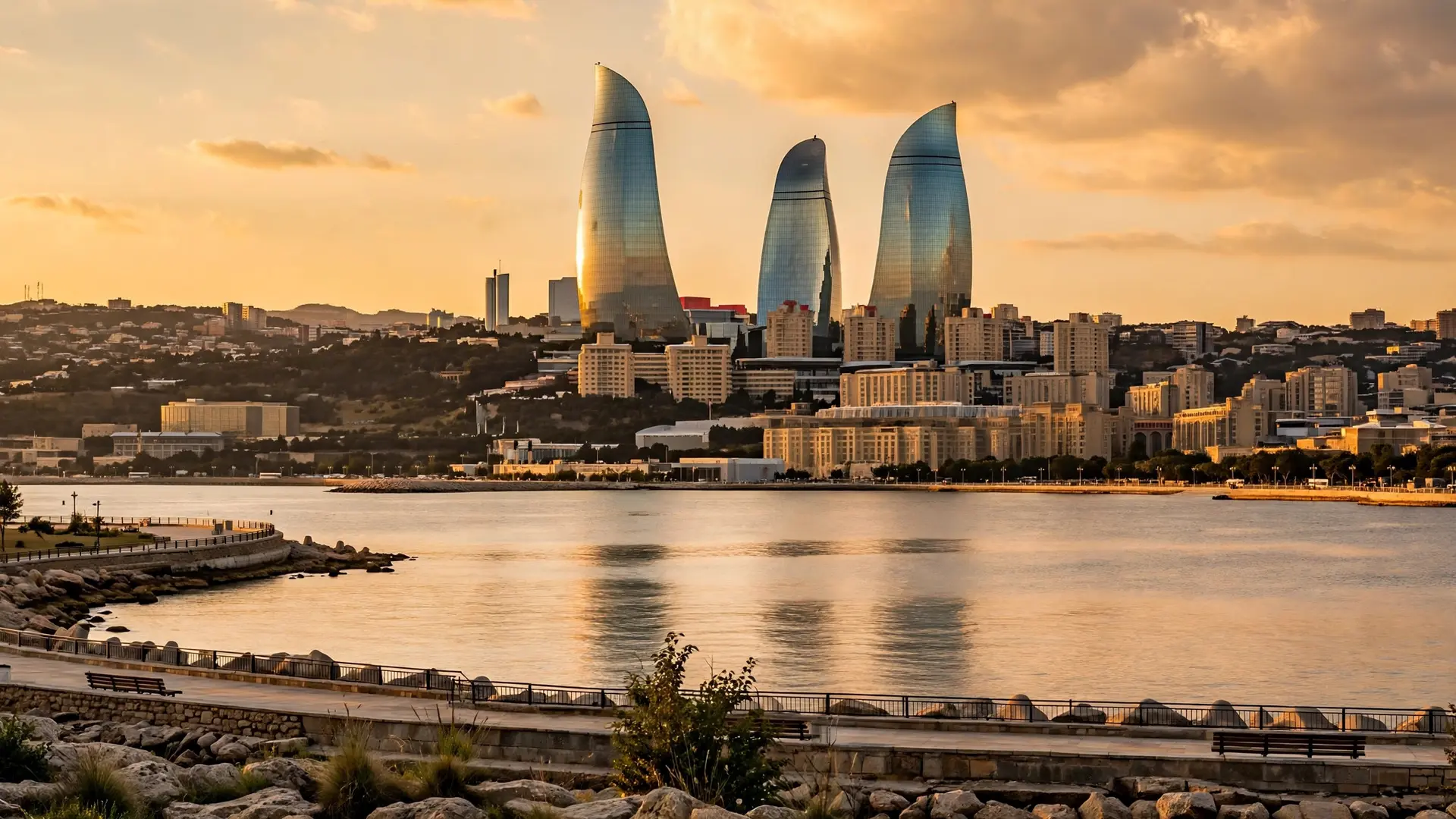
Baku, Azerbaijan sits 28 meters below sea level: the lowest capital city on Earth. Why the Caspian Sea sits so low, and what life is like there.
Key takeaways
- Baku, Azerbaijan, at 28 m (92 ft) below sea level, is the world's lowest national capital.
- Amsterdam (about 2 m below sea level) is the only other capital below sea level, 26 m higher than Baku.
- The Caspian Sea, an enclosed remnant of the Tethys Sea, sits about 28 m below the global ocean.
- Baku drilled the first mechanical oil well in 1846 and once supplied over half the world's oil.
- About 350 mud volcanoes cluster around the city; its Walled City is a UNESCO site since 2000.
Baku, Azerbaijan, is the lowest capital city on Earth at 28 meters (92 feet) below sea level, 26 meters (85 feet) lower than Amsterdam, the only other capital below sea level. The twist: Baku isn't in a crater. It sits on the Caspian Sea, an enclosed basin whose surface rests far below the global ocean.
- No national capital sits lower than Baku: the city rests 28 meters (92 feet) below sea level. (Prosecutor General's Office of Azerbaijan)
- Amsterdam, at about 2 meters (7 feet) below sea level, is the only other national capital below sea level. (AboutNL)
- The Caspian Sea's surface sits around 28 meters below the global ocean; Britannica gives 27 meters (90 feet). (ESA, Encyclopaedia Britannica)
- The Caspian spans about 386,400 square kilometers (149,200 square miles), the world's largest inland body of water, and plunges 1,025 meters (3,360 feet) deep. (Encyclopaedia Britannica)
- Baku's first mechanically drilled oil well dates to 1846; in the late 19th century the city supplied more than half of the world's oil output. (International Relations Review)
- About 350 mud volcanoes cluster around Baku and the nearby Caspian shore. (Prosecutor General's Office of Azerbaijan)
Why is Baku below sea level?
The city wraps around its bay on the western shore of the Caspian, on the Absheron Peninsula. Because the Caspian's surface sits about 28 meters below the global ocean, everything on its shoreline, including a capital of 2.432 million people (2023 figure), sits below sea level too. There is no crater, no sunken bowl you can see from the street. The oddity is relative to a faraway ocean, not to the ground underfoot. That relative framing is the whole story. The Caspian fills a deep depression between Europe and Asia, in ESA's phrase, and its surface is simply the regional base level: the lowest water can sit in that basin. Baku is below sea level the way a basement is below the roof, not the way a pit is below the yard. And the basin in question is enormous: the Caspian Sea is the world's largest lake by area, so "below sea level" here describes a coastline shared by five countries.
How did the Caspian Sea end up below the ocean?
It used to be ocean. The Caspian is a remnant of the ancient Tethys Sea, and it stayed connected to the world ocean through the ancestors of the Black and Mediterranean seas until about 11 million years ago, when the link closed. What remained was an enclosed basin: rivers flow in, but nothing flows out. Water escapes only by evaporation. In an arid region, that one-way plumbing sets the water level wherever inflow and evaporation balance, and the balance point sits well below the ocean's. The Volga, Europe's longest river, drains about a fifth of Europe's land area and supplies 80 percent of the Caspian's freshwater inflow, yet even the Volga cannot fill the basin to ocean level against the evaporation of a desert climate. The sea's level also breathes over decades: it fell through the 1960s and 1970s as dams went up on its feeding rivers, then rose about 2.5 meters (8 feet) starting in the late 1970s. ESA notes it has since stabilized and may be falling again. How a sea ends up 28 meters below the ocean, step by step:
- Start with an ocean. The Caspian is a leftover of the ancient Tethys Sea. (ESA)
- Cut it off. About 11 million years ago, its connection to the world ocean closed. (Encyclopaedia Britannica)
- Close the drain. Rivers flow in, nothing flows out; water leaves only as vapor. (Copernicus / Ocean Science)
- Let the desert set the level. Evaporation in the arid basin holds the surface below the ocean's, with the Volga's 80 percent of inflow as the counterweight. (ESA)
- Watch it breathe. Dam-building dropped the level in the 1960s and 1970s; it rose about 2.5 meters from the late 1970s, and may now be falling again. (ESA)
What is life like in the world's lowest capital?
Wind defines the city. Its nickname, the City of Winds, comes from two regular visitors: the cool Khazri blowing down from the north and the warm Gilavar arriving from the south. A 19th-century theory traces the name Baku to Persian words meaning "wind-pounded city," though Azerbaijan's official history prefers an older root, Bagavan. Either way, the wind is the first thing the geography gives you, before the elevation ever registers. The second thing is oil. Baku's first mechanically drilled well was completed in 1846, and by the late 19th century the city supplied more than half of the world's oil output, surpassing the United States as the largest producer in the 1880s. After the 1872 privatization reforms, the Nobel brothers and the Rothschilds poured money in; the Nobels introduced advanced refining and built one of the world's first oil pipelines. By 1900, Baku was the largest supplier of oil on the world market. Marco Polo had already noted the oil fields in the 13th century, which means Baku's petroleum fame is roughly 750 years old.
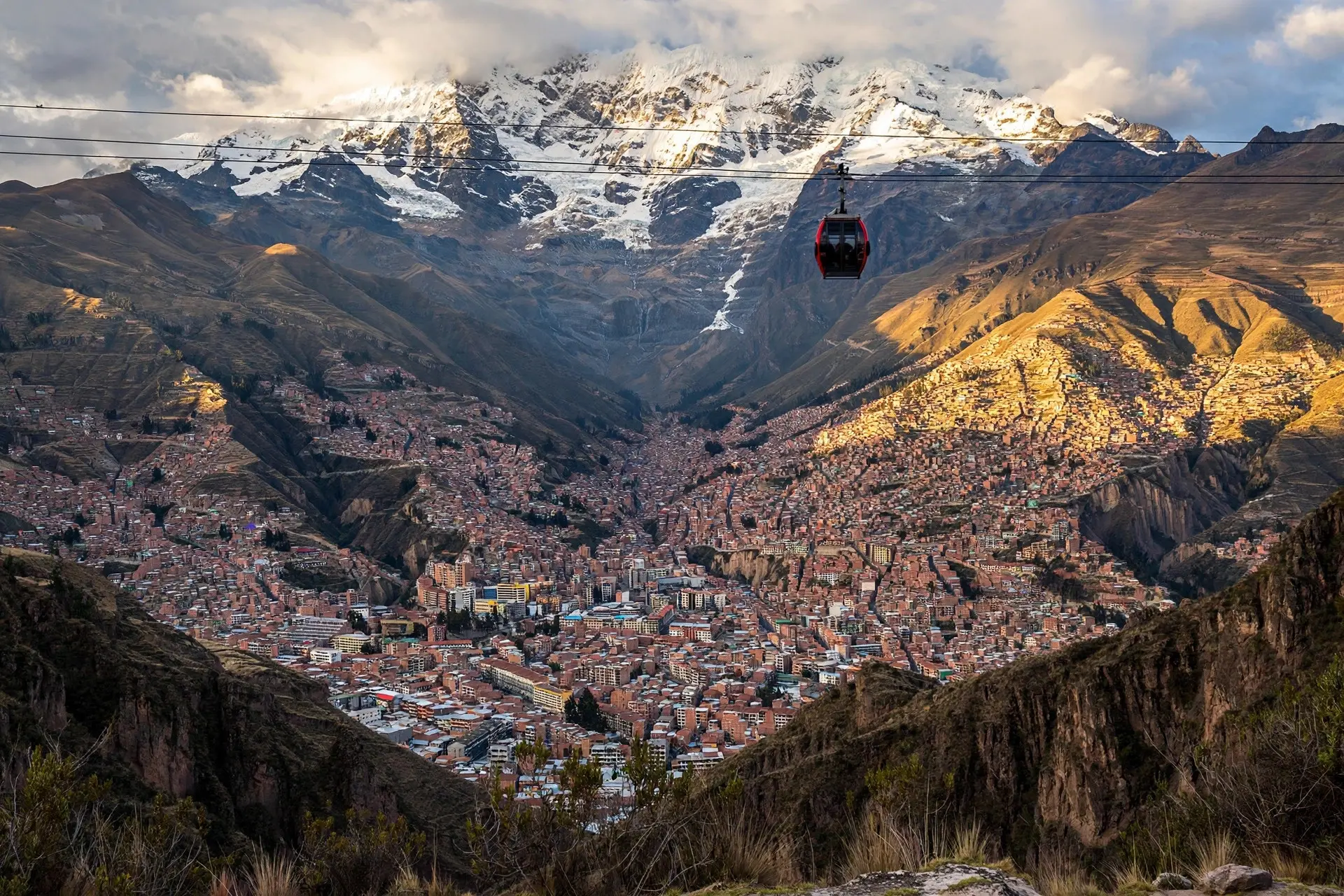
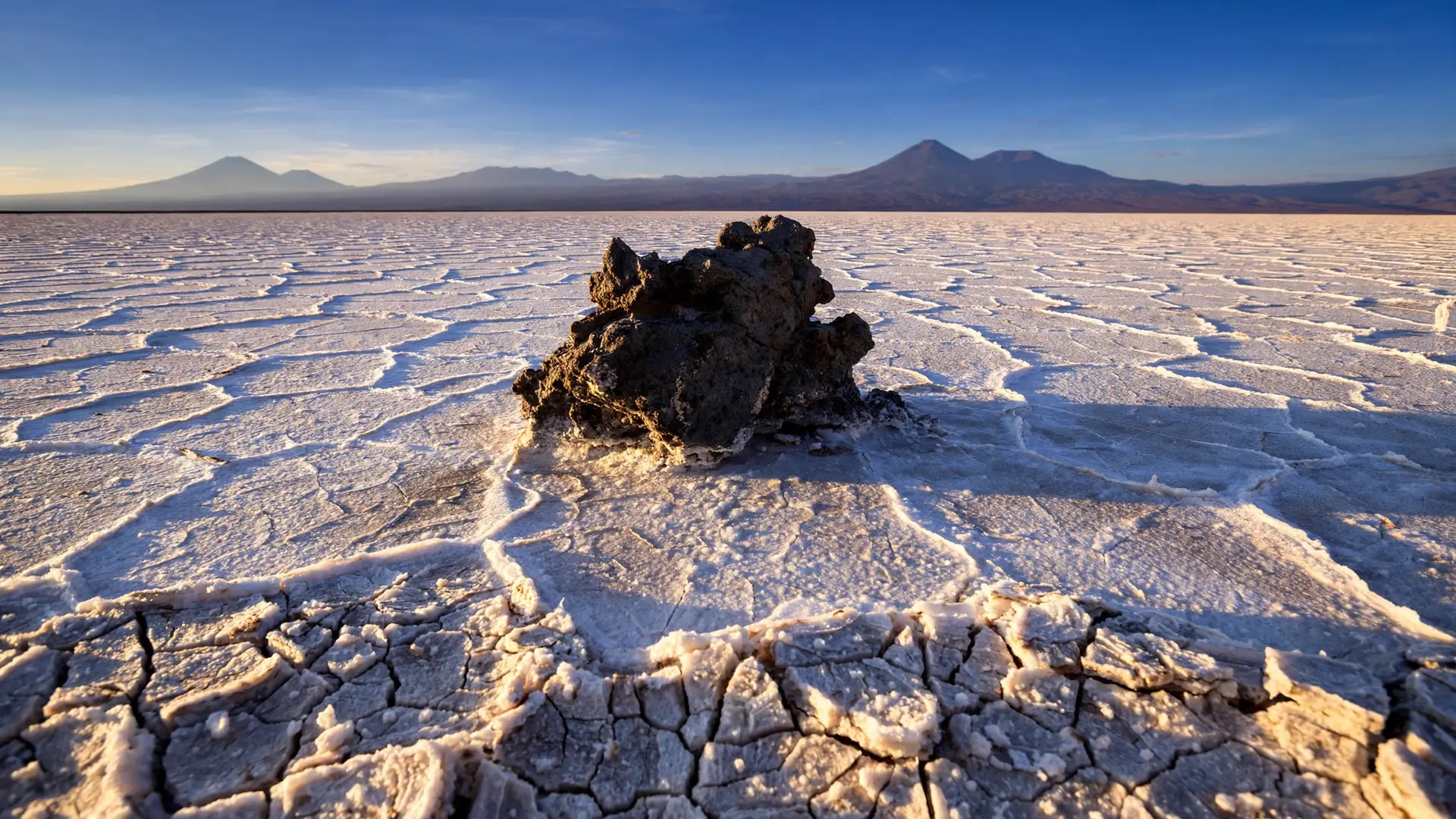
The old town keeps the deeper history. In 2000, UNESCO added the Walled City of Baku to its World Heritage list for the medieval old town, the Shirvanshah's Palace, and the Maiden Tower. The site has been inhabited since the Palaeolithic; the inner city preserves much of its 12th-century defensive walls, the Maiden Tower may date to the 7th or 6th century BC, and the Shirvanshahs' Palace spans the 12th to 15th centuries. It spent 2003 to 2009 on the In-Danger list before conservation work brought it back. And then there are the mud volcanoes. About 350 of them cluster around Baku and the nearby Caspian shore, earning Azerbaijan the nickname "mud volcano capital of the world." The same geology that trapped the oil pushes gray mud up through the Absheron Peninsula in slow, cold eruptions. Extreme-city records come in many flavors: Arica holds the driest-city record, and at the other end of the scale, La Paz, Bolivia, the highest capital on Earth, sits 3,640 meters (11,942 feet) above sea level. Baku owns the bottom of the ranking by 26 meters over its nearest rival.
What most people get wrong about below-sea-level cities
The first mistake is picturing a crater. Nothing about Baku looks sunken. "Below sea level" compares the city to the surface of the distant ocean, and the Caspian basin's depression is regional, spread across five countries, not a pit with the city at the bottom. Stand on the Baku waterfront and the only clue is a number on a surveyor's report. The second mistake is assuming plenty of capitals share the distinction. They don't. Amsterdam is the entire rest of the list, at about 2 meters below sea level. After Baku and Amsterdam, every national capital on Earth sits at or above the ocean's surface. The third mistake is thinking the Dead Sea breaks Baku's record. The Dead Sea shoreline sits far lower, around 430 meters below sea level, but it holds a different record: lowest exposed land on Earth, not lowest capital. Records need categories, and capitals are Baku's category alone. The fourth mistake is confusing below sea level with deep underground. Humans have gone far deeper beneath the surface: the deepest mine on Earth in South Africa descends kilometers below the ground its miners stand on. Baku's 28 meters is a quirk of geography; the mine is a feat of engineering. Baku's record is safe for the foreseeable future. No other capital is even close, the Caspian's level would have to rise 26 meters to strand Amsterdam, and the city has spent 750 years turning its strange geology, wind, mud, and oil, into an identity. The lowest capital on Earth turns out to be one of its oldest energy capitals too. How we made this article: FactSpire researched and drafted it with AI assistance and checked every fact against the sources listed above.
Frequently asked questions
Is Baku really below sea level?
Yes. Baku rests 28 meters (92 feet) below sea level, which an official Azerbaijan government briefing calls the world's lowest-lying national capital. The city sits on the Caspian Sea, an enclosed basin whose surface lies far below the global ocean, so the whole shoreline shares the distinction.
Which is the only other capital below sea level?
Amsterdam, at about 2 meters (7 feet) below sea level, a full 26 meters (85 feet) higher than Baku. Every other national capital sits at or above sea level. Baku's margin is so large that no city comes close to challenging it.
Why is the Caspian Sea below ocean level?
The Caspian is a leftover of the ancient Tethys Sea, cut off from the world ocean about 11 million years ago. Rivers flow in, with the Volga supplying 80 percent of the inflow, but water escapes only by evaporation. In the arid basin, that balance holds the surface about 28 meters below the global ocean.
Why is Baku called the City of Winds?
Two regular winds shape life there: the cool Khazri blowing from the north and the warm Gilavar from the south. A 19th-century theory even traces the city's name to Persian words meaning wind-pounded city, though Azerbaijan's official history prefers an older root, Bagavan.
Sources
- BAKU, Prosecutor General's Office of Azerbaijan
- The Caspian Sea, ESA
- Caspian Sea | Facts, Map, & Geography, Encyclopaedia Britannica
- Walled City of Baku with the Shirvanshah's Palace and Maiden Tower, UNESCO World Heritage Centre
- Baku, Azerbaijan | Geography and Cartography | Research Starters, EBSCO
- The Power Beneath the Caspian: Baku's Oil and Its Impact on Tsarist Russia, International Relations Review
- Is Amsterdam below sea level?, AboutNL
- Currents Generated by the Sea Breeze in the Southern Caspian Sea, Ocean Science / Copernicus