The Microwave Oven Was Invented by a Melted Chocolate Bar
In 1945, a radar magnetron melted the candy bar in Percy Spencer's pocket. He turned the mishap into microwave cooking — and the giant Radarange.
Yes — the microwave oven really was invented because of a melted chocolate bar. In 1945, Raytheon engineer Percy Spencer noticed a candy bar melting in his pocket while he worked beside an active radar magnetron, and instead of wiping off the mess, he asked what else the invisible energy could heat. Within months, Raytheon had filed a patent for cooking food with microwaves — and one of the defining appliances of modern life was born.
The accident, though, is only half the story. Thousands of people could have melted a snack beside a radar set and thought nothing of it. What turned a ruined chocolate bar into a revolution was the particular mind it happened to: a self-taught engineer who knew the magnetron so intimately that a softening candy bar read to him not as a mishap, but as a signal.
A Pocketful of Melted Candy
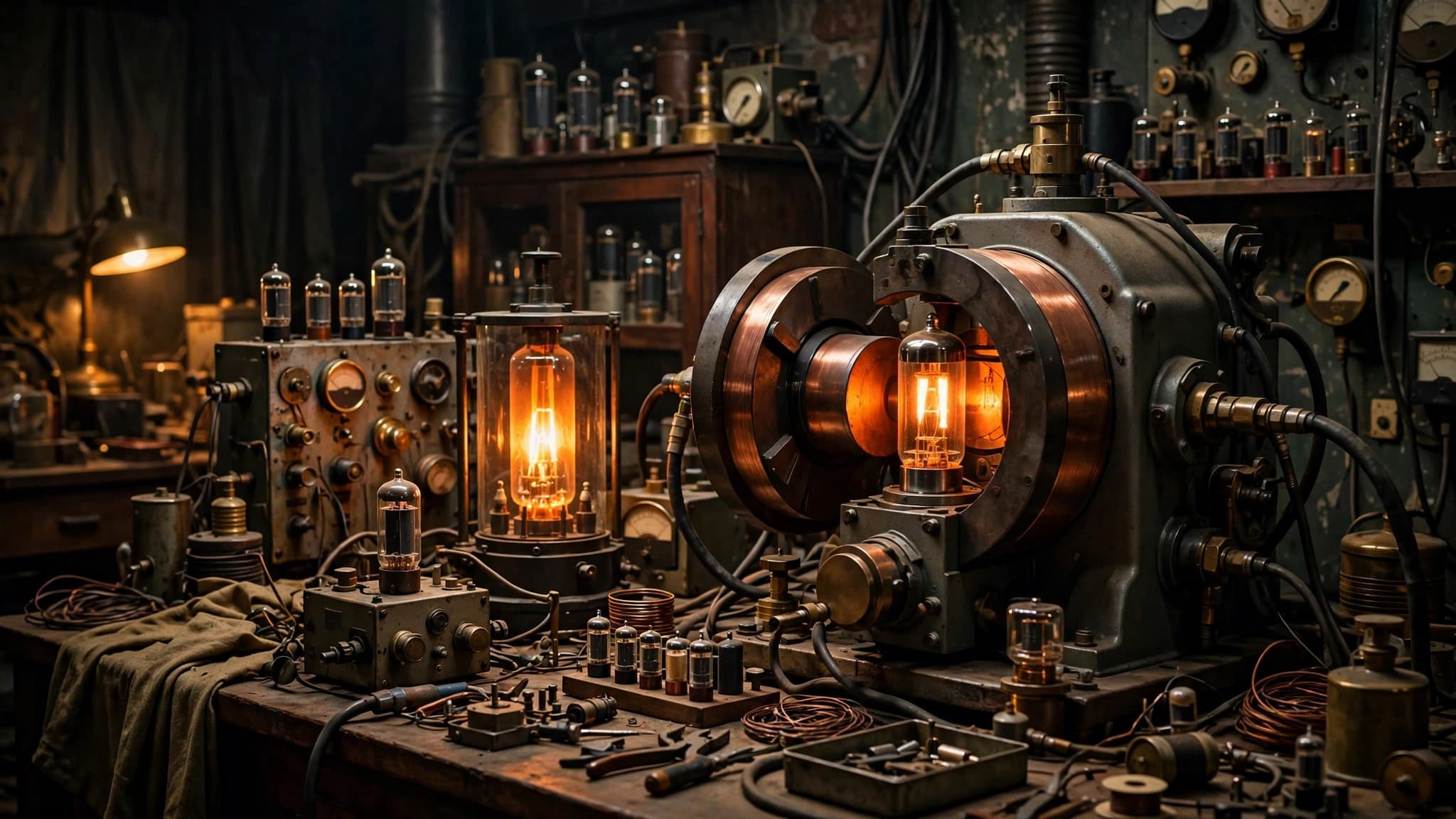
The scene was a Raytheon radar test room in 1945, just after the end of the Second World War. Percy Spencer, then the company's radar expert, was working near a cavity magnetron — a high-powered vacuum tube that generates the microwave-frequency electromagnetic waves used by Allied radar to resolve aircraft and ships. At some point he reached into his pocket and found his chocolate bar softening and melting. Curiously, he felt no heat himself.
Spencer's response was pure experiment. He sent for corn kernels, held them near the running magnetron tube, and watched them pop across the laboratory. Next came an egg, placed in a pot in front of the magnetron — it heated so fast that it burst over a colleague. Like Alexander Fleming's stray mold spore, which drifted onto a petri dish to create penicillin, the moment was random. What followed was anything but.
To verify the effect, Spencer fed microwave power from a magnetron into a sealed metal box, creating a dense electromagnetic field with nowhere for the energy to escape. Food placed inside heated rapidly. On October 8, 1945, Raytheon filed a United States patent application for the microwave cooking process — granted in 1950 under the title "Method of Treating Foodstuffs." A Boston restaurant soon received one of the first microwave ovens for testing. The distance from melted chocolate to filed patent was measured in months. The patent, titled "Method of Treating Foodstuffs," claimed electromagnetic energy at wavelengths around ten centimeters, concentrated in a restricted space — an almost casual description of a technology that would reshape the world's kitchens.
The Man Who Was Ready for the Accident
Spencer is sometimes painted as a lucky passerby. He was the opposite. Born in Maine in 1894, he dropped out of grammar school at twelve to work in a weaving mill, then joined the U.S. Navy at eighteen as a radio operator. On night watch he taught himself, from textbooks, trigonometry, calculus, and physics. At Raytheon he rose to run the company's radar effort, and his most celebrated wartime contribution was solving the magnetron itself: he reworked its painstaking hand-machined assembly into stamped and soldered parts, taking production from a trickle to thousands of units a day. That work earned him the U.S. Navy's Distinguished Public Service Award.
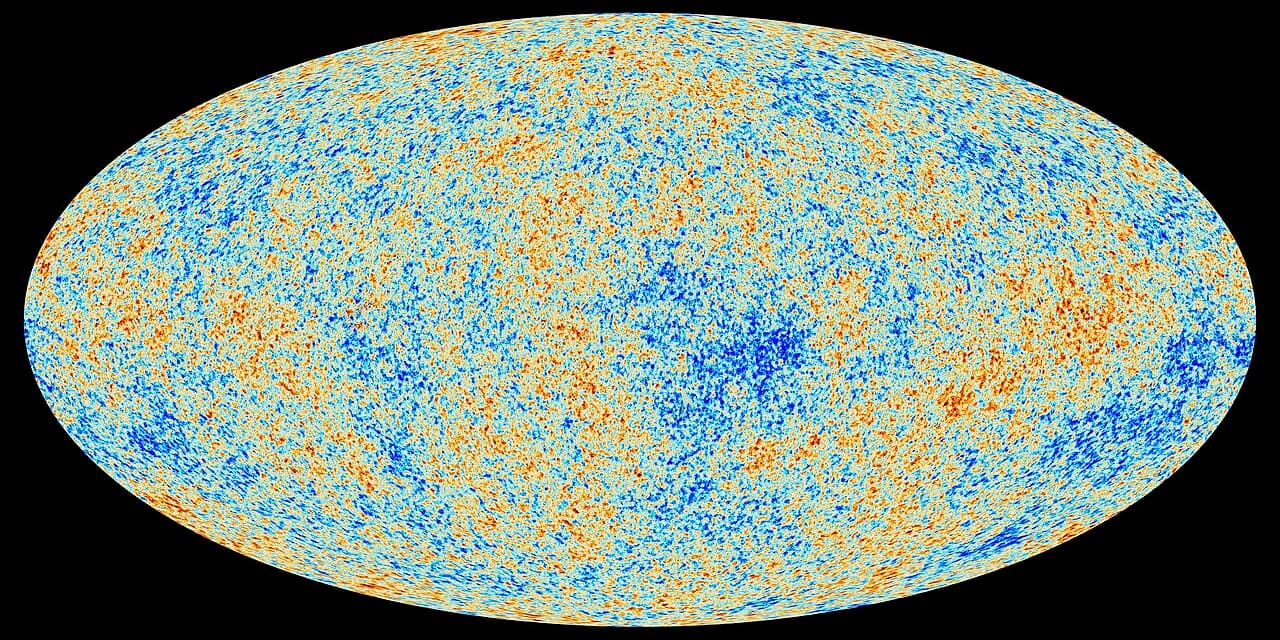
So the melting candy bar landed in the pocket of the one man in the building who understood exactly what stood beside him. He knew the magnetron was bathing his pocket in high-frequency electromagnetic energy — the same band of the spectrum, it turns out, whose faint afterglow we now study as the cosmic microwave background. Spencer grasped almost immediately that microwaves agitate the water molecules in food, and that agitation is heat. The observation was accidental; the diagnosis was the product of a lifetime of preparation.
The Radarange: A Six-Foot, 750-Pound Kitchen Monster
Raytheon named its first commercial microwave the "Radarange," because it cooked with the same magnetron tubes the company built for military radar. The first model arrived in 1947 and looked nothing like a kitchen appliance. It stood about six feet tall, weighed roughly 750 pounds, and needed water cooling. It cost thousands of dollars — accounts range from about $2,000 to $5,000, in an era when that was serious money — which confined it to commercial settings: ocean liners, trains, restaurants, and hotel dining rooms. Some establishments even advertised special all-microwaved meals to promote the novelty.
Raytheon tried selling home versions through a licensing deal with the Tappan Stove Company, but the machines were simply too big, too expensive, and too alien for family kitchens. The technology worked beautifully; the economics didn't.
Twenty More Years to the Countertop
The microwave's second act arrived through a chance dinner meeting in 1963 in Chicago, where two Raytheon executives and the president of Amana Refrigeration happened to be visiting. The encounter ended with Raytheon acquiring Amana, and with Amana's consumer marketing expertise behind it, the first under-$500 countertop model — the Amana Home Radarange — appeared in 1967. By the 1970s, smaller, affordable machines were becoming common fixtures in American kitchens, and today more than 90 percent of American homes have one.
The arc is worth savoring: the discovery took an afternoon, the patent took months, and the journey from patent to the kitchen counter took more than two decades of engineering and business reinvention. Serendipity started the microwave; persistence delivered it. Fittingly, Spencer's 1945 patent even described moving food through the field as it cooked — a turntable in principle, decades before turntables became standard in home models.
As for Spencer himself, company lore holds that Raytheon paid him its standard inventor's bonus of two dollars for the patent — a famously lopsided footnote for an invention that reshaped how the world eats. He died in 1970, just as his creation was going mainstream, and was inducted into the National Inventors Hall of Fame in 1999.
The real lesson of the melted chocolate bar isn't that accidents make inventions. It's that prepared minds cash accidents in — and that a world-changing idea can begin with something as small as a ruined snack, if the person holding it knows exactly what they're looking at. Every reheated leftover since is a quiet monument to one engineer who refused to ignore a curiosity in his pocket.