What Is the Tallest Mountain Measured From Base to Peak?
What is the tallest mountain measured from base to peak? Mauna Kea rises 10,211 m from the Pacific Ocean floor, well above Mount Everest's 8,848 m.
Key takeaways
- Mauna Kea is the tallest mountain from base to peak at 10,211 m, taller than Everest.
- About 59% of the mountain sits below sea level, hidden under the Pacific.
- It is a dormant volcano that last erupted around 4,500 years ago.
- Its summit hosts major observatories and is sacred in Hawaiian tradition.
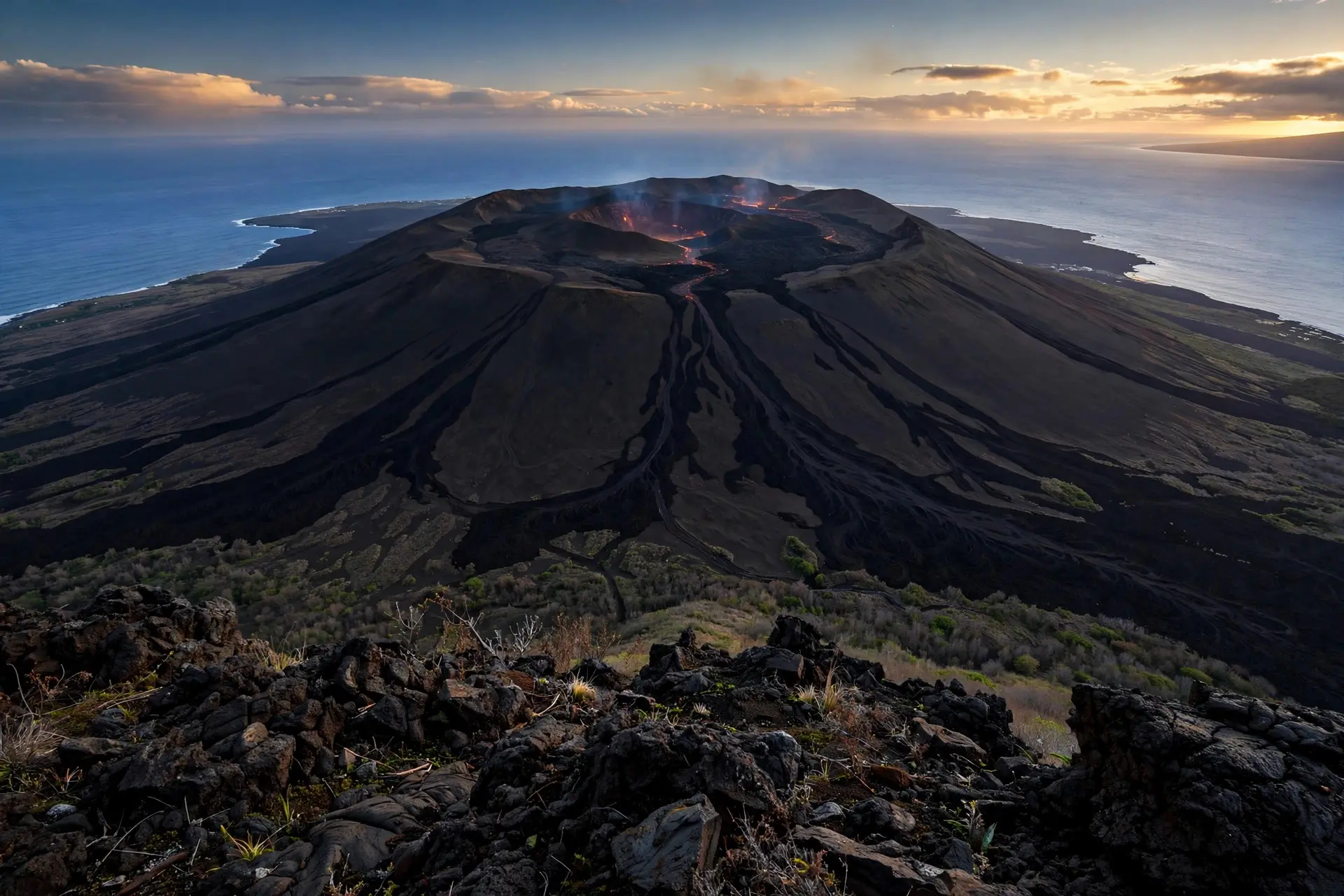
Measured from base to peak, the tallest mountain on Earth is Mauna Kea in Hawaiʻi. It rises 10,211 meters from the Pacific Ocean floor, about 1,363 meters taller than Mount Everest is above sea level. More than half of it sits underwater. Key facts
- Mauna Kea rises 13,796 feet (4,205 meters) above sea level and extends about 19,700 feet (6,000 meters) below sea level to the deep ocean floor, for a total height of nearly 33,500 feet (10,211 meters) (USGS).
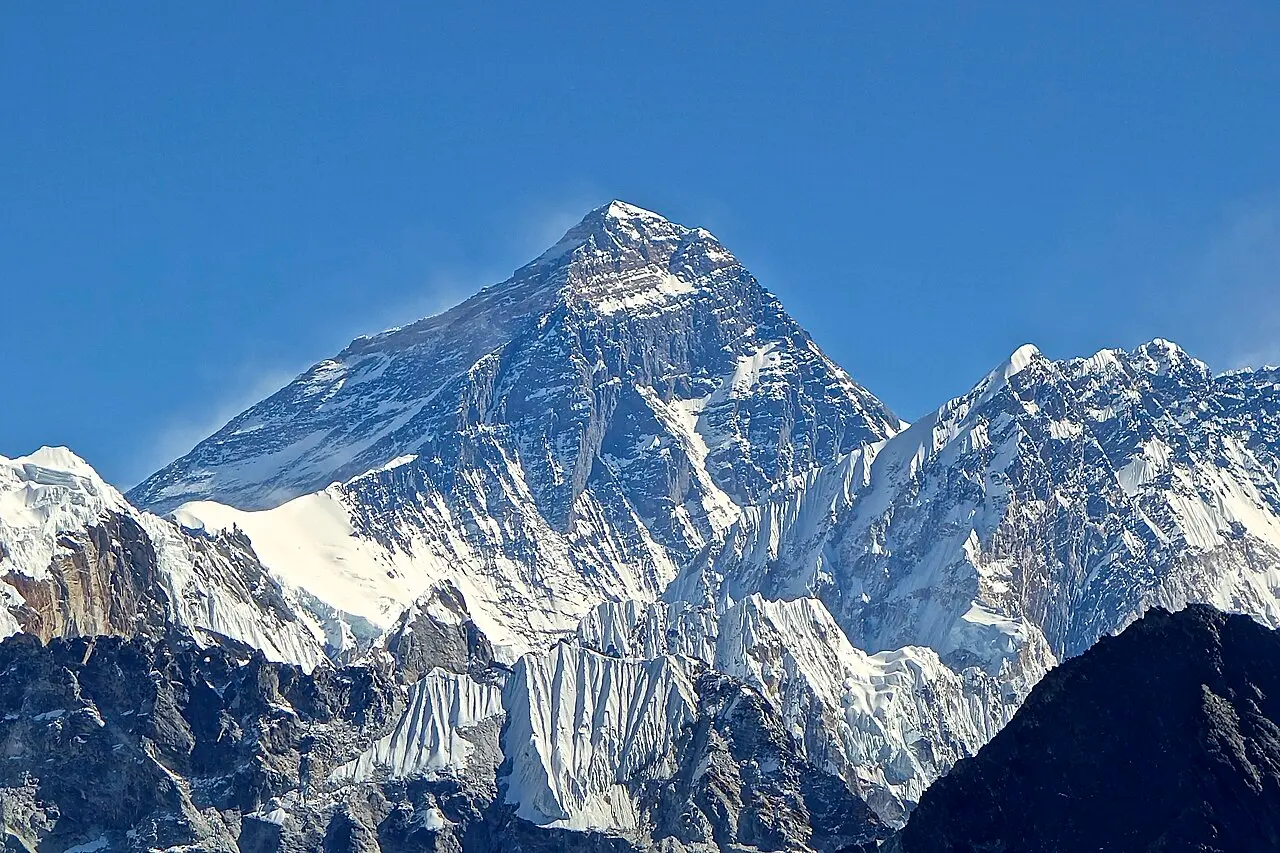
- Mount Everest, the tallest mountain on land, reaches 29,029 feet (8,848 meters) above sea level, about 1,363 meters less than Mauna Kea's full height (USGS).
- Mauna Kea is the highest peak on the Island of Hawaiʻi at 4,207.3 meters (13,803 feet), only 35 meters (115 feet) higher than nearby Mauna Loa (USGS).
- The volcano last erupted about 4,500 years ago and is likely to erupt again, according to the USGS (USGS).
- Its Hawaiian name means "White Mountain," a reference to the seasonal snow that caps its summit (USGS).
Why does Mauna Kea beat Everest?
The trick is where you start the tape measure. "Highest" means elevation above sea level, and Everest wins that contest at 8,848 meters. "Tallest" means the full stack of rock from base to peak. Mauna Kea starts on the Pacific Ocean floor about 6,000 meters down, so its total is 4,205 meters above the waves plus 6,000 meters below: 10,211 meters, comfortably more than Everest's 8,848. How much of the mountain hides underwater? Divide the submerged part by the total: 6,000 ÷ 10,211 ≈ 0.59. About 59 percent of Mauna Kea sits below sea level. Only the top 4,205 meters break the surface, which is why the mountain looks modest from a beach in Hawaiʻi while actually dwarfing every peak in the Himalaya by the base-to-peak yardstick:
| Mountain | Above sea level | Below sea level | Total base to peak |
|---|---|---|---|
| Mauna Kea | 4,205 m (13,796 ft) | ~6,000 m (19,700 ft) | 10,211 m (33,500 ft) |
| Mount Everest | 8,848 m (29,029 ft) | Not applicable | 8,848 m |
| Mauna Loa | More than 4 km (2.5 mi) | ~5 km to the seafloor | ~17 km (10.5 mi) |
How did a mountain end up mostly underwater?
Mauna Kea is a shield volcano about a million years old, built the same way as its neighbors: the Pacific Plate drifted over the Hawaii hotspot, and layer upon layer of lava accumulated on the seafloor. It is constructed on the southern flank of the older Kohala Volcano's eastern rift zone, and its mass is so great that it depresses the ocean crust beneath it by about 6 kilometers. The volcano has moved past its most active shield-building stage into a quieter post-shield phase. Its lava grew thicker and more gas-rich, steepening the upper slopes and building the cinder cones that dot the summit today. The peak stands only 35 meters above Mauna Loa, yet Mauna Loa carries far more total rock, a reminder that height and bulk are separate measures. The same hotspot mechanics that raised these islands are explained in the guide to how volcanic islands form.
What sits on top of the tallest mountain?
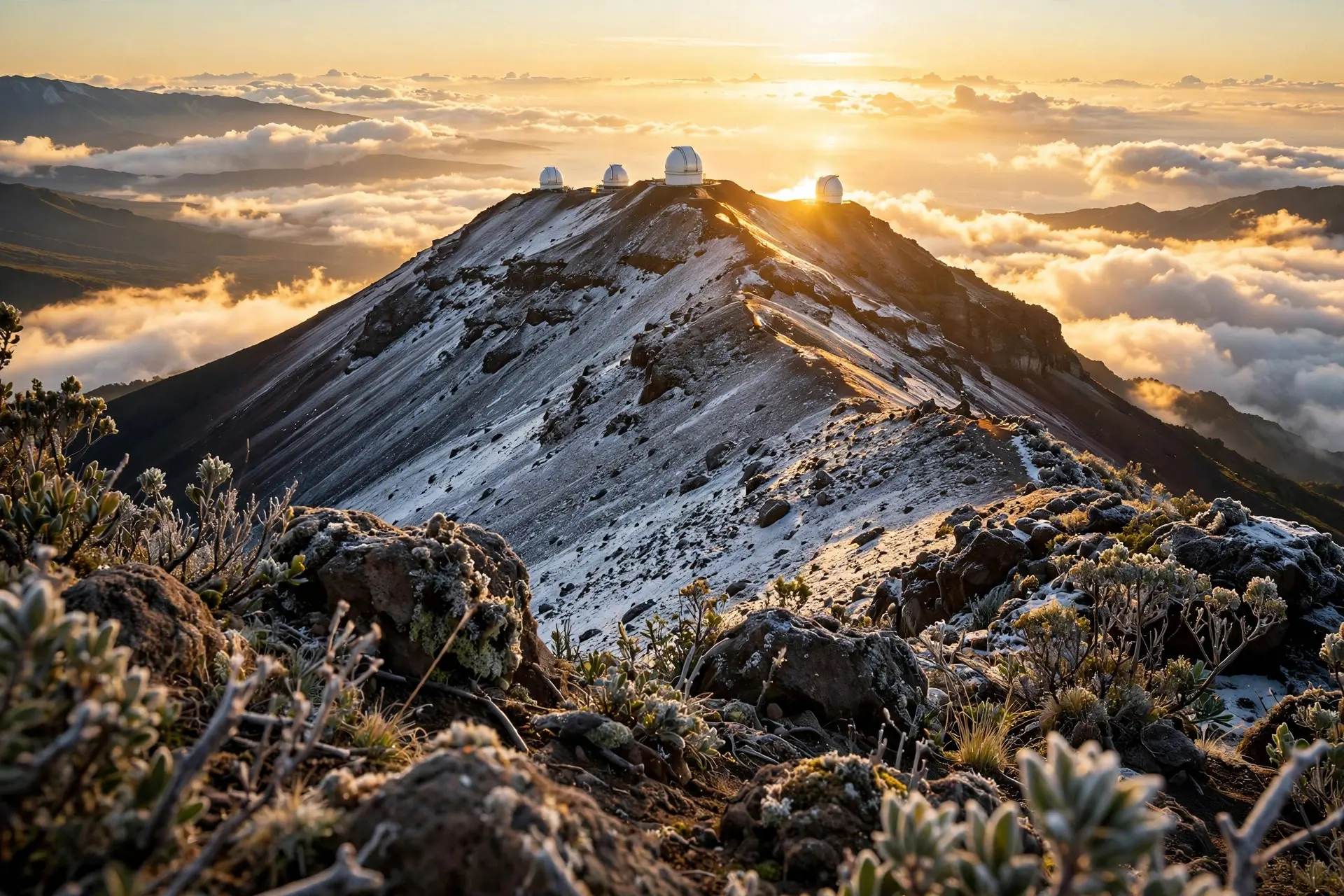
Two things share the summit, and they do not always sit easily together. The first is science: thirteen telescopes funded by eleven countries, built after an access road opened in 1964, taking advantage of the thin, dry, stable air above the clouds. Astronomers prize exactly these conditions, which is why major observatories also cluster in the driest place on Earth, Chile's Atacama Desert.
The second is culture. The peaks of the island of Hawaiʻi are sacred in Native Hawaiian tradition, and Mauna Kea's name honors Wākea, the sky father. Ancient law restricted summit visits to high-ranking aliʻi, and the mountain's slopes provided food, forests, and dense volcanic stone quarried for tools. Construction on the summit continues to be debated, a collision between world-class astronomy and a landscape held sacred for centuries. The USGS also notes that geologists have long recognized glacial deposits on Mauna Kea from recent ice ages, making it the only Hawaiian volcano with clear evidence of glaciation. The summit even holds Lake Waiau, the highest lake in the Pacific Basin at 13,022 feet (3,969 meters), tucked inside the Puʻu Waiau cinder cone. It is the only alpine lake in Hawaiʻi, and radiocarbon dating of samples from its bed shows it has been clear of ice for about 12,600 years.
What do people get wrong about the tallest mountain?
The biggest confusion is mixing up "tallest" and "highest." Everest is the highest point on Earth, and nothing challenges that. Mauna Kea is the tallest when the tape runs from base to peak. Both statements are true at once because they measure different things. A subtler problem is the base itself. Unlike sea level, a mountain's base is loosely defined: estimates for Mauna Kea's total height range from about 9,966 meters (to the deepest point of the Hawaiian Trough) to 17,205 meters (to the volcano's deep underground root). The widely quoted 10,211 meters uses the ocean floor as the base, the most defensible and standard choice. And the tallest title does not make Mauna Kea the biggest: its neighbor Mauna Loa holds far more rock, and claims for other mountains, like measuring from Challenger Deep to a nearby peak, use bases no one would accept for a single mountain. So the careful answer stands: by the standard base-to-peak measure, Mauna Kea is the tallest mountain on Earth, and most of it is hiding in the dark of the Pacific. The number to remember is 10,211 meters, nearly 33,500 feet of stacked volcanic rock, of which a visitor to Hawaiʻi sees only the snowy top. Ask "tallest" and the answer is Mauna Kea; ask "highest" and it is Everest; ask "largest" and it is Mauna Loa. Three different yardsticks, three different champions, with two of them standing side by side on the same Hawaiian island. How we made this article: FactSpire researched and drafted it with AI assistance and checked every fact against the sources listed above.
Frequently asked questions
Is Mauna Kea taller than Mount Everest?
Measured from base to peak, yes: 10,211 meters against Everest's 8,848 meters above sea level. But Everest remains the highest point on Earth above sea level, so tallest and highest answer different questions.
How much of Mauna Kea is underwater?
About 6,000 meters of its 10,211-meter height sits below sea level, roughly 59 percent. The 4,205 meters that rise above the Pacific are just the visible tip of the mountain.
Is Mauna Kea a volcano?
Yes, a dormant shield volcano about a million years old. It last erupted around 4,500 years ago and, according to the USGS, is likely to erupt again. Its Hawaiian name means White Mountain.
Why are there telescopes on Mauna Kea?
Its high elevation, dry air, and stable airflow make the summit one of the best observing sites on Earth. Thirteen telescopes funded by eleven countries stand there, and the summit is also sacred in Native Hawaiian tradition.
Sources
- How big are the Hawaiian volcanoes?, U.S. Geological Survey
- Mauna Kea | U.S. Geological Survey, U.S. Geological Survey
- How to Count to One, W. M. Keck Observatory