Mauna Loa: How Big Is the Largest Active Volcano on Earth?
How big is the largest active volcano on Earth? Mauna Loa holds at least 75,000 km³ of rock and covers half of Hawaiʻi Island. It last erupted in 2022.
Key takeaways
- Mauna Loa is Earth's largest active volcano, holding at least 75,000 km³ of rock.
- It covers about 5,100 km², slightly more than half of the Island of Hawaiʻi.
- Its summit stands roughly 17 km above its base on the Pacific Ocean floor.
- It last erupted from November 27 to December 10, 2022, its first eruption since 1984.
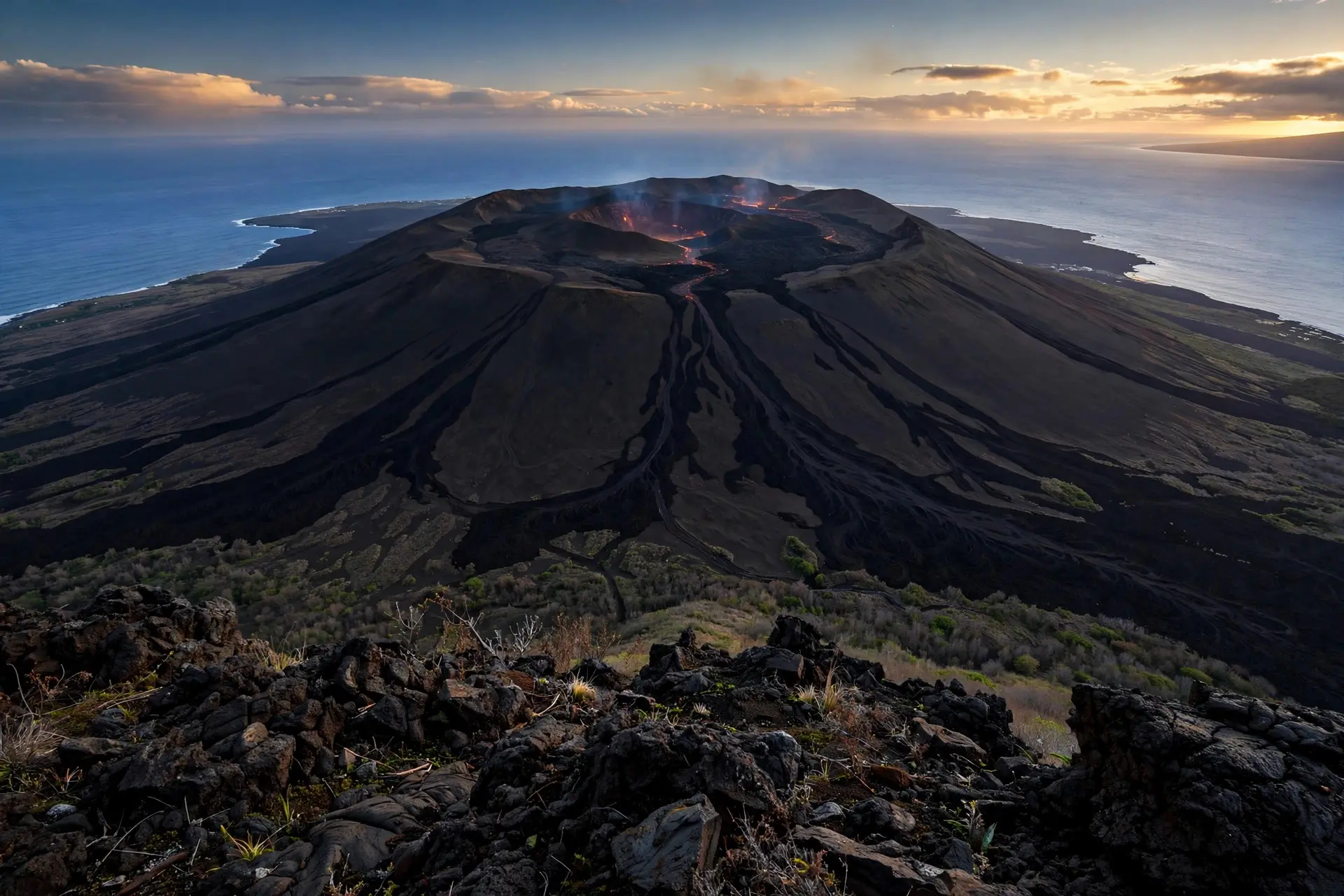
The largest active volcano on Earth is Mauna Loa on the Island of Hawaiʻi. It holds at least 75,000 cubic kilometers of rock, covers slightly more than half of the island, and its summit stands about 17 kilometers above its base on the Pacific Ocean floor. Key facts
- Mauna Loa holds at least 75,000 km³ (18,000 mi³) of rock, which is why the U.S. Geological Survey calls it Earth's largest active volcano.
- The volcano covers about 5,100 km² (1,969 mi²), slightly more than half of the surface area of the Island of Hawaiʻi (USGS).
- Its summit sits roughly 17 km (10.5 miles) above its base: more than 4 km above sea level, another 5 km down to the seafloor, and a further 8 km where the crust is pressed downward by the volcano's weight (USGS).
- Mauna Loa erupted from November 27 to December 10, 2022, its first eruption since 1984, sending lava flows 19 km (12 miles) down its north flank (USGS).
- About 90 percent of the volcano's surface is covered by lava flows erupted within the past 4,000 years (USGS).
What does "largest active volcano" actually mean?
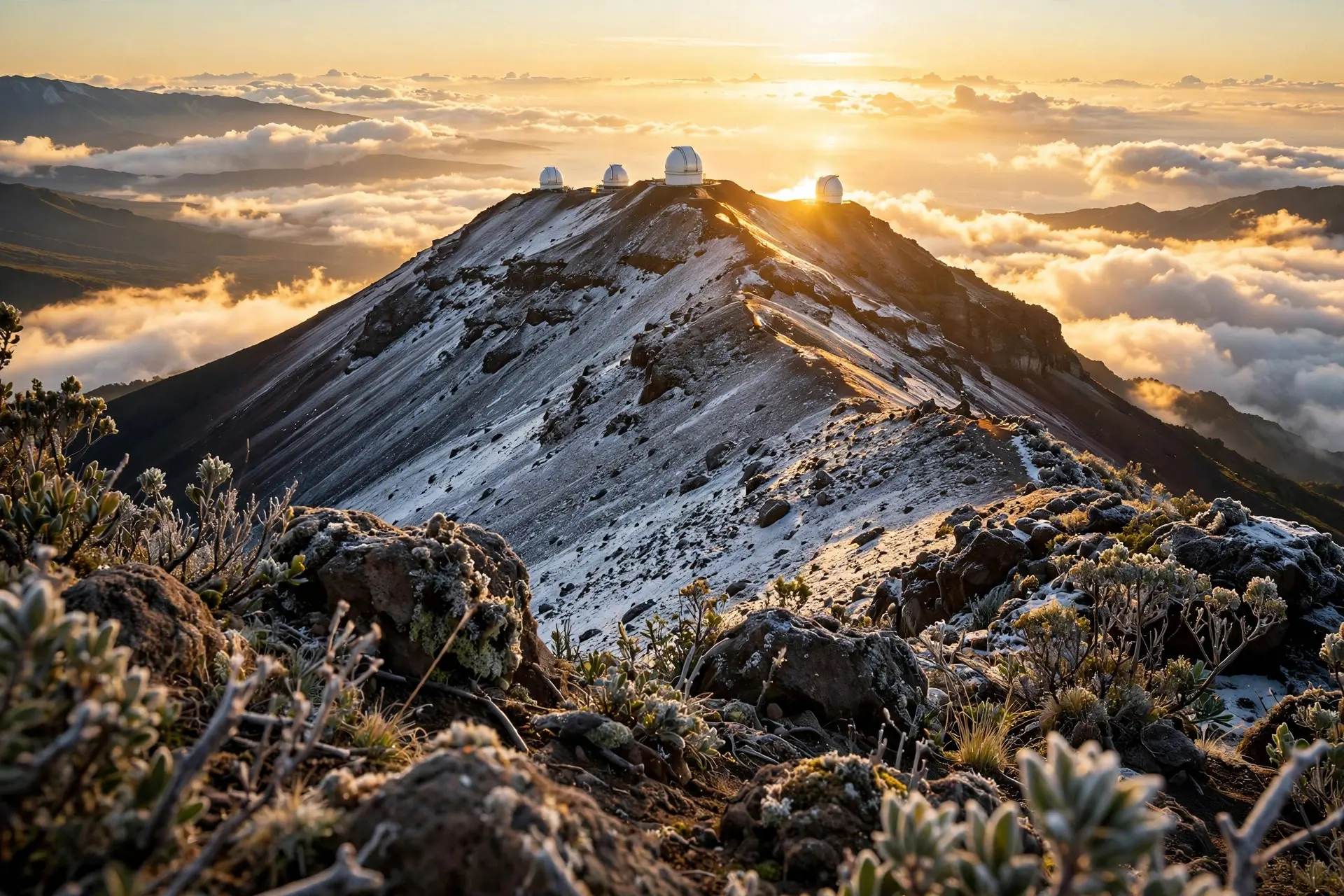
"Largest" here is a measurement of volume, not height. Mauna Loa is a shield volcano, built from extremely fluid basaltic lava that spreads in thin sheets instead of piling into a steep cone. Its slopes average only about 12 degrees at their steepest, so the mountain rises as a long, broad dome that stretches from the ocean floor to more than 4 kilometers (2.5 miles) above sea level. "Active" means the volcano is currently capable of erupting and is under constant watch by the Hawaiian Volcano Observatory, not that it erupts every year. A mountain like Mount Everest is far taller above sea level, but it contains a fraction of Mauna Loa's rock. Size comparisons get clearer when each mountain is measured the same three ways:
| Mountain | Above sea level | Base to peak | Estimated volume |
|---|---|---|---|
| Mauna Loa | More than 4 km (2.5 mi) | About 17 km (10.5 mi) | At least 75,000 km³ (18,000 mi³) |
| Mauna Kea | 4,205 m (13,796 ft) | Nearly 33,500 ft (10,211 m) | Much smaller than Mauna Loa |
| Mount Everest | 8,848 m (29,029 ft) | 8,848 m from sea level | Not applicable |
| To put 75,000 km³ in perspective: that equals 75 trillion cubic meters. A standard Olympic swimming pool (50 m × 25 m × 2 m) holds 2,500 cubic meters. Divide 75 trillion by 2,500 and the result is 30 billion. Mauna Loa's rock alone would fill roughly 30 billion Olympic swimming pools. |
How did Mauna Loa grow so enormous?
Like all Hawaiian volcanoes, Mauna Loa was built as the Pacific tectonic plate drifted over the Hawaii hotspot, a plume of hot rock rising through the mantle. Its earliest lava flows erupted onto the seafloor, and the submerged flanks of the neighboring Hualālai or Mauna Kea volcanoes, between about 0.6 and 1 million years ago. The volcano likely broke the ocean surface around 300,000 years ago and has grown upward rapidly ever since. Growth came from thousands of thin lava flows, each averaging only a few meters thick, stacked over hundreds of thousands of years. Eruptions issue from five broad areas: the summit above 3,660 meters (12,000 feet), the northeast and southwest rift zones, and the flanks. The summit holds Mokuʻāweoweo Caldera, which formed when a shallow magma chamber emptied and collapsed. This steady, patient construction explains the volcano's size: it is still in its shield-building prime, unlike older Hawaiian volcanoes that have slowed down. The same hotspot process builds other ocean islands, as explained in the guide to how volcanic islands form.
What happened in the 2022 eruption?
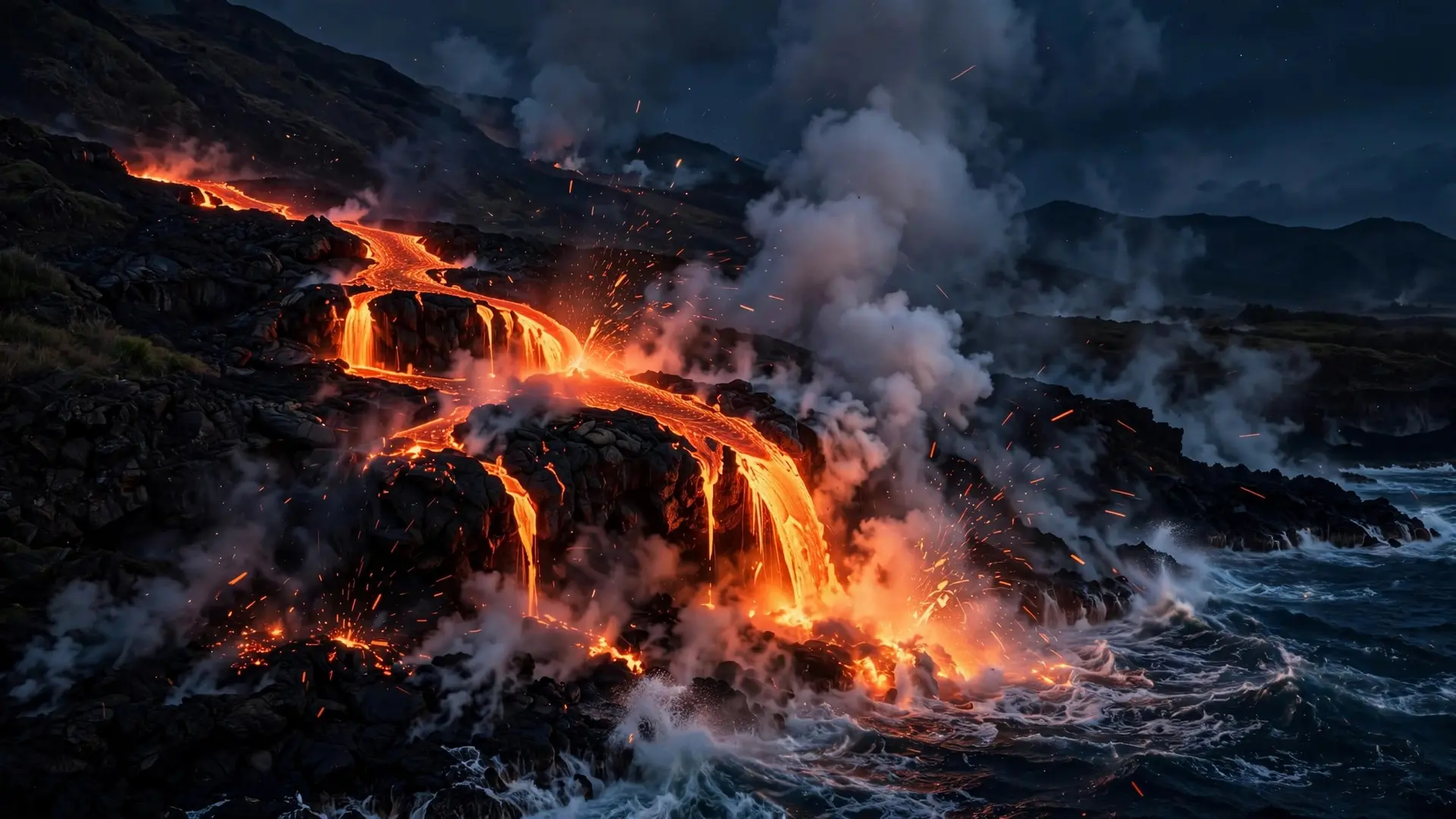
After a 38-year quiet stretch, Mauna Loa began erupting at about 11:21 p.m. Hawaii Standard Time on November 27, 2022. Lava fountains rose inside Mokuʻāweoweo Caldera, and by the next morning activity had migrated to four fissures in the Northeast Rift Zone between 3,755 and 3,365 meters (12,320 and 11,040 feet) above sea level. By December 2 the eruption had settled on a single vent, and a network of channels fed ʻaʻā flows that reached 19 km (12 miles) down the north flank before the eruption ended on December 10. Hawaiian Volcano Observatory crews sampled the lava almost daily and analyzed it within 24 hours using X-ray fluorescence at the University of Hawaiʻi at Hilo. The lavas matched other Mauna Loa compositions erupted since 1843, with an average magnesium oxide content of 6.2 percent by weight, slightly lower than any other Mauna Loa eruption in the past 200 years. The eruption stayed within uninhabited areas, so no communities were threatened.
What do people get wrong about the "largest volcano" title?
The common mistake is reading "largest" as "tallest." By volume and mass, Mauna Loa has no active rival. By height above sea level, Mount Everest wins easily at 8,848 meters, and even Mauna Loa's own neighbor Mauna Kea stretches nearly 33,500 feet from the ocean floor to its summit. The word people actually want for height is "tallest" or "highest," and those are different contests with different winners. A second mistake is assuming an "active" volcano erupts constantly. Mauna Loa's 38-year pause between 1984 and 2022 is normal for a giant shield volcano: its plumbing refills slowly, and the Hawaiian Volcano Observatory watches ground deformation and earthquakes for the inflation that precedes an outbreak. Quiet decades are part of the cycle, not a sign the volcano has shut down. Even in regions far from any eruption, extremes of terrain shape life in surprising ways, from the driest place on Earth in Chile's Atacama Desert to the thin air of the highest peaks. Mauna Loa remains the benchmark for what a shield volcano can become. Its volume is still growing with every flow, and its next eruption is a matter of when, not if. How we made this article: FactSpire researched and drafted it with AI assistance and checked every fact against the sources listed above.
Frequently asked questions
Is Mauna Loa the tallest volcano in the world?
No. The title refers to volume, not height. Its Hawaiian neighbor Mauna Kea measures nearly 33,500 feet (10,211 meters) from the ocean floor to its summit, while Mount Everest remains the highest point above sea level at 8,848 meters (29,029 feet).
When was Mauna Loa's most recent eruption?
It erupted from November 27 to December 10, 2022, the first eruption since 1984. Activity began in the summit caldera Mokuʻāweoweo and migrated to the Northeast Rift Zone, where lava flows ran 19 km (12 miles) down the north flank.
Where is the largest active volcano located?
Mauna Loa sits on the Island of Hawaiʻi in the US state of Hawaii. It covers about 5,100 square kilometers (1,969 square miles), slightly more than half of the island's surface area, with a summit caldera and two rift zones.
How did Mauna Loa form?
It grew over the Hawaii hotspot as the Pacific Plate drifted across it. Its earliest lava flows erupted onto the seafloor 0.6 to 1 million years ago, and the volcano emerged above sea level about 300,000 years ago.
Sources
- Geology and History of Mauna Loa | U.S. Geological Survey, U.S. Geological Survey
- How big are the Hawaiian volcanoes?, U.S. Geological Survey
- Volcano Watch — Hazards of Mauna Loa | U.S. Geological Survey, U.S. Geological Survey
- Volcano Watch — “Seeing” inside Mauna Loa for the first time in almost 40 years | U.S. Geological Survey, U.S. Geological Survey