What Causes Thundersnow in Winter Storms?
Thundersnow is a thunderstorm that drops snow instead of rain. Here is the rare mix of instability, moisture and lift that lets a winter storm build lightning.
Key takeaways
- Thundersnow is an ordinary thunderstorm mechanism operating in winter: falling snow replaces rain, but the lightning is made the same way.
- Lightning needs a mixed-phase cloud region where rain, graupel and snow collide in strong updrafts and downdrafts, separating electrical charge.
- Winter air usually lacks the warmth, moisture and instability that charge separation needs, which is why thundersnow is rare.
- It shows up most often in powerful nor'easters, lake-effect squalls and mountain storms, where extra lift stirs the cloud.
- Falling snow muffles the thunder, but the lightning is just as dangerous as in a summer storm.
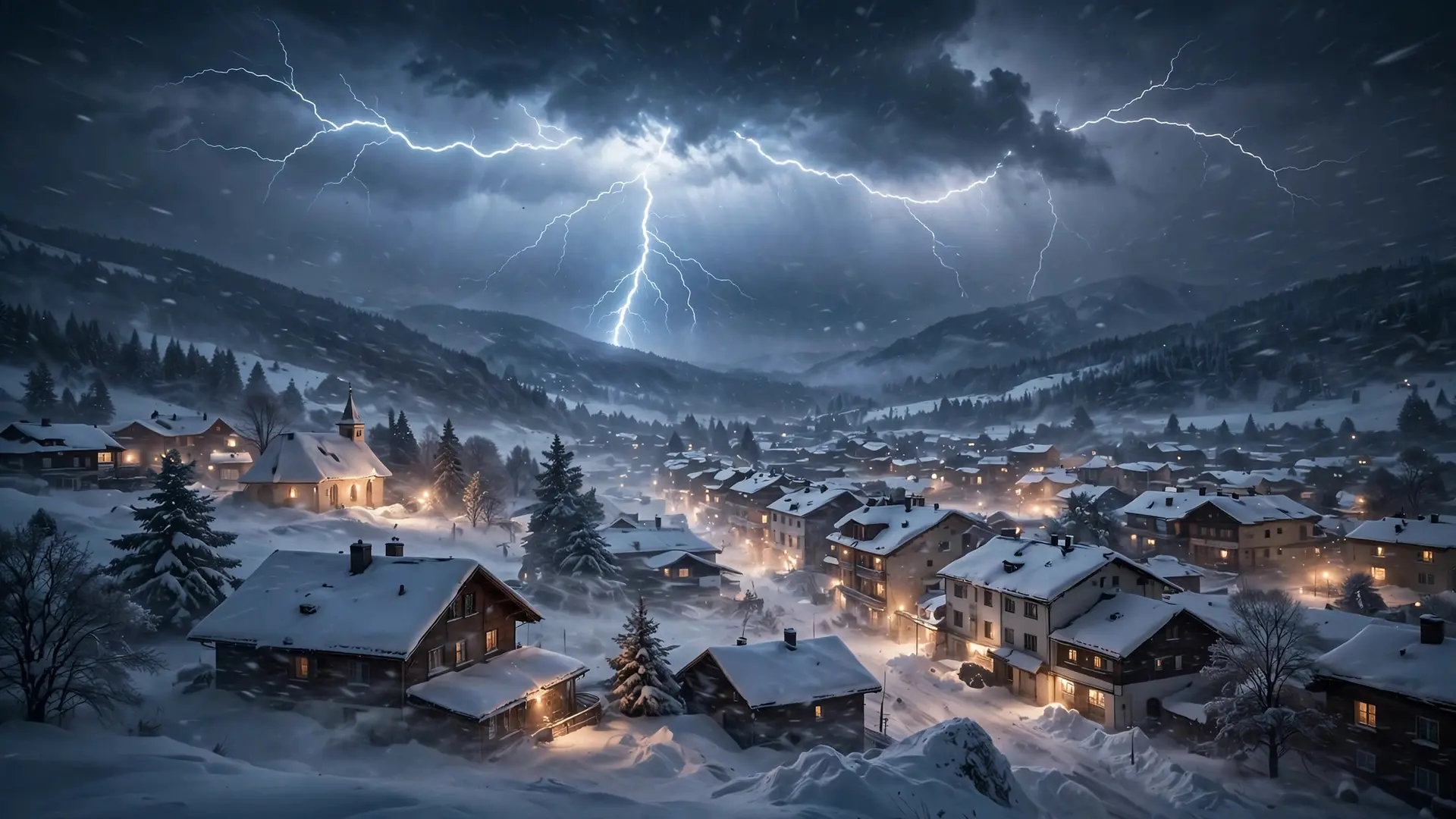
Thundersnow is a thunderstorm that forgot it was winter. Lightning splits the sky and thunder rolls through falling snow, because a winter storm has managed to build the same electrical engine that powers a summer downpour. The precipitation is different, but the machinery is not — and that is exactly why the phenomenon is so uncommon.
How does a snowstorm make lightning?
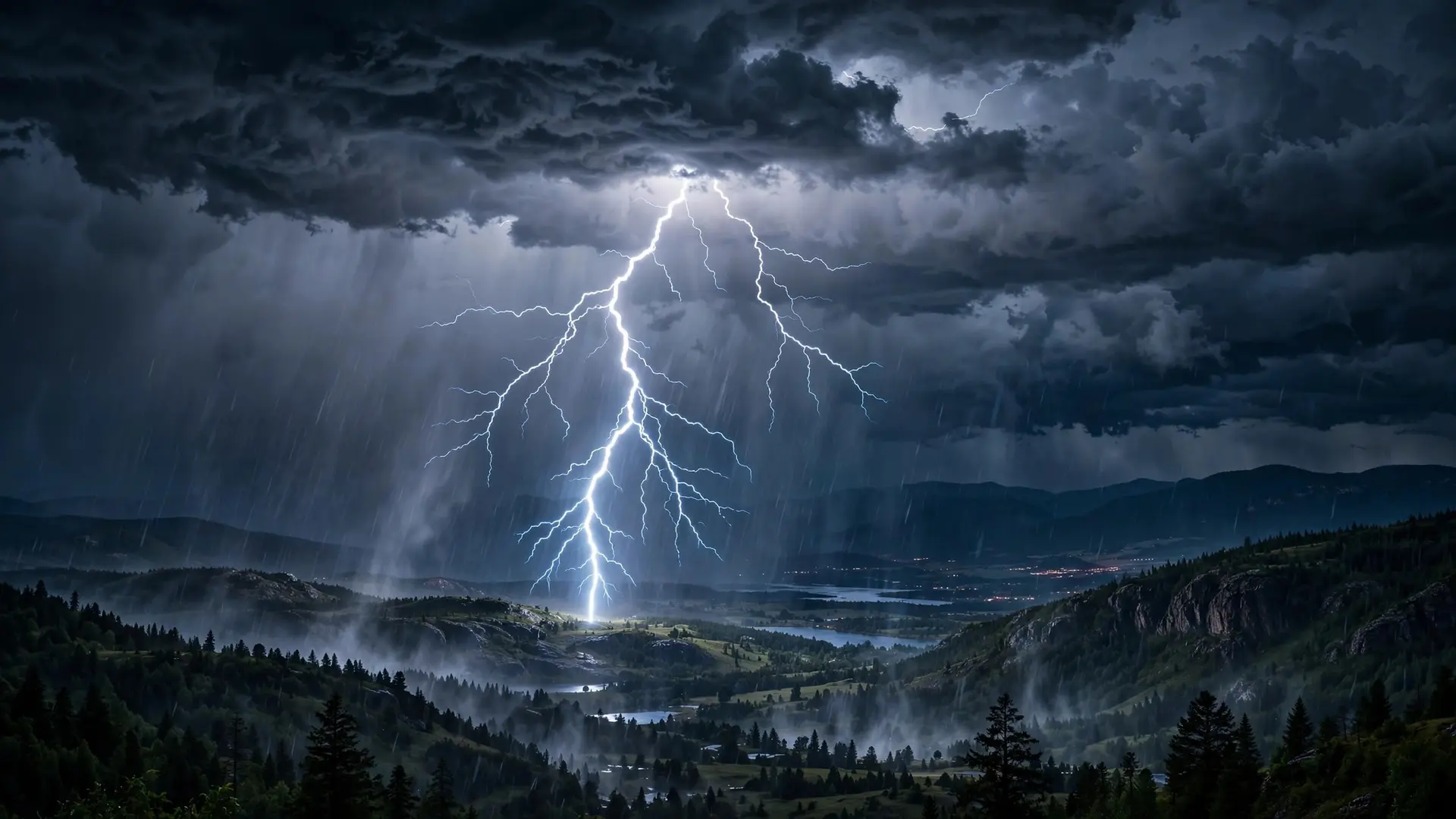
Every lightning bolt, in any season, starts with charge separation inside a cloud. In a tall, turbulent cloud, a region holds a jumble of ingredients at once: liquid rain droplets, soft ice pellets called graupel, and snow crystals. Meteorologists call this the mixed-phase region, and it only becomes electrically active when powerful updrafts and downdrafts churn through it. That churning is the key step. As the storm's winds hurl ice particles and pellets against one another, collisions strip electrons from some particles and hand them to others. Over time the cloud sorts itself into zones of positive and negative charge, like a battery being assembled in the sky. When the imbalance grows large enough, the air can no longer hold it back, and a discharge jumps — a lightning bolt — followed by the thunderclap of rapidly heated air. In a summer thunderstorm the recipe is easy to follow: warm, humid air near the ground rises eagerly into cooler air above, and towering clouds build themselves. A thundersnow storm does the same thing under much harder conditions, which is why forecasters treat a winter lightning report as a sign of an unusually vigorous storm. As one National Weather Service meteorologist put it, thundersnow lightning is simply another indication that you are dealing with a really strong system.
Why is thundersnow so rare?
Winter works against thunderstorms in three ways. Air temperatures are colder, so air near the ground is less eager to rise. The sun sits low in the sky, so there is little daytime heating to stir the atmosphere. And cold air holds less moisture, so there is less fuel for cloud-building in the first place. Without instability — the tendency of air to keep rising once it starts — a cloud never develops the violent vertical motion that charge separation requires. No charge separation means no lightning, and no thundersnow. Only the most muscular winter storms can overcome those handicaps. The National Weather Service describes the same three ingredients behind every thunderstorm — moisture, instability and a lifting mechanism — and thundersnow appears when a winter storm supplies all three at once. That usually happens in a storm strong enough to drive heavy snowfall, sometimes at rates of up to two inches per hour. If the storm is merely cold and snowy, without that inner turbulence, it stays electrically silent. This rarity is measurable. A National Weather Service science officer in Burlington, Vermont, estimated that northern New England sees thundersnow only about once every year or two. His office tracked it across northern Vermont on two recent days: November 15, 2019, and March 29, 2023. He himself has witnessed it firsthand only twice in his life, in events roughly two decades apart. A phenomenon that a career forecaster sees twice is genuinely scarce.
Where does thundersnow show up?
Thundersnow has three favorite settings, and each one supplies the missing ingredient of lift in a different way. The first is the nor'easter, the powerful coastal storm that batters the northeastern United States. When gale-force winds blow from the northeast and heavy snow falls, the storm's sheer violence can inject enough instability into the cold air to start the charging process. These are the storms that make headlines, and they are where most East Coast thundersnow reports come from. The second is the lake-effect squall. When bitterly cold air crosses relatively warm open water — most famously the Great Lakes, but also the Great Salt Lake in Utah — the air picks up heat and moisture from the water below. That warmed, moistened air rises into the cold air above, building narrow, intense snow bands that can flash with lightning. The National Oceanic and Atmospheric Administration's severe-storms laboratory notes that thundersnow is often observed downwind of these lakes during lake-effect events.
The third is mountain terrain. When a winter storm pushes air uphill, the slope itself forces the air to rise, cool and condense, adding the lift that flat ground cannot provide. The same principle applies wherever a storm's internal dynamics create narrow pockets of rising air, even far from coasts and lakes. What causes lightning in the first place is a story of colliding ice, and thundersnow is what that story looks like when the whole storm is below freezing. Other rare sky electricity, like the glowing spheres of ball lightning, shows how many ways the atmosphere can surprise us — but thundersnow needs no exotic explanation, just an ordinary thunderstorm engine running in the wrong season.
Why does the thunder sound muffled, and is it dangerous?
One of thundersnow's strangest traits is how quiet it can be. Falling snow is an excellent sound absorber, and during a high-intensity snowstorm the flakes dampen the thunder before it travels far. Instead of the sharp crack of a summer storm, which can be heard from miles away, thundersnow often arrives as a low rumble detectable only within a mile or two of the flash. Some people mistake it for a snowplow, a roof shedding its load, or a distant explosion, and only realize what they heard when lightning follows. That softness is deceptive. The lightning itself is no gentler for being wrapped in snow. Accounts collected by the Washington Post describe thundersnow lightning blasting a hole in the side of a house in Rhode Island and injuring several people at a bus stop in Illinois. Heavy snowfall and near-zero visibility already make these storms hazardous for travel; the lightning adds a risk that is easy to underestimate precisely because the thunder sounds so subdued. The safety rule is therefore the same as in July: when you see a flash or hear a rumble, go inside and stay there until the storm passes. A roof and walls protect you from both the bolt and the blizzard. Watching the sky light up from a window is the right way to enjoy one of winter's rarest shows. Thundersnow, then, is not a different kind of lightning. It is a reminder that the atmosphere does not respect the calendar: give a winter storm enough moisture, instability and lift, and it will build a thunderstorm anyway — it will just deliver its rain as snow.
Frequently asked questions
Is thundersnow just a thunderstorm in winter?
Essentially, yes. The same charge-separation process that powers a summer thunderstorm is at work, except the precipitation falling from the cloud is snow rather than rain. The difference is the season, not the physics.
Why does thundersnow thunder sound muffled?
Dense falling snow absorbs sound, so the boom loses its sharp crack and becomes a low rumble that is often only heard within a mile or two of the flash. In a summer storm the same discharge can carry for miles.
Where is thundersnow most likely to happen?
In the strongest winter storms: nor'easters on the US East Coast, lake-effect squalls downwind of the Great Lakes and the Great Salt Lake, and storms pushed uphill over mountains. All three settings add the lift and instability winter air usually lacks.
Is thundersnow lightning dangerous?
Yes. Accounts collected by newspapers describe thundersnow lightning blasting a hole in a house in Rhode Island and injuring people at a bus stop in Illinois. If you see a flash or hear a rumble during a snowstorm, head indoors just as you would in summer.
Sources
- Thundersnow: A Rare Type of Winter Storm, Northern Woodlands
- What is thundersnow? Here's what to know, Fox Weather
- Thundersnow: The rare winter storm phenomenon that lights up the sky, The Weather Company