The Dead Sea is so salty because it is a lake that can only take in and never give out. Water arrives carrying dissolved minerals from the Jordan River and mineral-rich springs, but there is no outlet to the ocean — the only way out is evaporation, and evaporation leaves every gram of salt behind. Repeat that one-way exchange for thousands of years under a desert sun, and you get water that is roughly 34 percent salt: about ten times the ocean.
A Lake With No Exit
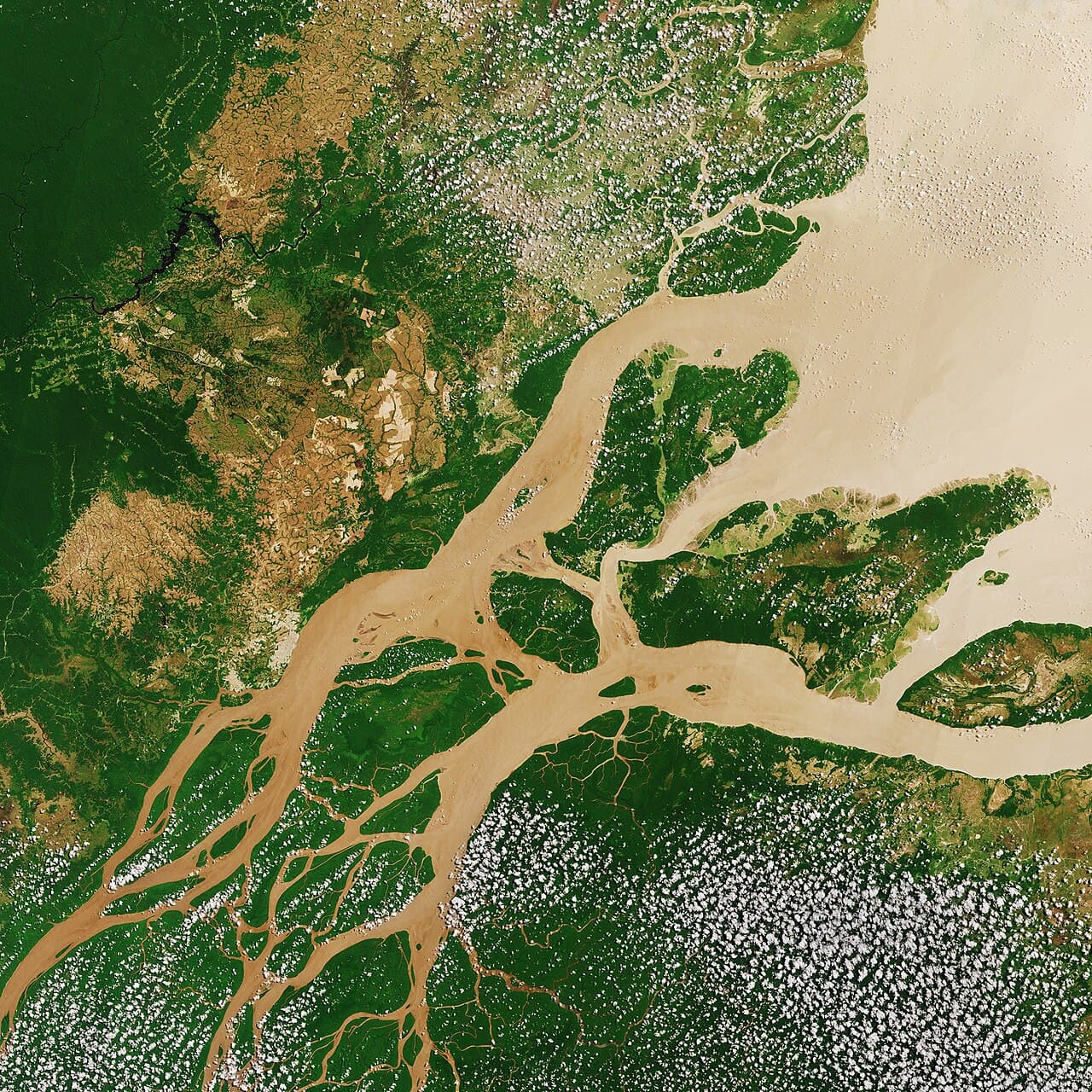
The Dead Sea lies between Jordan to the east and Israel and Palestine to the west, in the Jordan Rift Valley, and its surface sits some 430 metres below sea level — the lowest exposed point on Earth's land surface. Geographers call it an endorheic, or terminal, basin: the rim of the basin stands higher than the lake's surface, so water physically cannot drain away to the sea. Its main inflow is the Jordan River, about 251 kilometres long, which rises from springs at the foot of Mount Hermon — the Hasbani, the Banias, and the Dan — passes through the Sea of Galilee, and descends into the Dead Sea near the Lisan Peninsula, joined along the way by wadis and saline springs from the surrounding geology. Every litre carries small traces of minerals dissolved from rock and soil, and every trace ends up here with nowhere further to go. Rivers are the conveyor belts of dissolved minerals everywhere — a role the Amazon plays on a far grander scale — but only in closed basins like this one does nothing ever leave. It is a predicament the disappearing Aral Sea shares, with far grimmer consequences.
Evaporation's Patient Arithmetic
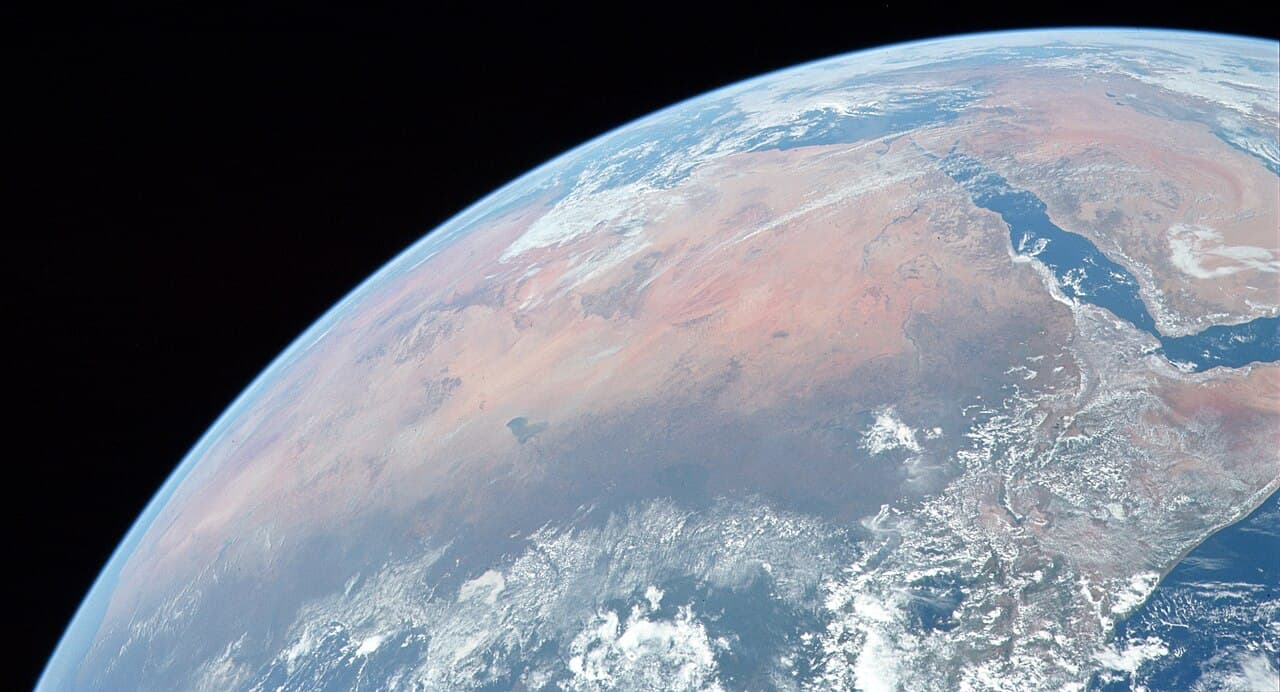
The climate does the concentrating. The Dead Sea sits in a hot, dry desert where summers are scorching and rainfall is scarce, so evaporation — on the order of 1.1 to 2.0 metres per year — far outpaces precipitation. The loop is simple: inflow arrives, water leaves as vapour, salts stay. Over millennia, trace minerals pile up to roughly 340 grams per kilogram of water, about 34 percent. And the process is now being accelerated by people. Historically, around 1.2 to 1.3 billion cubic metres of water flowed into the Dead Sea each year; after decades of diversions for agriculture and industry, that inflow has collapsed to under 30 to 100 million cubic metres per year. The lake's level has been dropping by roughly a metre per year in recent decades, with the shoreline now sitting around 438 to 440 metres below sea level. Less fresh water coming in means each year's evaporation concentrates what remains a little further — the same desert heat engine that makes the Sahara a desert is, in miniature, manufacturing brine here.
Not the Salt on Your Table
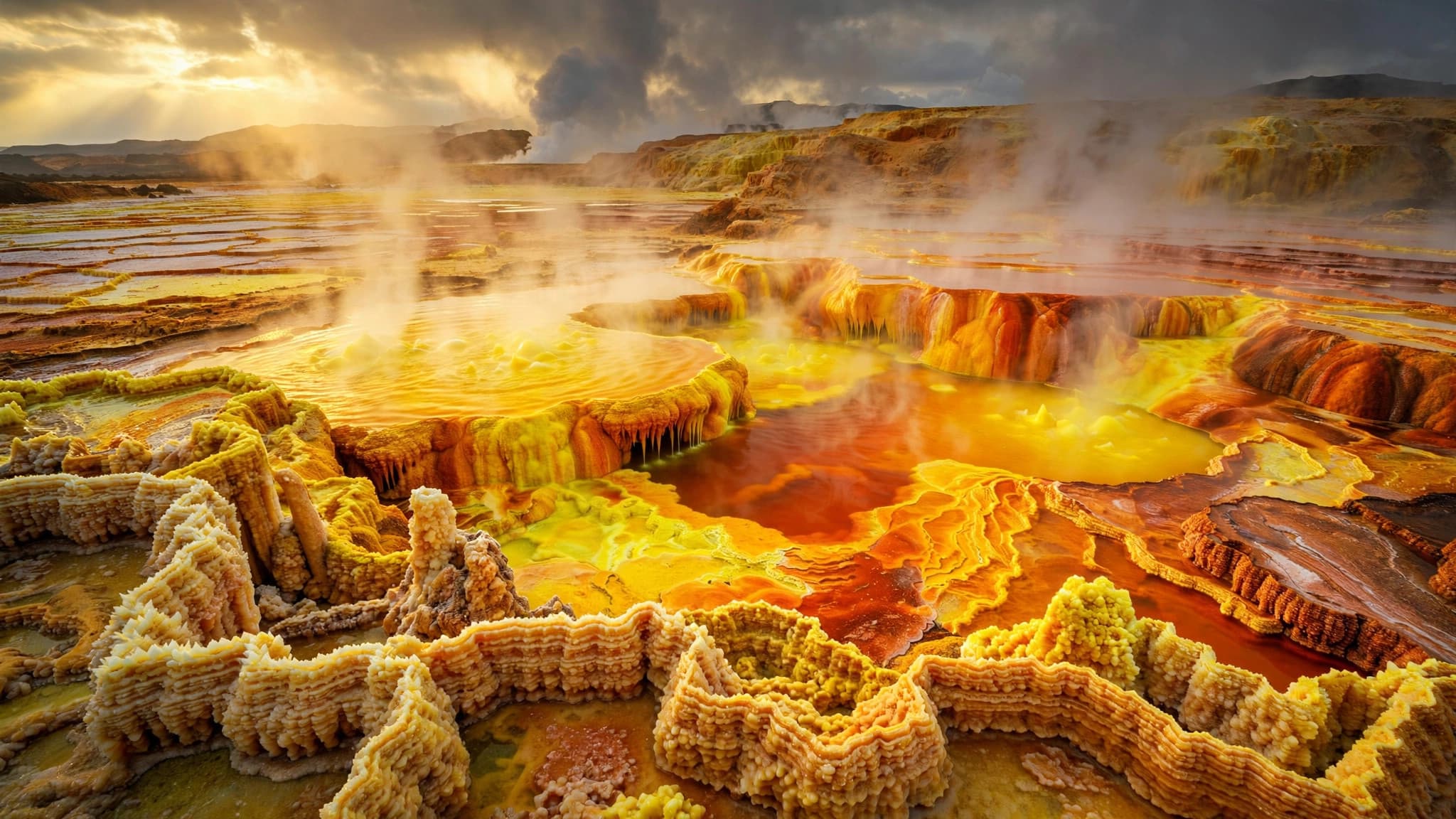
What makes the Dead Sea remarkable is not just how much salt it holds, but what kind. Ocean salt is about 85 percent sodium chloride — ordinary table salt. Dead Sea salt is only about 30.5 percent sodium chloride. The rest is a very different mineral cocktail: magnesium chloride makes up roughly half of the dissolved salts, with substantial calcium chloride and potassium chloride alongside. Measurements from the early 1980s put the main ions at 181.4 grams of chloride, 35.2 grams of magnesium, 32.5 grams of sodium, 14.1 grams of calcium, 6.2 grams of potassium, and 4.2 grams of bromide per kilogram of surface water — the bromide concentration being the highest found in any natural water on Earth. This unusual mix gives the water a nominal density of 1.24 kilograms per litre, about a quarter denser than freshwater. The exact figure shifts with season, depth, and temperature — surface-water measurements from the early 1980s put total dissolved salts at 276 grams per kilogram — but it always hovers an order of magnitude above the open ocean. That mineral wealth is also an industry: potash, magnesium, and bromine are extracted from the lake for fertilizer, chemicals, and pharmaceuticals, making the Dead Sea as much a resource as a wonder. It also explains the Dead Sea's famous shore: as water evaporates, fractional crystallisation builds white salt pebbles and formations along the beach, and the magnesium- and potassium-rich mud has sustained a long tradition of therapeutic spas and skincare, prized for conditions like eczema and psoriasis. An unusual bonus of the geology: the lake's deep seeps constantly discharge small pebbles and blocks of asphalt, a substance ancient Egyptians imported from this very region for mummification.
Why You Float Like a Cork
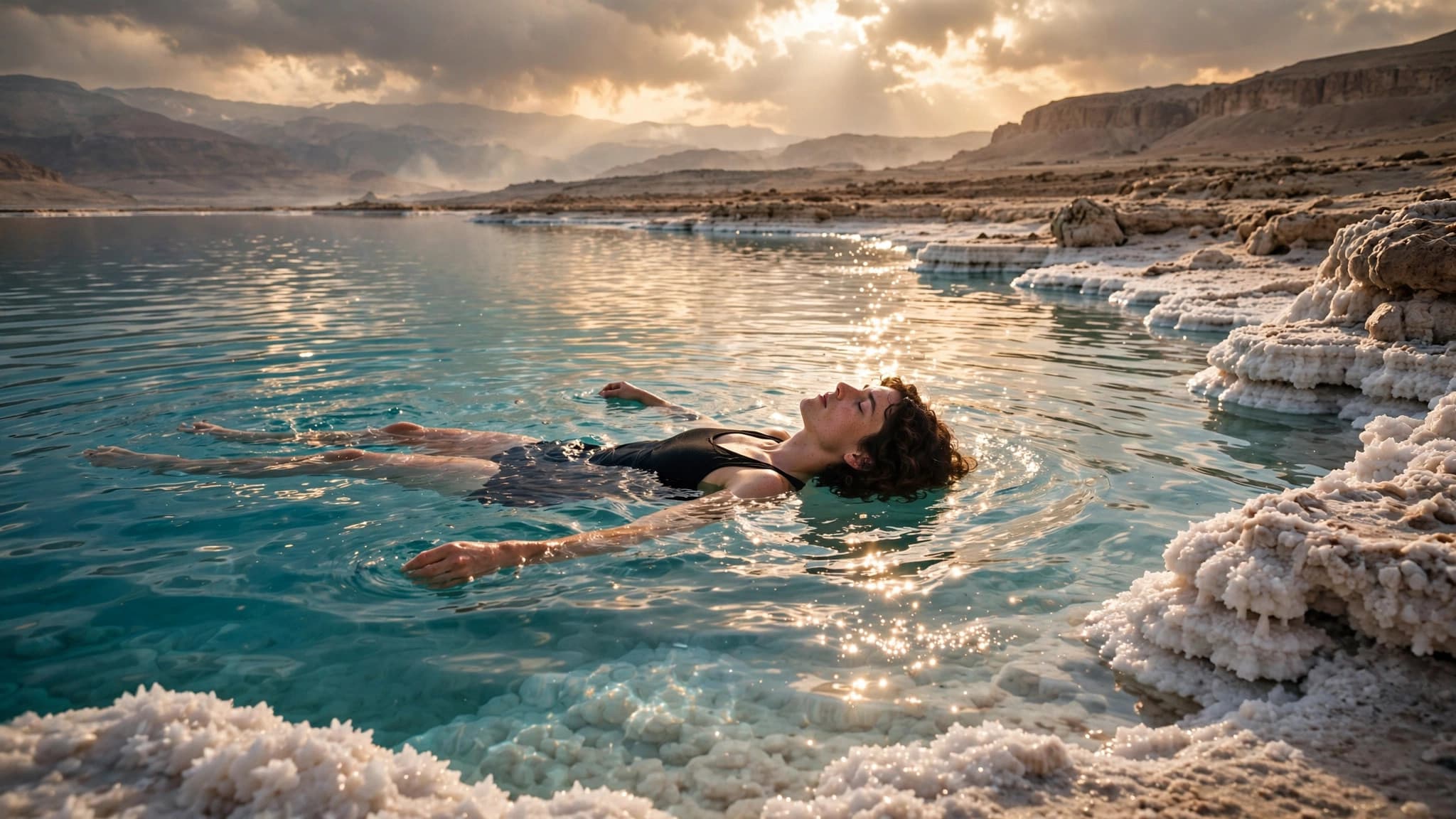
That density is what makes swimming in the Dead Sea feel like a magic trick. Archimedes' principle says a submerged body experiences an upward force equal to the weight of the water it displaces. Because displaced Dead Sea water weighs so much more than freshwater, far less of your body needs to sink before the upward force balances your weight — so you bob at the surface with barely any effort, the classic photograph of someone reading a newspaper on their back. In this respect the Dead Sea is similar to the Great Salt Lake in Utah, another hypersaline basin where bathers float with unnatural ease. But floating is not the same as safe. A person can still roll face-down, panic, or struggle to control their position, and the water stings eyes, mouths, and any open cut fiercely. Visitors are told not to dive, not to swallow the water, and to stay at designated bathing areas. As for the name: at roughly ten times ocean salinity, the Dead Sea is far too harsh for fish, plants, and typical marine animals to survive — which is exactly how it got its name.
The Dead Sea is a slow-motion chemistry experiment — a basin that collects and keeps, concentrating the desert's mineral harvest into water dense enough to sit on. It is also a gauge: its steadily falling level measures every litre diverted upstream, and its strange mineral recipe is a reminder that "salt" is never just one thing. Salt, in the end, is just water's memory of everything it carried.