The Black Death's Unexpected Economic Aftermath
The 1347-1353 plague killed up to half of Europe — yet scarcity made labor valuable. Wages rose, wage laws failed, and feudalism gave way to a wage economy.
Key takeaways
- The Black Death of 1347–1353 killed an estimated 30–50% of Europe's population, creating a severe labor shortage.
- With workers suddenly scarce, real wages rose and surviving laborers gained bargaining power for the first time.
- England's Statute of Labourers (1351) tried to freeze wages at pre-plague levels, but it proved unenforceable.
- The demographic shock accelerated the decline of serfdom and the shift toward a wage-based economy in Western Europe.
The deadliest pandemic in European history quietly invented the labor market. Between 1347 and 1353, bubonic plague killed an estimated 30 to 50 percent of Europe's population — some 25 to 50 million people. Yet the survivors, especially the poorest ones, found themselves in a position medieval peasants had never known: for the first time, they were needed. And that scarcity rewrote the economics of an entire continent.
Why did wages suddenly rise?
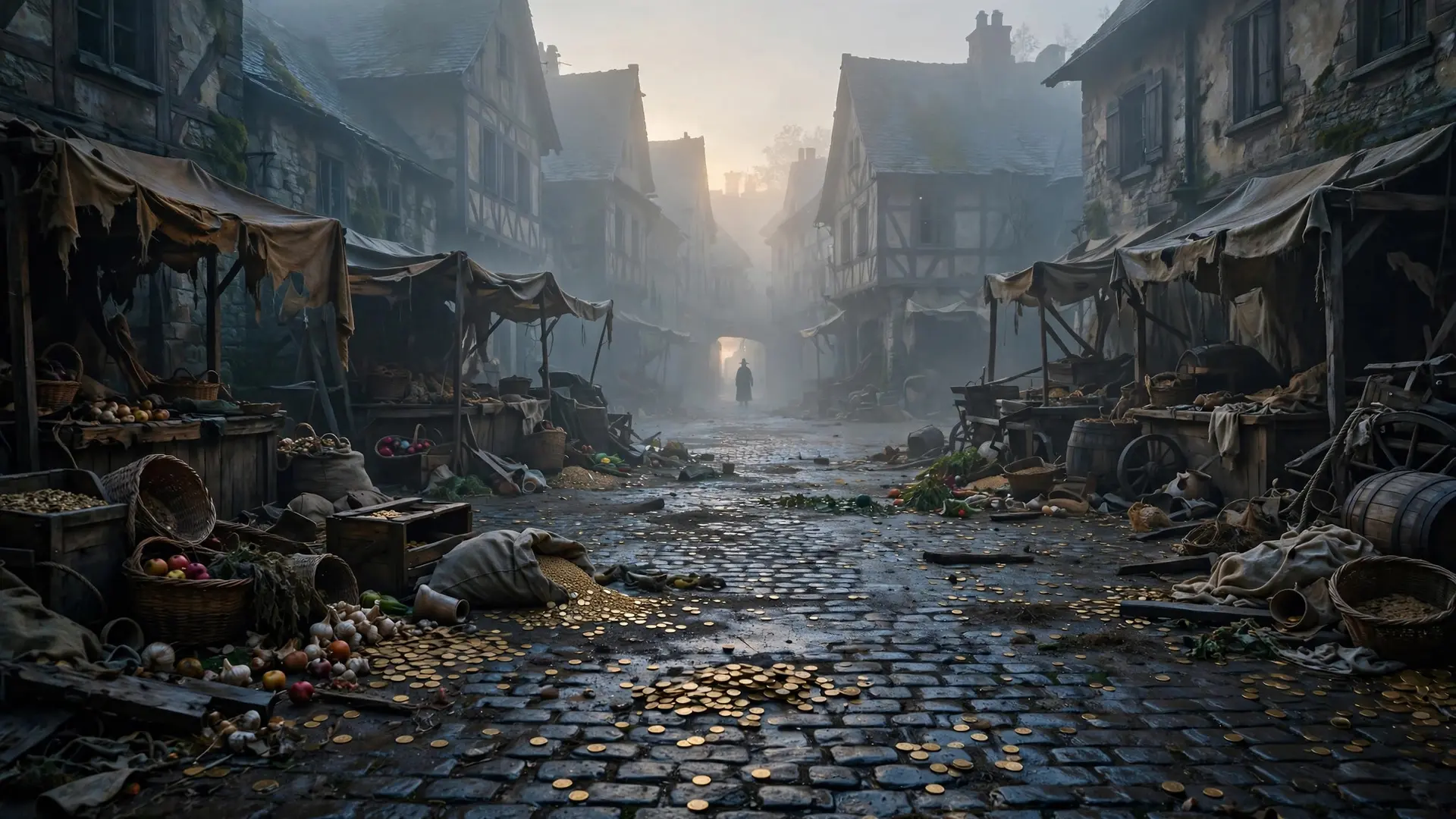
Before the plague, labor in Europe was abundant and cheap. Population had been growing for centuries, and on a crowded manor a lord could always find someone willing to work for a subsistence plot and a few customary dues. Serfs were bound to the land; their labor was a duty, not a commodity. The plague destroyed that arithmetic overnight. With half the hands gone, fields stood unharvested and livestock wandered untended. Landowners who refused to raise their offers watched crops rot in the field — so they raised them. Wages across England doubled in some regions. Peasants who had spent generations tied to one manor could suddenly demand payment in coin, better food and housing, and the freedom to leave for a lord who paid more. Supply and demand, applied with terrible simplicity, did what no rebellion had: it put a price on peasant labor. Even skilled trades felt the surge. Craftsmen, masons, and builders — always more specialized than field hands — commanded steep premiums, and town guilds found their carefully guarded wage structures undercut by a market that no longer respected them. What had been a world of fixed stations began to look, however faintly, like a world of offers and choices. The dynamic ran in both directions. While labor grew expensive, land grew cheap. Survivors found themselves living in a world of empty villages and abandoned plots — there was suddenly more land per person than anyone could work. Lords who had once treated land as power now struggled to find anyone to farm it.
Why did the laws trying to stop it fail?
Governments understood exactly what was happening, and they panicked. In 1351, England's parliament passed the Statute of Labourers, attempting to freeze wages at pre-plague levels and forbid workers from moving in search of better pay. It was, in effect, the first time an English government tried to micromanage the economy — and it failed completely. Desperate landlords paid "under the table" to secure harvest crews; workers took the coin and kept moving. Similar measures flared across Europe — France's ordinance of 1354, sumptuary laws policing what fabrics ordinary women could wear — but enforcement led to evasion and resentment rather than compliance. Real wages kept rising through the plague's recurrent outbreaks, as population levels stagnated for generations. The tensions eventually detonated. England was still financing its war with France and kept taxing a badly shrunken population, culminating in the punitive poll taxes of 1377, 1379, and 1380. The result was the Peasants' Revolt of 1381 — the largest uprising of the English Middle Ages — driven in part by workers who had tasted bargaining power and refused to surrender it. Like the earlier disease-spreading Silk Road networks, the plague showed how tightly connected systems transmit shocks as well as opportunities.
How did the plague reshape the land itself?
Economics forced a rethinking of the fields. With labor expensive and land cheap, the old model — maximum grain acreage worked by maximum hands — stopped making sense. Many landlords converted labor-hungry crop land to pasture, because sheep and cattle needed far fewer workers than wheat. Wool production surged, feeding the growing textile trades of towns and cities.
Marginal land simply went back to waste: thousands of villages were abandoned across Europe, monasteries that had housed 150 monks shrank to a handful, and vast estates sat without heirs. Yet survivors inherited land they could never have dreamed of before the plague. A new middle stratum of men emerged — not born into the gentry, but wealthy enough from surplus earnings to buy property outright, with ownership increasingly open to market speculation. Cities, meanwhile, grew. Towns offered cash wages and trade, drawing migrants from the emptied countryside. Urbanization, which had been gathering pace for a century, accelerated sharply in the plague's wake. Artisans and merchants in the towns were among the plague's earliest economic winners, and the wealth now flowing through their workshops would help bankroll the cultural ferment of the coming Renaissance.
Was this really the end of feudalism?
Not overnight, and not everywhere. Serfdom persisted in Eastern Europe for centuries, and in some regions lords responded to the labor shortage by tightening bonds rather than loosening them. The plague was an accelerant, not a lone cause — it sped up changes that were already stirring, like the monetization of rents and the growth of towns. But in Western Europe the direction of travel is unmistakable: feudal dues gave way to cash rents, compulsory labor gave way to wage work, and immobility gave way to a labor market. Where lords had once demanded weeks of unpaid service on their demesne, they increasingly accepted coin instead — simpler for the tenant, and, given the cost of hired hands, often more profitable for the lord. Labor scarcity also pushed toward labor-saving methods — improved plows, watermills, more mechanized textile production — an early nudge along the road that would eventually lead to industrialization. The catastrophe was also, in the long view, a reset: the economic bubbles and shocks of later centuries would follow the same pattern, with old arrangements collapsing and new ones rising from the wreckage. The irony is stark. A disaster that killed perhaps half a continent's people ended up improving the lives of many who survived it. Wages rose, diets improved, serfdom faded, and workers gained a freedom of movement their grandparents could not have imagined. The Black Death did not set out to democratize labor — but by emptying Europe, it made every surviving worker matter.
Frequently asked questions
How did the Black Death change wages in Europe?
The plague removed 30–50% of the population, so labor became scarce and valuable. Real wages rose sharply — doubling in some parts of England — as surviving workers could demand better pay and conditions.
What was the Statute of Labourers 1351?
An English law that tried to freeze wages at pre-plague levels and restrict workers' freedom of movement. It largely failed: desperate landlords kept paying more to secure harvest labor, often secretly.
Did the Black Death end feudalism?
Not single-handedly, but it greatly accelerated the decline of serfdom in Western Europe. Labor scarcity let peasants negotiate cash rents, move between lords, and sell their labor — weakening the feudal bonds that had held for centuries.
What happened to farmland after the plague?
Land values fell while labor costs rose, so many landlords abandoned marginal fields and switched from labor-intensive grain farming to pasture and sheep, which needed far fewer workers and fed the growing wool trade.