The Great Famine of 1315: Europe's Forgotten Disaster
Relentless rain ruined Europe's harvests in 1315, killing up to a quarter of people in the hardest-hit cities — yet this catastrophe is barely remembered.
Key takeaways
- Three straight years of torrential rain from 1315 to 1317 destroyed northern Europe's harvests when its population was at a historic high.
- Food prices in England doubled within months; wheat prices in Lorraine rose about 320 percent, putting bread beyond the reach of peasants.
- Many towns and cities lost a tenth to a quarter of their people, and food supplies did not fully recover until about 1325.
- The famine struck only northern Europe; the Alps and Pyrenees spared Italy and southern Spain from its worst effects.
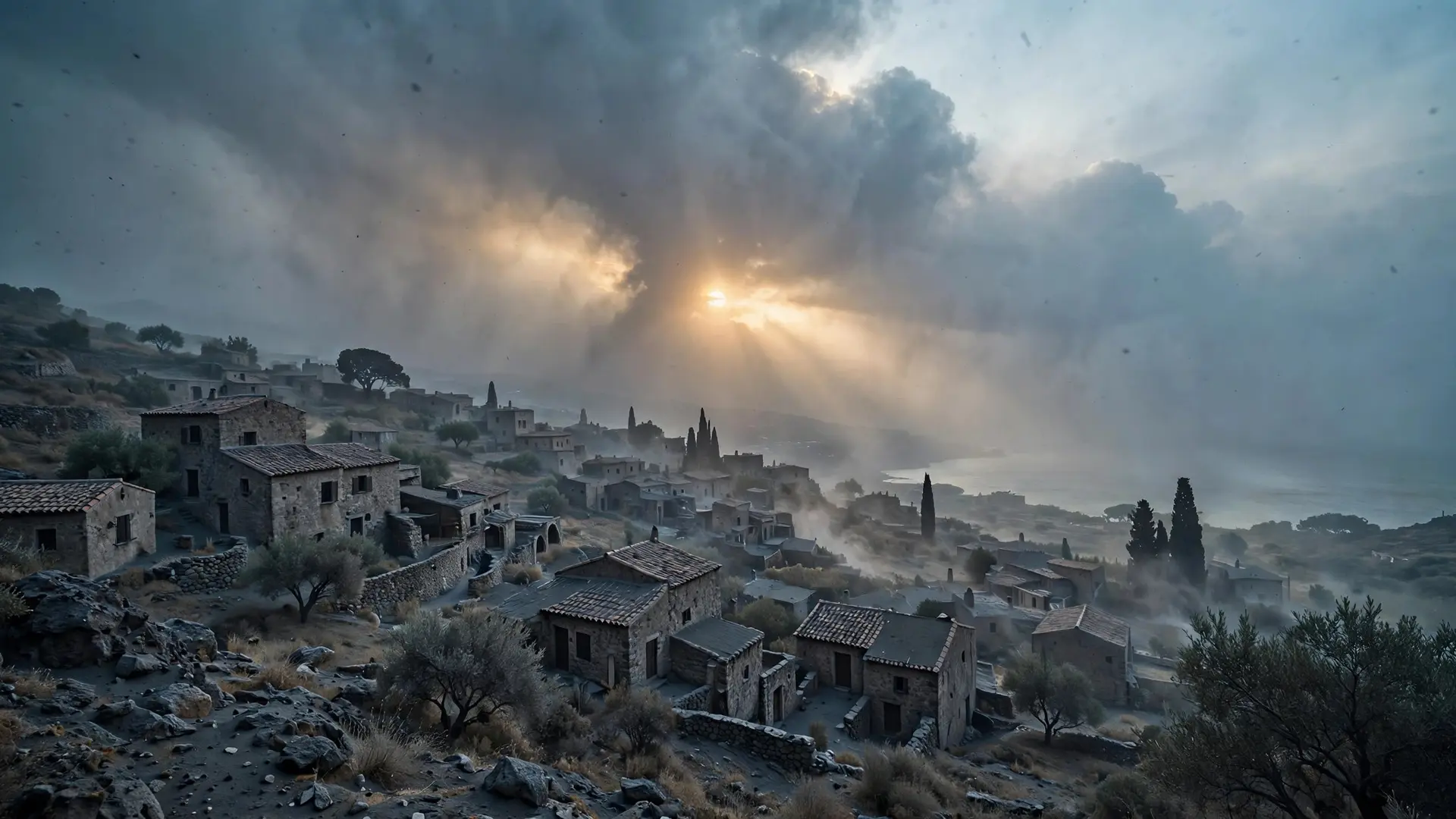
In the spring of 1315, rain began falling across Europe and refused to stop. It drowned the grain harvests of an entire continent, and before it finally ended, the Great Famine killed as many as one in four people in the worst-affected cities. Yet this three-year catastrophe — which scholars rank among the worst food crises in recorded European history — is remembered far less than the plagues and wars that followed it.
Why was the rain of 1315 so deadly?
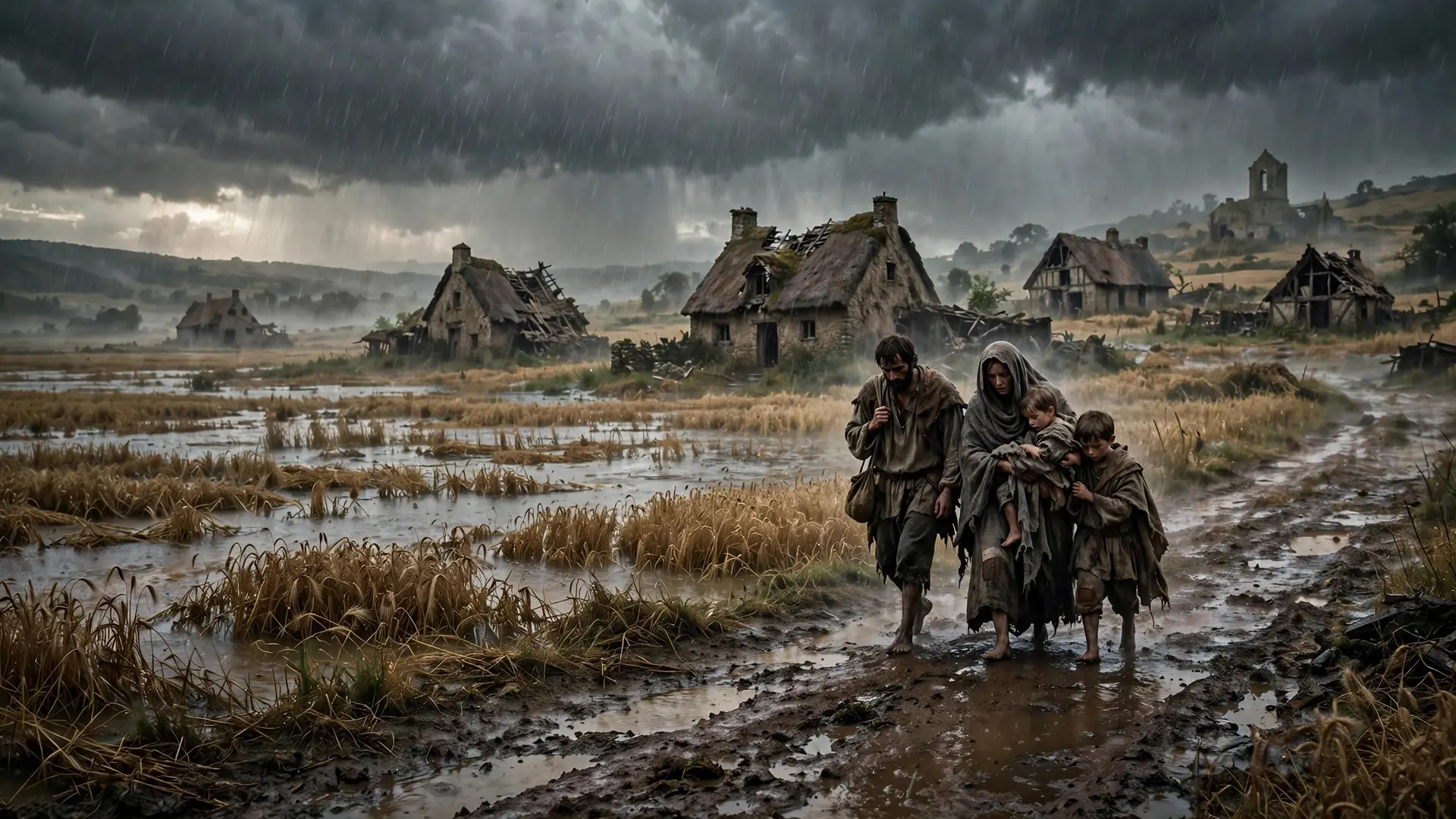
Rain alone does not make a famine. What made 1315 different was that the rain never really stopped — not that summer, and not the next one either. From the spring of 1315 onward, Europe endured cool temperatures and near-constant downpours through the growing seasons of 1315 and 1316, with harsh conditions lingering into 1317. Grain needs sun and dry weeks to ripen; instead it rotted in waterlogged fields. The hay harvest failed too, because cut grass could not be dried and cured, which meant livestock went into winter with almost no fodder. Farmers carried what little grain they had indoors in pots and urns just to keep it dry. The timing could hardly have been worse. Europe's population had grown for roughly two centuries on the back of good harvests and mild weather, and by 1315 it stood near the limit of what medieval farming could feed. Only kings, great lords, nobles, wealthy merchants and the Church held grain reserves meant to last through emergencies; everyone else lived harvest to harvest. When three harvests failed in a row, there was nothing to fall back on. Modern climate researchers have ranked the period from 1314 to 1316 as the fifth-wettest three-year stretch in Europe between the years 1300 and 2012. The earlier wet periods came after farming had become far more productive, or after the Black Death had shrunk the population. In 1315, record rainfall collided with a record population and a pre-industrial food system — a combination that left almost no room for survival.
How bad did it actually get?
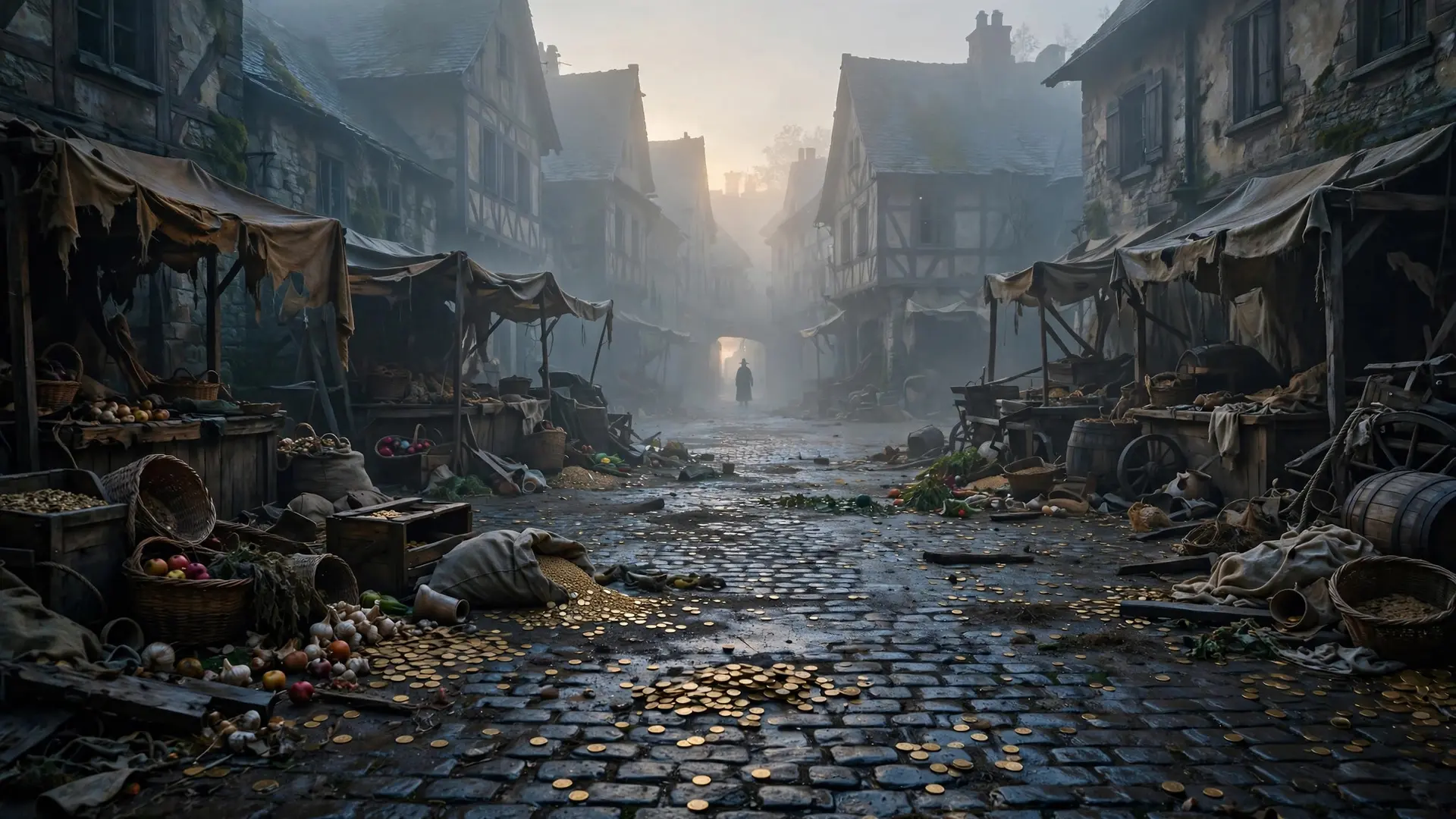
The price of bread tells the story faster than any chronicle. In England, food prices doubled between the spring and midsummer of 1315. Salt, which families needed to cure meat so it would last the winter, jumped from 30 to 40 shillings because brine would not evaporate in the constant rain. In Lorraine, wheat prices climbed about 320 percent, pushing bread entirely beyond what peasants could afford.
The crisis reached even the top of society. When Edward II halted at St Albans on 10 August 1315, his household could not find bread for the king or his followers, a striking sign that even royalty went hungry. The French king Louis X tried to invade Flanders, but his army sank into the soaked low-country fields and had to retreat, burning its own provisions rather than haul them away. Ordinary people foraged for wild roots, plants, nuts and tree bark. They slaughtered the draft animals they needed for plowing, and they ate the seed grain that should have been planted the following spring — a desperate trade that guaranteed the next harvest would be even worse. Town chronicles in Bristol recorded that year that mortality was so great the living could scarcely bury the dead, and that horse and dog meat passed as acceptable food. Medieval writers also reported cannibalism and even parents killing their children, though historians warn that such accounts may have been colored by rumor and fear. The human toll was staggering. Historians estimate that many towns and cities lost between a tenth and a quarter of their inhabitants. Southern England lost perhaps 10 to 15 percent of its people; northern France lost around 10 percent. When the weather finally returned to normal in the summer of 1317, the survivors were already weakened by pneumonia, bronchitis and tuberculosis, and so much seed grain had been eaten that full harvests did not return until about 1325 — a full decade after the rain began.
Why is it barely remembered?
Part of the answer is geography. The Great Famine was a northern European disaster: it hit a broad band from Ireland and Britain through northern France and the Low Countries to Scandinavia, Germany and western Poland, while the Alps and the Pyrenees marked its southern edge. Italy and southern Spain largely escaped, so the continent's richest cultural centers — and many of its most prolific chroniclers — had less reason to dwell on it. The famine also unfolded slowly, year after year, which made it harder to fix in memory than a single dramatic event like the year without a summer or the catastrophe of 536.
Its shadow was then swallowed by what came next. A generation later, the Black Death swept through Europe and killed on an even greater scale, and its cultural imprint — the art, the sermons, the social upheaval — overwhelmed the memory of the famine. The contrast between the two disasters is revealing: the plague could empty a town in months, while the famine ground on for years, draining its victims slowly. As one French historian observed, the famine produced slaughter on a massive scale precisely in a world that was already crowded, especially in towns that had absorbed the countryside's surplus population. The famine also left subtler marks that are easy to miss. Crime surged as starving people stole food. The Church, which could not pray the rain away, lost some of its authority in the eyes of ordinary believers. And the disaster quietly ended the long medieval boom: the confident expansion of the 11th through 13th centuries gave way to a harsher century of shrinking harvests, disease and war — including, three decades later, the economic devastation that followed the Black Death.
Was it really the worst famine in European history?
Economic historians studying the famine in Flanders have argued that no other food crisis in recorded European history compares to it — a claim that sounds extravagant until you weigh its scale, its duration and its death toll against any other pre-modern food crisis. What makes the claim hard to dispute is how many ways the disaster compounded itself: failed harvests, dead livestock, eaten seed grain, soaring prices, collapsing wages and spreading disease, all feeding into one another. Still, some details deserve caution. The most lurid stories — graves opened for food, parents devouring their children — come from chronicles written by people living through terror, and medieval specialists note that such tales may tell us as much about fear as about fact. And the ultimate cause of the rains remains debated: shifting weather patterns get most of the blame, but some researchers have proposed that a distant volcanic eruption — possibly of Mount Tarawera in New Zealand, which erupted for years — may have tipped the climate over the edge. What is not in doubt is the lesson. The Great Famine of 1315 was not caused by rain alone, but by rain falling on a society with no margin for error: too many people, too little stored food, and farming that could only just feed everyone in the best of years. Europe learned that vulnerability the hardest possible way — and then, within a generation, had to learn it again.
Frequently asked questions
What caused the Great Famine of 1315?
Unusually heavy rain and cool temperatures from 1315 to 1317 ruined harvests across northern Europe. With the population at a record high and almost no food reserves, the crop failures turned into mass starvation.
How many people died in the Great Famine?
Historians estimate that many towns and cities lost between a tenth and a quarter of their inhabitants. Southern England lost perhaps 10 to 15 percent of its people and northern France about 10 percent.
Did the famine affect all of Europe?
No. It was a northern European disaster, reaching from Ireland and Britain through northern France and the Low Countries to Scandinavia, Germany and western Poland. Lands south of the Alps and Pyrenees largely escaped.