The Year 536: The Worst Year in Human History
In 536 AD, a mysterious volcanic eruption dimmed the sun for 18 months, crashing harvests and freezing summers, triggering a century of famine and collapse.
Key takeaways
- In 536 AD, a volcanic eruption dimmed the sun for 18 months across Europe, the Middle East, and parts of Asia.
- Summer temperatures fell 1.5 to 2.5 degrees Celsius, beginning the coldest decade in the past 2,300 years.
- The eruption set off crop failures, famine, and the Late Antique Little Ice Age, worsened by eruptions in 540 and 547.
- The weakened world was then struck by the Plague of Justinian in 541, and recovery took nearly a century.
What would you do if the sun simply stopped working? Not set early or hide behind clouds — just faded, dim and blue, casting no shadows at noon for a year and a half. In 536 AD, that is exactly what happened across the Northern Hemisphere, and historians now call it the worst year to be alive. Not 1349, when the Black Death swept Europe. Not 1918, when influenza killed tens of millions. The year 536 — because it was not one catastrophe, but the start of a chain reaction that nearly broke the ancient world. The story of 536 matters today because it is our clearest example of how fast a climate shock can cascade into collapse. A single volcanic winter erased harvests, and the starving, weakened world that followed could not resist plague, war, or economic ruin. Everything we know about our own climate's fragility is written into the ice and tree rings of 536.
What did witnesses actually see in 536?
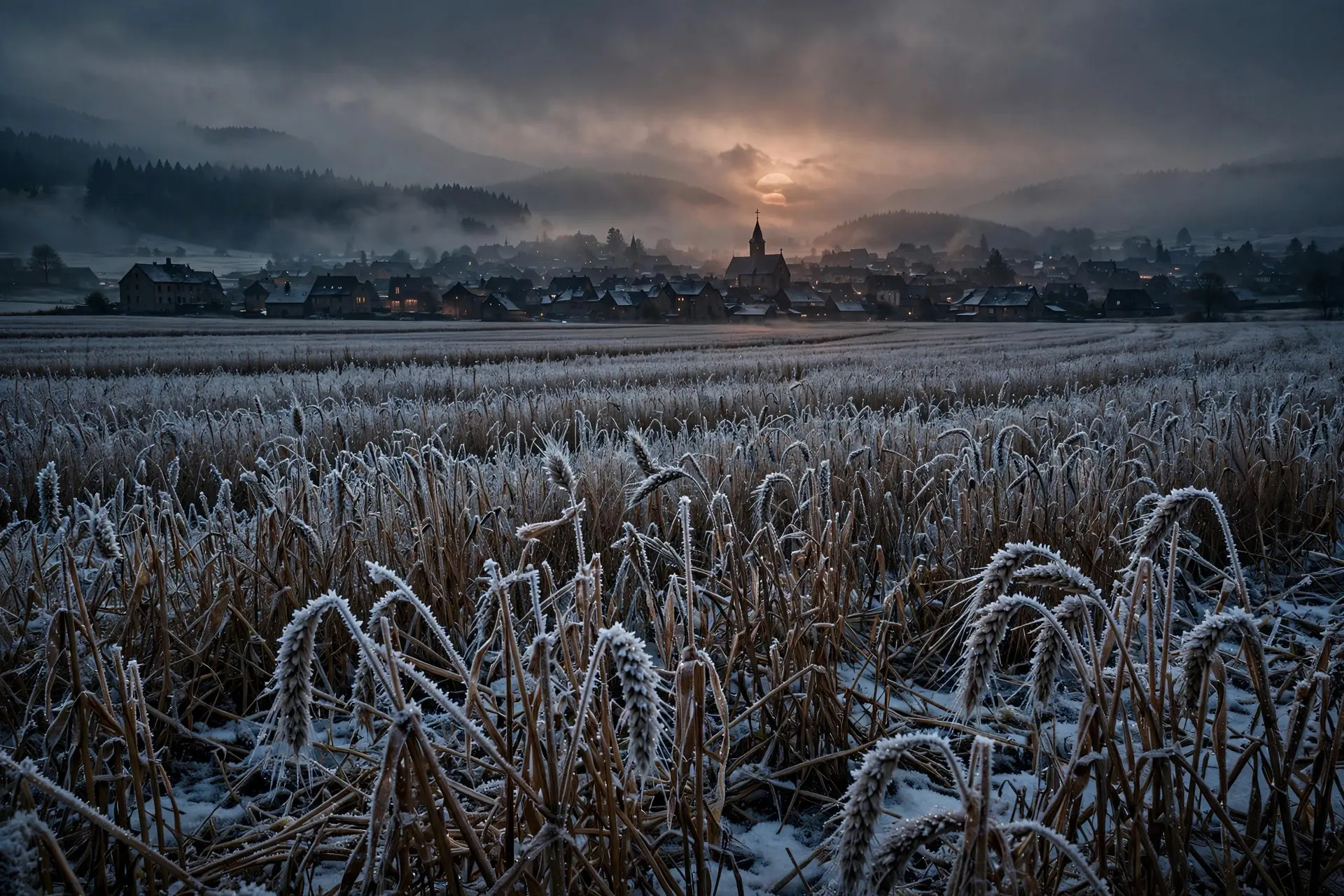
The Byzantine historian Procopius, writing from Constantinople, recorded that "the sun gave forth its light without brightness, like the moon, during this whole year." It seemed, he wrote, as though the sun were perpetually in eclipse. A Roman official named Cassiodorus described a bluish sun that cast no shadows at noon, and "seasons... all jumbled up together." In the Middle East, the Syrian chronicler Zacharias of Mytilene wrote that the sun was darkened by day and the moon by night for months, while winter snows killed birds and brought distress among men. These accounts span continents. Irish annals record "a failure of bread" in the years 536 through 539 — a flat admission that the harvests simply stopped coming. In China, imperial records describe summer snowfall and yellow dust falling like snow. For nearly 18 months, a persistent dry haze dimmed the sky over Europe, the Middle East, and parts of Asia. For generations, scholars dismissed these reports as poetic exaggeration. Then the ice proved them right.
What caused the darkness?
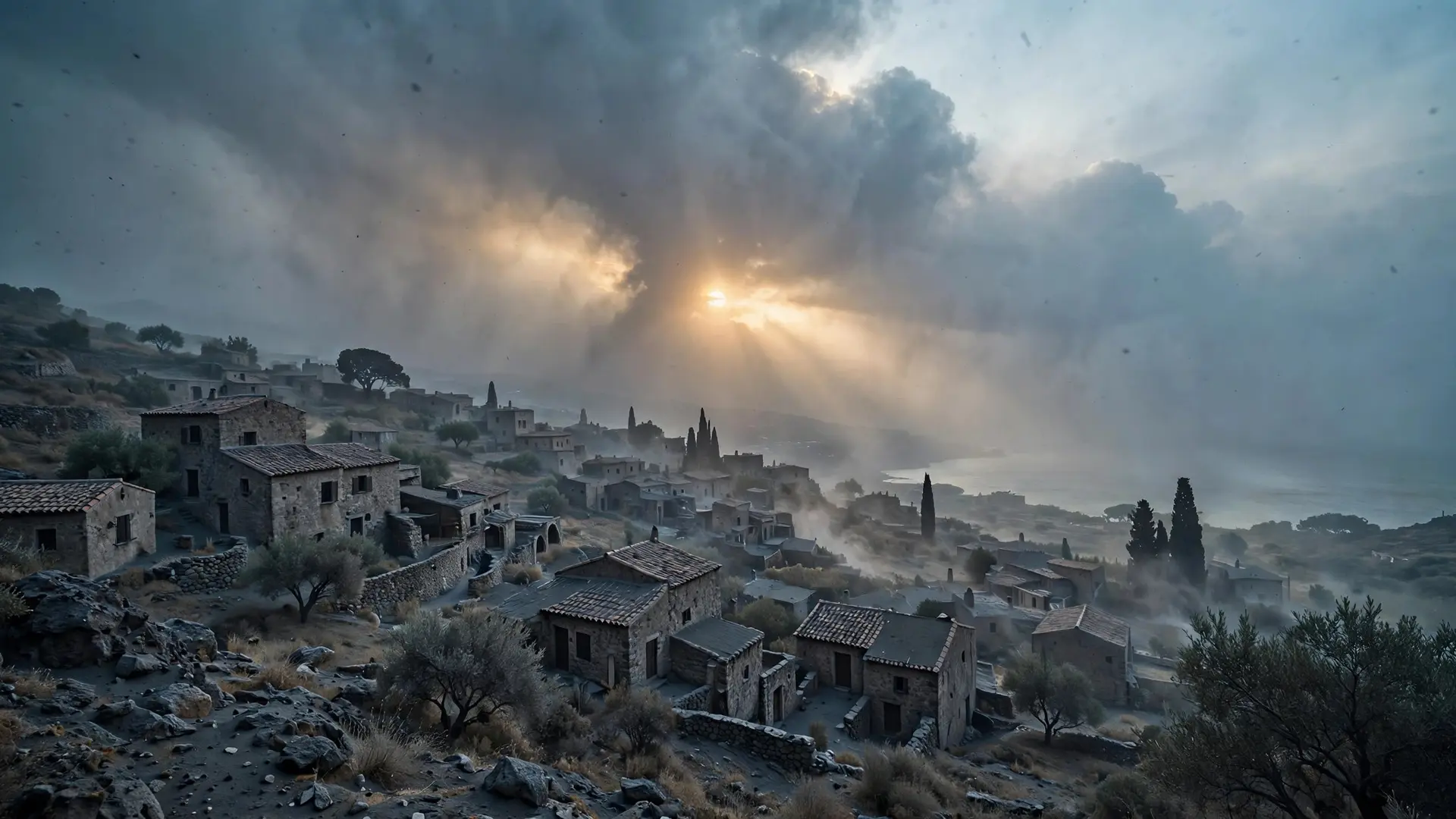
For over a thousand years, the cause of the mid-sixth-century dimming was a total mystery. That changed in 2018, when Harvard medieval historian Michael McCormick and glaciologist Paul Mayewski analyzed ice from the Colle Gnifetti glacier in the Swiss Alps. Deep in the frozen layers, they found microscopic shards of volcanic glass — tephra — that pointed to a cataclysmic eruption in Iceland in early 536. The volcano had spewed sulfur, bismuth, and ash high into the atmosphere, where they formed an aerosol veil that reflected sunlight back into space and cooled the planet. The chemistry was dramatic: tree-ring studies across Eurasia show that average summer temperatures fell by 1.5 to 2.5 degrees Celsius. That sounds small, but it initiated the coldest decade in the past 2,300 years. Growth rings in Danish and Irish trees are some of the narrowest ever recorded. And the 536 eruption did not come alone — two more eruptions followed, in 540 and 547, each pumping more ash into an already choked sky. Together they triggered what scientists call the Late Antique Little Ice Age, a decades-long cold snap that squeezed the ancient world's food supply to the breaking point.
How bad was the famine that followed?
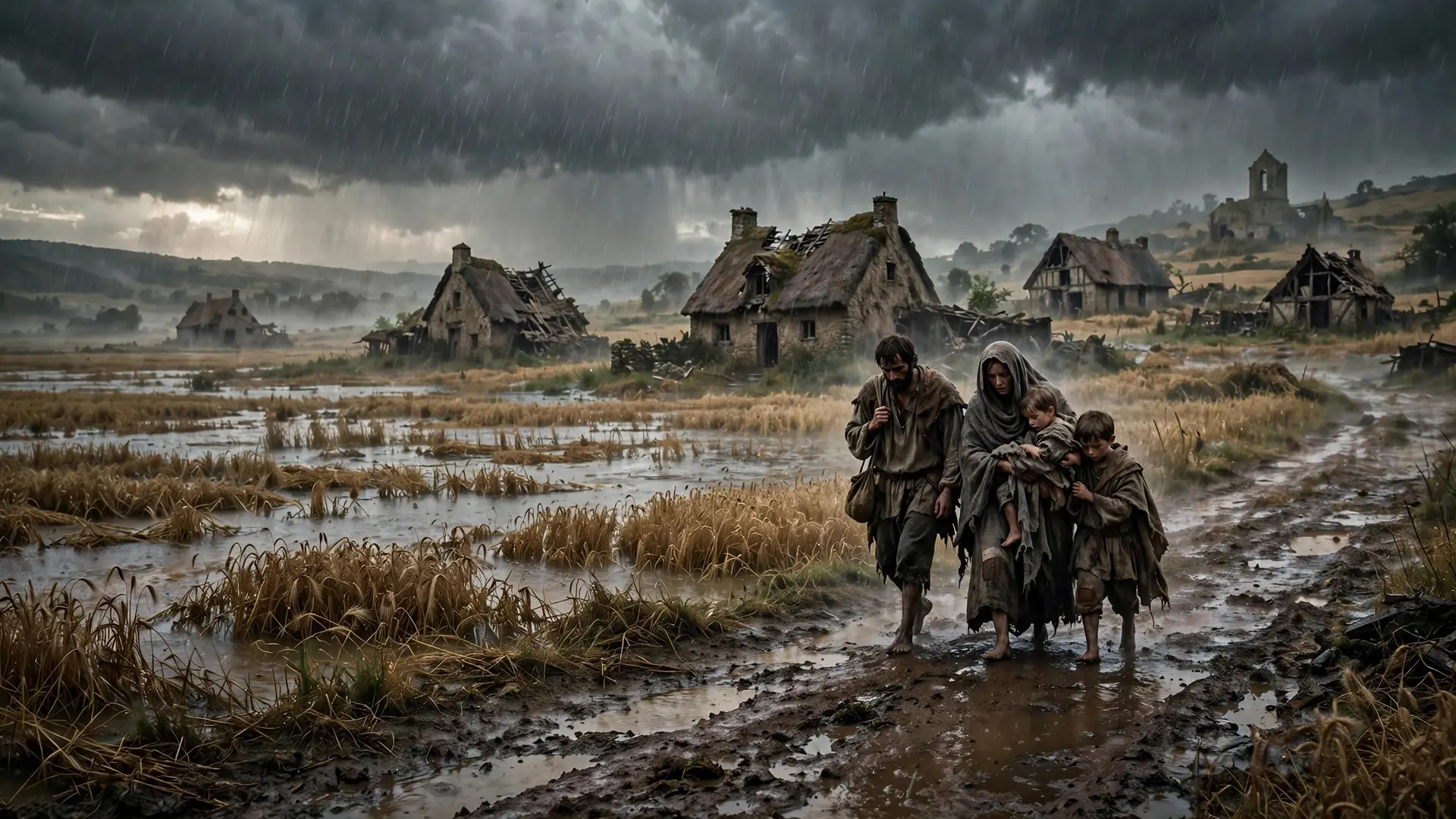
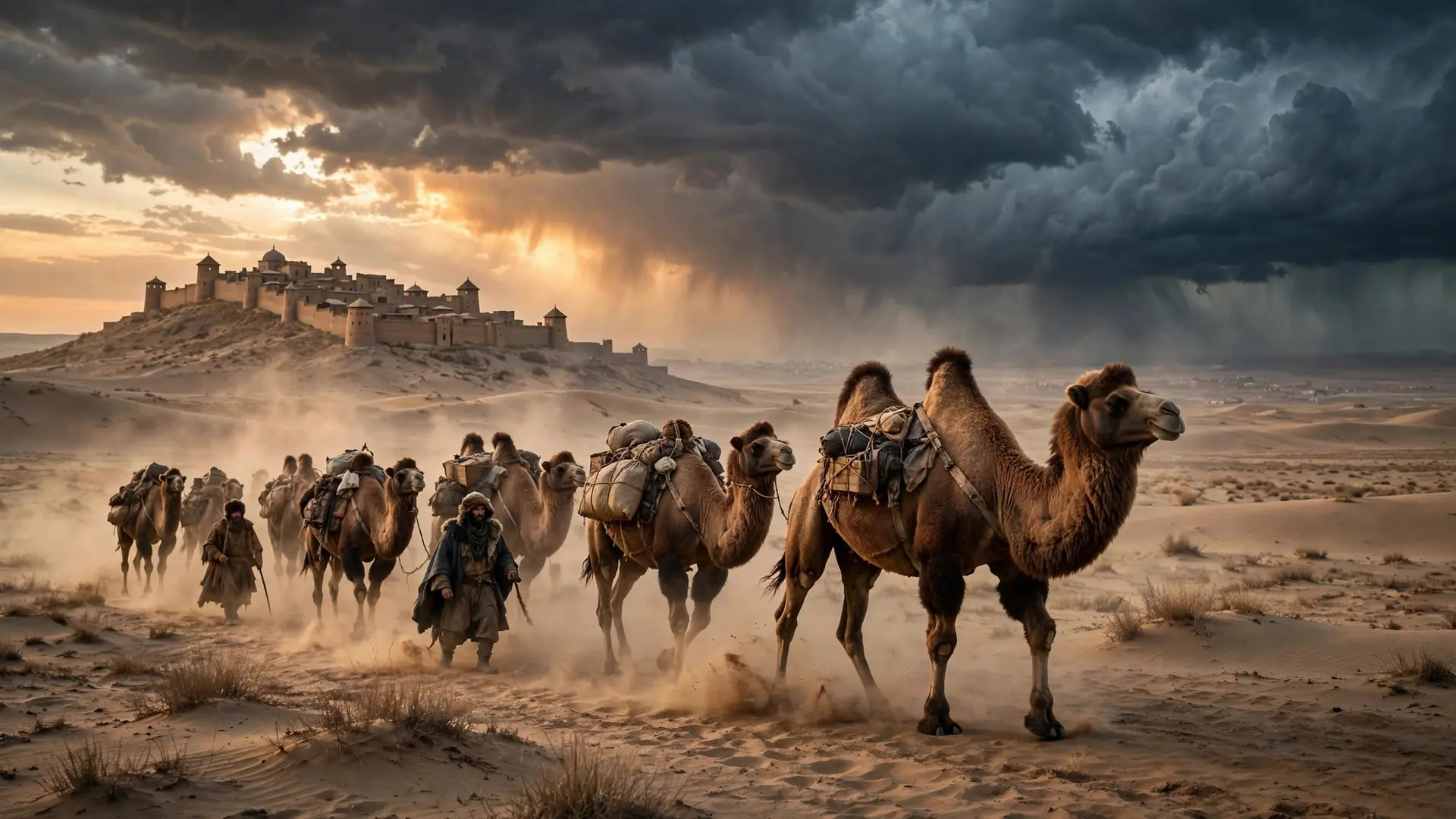
Agriculture in the sixth century ran on thin margins, and a 1.5-degree summer was the difference between a harvest and a catastrophe. When crops failed in 536, they failed across continents at once. Ireland's bread failed for three consecutive years. Snow fell in Chinese summers. Fruit would not ripen in the Mediterranean. People watched food rot in cold fields while believing, as Procopius wrote, that "men were free neither from war nor pestilence nor any other thing leading to death." The economic evidence is just as chilling. Ice cores preserve not only volcanic chemistry but also the trace pollution of ancient industry — and after 536, airborne lead levels, a byproduct of silver smelting, collapsed. An entire economy's worth of mining and metalwork simply stopped. The frozen record tells us that trade and industry went into a depression that would last over a century, with signs of recovery only appearing around 640 AD. This is what a climate-driven collapse looks like from space: not dramatic ruins, but a world quietly going still. The Year Without a Summer in 1816 was a small-scale echo of the same mechanism — a single volcano cooling a hemisphere — but 536 was far larger and hit a far more fragile world.
What role did the Plague of Justinian play?
As if famine were not enough, the weakened world was then struck by disease. In 541, just five years after the dimming began, bubonic plague arrived at the Roman port of Pelusium in Egypt and spread through the known world. The Plague of Justinian — named for the Byzantine emperor on the throne — was the first recorded pandemic of bubonic plague in history. It killed millions across the Byzantine Empire, with contemporary accounts describing thousands dying daily at its peak in Constantinople. The connection to 536 is not coincidence. Famine-weakened populations, disrupted trade routes, and a freezing climate created ideal conditions for a pandemic to spread and for societies to lose the capacity to respond. Mortality estimates in the hardest-hit areas ran as high as 25 to 50 percent. The plague is widely considered a major factor in the long decline of the Byzantine Empire and the broader end of the ancient world — a collapse that began the day the sun went dim.
Why does 536 matter more than ever now?
Here is the uncomfortable part: 536 is not just ancient history. It is the closest thing we have to a natural experiment in what a sudden, sustained climate shock does to civilization. Modern climate models struggle with exactly this question — how societies respond when harvests fail across continents simultaneously — and 536 hands us the answer: badly. The famine arrived in a year. The plague arrived in five. The economy took a century to recover. It also humbles our technology. The 536 mystery was solved not by satellites or computers, but by matching 1,400-year-old diary entries to ice-core chemistry and tree rings — a forensic collaboration between historians and climate scientists. Yet for all that science, one crucial thing remains unknown: the exact Icelandic volcano responsible has never been identified. It sleeps somewhere beneath the ice, unnamed, and geological history suggests eruptions of this scale are not once-per-millennium flukes. The economic devastation of the Black Death shows how a single plague can reshape labor, wages, and trade for generations. Now imagine that plague arriving in a world already starved, frozen, and economically shattered — a world that had endured a decade of volcanic winter. That was the 540s. The sun came back, eventually. The civilization it rose over was not the same one it had dimmed. The takeaway from 536 is not despair but perspective. Civilizations are not as sturdy as they feel, and the systems that feed us can be broken by a single sky-darkening event. The ancient world had no science to warn it. We do — and we can still read, in ice and rings and the words of Procopius, exactly what is at stake.
Frequently asked questions
Why is 536 AD called the worst year in human history?
Harvard historian Michael McCormick gave it that title because a massive volcanic eruption dimmed the sun for 18 months, crashed harvests, and triggered a cascade of famine, plague, and economic depression that lasted about a century.
What caused the 536 AD disaster?
A cataclysmic volcanic eruption in early 536, traced through volcanic glass in a Swiss glacier's ice core to Iceland. The exact volcano has never been identified.
What followed the 536 eruption?
More eruptions in 540 and 547 deepened the freeze into the Late Antique Little Ice Age. Then, in 541, the Plague of Justinian arrived — the first recorded bubonic plague pandemic.