How the Maya Built Tikal's Pyramids Without Metal Tools
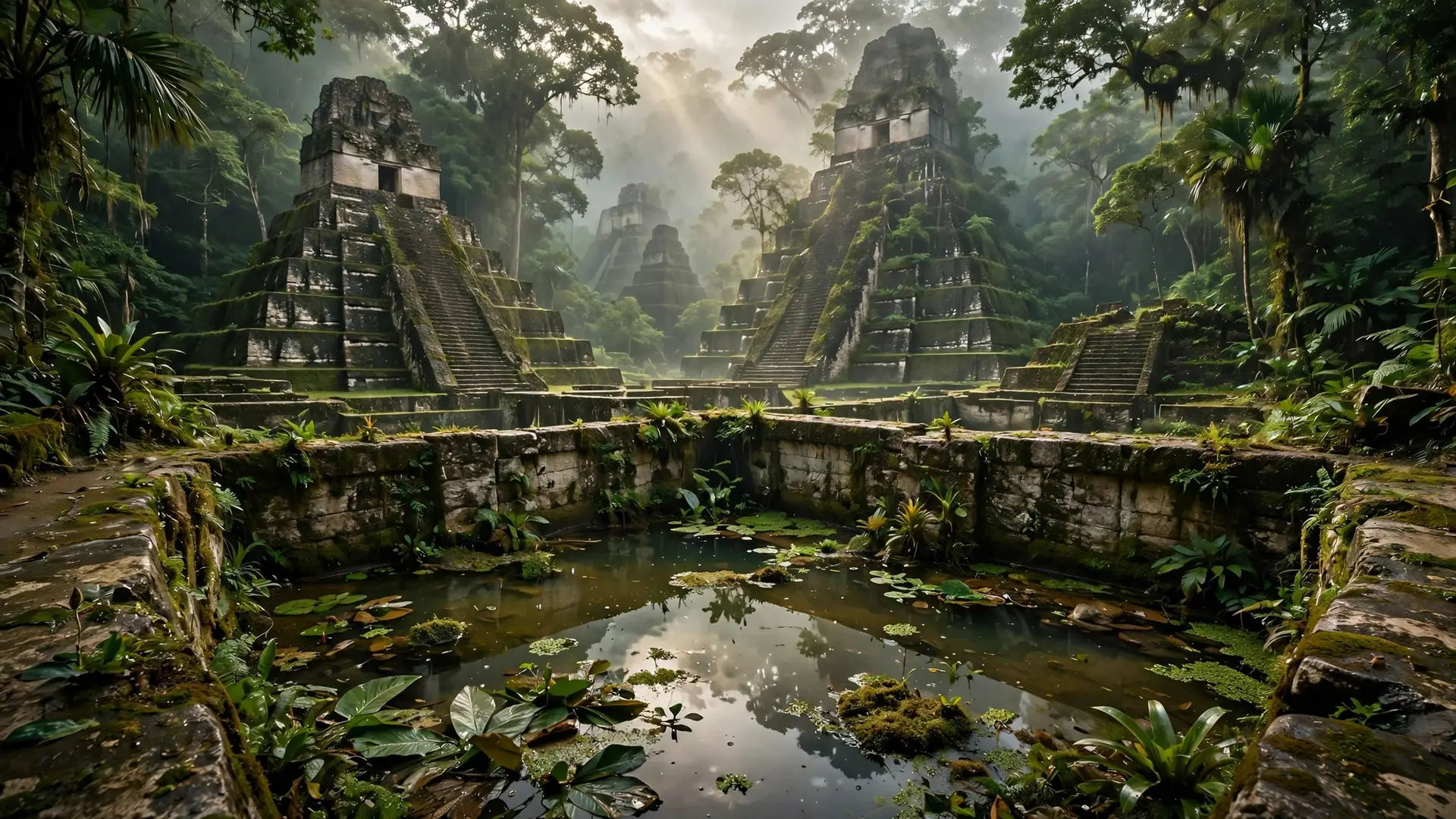
Tikal's Temple IV rose 65 metres without metal tools, the wheel or draft animals. The secret was limestone, burnt-lime mortar and corbelled vaults.
Key takeaways
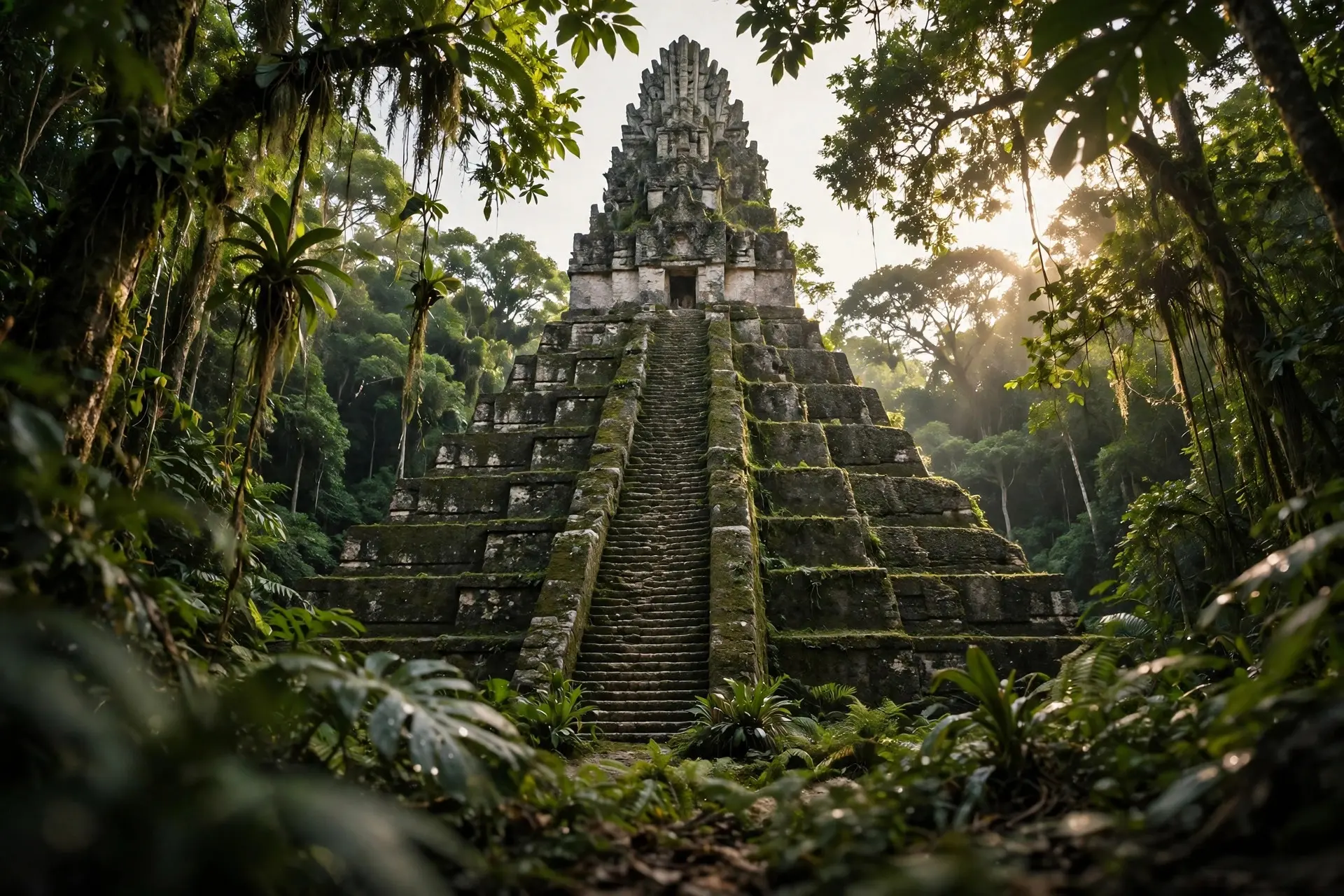
- Tikal's Temple IV rises 65 metres (213 ft), built with stone tools only — no metal, no wheel, no draft animals.
- Local limestone cuts easily when freshly quarried and hardens on exposure to the air, a natural advantage the Maya exploited.
- Burnt-lime cement made from the same limestone bound the rubble cores; Maya builders also used zahcab, a natural lime gravel.
- Temple interiors roofed with corbelled vaults: overlapping stones closed by a single capstone, braced with wooden crossties.
- Exteriors were coated in stucco and painted bright colours, especially red — the grey ruins hide a gaudy original.
The Maya raised monuments 20 storeys tall using tools of stone, wood and bone. Tikal's Temple IV rises 65 metres (213 ft), and every block was cut, carried and set without a metal chisel, without the wheel, and without a draft animal. The trick was soft limestone, a remarkable mortar, and human labor.
Key facts
- Temple IV at Tikal stands 65 metres (213 ft) high, an 8th-century CE structure raised entirely without metal tools (source).
- The local limestone "was one of the best building materials in all pre-Columbian America; not only was it easily quarried with tools of stone and wood (the only ones at the disposal of the ancient Maya builders), but it also hardens on exposure to the elements," wrote Sylvanus Morley in The Ancient Maya (1947) (source).
- "The Maya did not use the wheel nor draft animals, so they transported the building materials using person-power from the quarries to the building site," said Judith Maxwell, professor of linguistics and anthropology at Tulane University, in 2016 (source).
- Smaller loads were carried on a tumpline, a backpack hung from a forehead strap that places the weight on the spinal column rather than the muscles, letting bearers move heavier loads (source).
- "Blocks were cut using stone tools only," writes historian Mark Cartwright, and "burnt-lime cement was used to create a form of concrete and was occasionally used as mortar, as was simple mud" (source).
- The Maya even mined a natural cement: zahcab, a coarse lime-rich gravel found throughout the region, which Morley called the third ingredient of "a primitive, durable stone-and-masonry architecture" (source).
Why were stone tools good enough?
A chisel is only as good as the stone it cuts. Tikal sits on beds of limestone that is saturated with groundwater underground, which makes it comparatively soft while it is being quarried. Freshly cut, it yields to tools of flint, chert, obsidian and jadeite, all far harder than the soft limestone. Once hauled out and exposed to the air, the limestone undergoes carbonation and hardens significantly. The builders were carving the stone at its weakest moment. That chemistry gave the Maya something almost like a cheat code: the same limestone that formed the blocks also became the binder. Burnt in kilns, limestone reduces to quicklime; slaked with water and mixed with sand or gravel, it becomes a mortar and stucco that set harder than the rubble they surrounded. Mexicolore notes that lime has been used in Mesoamerica for 3,000 years or more, for cooking maize as well as for building. It was a material the culture understood at a cellular level.
How did they quarry, cut and carry the stone?
The quarrying started with water. Maya masons soaked or selected limestone while it was still soft, then cut it with stone tools alone. Facade details and carvings were shaped with chisels of jadeite and obsidian, the two hardest materials the lowlands offered. Transport was the bottleneck, and the Maya solved it with bodies. With no wheel, no pulley and no pack animal, "they transported the building materials using person-power from the quarries to the building site," in Maxwell's words. The tumpline was the technology: a leather strap across the forehead tied to a backpack, transferring the load to the spine so the legs did the work. It is still used across the highlands today. The infrastructure for that manpower was itself monumental. A network of sacbeob, "white roads" coated in smooth stucco, threaded through the jungle; some stretched up to 60 miles (97 km), linking cities and likely doubling as royal processional routes. The sources themselves draw the comparison Roman engineers would recognize: straight, hard-surfaced, state-maintained highways. Moving stone this way was slow but relentless: every ton arrived on someone's back. The lime cycle deserves its own attention, because it was the Maya's true industrial secret. Quarried limestone was burnt in open kilns until it became quicklime, then slaked with water to make a putty that, mixed with sand or crushed rock, cured into mortar, floor plaster and sculptable stucco. Morley identified the region's luck in full: easily worked stone, lime, and zahcab gravel for aggregate. With those three, he argued, "the three essential elements for a primitive, durable stone-and-masonry architecture were present." The Maya did not invent lime plaster (its use in Mesoamerica stretches back 3,000 years or more), but at Tikal they scaled it to industrial proportions, coating plazas, pyramids and causeways alike.
How did a pyramid actually go up, step by step?
A Tikal pyramid is a sandwich, not a solid. Here is how one rose:
- Quarry while soft. Limestone was cut from local beds before exposure hardened it, using stone, wood and bone tools.
- Carry it in. Blocks moved by tumpline and human porterage along sacbeob and jungle paths.
- Raise the core. The structural heart is not finished stone but limestone rubble and earth, bound with burnt-lime mortar and natural zahcab gravel, built in stages.
- Face it with veneer. Finely cut rectangular blocks, ashlar masonry, went over the core in a tight-jointed skin that shielded the softer interior from tropical rain.
- Vault the rooms. Interiors were roofed with corbelled vaults: flat stones piled so each course projected slightly inward until a single capstone bridged the gap, stiffened with wooden crossties. No true keystone arch was ever used.
- Crown it. Massive roof combs rose above the summit temple as vertical stone billboards carrying carvings and paint.
- Paint it. Every surface got thick lime stucco, painted bright colours, especially deep red. The grey stone of today's ruins is the stripped skeleton of something once gaudy. Each layer does a job, and the table makes the engineering readable at a glance:
| Layer | Material | What it does |
|---|---|---|
| Rubble core | Limestone rubble, earth, lime mortar | Gives the pyramid its bulk and height cheaply |
| Ashlar veneer | Finely cut blocks | Weatherproof skin, tight joints, carved decoration |
| Corbelled vault | Overlapping flat stones, capstone, wood ties | Roofed temple rooms without a true arch |
| Roof comb | Vertical stone slabs | Displayed sculpture and added sacred height |
| Stucco + paint | Burnt-lime plaster, pigments | Sealed the porous stone, carried the color program |
| Pyramids also grew in time as well as space. Rulers periodically enlarged them, building a new, larger pyramid around the old one, so excavation sometimes reveals a series of complete but diminishing pyramids nested inside, "often still with their original coloured stucco decoration," as Cartwright writes. |
What do the grey ruins get wrong?
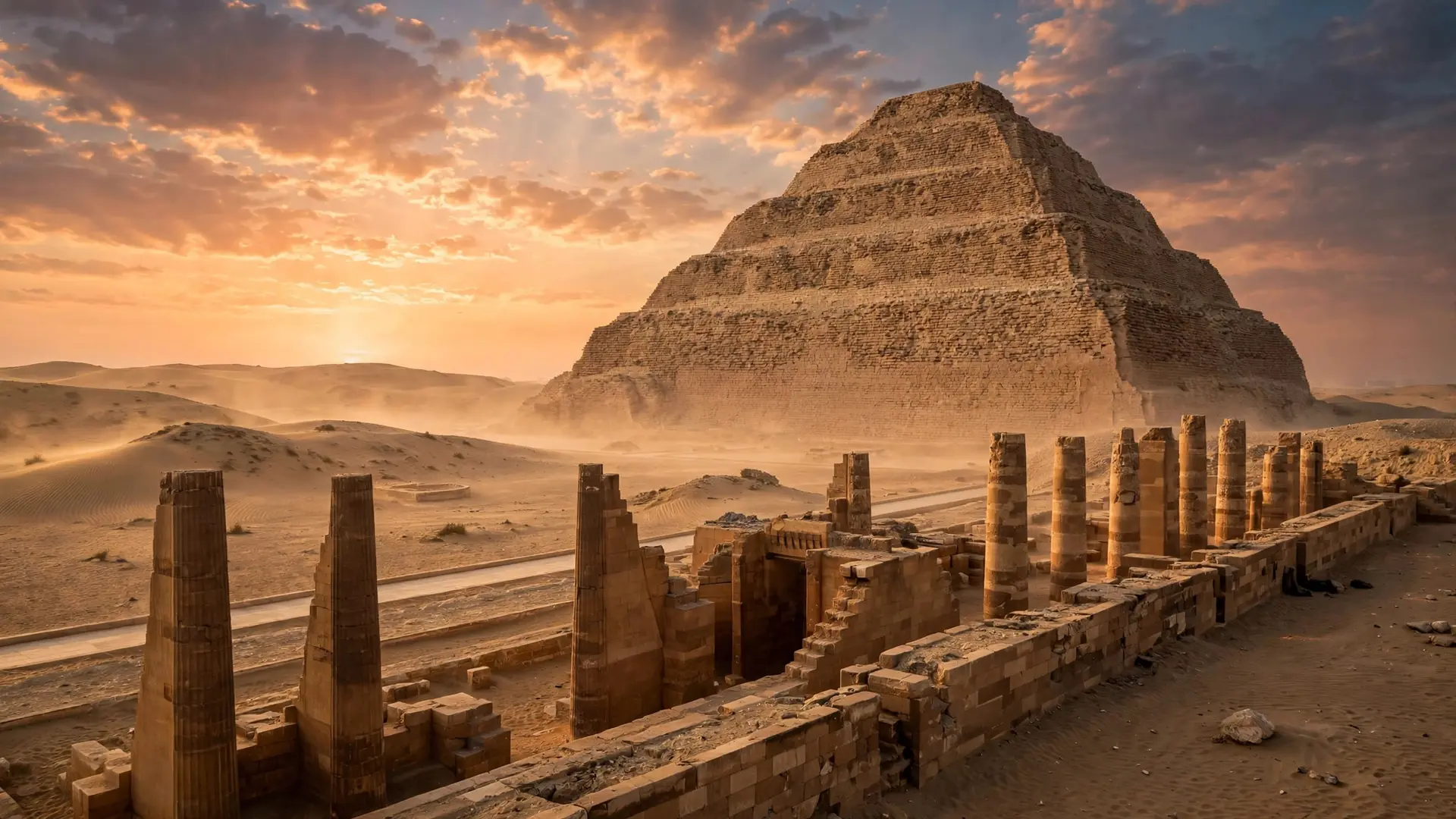
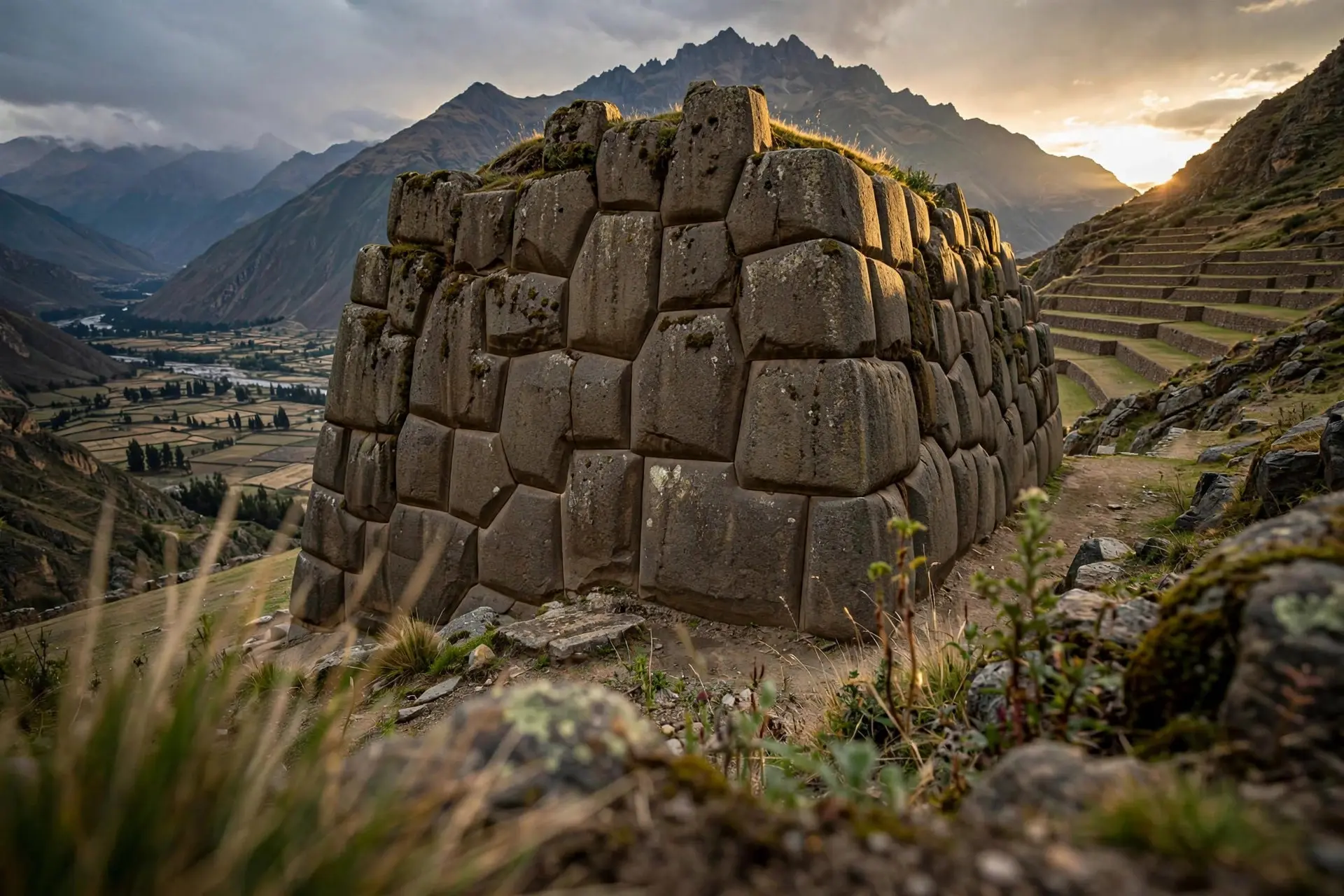
The biggest misconception is the color. Nobody visiting Tikal sees what the Maya saw: an entire ceremonial center stuccoed and painted in red, yellow, green and blue. The coating was not decoration layered over engineering; it was engineering. It sealed porous limestone against tropical downpours, and the Maya renewed it across centuries. The second is the idea that pyramids are hollow tombs like Egypt's. Maya pyramids were stepped platforms that lifted a temple toward the sky, built as man-made sacred mountains. They did double duty as tombs: Pakal's sarcophagus at Palenque, a single 20-ton (18-tonne) block of carved limestone, sat deep inside its pyramid, but the summit temple, not the burial, was the point. The third is the corbelled vault itself. It looks like an arch, but it is not one: it works by weight, not by the wedge action of a keystone. That is why Maya temple rooms are famously narrow and their walls so thick. The builders never solved the true arch, and never needed to. They also never wrote a manual. Our best record of the construction sequence came the hard way: Penn Museum's Tikal Project, begun in 1955 under Edwin Shook, spent decades mapping more than 2,000 structures and publishing its findings in 33 volumes. When archaeologists dismantled one crumbling pyramid in the 1960s, they found the layered, stage-by-stage construction the textbooks now describe. The real answer to "how did they build without metal tools?" is that the question flatters the tools. Limestone, lime and human organization were the technology. The Penn Museum's mapping campaign showed the scale of that organization: more than 2,000 separate structures in the mapped core, housing a central population of roughly 17,000 and perhaps 45,000 across the hinterlands. That is the labor pool behind the pyramids. Copper would have helped, but Tikal's builders had already found that the stone itself, cut at the right moment and bound with its own burnt bones, was all the hardware they needed. Compare with Egypt's approach to moving 2.3 million pyramid blocks, the earlier experiment of Imhotep's step pyramid at Saqqara, Inca stonework laid without mortar, and the water system that made the city possible, Tikal's rainwater reservoirs. How we made this article: FactSpire researched and drafted it with AI assistance and checked every fact against the sources listed above.
Frequently asked questions
Did the Maya really build without any metal tools?
Yes. As historian Mark Cartwright puts it, blocks were cut using stone tools only. Chisels were shaped from jadeite and obsidian, and the work was possible because Tikal's limestone is soft when freshly quarried and hardens with exposure. Copper and bronze metallurgy never took hold in the Maya lowlands the way it did in the Old World.
How did they move the stone blocks?
Pure manpower. Judith Maxwell of Tulane University notes that without the wheel or draft animals, the Maya carried building materials from quarries to sites using person-power. Smaller blocks rode on a tumpline, a forehead-strapped backpack that loads the spine rather than the muscles. Finished causeways called sacbeob, some up to 60 miles (97 km) long, linked quarries, cities and trade routes.
What held the stones together?
Burnt-lime cement, made by heating limestone until it became quicklime and slaking it with water, created a form of concrete used as mortar; simple mud worked too. The Maya also exploited zahcab, a naturally lime-rich gravel. Bound with rubble into a core, the mixture cured into a mass that has survived some 2,000 years of earthquakes and hurricanes.
How did the blocks reach the top of a 65-metre pyramid?
They did not have to go up all at once. Maya pyramids grew in stages: each generation encased the previous structure, so interiors often reveal complete but smaller pyramids inside. The bulk of every pyramid is a rubble-and-earth core raised course by course, not a stack of finished blocks hauled to a summit.
Sources
- Maya Architecture, World History Encyclopedia
- RESOURCE: Maya buildings that resisted earthquakes, Mexicolore
- How did the ancient Maya build their pyramids?, Mexico News Daily
- Understanding the Ancient Maya, Penn Museum