The Nile: Africa's Longest River Explained
The Nile runs 6,695 km from Burundi's highlands to the Mediterranean — but is it truly the world's longest river? The answer is more contested than it looks.
Key takeaways
- Guinness World Records credits the Nile at 6,695 km, measured from its farthest stream in Burundi to the Mediterranean.
- Two tributaries form the river: the Blue Nile supplies more water, while the White Nile reaches deeper into Africa.
- The Nile flows through 11 countries and has sustained human settlement for at least 5,000 years.
- A 2026 expedition suggests the Nile may be at least 25 miles longer than the Amazon — but the finding is provisional.
The Nile is the longest river in the world — at least according to Guinness World Records, which measures it at 6,695 kilometers (4,160 miles) from its farthest stream in Burundi to its mouth in the Mediterranean Sea. But the crown is genuinely contested: the Amazon is a close rival, measuring a river's true length depends on where you start counting, and the newest expedition data — published in 2026 — still calls the Nile's win provisional. What is beyond dispute is the river's scale and its role in history: a single watercourse running the length of northeast Africa, through eleven countries, that made a civilization possible.
How Long Is the Nile, Really?
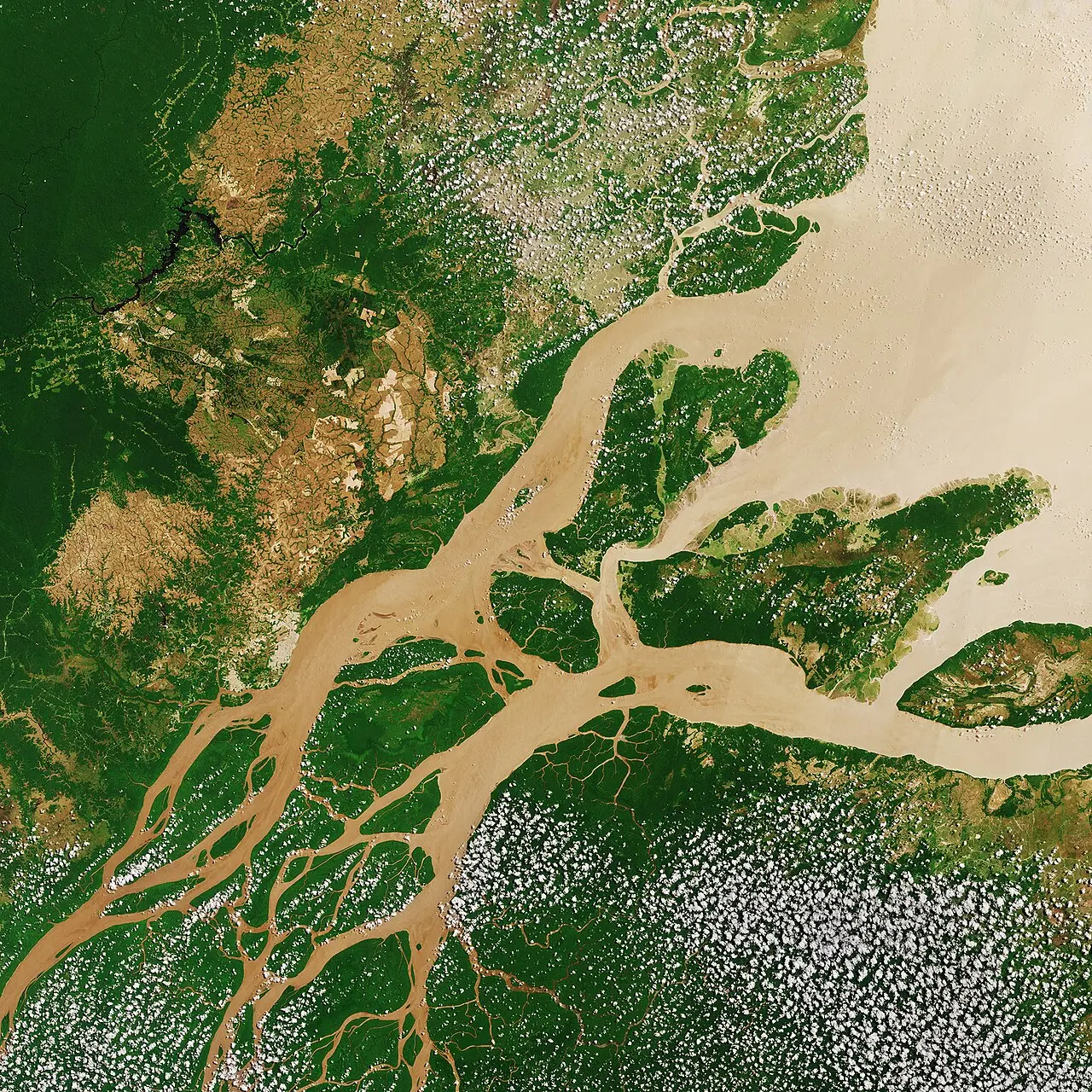
Three heavyweight references give three slightly different numbers, and the differences are instructive. Guinness World Records (2022): 6,695 km (4,160 miles), measured from the farthest stream in Burundi. Encyclopaedia Britannica: about 4,132 miles (6,650 km), and it calls the Nile the longest river in the world outright. National Geographic's education division agrees: "the longest river in the world." NASA's Earth Observatory is more cautious, calling the Nile "one of the longest, if not the very longest, river on Earth." Why the spread? Length depends on which headwater counts as the start and how the meandering delta is measured. This is where the Amazon River enters the argument: depending on the survey, Brazil's advocates sometimes credit the Amazon with greater length. The freshest data comes from National Geographic's September 2026 report on Steve Boyes' Wilderness Project, which mapped the Nile's headwaters and found the Nile "at least 25 miles longer than the Amazon." Boyes himself is careful to call the finding provisional — the margin is small, and river science measures in moving targets. For now, the Nile holds the title with an asterisk the researchers wrote themselves.
Where Does All That Water Come From?
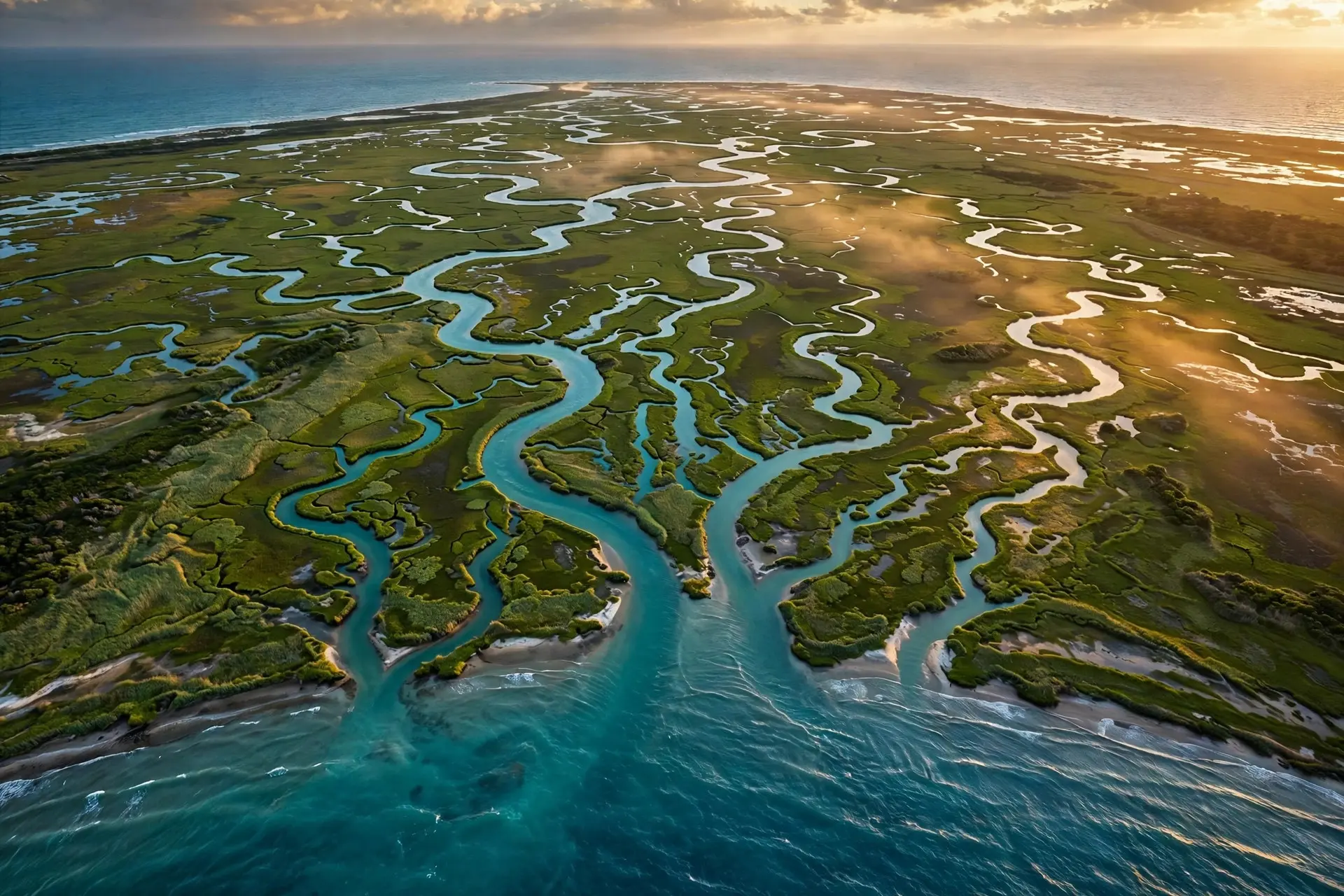
The Nile is really two rivers wearing one name. The Blue Nile delivers more water; the White Nile reaches deeper into the heart of Africa. The White Nile begins at Lake Victoria — accepted as its source since the mid-1800s — flows through Uganda and South Sudan, and its southernmost headwater is the Kagera River in Burundi, the farthest stream Guinness uses for its measurement. The Blue Nile rises at Lake Tana in the Ethiopian highlands and joins the White Nile near Khartoum in Sudan, where the united river becomes simply the Nile. The last major tributary, the Atbara, joins about 320 kilometers north of Khartoum. From there the river runs north through desert for more than 1,500 kilometers without receiving a single tributary, descends through six cataracts before entering Lake Nasser at the Egypt–Sudan border, and finally fans out north of Cairo into a broad delta that splits into two great channels — the Rosetta in the west and the Damietta in the east (see how river deltas form for the mechanics). The drainage basin sprawls across more than 3,349,000 square kilometers. Eleven countries share the watershed: Burundi, the Democratic Republic of the Congo, Egypt, Eritrea, Ethiopia, Kenya, Rwanda, South Sudan, Sudan, Tanzania, and Uganda.
How Did One River Build a Civilization?
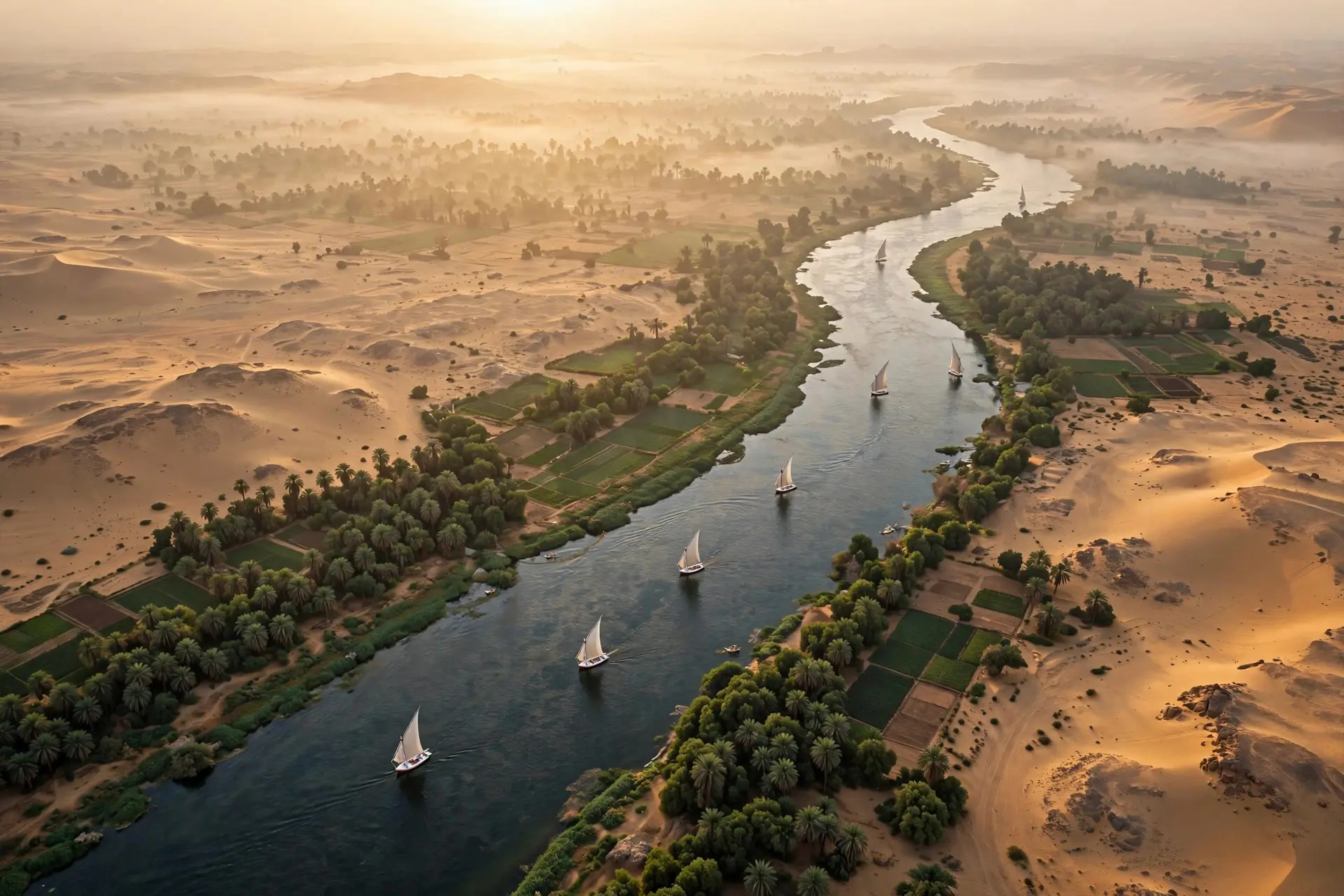
Egyptian civilization flourished in the Nile valley after about 3000 BC, and the river was the reason. Every year, floods washed nutrient-rich silt from the Ethiopian highlands down onto the riverbanks, renewing the soil. The Egyptians built a network of earthen banks across the floodplain for large-scale irrigation, farmland expanded, and population and wealth grew with it. The river has supported continuous human settlement for at least 5,000 years. The Nile was pantry, highway, and temple in one. Its farmers grew beans, wheat, flax, cotton, and millet; the delta's papyrus became the ancient world's paper, as well as cloth, boxes, and rope; the river was worshipped as a giver of prosperity and life itself. The dependence never ended: today some 95 percent of Egyptians still live within a few miles of the Nile, and the country draws 90 percent of its water from it. The valley around Lake Victoria, where the White Nile begins, sits at the edge of the Great Rift Valley, the geological seam that shapes so much of African geography.
What Changed the Nile in Modern Times?
The modern Nile is an engineered river. Construction of the Aswan High Dam began in 1960 and finished in 1970: a 3,830-meter earthen embankment, one of the largest in the world, holding back 132 cubic kilometers of water in the 550-kilometer-long Lake Nasser. Its 2.1 gigawatts of hydropower supplied fully half of Egypt's electricity needs in 1970, and the dam virtually eliminated the danger of downstream floods. The price was steep: nearly 100,000 residents were relocated, and four archaeological sites were dismantled and rebuilt above the new shoreline — most famously the rock temple of Abu Simbel, carved by Pharaoh Ramses II in the 13th century BCE. The dam also rewrote the river's ecology. Silt that once fertilized the fields is now trapped behind the dam; without the annual flood to scour the delta, erosion is shrinking it. The river flows on, but the ancient bargain — flood for fertility — is gone.
Who Searched for the Nile's Source?
The question of where the Nile begins is nearly two millennia old. Under the emperor Nero in the first century AD, a Roman expedition set out to find the source and gave up in the swamps of the Sudd in South Sudan. In 1898, German explorer Richard Kandt documented the spring-fed stream in Rwanda now generally considered the farthest source. In 1968, Colonel John Blashford-Snell led 70 servicemen and scientists down the Blue Nile — an expedition of gunfire, hostages, and the drowning of Corporal Ian Macleod — completing the run in September. In 2004, Pasquale Scaturro and Gordon Brown completed the first full source-to-sea descent of the Nile: 114 days, 3,250 miles, from the Ethiopian highlands to Alexandria, an expedition that became the IMAX film "Mystery of the Nile." And in February 2026, Boyes' Wilderness Project spent 25 days in the Rwandan headwaters — 16 members, more than 400 miles covered, measurements at 103 survey sites — verifying a peatland spring in Nyungwe National Park as part of the farthest source chain: spring to Nyabarongo River to Ruvubu to Kagera to Lake Victoria, "where the Nile proper begins." From Nero's legions to GPS-wielding surveyors, the longest river in the world has kept explorers walking upstream for two thousand years — and it still has not quite told them everything.
Frequently asked questions
Is the Nile or the Amazon the longest river in the world?
Guinness World Records, Britannica, and National Geographic credit the Nile. A 2026 National Geographic-reported expedition found the Nile provisionally at least 25 miles longer than the Amazon — though the researchers themselves call the finding provisional, since the margin is small.
Where does the Nile start and end?
Its farthest headwater is the Kagera River in Burundi, feeding Lake Victoria; the river flows north through 11 countries and empties into the Mediterranean Sea via the Rosetta and Damietta branches of its delta.
Why was the Nile so important to ancient Egypt?
Annual floods carried nutrient-rich silt from the Ethiopian highlands onto the riverbanks, making the land fertile. Egyptian civilization flourished in the valley after about 3000 BC on farming made possible by that silt.