Bir Tawil: The Land No Country Wants to Claim
Bir Tawil is a 2,060 km² trapezoid of desert between Egypt and Sudan, claimed by neither, because claiming it would cost each side a far richer prize.
Key takeaways
- Bir Tawil is a 2,060 km² desert trapezoid south of the 22°N parallel, claimed by neither Egypt nor Sudan.
- Egypt asserts an 1899 straight-line border; Sudan asserts a 1902 administrative boundary — both put Bir Tawil in the other country.
- Neither side will claim it, because doing so would concede the disputed, resource-rich Halaib Triangle.
- The legal reality is stranger than it looks: each state effectively assigns the territory to the other.
Bir Tawil is a 2,060-square-kilometer trapezoid of Nubian Desert wedged between Egypt and Sudan that neither country claims — not out of generosity, but out of strategy. Claiming it would require each side to accept the other's version of their shared border, and with that border goes the real prize: the populated, gold-and-oil-rich Halaib Triangle. So the desert sits in one of the strangest situations in modern geography, a patch of Earth that two nations actively insist belongs to the other one.
How Did a Patch of Desert End Up Claimed by Nobody?
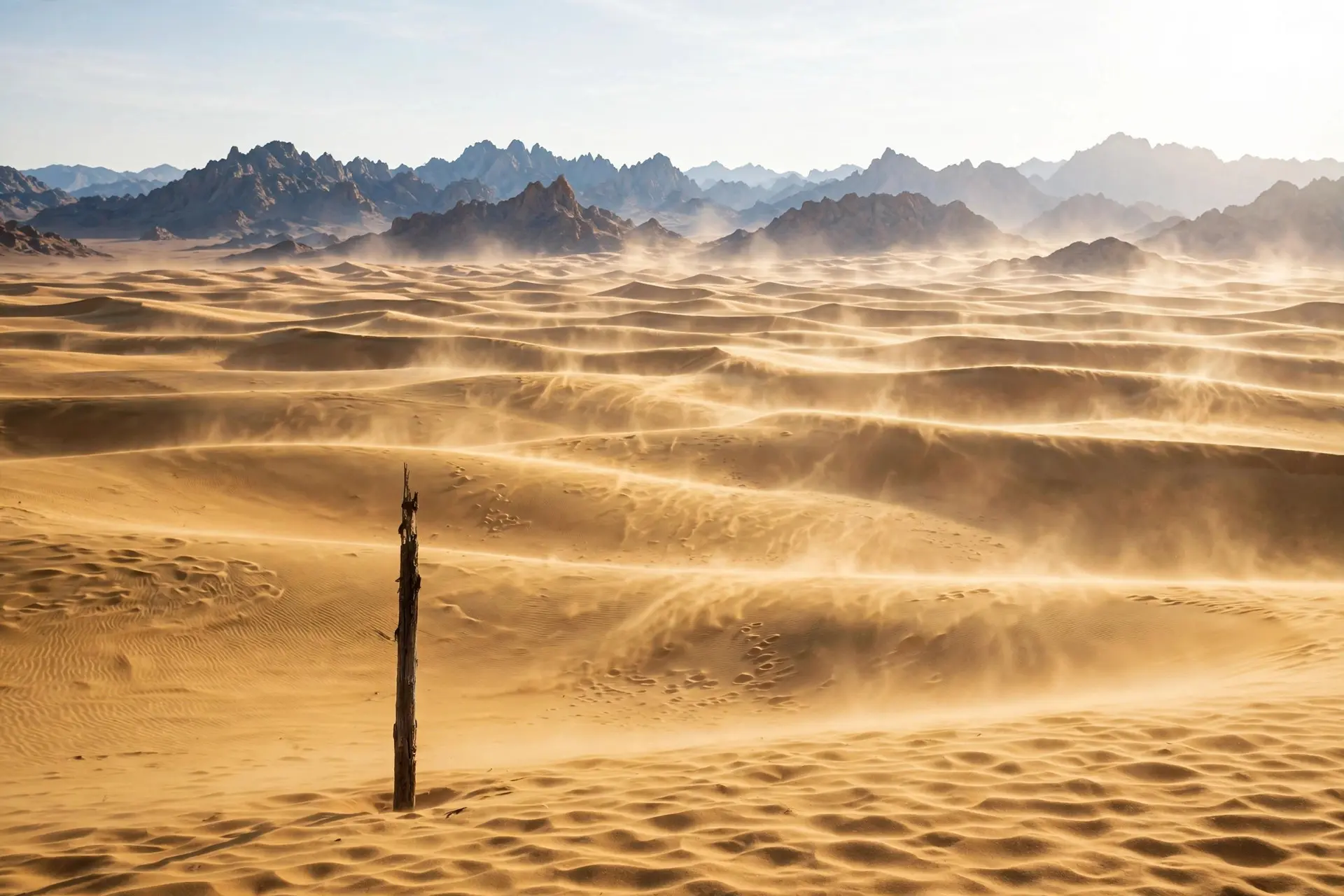
The tangle begins with two lines drawn by British colonial administrators. On 19 January 1899, Egypt and Britain set the Egypt–Sudan boundary as a dead-straight line along the 22nd parallel north — one of the famously ruler-drawn African borders explored in why some country borders are straight lines. But on 4 November 1902, the British drew a second, administrative boundary to reflect how local tribes actually used the land: Bir Tawil, grazing land of the Ababda tribe based near Aswan, fell under Egyptian administration, while the Halaib area, whose people were culturally closer to Khartoum, fell under the British governor of Sudan. Both lines survived into the post-independence era, and each country adopted the one that favored it. Egypt asserts the 1899 straight line, which puts the Halaib Triangle inside Egypt — and Bir Tawil inside Sudan. Sudan asserts the 1902 irregular line, which puts Halaib inside Sudan — and Bir Tawil inside Egypt. The result is a perfect deadlock: both claim Halaib, neither claims Bir Tawil. The trapezoid lies just south of 22°N, roughly centered at 21°51′54″ N, 33°37′30″ E, ringed by mountains with dry wadi riverbeds that flood each spring. Little grows, nothing changes, and no permanent residents live there — only Ababda nomads and gold miners pass through its makeshift camps.
Why Won't Either Side Just Take It?
Because Bir Tawil is worth nothing next to what taking it would cost. The Halaib Triangle is populated and holds natural resources, including gold and oil. Egypt seized de facto control of it in 1992, the year Sudan granted drilling rights to a Canadian oil company, and has held it ever since. The dispute nearly turned violent once before: in the 1950s, when Sudan made Halaib an electoral unit, the two countries came close to full-scale conflict. If Egypt claimed Bir Tawil, it would have to recognize Sudan's 1902 boundary — and hand over its claim to Halaib. The same logic binds Sudan in reverse. A border-law analysis from the specialist publication Sovereign Limits adds a delicious nuance: Bir Tawil is technically not terra nullius at all. Each state, under its own claim line, assigns the territory to the other — Egypt "gives" it to Sudan, Sudan "gives" it to Egypt — while neither bothers to maintain actual control over the remote, unpopulated desert. It is not lawless land waiting for an owner; it is a diplomatic stalemate frozen in sand. Border history is full of such oddities, from the checkerboard enclaves of Baarle-Nassau to the narrow mountain corridor of Wakhan — but Bir Tawil may be the only one created by mutual rejection.
Who Has Tried to Become King of Nowhere?
Unclaimed land is catnip for micronationalists. The most famous attempt belongs to Jeremiah Heaton, a farmer from Virginia, who traveled to Bir Tawil in June 2014 and planted a homemade blue flag — designed with his children, crown and four stars — on the desert floor. He had promised his young daughter Emily that she could be a princess, and she was seven years old when he planted the flag on 16 June 2014. Heaton declared that Bir Tawil "shall be forever known as the Kingdom of North Sudan," and the story ricocheted from a local Virginia newspaper to CNN, Time, and Newsweek, followed by a $250,000 crowdfunding campaign for his would-be state.
He was not the first. A claimant styling himself George Henry I had declared the "Kingdom of Bir Tawil" in 2010. Then came Dmitry Zhikharev, a Russian satellite-radio enthusiast, who arrived on 17 December 2014 with a companion, planted a Russian banner, and called himself "King of Bir Tawil" — directly contesting Heaton's claim and getting rebuffed. Later flags followed: Suyash Dixit, an Indian adventurer, planted his in 2017 and proclaimed the "Kingdom of Dixit," while others declared a Grand Dukedom of Bir Tawil and a "Kingdom of the State of Bir Tawil" that promptly split into West and East factions after internal disagreements. None of these claims has any legal standing, and no opened source confirms what became of them.
Can You Visit the Land Nobody Owns?
Reaching Bir Tawil is possible but not casual. Expeditions have gone in via Aswan in southern Egypt or via Abu Hamad in Sudan; Egypt's side requires military permission to enter the border zone, and the UK's Foreign Office rates the area as "advise against all but essential travel" even as surrounding Sudan is red-listed entirely. There are no paved roads, no settlements, no services — just desert, mountains, and whoever happens to be passing through. The reality on the ground belongs, if anyone, to the Ababda. A 2015 account estimated some 4,000 Ababda tribe members were living in Bir Tawil, mining gold in makeshift camps. When adventurer Richard Collett attempted a 2022 expedition, his group was turned back: the Ababda had declared the land theirs, and tribal elders made it clear they were the owners of Bir Tawil. One satellite-phone warning from the self-styled "Emir of Bir Tawil" reportedly threatened that anyone found there would be shot. The would-be kings plant their flags; the people who actually live and work in the desert decide who stays. Bir Tawil endures as a paradox only maps could create: two countries, one piece of desert, and a prize neither wants but both refuse to abandon — because the moment one picks it up, it loses something far more valuable. Until either side values an empty desert above gold, oil, and sovereignty, the trapezoid will stay exactly as it is: the land that no country wants.
Frequently asked questions
Why doesn't anyone claim Bir Tawil?
Egypt's 1899 border claim places Bir Tawil inside Sudan, while Sudan's 1902 border claim places it inside Egypt. Claiming it would force each country to adopt the other's boundary line and surrender the disputed, gold-and-oil-rich Halaib Triangle.
Can you visit Bir Tawil?
It is reachable via Aswan in Egypt or Abu Hamad in Sudan, though Egypt's side requires military permission. There are no permanent residents or paved roads, and the UK's Foreign Office advises against all but essential travel there.
Has anyone tried to make Bir Tawil their own country?
Yes. The best-known is Jeremiah Heaton, who planted a flag in June 2014 and declared the 'Kingdom of North Sudan' for his daughter; other would-be kings include Dmitry Zhikharev in December 2014 and Suyash Dixit in 2017.