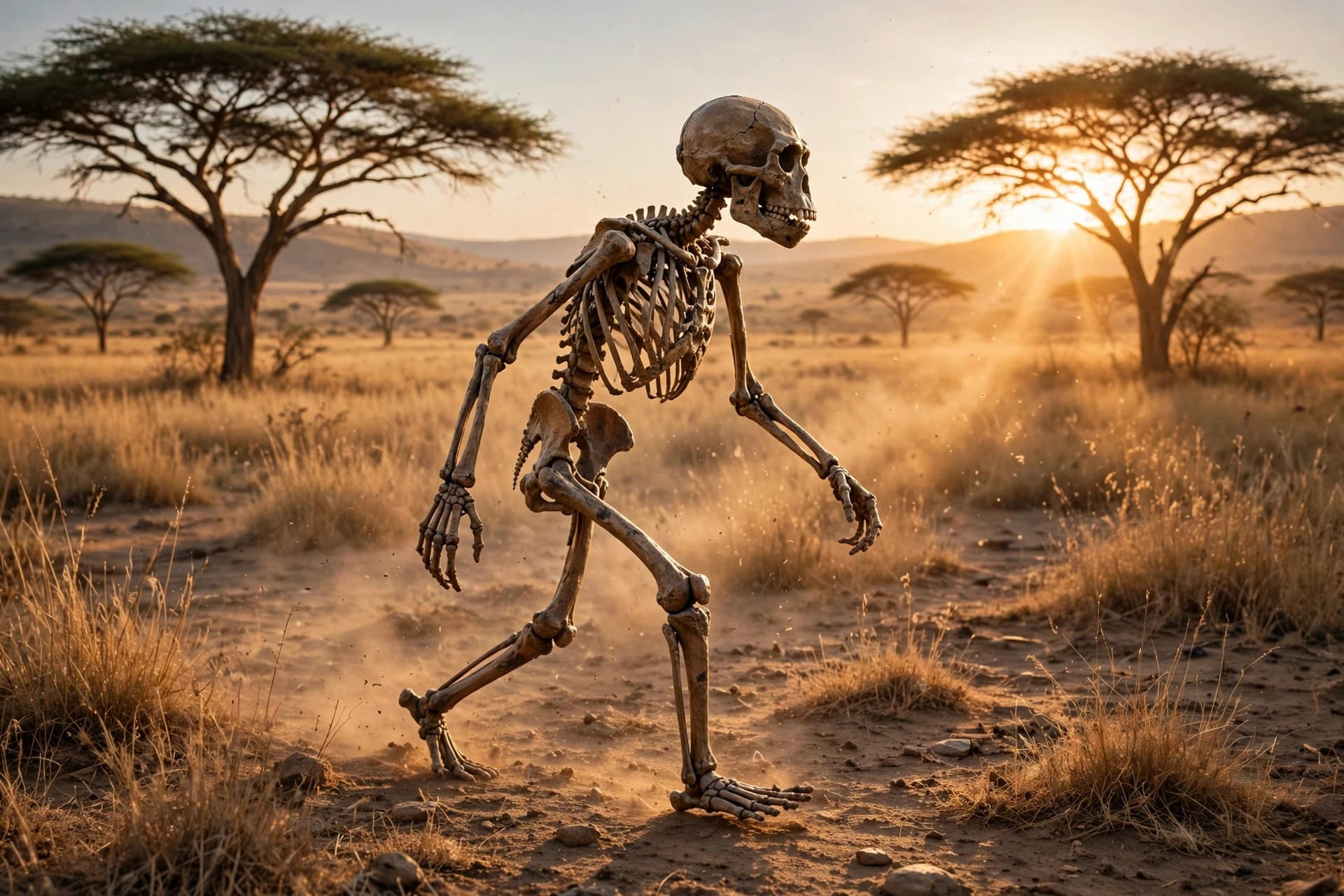
Otzi the Iceman: A 5,300-Year-Old Murder Mystery
Hikers found a frozen corpse in the Alps in 1991. A decade later, an X-ray revealed a flint arrowhead in his shoulder — exposing the oldest murder victim ever found.
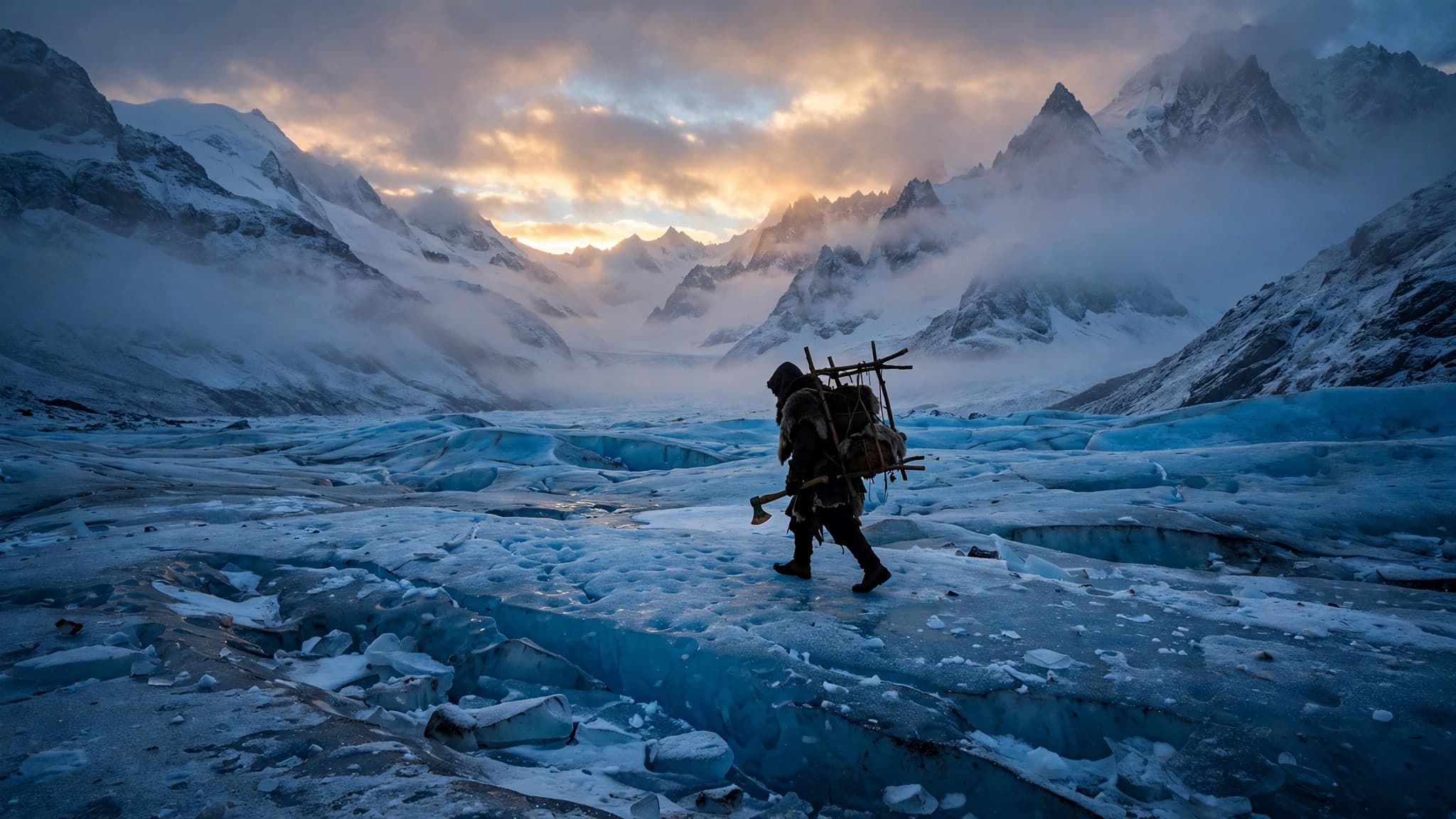
On September 19, 1991, two German hikers crossing a high Alpine pass spotted something emerging from the melting ice. They assumed it was the body of a mountaineer who had died the previous winter — it happens in the Alps. Instead, radiocarbon dating revealed that the dead man had been lying there for roughly 5,300 years. And a decade later, an X-ray showed he had been murdered.
Ötzi — as a Viennese journalist dubbed him, after the Ötztal Alps where he was found — is Europe's oldest known natural human mummy. He died around 3300 BC, in the Copper Age, at about 45 years old (a ripe age for his era), standing roughly 1.6 meters tall. His body, his clothes, his tools, his last meal, and even the bacteria in his gut all survived. No archaeological find has ever handed scientists a single prehistoric life in such detail. But the central question of his story — who killed him, and why — has never been answered.
The Hikers Who Found a Crime Scene
Helmut and Erika Simon, tourists from Nuremberg, were walking off the path between the Hauslabjoch and Tisenjoch passes when they found the body at 3,210 meters above sea level, on the Austrian–Italian border. Because they believed the corpse was modern, the recovery was rough: a pneumatic drill, ice axes, and bad weather. The body was semi-officially extracted on September 22 and officially salvaged the next day, then taken to the University of Innsbruck — where, on that same day, researchers recognized it was primeval.
His preservation was a freak of geography. After Ötzi died, snow and ice covered his body, and it lay in a 3-by-7-meter rocky gully that shielded it from the crushing movement of the glacier above. He was not deliberately mummified like an Egyptian pharaoh; the cold simply freeze-dried him in place, along with everything he was wearing and carrying. Today he rests in the South Tyrol Museum of Archaeology in Bolzano, Italy.
For the first ten years, researchers worked under a reasonable assumption: the Iceman had died of exposure or exhaustion while crossing the mountains. Nothing about the frozen body screamed violence. Then, in 2001, a routine X-ray changed everything.
A Life Written in Skin and Bone
Before the murder, there was the man. Scientists have counted more than 60 tattoos on Ötzi's skin — short blue lines across his lower spine, left leg, and right ankle, made by rubbing charcoal into small cuts. They are the oldest known tattoos on a human body, and their placement over arthritic joints suggests they may have been a form of Neolithic therapy, something like acupuncture for pain.
His medical file reads like that of a man twice his age. He suffered from arthritis, Lyme disease, a whipworm infestation in his gut, severe tooth decay, and hardened arteries. His lungs were blackened from years of cooking over open fires. He had once broken his nose and several ribs. He was not a healthy man — but he was not a starving one, either.
In 2018, researchers led by Frank Maixner at the Eurac Research Institute for Mummy Studies analyzed Ötzi's actual stomach contents and reconstructed his final meal: a remarkably rich, high-fat feast of ibex and red deer meat with einkorn wheat. They also found traces of the poisonous bracken plant, which he may have eaten as medicine against his intestinal parasites. An earlier meal, reconstructed from his intestines in 2002, had included ibex, wild plants, and cereal grains. He had eaten well, roughly an hour or two before he died.
His equipment was the toolkit of a Copper Age survivor: a copper-bladed axe with a yew handle, a flint dagger with an ash handle, a quiver holding 14 arrows, a leather coat stitched from several sheep and goat hides, a woven grass cape, a fur cap, and leather shoes stuffed with grass for insulation. The copper axe is the standout — in 3300 BC, copper was a rare, precious material, and such an axe was as much a status symbol as a tool. This was not a man who owned nothing. This was someone of standing.
The Arrow Nobody Saw for Ten Years
The 2001 X-ray revealed a flint arrowhead lodged in Ötzi's left shoulder. The projectile had struck him from behind, punching through his shoulder blade — and the wooden shaft had been pulled or broken off, leaving only the stone tip embedded in the tissue. A decade of "died of exposure" theories collapsed overnight. The excavation site had become a crime scene, 5,300 years cold.
In August 2005, a radiological team at the General Hospital in Bolzano ran multislice CT scans over the mummy and traced the arrowhead's path in three dimensions. The finding was forensic and final: the arrow had lacerated Ötzi's left subclavian artery — the major vessel running beneath the collarbone. In the tissues around the lesion, the scans showed a large hematoma, a bruise of pooled blood. Such an injury, researchers concluded, would have killed him by blood loss within a short time. As one anatomist put it, he would essentially have bled to death.
The body held other evidence of violence. Ötzi's right hand bore a deep cut — nearly to the bone, between the thumb and index finger — consistent with grabbing an attacker's blade in a fight that happened days before his death. He had been in a violent encounter, survived it, eaten a hearty meal, climbed high into the Alps — and then someone shot him in the back.
There is even a wrinkle in the clean narrative. A recent forensic study re-analyzing Ötzi's 2013 CT scans with 3D reconstruction techniques suggested the shoulder wound might not have been instantly fatal, and that he could have survived for several hours after being shot. The murder-mystery framing holds — but the exact timeline of his final hours is still being revised, five millennia on.
The Question the Ice Can't Answer
Here is what makes Ötzi's case genuinely haunting: every physical detail is known, and the motive is a blank. His copper axe — the single most valuable object in a Copper Age person's world — was still beside him when he died. That detail has made researchers wonder what kind of attack this really was. A robbery that left the richest prize behind? A personal vendetta carried up into the high Alps? A tribal conflict whose context vanished with the ice?
We know the victim's tattoos, his parasites, his dinner, his wounds, and the exact artery that killed him. We do not know the name of the person who drew the bow. No witness, no weapon recovered in full, no confession carved in stone. After more than three decades of study — genome sequencing, stomach-content analysis, forensic animation of the arrow's trajectory — Ötzi remains one of the most intensively examined humans in history and, simultaneously, the world's oldest unsolved homicide.
Perhaps that is the real discovery. The ice preserved a man so completely that 5,300 years later we can reconstruct his final meal and his final wound — and still be left, like any detective, staring at the one question the evidence cannot answer: why.
More ancient mysteries: the 40,000-year-old girl of Lucy, the standing stones of Stonehenge, and the buried army of the Terracotta Warriors.