
Why the QWERTY Keyboard Layout Has Lasted 150 Years
QWERTY wasn't designed to slow you down. It was a mechanical fix for 1870s typewriters that survived through habit, training, and the economics of lock-in.
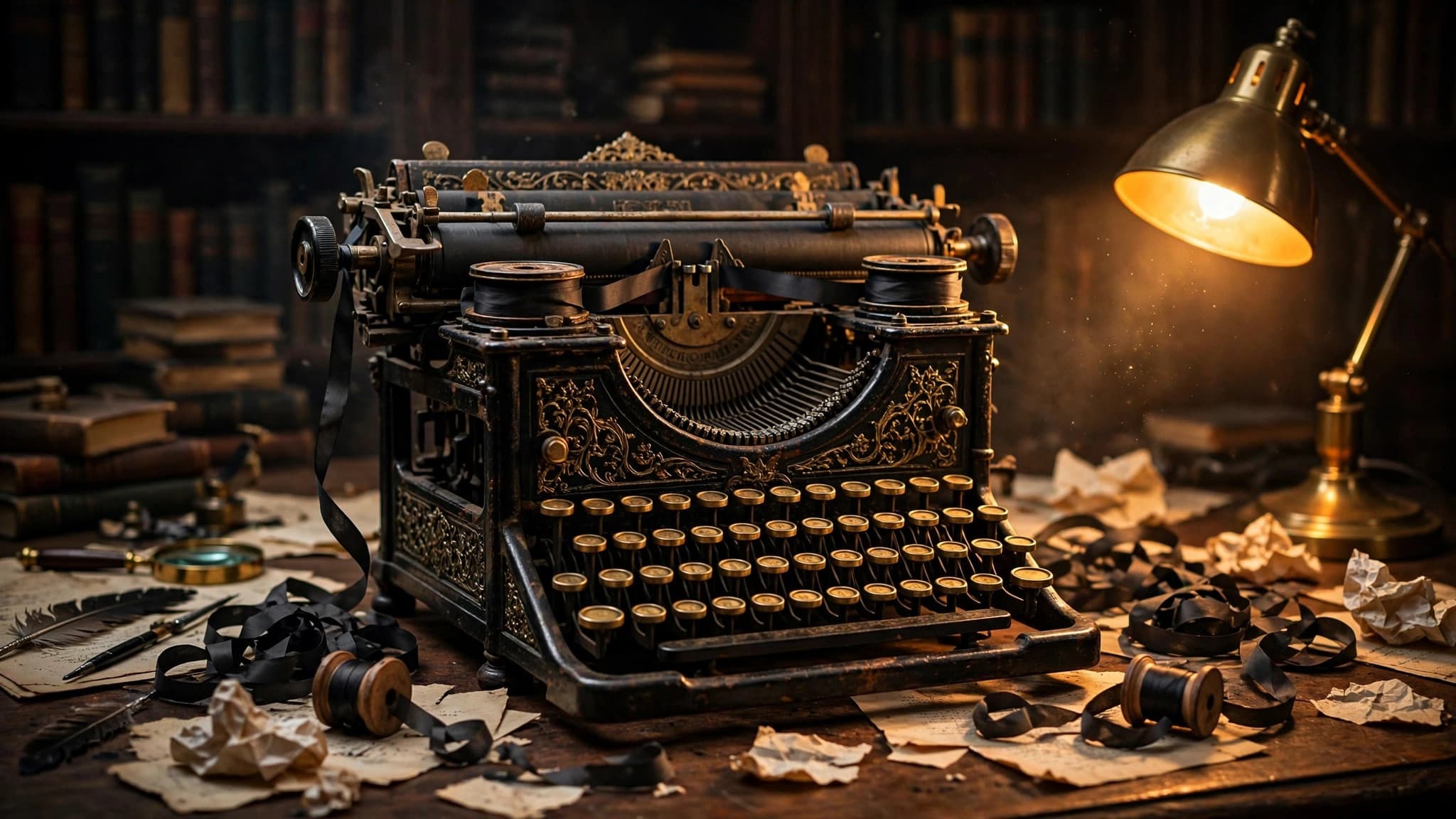
Glance at the keyboard in front of you. The top letter row reads Q-W-E-R-T-Y — an arrangement designed in the early 1870s for a machine that no longer exists, solving a problem that no longer occurs. The mechanical typewriter is a museum piece, yet its key layout has survived every challenger for a century and a half, migrated untouched into computers, tablets, and phones, and outlived the company that made it famous. QWERTY endures not because it is the best layout, but because of how standards get born, how habits get baked in, and how hard it is to dislodge something the whole world already knows.
The myth: Sholes slowed typists down on purpose
The most repeated story about QWERTY is tidy and dramatic: inventor Christopher Latham Sholes deliberately scattered common letters across the keyboard to slow typists down, because fast typing jammed his machine's typebars. The story is wrong enough to be worth correcting.
Sholes, a Milwaukee newspaper editor, patented a typewriter design in 1868 and spent the next five years iterating. His earliest keyboards were near-alphabetical. The real mechanical problem was this: each key drove a metal typebar upward into a single striking point, and typebars for letters that frequently appear together in English — like T and H — sat next to each other in the basket. Fired in quick succession, neighboring bars collided and locked. The fix was not to hobble the typist but to separate common letter pairs in the basket, spacing them apart so their bars would not clash.
Archival work by researchers Koichi Yasuoka and Motoko Yasuoka at Kyoto University traces this evolution through Sholes's patents and manufacturing records. Their reading is blunt: the arrangement was shaped by typebar mechanics, by feedback from telegraph operators transcribing Morse code on the machines, and by the manufacturing choices of E. Remington and Sons — which bought the rights in 1873 and began commercial production the following year. One detail reveals how un-scientific the process was: the "R" reportedly moved into the top row late so a salesman could type "TYPE WRITER" using only that row during demonstrations. A marketing trick, immortalized for 150 years.
Remnants of the original alphabetical experiment still hide in the middle row: D-F-G-H-J-K-L sit in sequence, fossils of Sholes's first keyboard.
How a mechanical fix became a national standard
A decent layout still had to beat its rivals. The decisive moment came on July 25, 1888, at a typing contest in Cincinnati, where court stenographer Frank McGurrin — apparently the first person to memorize the keyboard and touch-type — demolished a hunt-and-peck opponent on a rival Caligraph machine. The victory made McGurrin a celebrity and his Remington machine the one to beat. Manufacturers noticed: the machine that won the contests was the machine offices bought.
Then came the deeper lock-in. Touch typing meant memorizing key positions as muscle memory, so every school that taught typing, every company that hired typists, and every exam that certified them was standardizing on QWERTY without anyone voting for it. Retraining an entire workforce on a different layout would cost time and money, while switching an individual typist's machine served no one. By the early 20th century, QWERTY was not the best arrangement anyone had measured — it was simply the arrangement the most hands already knew.
Dvorak's challenge — and why the evidence never settled it
The most famous challenger arrived in the 1930s. August Dvorak, a professor of education, spent nearly two decades studying letter frequencies, hand physiology, and typing errors before patenting the Dvorak Simplified Keyboard in 1936. Common letters sat on the home row, hands alternated rhythmically, and the stronger fingers carried the heaviest load. His camp claimed dramatically less finger travel and faster learning.
During World War II, the U.S. Navy reportedly tested retraining QWERTY typists on Dvorak, with proponents claiming speed gains and quick payback on retraining costs. But those tests were run under Dvorak's own direction, and later, more carefully controlled experiments told a different story: one study retrained matched groups on each layout and found no advantage for Dvorak in typing or training speed, suggesting earlier results came from weak experimental design and the inventor's own bias.
The honest verdict from the research is less dramatic than either side admits: later experiments found that many layouts — even alphabetical ones — allow roughly similar typing speeds once typists are properly trained, because layout is only a small part of the complex physical activity of typing. Dvorak may well be somewhat more ergonomic, but it was never the decisive leap its advocates claimed, and it never cleared the bar that matters most: being so much better that it justifies abandoning what everyone already knows. Colemak, Neo, and other modern alternatives have met the same wall.
The economics of being stuck: path dependence
Economist Paul A. David gave this phenomenon a name in a landmark 1985 paper, "Clio and the Economics of QWERTY": path dependence. Once a standard reaches critical mass, the cost of switching falls on individuals while the benefits are diffuse, so nobody switches — even when a better alternative exists. QWERTY became the textbook example, quoted in every economics and technology-history course since.
The mechanism is a self-reinforcing loop. Typing teachers teach QWERTY because employers expect it. Employers expect it because workers know it. Keyboard manufacturers make QWERTY because buyers want it. And every year the installed base grows, the math of switching gets worse. When the personal computer arrived, nobody debated the layout; QWERTY keyboards simply came in the box, and the 150-year-old arrangement rode the digital revolution without a single serious attempt at replacement. Even phone touchscreens, freed from any mechanical constraint whatsoever, shipped with QWERTY because anything else would have baffled users.
What the stubborn keyboard teaches us
QWERTY is often presented as a cautionary tale of technological inefficiency, and partly it is. But there is a subtler lesson in its survival. The layout is not terrible — it alternates hands reasonably well, and trained typists reach speeds above 100 words per minute on it. The myth that it was deliberately crippled obscures a realer story: a good-enough solution, shaped by the constraints of its era, won an early contest, got encoded into millions of pairs of hands, and became cheaper to keep than to change.
Every era inherits furniture from a previous one. Railway gauges, electrical plugs, the 60-hertz hum of the power grid, and the QWERTY keyboard are all physical reminders that technology is not a contest of perfection but a process of settlement. The keyboard beneath your fingers is not the best arrangement ever devised. It is the arrangement that arrived first, proved itself adequate, and then — through contests, classrooms, and cold economic logic — never left.
That lock-in runs through the whole early history of communication technology, from the printing press's reshaping of knowledge to ENIAC, the room-sized ancestor of the computers that inherited QWERTY without debate. Like the encoding tricks in QR codes, it shows how standards, once set, become invisible infrastructure — the kind of thing we only notice when we stop to ask why it is there at all.