The Library of Timbuktu: Africa's Medieval Manuscripts
Timbuktu's medieval manuscripts — hundreds of thousands of pages on astronomy, law, and medicine — survived nine centuries and a daring 2012 smuggling rescue.
Key takeaways
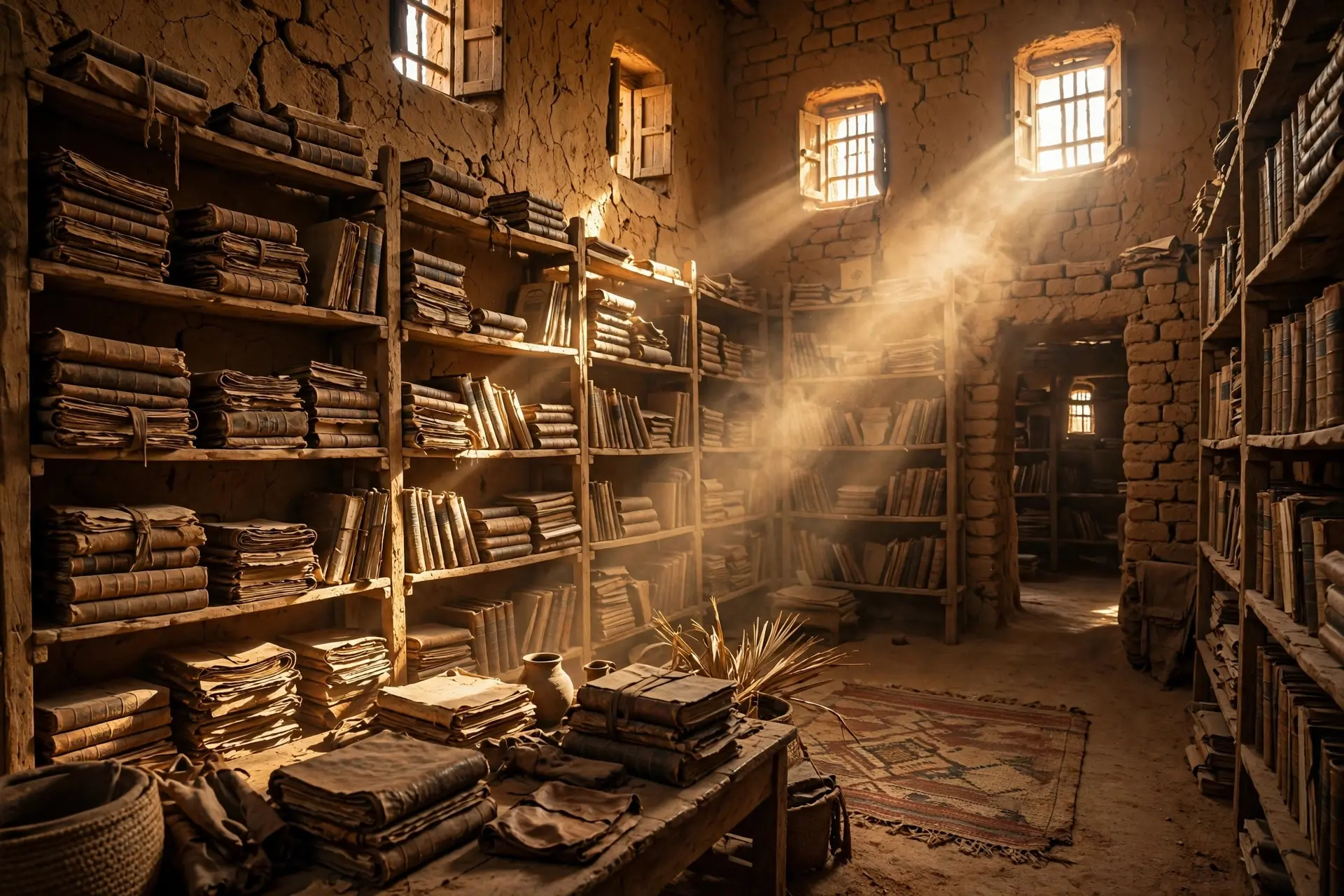
- Timbuktu's surviving manuscripts number in the hundreds of thousands, held in family chests and mud-brick libraries, with some dating back to the 12th and 13th centuries.
- In 2012, librarians smuggled roughly 370,000 manuscripts out of occupied Timbuktu to Bamako, saving almost everything while extremists destroyed about 4,000.
- The manuscripts cover astronomy, mathematics, medicine, Maliki law, and poetry, and their marginalia records everyday events like earthquakes and court rulings.
- A militant leader's 2016 conviction at the International Criminal Court was the first time cultural heritage destruction was prosecuted as a war crime.
- Scholars estimate that only a tiny fraction of the manuscripts have ever been translated, so most of what they contain is still unread.
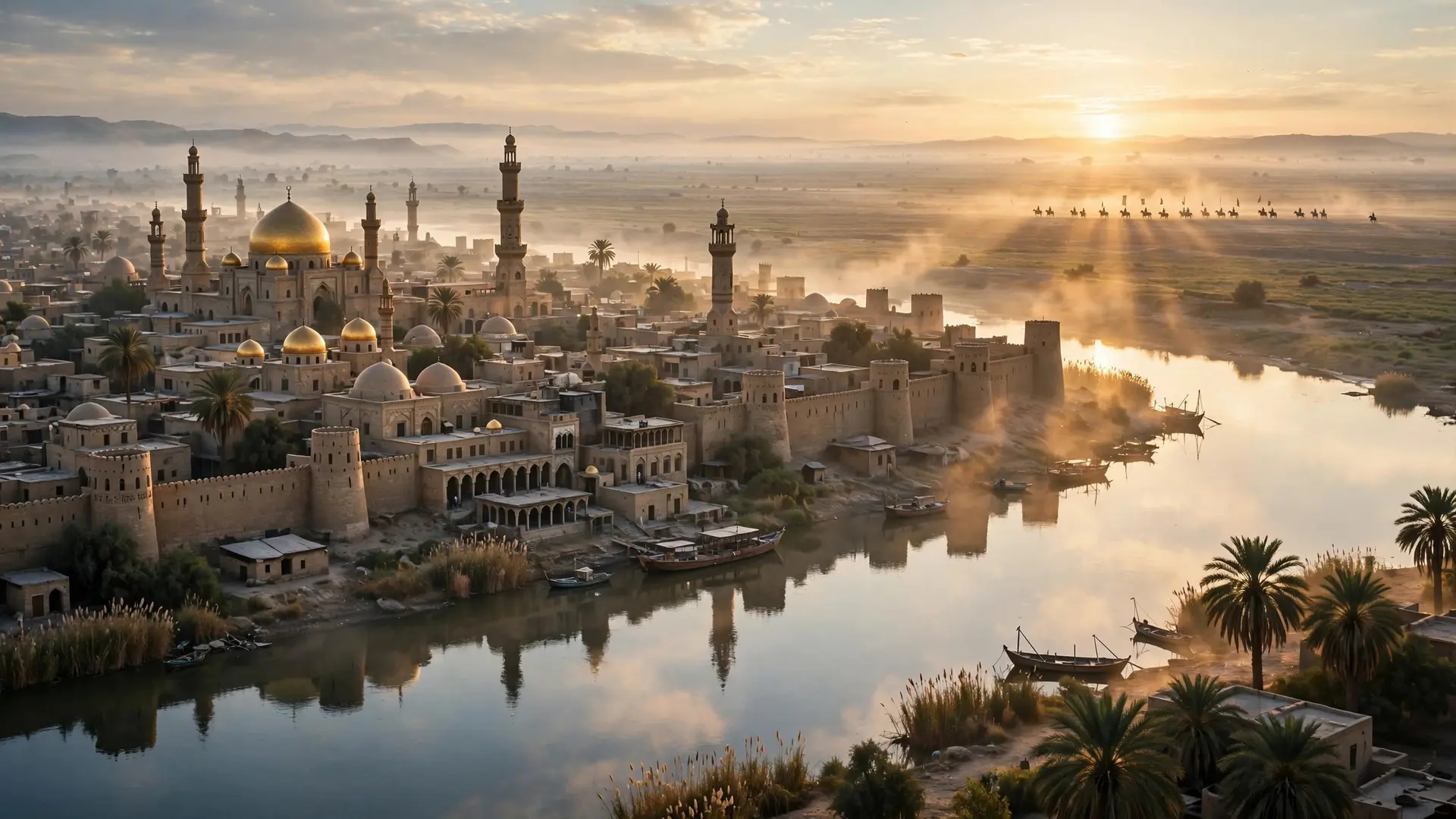
Long before the phrase "African history" appeared in any European textbook, a city on the edge of the Sahara had already written it down. Timbuktu's manuscripts — hundreds of thousands of handwritten pages accumulated between the 12th and 16th centuries — are one of the largest surviving bodies of medieval scholarship anywhere in the world. They survived droughts, invasions, and nine centuries of desert climate, and in 2012 they survived something else: a desperate night-time smuggling operation that carried them past al-Qaeda-linked fighters.
Why did a desert trading town become a city of books?
The manuscripts begin with salt and gold. Timbuktu sat at the junction where Saharan salt caravans met West African gold markets, and by the 1300s that trade made the city wealthy. Wealth bought scholars. When Mansa Musa, emperor of Mali, passed through on his famous 1324 pilgrimage to Mecca carrying gold that famously destabilized economies along his route, he returned with scholars, books, and architects — and word spread across the Islamic world that Timbuktu paid for learning. By the 1400s and 1500s, the city had become a working university town. Estimates put the student population near 25,000, drawn to the mosques of Sankore and Djingareyber and to private study circles where professors taught for fees paid in books. This was not a single library but an ecosystem: families built personal collections, students copied texts by hand to afford tuition, and visiting scholars donated volumes. The great scholar Ahmed Baba wrote some 70 works on law, grammar, and theology; after the Moroccan invasion of Songhay in 1591 he was deported to Marrakesh, where he reportedly told the sultan that the 1,600 stolen books from his own collection were the smallest library among his friends.
What is actually written in the manuscripts?
Open a Timbuktu manuscript and you do not just find prayer. The surviving pages include Qur'ans and collections of the Prophet's sayings, yes — but also treatises on astronomy, mathematics, and medicine, manuals of Maliki Islamic law, volumes of poetry, trade contracts, and local chronicles like the 17th-century Ta'rikh al-Sudan, the History of the Sudan. Perhaps the most human documents are the marginalia: scribbled notes in the margins of serious books recording earthquakes that shook the region in the 1400s, a decree warning men not to impose themselves on women and granting women the right to seek justice, and heated letters debating whether tobacco was sin or solace. These texts demolish a stubborn assumption. For generations, West African history was treated as primarily oral, something that began when Europeans started writing about it. The manuscripts are written proof of a literate, debating, calculating civilization — proof that sat in wooden chests in family homes all along. The subjects also show that these were working books, not trophies. Astronomy manuscripts tracked the stars to fix prayer times and calendars; mathematics texts served inheritance law, which requires precise division of estates; medical works blended local remedies with classical scholarship. The bindings are worn and the margins crowded precisely because the books were used every day. Yet hardly anyone today can read them: scholars estimate that only one or two percent of the collection has ever been translated.
How did librarians smuggle the manuscripts past the extremists?
In 2012, al-Qaeda-linked fighters seized northern Mali and occupied Timbuktu. They destroyed the city's UNESCO-listed Sufi mausoleums and began burning the Ahmed Baba Institute, which housed the most visible public collection. The loss was real — a United Nations expert mission later found that about 4,000 to 4,200 manuscripts had been burned or stolen.
But the overwhelming majority escaped. Led by archivists like Abdoulaye Cissé of the Ahmed Baba Institute and Abdel Kader Haidara of the private-library association SAVAMA-DCI, staff loaded crates of manuscripts onto donkey carts at night, carried them to the river, and ferried them on wooden boats and buses nearly 1,200 kilometers to the capital, Bamako. Around 370,000 manuscripts made the journey and were hidden in secure storage, where years of painstaking conservation and digitization followed. In August 2025 — thirteen years later, and after local leaders argued that the collection belonged home — the institute's 28,000 manuscripts finally returned to Timbuktu. The destruction was not forgotten. In 2016, Ahmad al-Faqi al-Mahdi, who led the militant desecration of Timbuktu's shrines and manuscripts, pleaded guilty at the International Criminal Court — the first time the destruction of cultural heritage had ever been prosecuted as a war crime.
Why do the manuscripts still change how we see African history?
Because most of them have never been read. Digitization continues, but translation lags far behind, which means the archive's biggest surprises may still be ahead. Each newly translated page can rewrite a paragraph of medieval history: a court ruling here, an astronomical observation there, a family record that re-dates an entire dynasty. The rescue itself became part of the story. When the manuscripts returned to Timbuktu in 2025, Mali's government framed it as a national victory — but the credit belongs to the librarians and families who had already kept these books alive for centuries, hiding them from French colonial seizures by burying them in the sand and refusing researchers access rather than risk a new era of pillaging. Unlike the Library of Alexandria, Timbuktu's collection was never a single building that could be burned in one night. It was distributed across thousands of family chests — which is exactly why it survived. Timbuktu's achievement is easy to undervalue precisely because it was quiet. While Europe's medieval scholars worked through Nalanda's rivals in India and monks copied texts in monastery scriptoria, West African families were quietly assembling one of the largest written archives of the medieval world. Even before the printing press made mass reproduction possible, they were preserving knowledge one hand-copied page at a time. UNESCO listed Timbuktu's monuments as World Heritage sites in 1988 — but the manuscripts, scattered across family chests, were the treasure no designation could protect. The manuscripts are still there, still mostly unread, still waiting — and after what they survived in 2012, waiting a little longer seems manageable.
Frequently asked questions
How many Timbuktu manuscripts still exist?
Estimates vary: recent reporting puts private family collections near 377,000 manuscripts, and the Ahmed Baba Institute holds about 28,000. Some older estimates run as high as 700,000 across the region.
Were the Timbuktu manuscripts destroyed by terrorists?
Most were saved. Occupying extremists burned around 4,000 manuscripts in 2012–2013, but librarians smuggled roughly 370,000 to Bamako before they could be reached. The surviving collection returned to Timbuktu in 2025.
What did the manuscripts actually contain?
Far more than religious texts: astronomy, mathematics, medicine, Maliki jurisprudence, poetry, trade contracts, and local chronicles, plus margin notes that record everyday medieval life.