Why Is an Ice-Covered Island Named Greenland?
Around 985 AD, the exiled Viking Erik the Red named an ice-buried island 'Greenland' — history's most famous naming pitch, designed to lure settlers west.
Key takeaways
- Around 985 AD, the exiled Viking Erik the Red named the ice-buried island 'Greenland' on purpose — the saga says a favorable name would attract settlers.
- Erik was outlawed in Iceland around 982 AD after killings and spent his three-year exile exploring the unknown western coast.
- Around 986, a fleet of 25 ships sailed for Greenland; only 14 survived the crossing to found the Eastern and Western settlements.
- The Norse colony endured nearly five centuries; the last record is a 1408 wedding, and the last ship sailed in 1410.
- In Greenlandic it is Kalaallit Nunaat, 'land of the Kalaallit' — Erik's thousand-year-old brand outlived the colony itself.
About 80 percent of Greenland lies buried under ice, some of it kilometers thick. Yet its name promises something lush, green, and welcoming. The contradiction is not an accident — it is arguably the most successful marketing campaign of the Middle Ages. Around 985 AD, a Viking exiled for murder named a forbidding island "Greenland" on purpose, because he needed recruits.
An Outlaw's Pitch
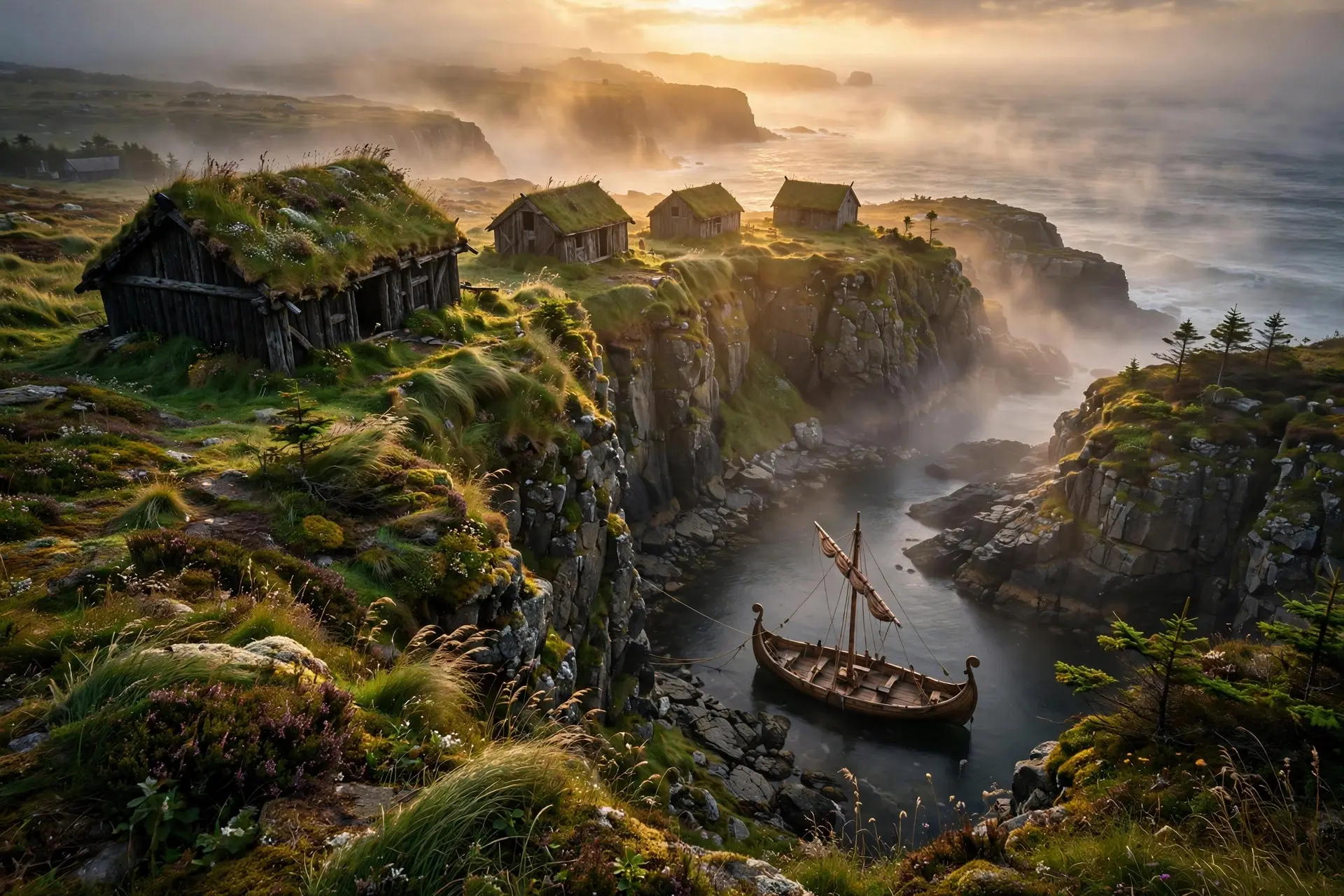
The namer was Erik Thorvaldsson, better known as Erik the Red. Around 982 AD, he was declared an outlaw in Iceland after a series of killings during local disputes — a grave sentence in Viking society. Banished for three years, he did something unusual with his exile: he sailed west into waters Europeans had only glimpsed and spent those years exploring a vast, unknown coast. When his exile ended, Erik sailed back to Iceland with a problem and a plan. The problem was that a new colony needed people — families, livestock, tools, crews. The plan was the name. The Saga of Erik the Red, one of the medieval Icelandic sagas that preserved this history, records that Erik called the land Greenland because, as he put it, people would be attracted there if it had a favorable name. It worked. Around 986, a fleet set sail from Iceland for the new land. Tradition holds that 25 ships departed and only 14 survived the brutal North Atlantic crossing. The survivors founded the Eastern and Western settlements along the comparatively sheltered southwestern coast, with Erik himself establishing the farm of Brattahlid. Erik's son Leif would later sail west from Greenland and become the first European to reach North America — the voyage to Vinland that made the family famous twice over.
The Name Wasn't Entirely a Lie
Erik's pitch is usually told as a con, and the joke writes itself: the most icy island on Earth named "Greenland," while neighboring Iceland, comparatively green, got the frosty name. But the marketing had a kernel of truth.
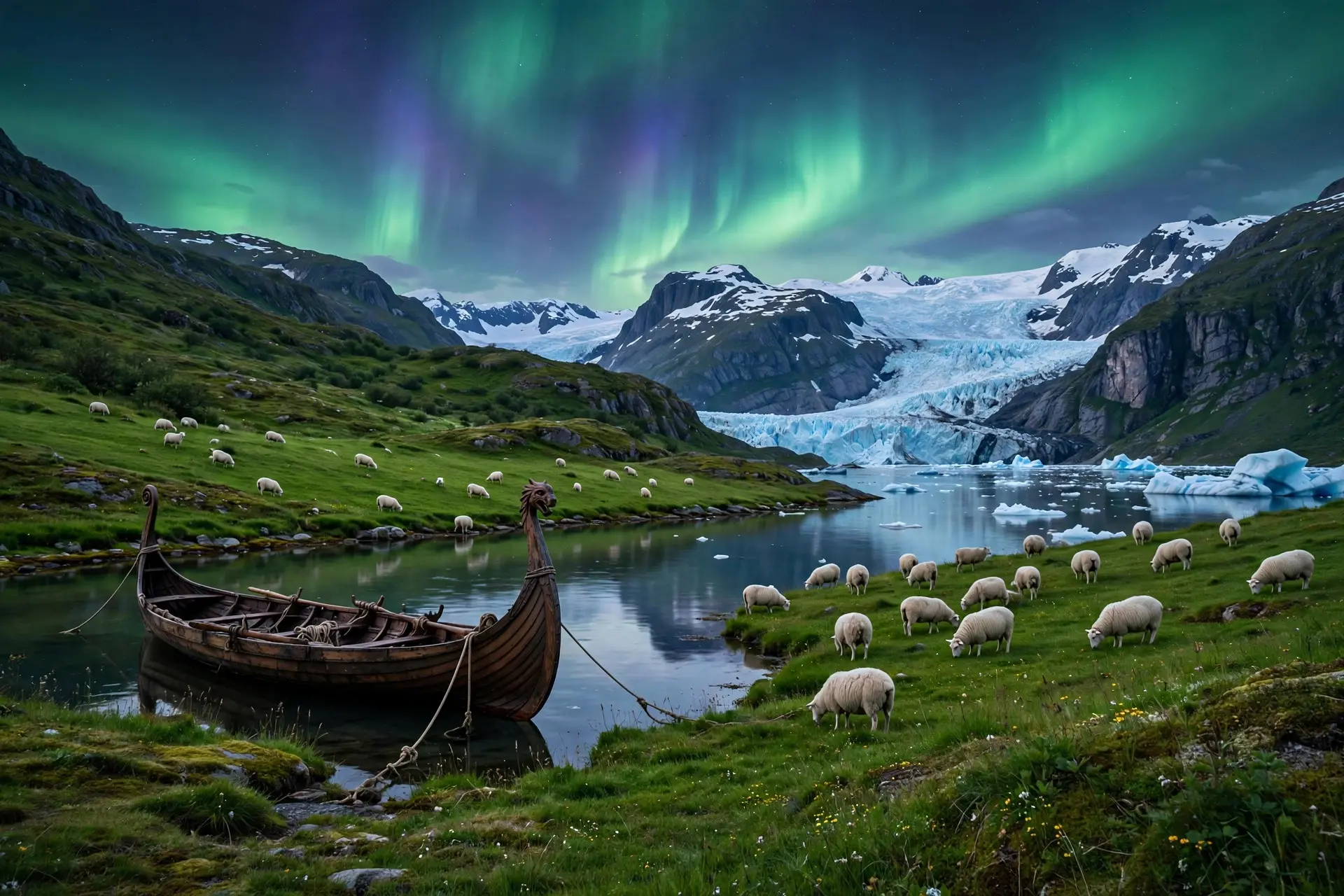
The Norse never tried to settle Greenland's ice sheet. They settled the deep, sheltered fjords of the south and southwest, where summer temperatures were mild enough for their way of life. At Brattahlid — today the site of the town of Qassiarsuk — the pastures still turn vividly green in summer, bright enough to stand out from space in satellite imagery. The settlers raised sheep, goats, and cattle, cut hay for the long winters, and built substantial stone farmsteads and churches. Their society endured for nearly five centuries, and at its height numbered a few thousand people spread across the two main settlements. Greenland in the Viking age was also modestly warmer than it is now, during a period climatologists call the Medieval Warm Period. None of this made the island "green" in any ordinary sense — most of it was rock, ice, and barren coast then as now. But the name described the one thing Erik needed settlers to see: the livable fringe, photographed today as emerald fields beneath calving glaciers, was green enough. It is worth pausing on what those settlers actually built. Their whole economy revolved around animals: sheep, goats, and cattle grazing summer pastures, with hay cut and stored to carry livestock through the long dark winters. They traded walrus ivory and skins with Europe and raised stone churches with walls several feet thick — at their height, they even supported a cathedral. NASA's survey of the Brattahlid site notes that the Greenland Norse devoted nearly all their agricultural effort to hay production, which is why their fortunes tracked the climate so closely. When the island began cooling in the 1400s, hay harvests shrank just as winters demanded more, and ice-choked fjords cut the trade lifeline to Norway. The name had promised a working farm economy, and for centuries it delivered — until the climate revoked the deal.
What About Iceland?
The mirror-image puzzle — icy Greenland, green Iceland — has spawned a persistent legend that the Vikings deliberately swapped the names to mislead rivals: Greenland sounds inviting, Iceland sounds repellent. Historians consider that theory unlikely, and the truth is more interesting.
Iceland got its name through a different, far less strategic process. According to the Sagas of Icelanders, an early Norse visitor named Naddador arrived to find the island snowy and called it Snæland, "snow land." A later explorer, Garðar Svavarsson, briefly renamed it after himself before Flóki Vilgerðarson — having seen ice packed into a fjord — settled on Ísland. The names were descriptive snapshots of what different arrivals happened to see, not a coordinated scheme. The two islands also genuinely look different at the margins. Iceland is volcanic, and its geothermal soils and milder ocean climate support extensive green lowlands. Greenland is continental: ancient rock on the North American plate, dominated by a single vast ice sheet. That geology, along with its size, is why it ranks as the world's largest island rather than a continent. Both names are exaggerations of a first impression — and only one of them was also a business plan.
The Brand Outlived the Colony
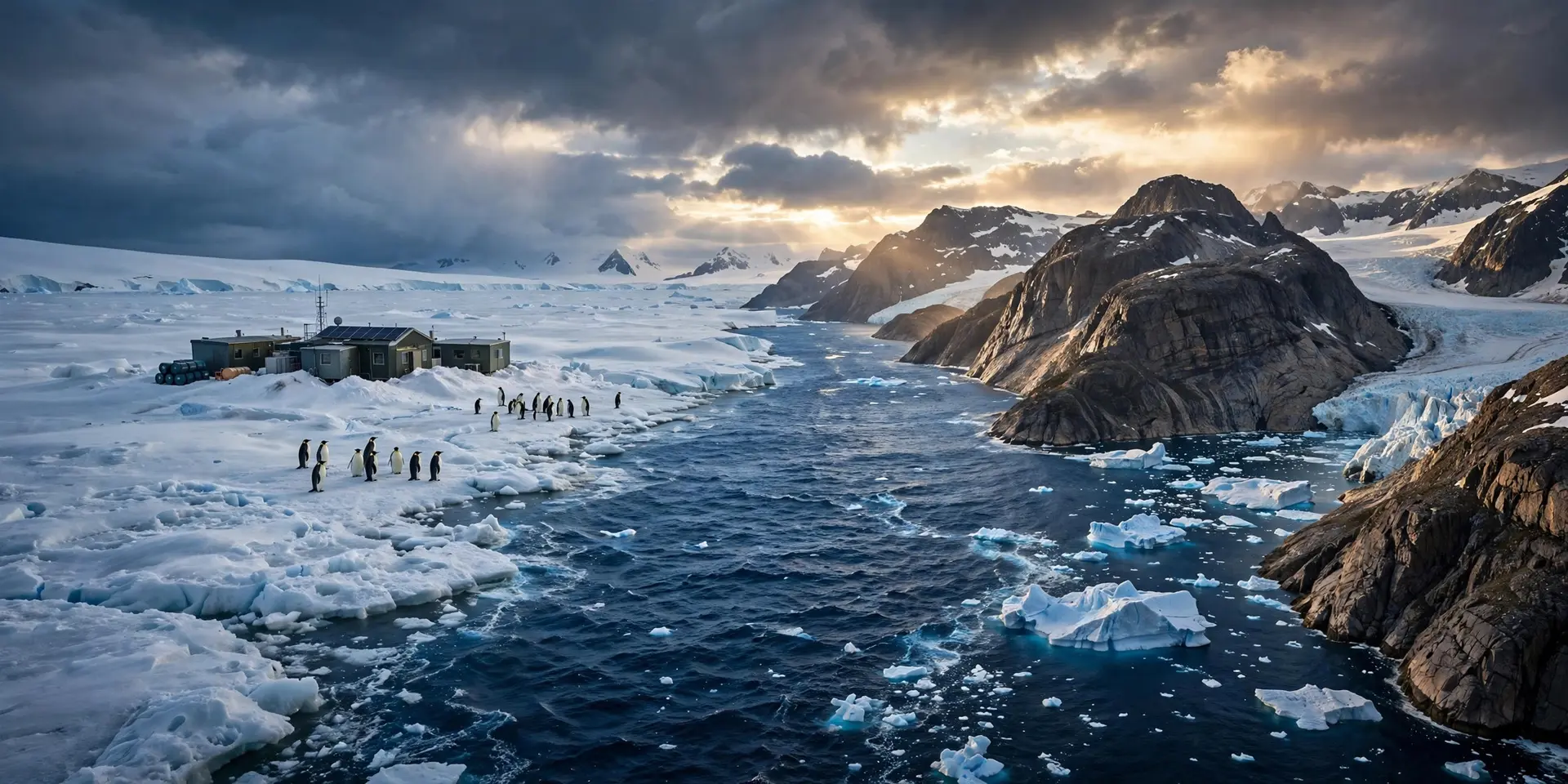
Here is the strangest part of the story: Erik's marketing outlived the settlement it was selling. The Norse colonies in Greenland went silent in the mid-1400s. The last written record is a wedding held at the church of Hvalsey in September 1408; the last ship known to have returned to Europe sailed in 1410. When Europeans re-established contact centuries later, they found only ruins. But the name survived — through Danish colonization, through the island's modern era as an autonomous territory of Denmark, right up to today. In Greenlandic, the island's native language, it is called Kalaallit Nunaat, "land of the Kalaallit." Yet internationally, Erik's brand endures, a thousand-year-old sales pitch nobody bothered to rename. And in one final twist, the pitch is becoming retroactively accurate. As the Arctic warms and Greenland's ice sheet retreats, new green fringe is appearing where ice used to stand. The island Erik named for its marketing value is, slowly and measurably, getting a little greener. The name was a lie told in service of a dream: enough people to hold a settlement at the edge of the known world. The settlement is gone. The dream is gone. The name stuck — and geography, in the end, may be catching up with it.
Frequently asked questions
Why is Greenland called Greenland when it's covered in ice?
Erik the Red chose the name around 985 AD as a deliberate marketing pitch to lure settlers west — and it worked.
How long did the Viking settlement last?
Nearly five centuries, from about 986 until the mid-1400s, when cooling climate and cut trade lines ended the colonies.
Is Greenland actually getting greener?
Slowly — as the Arctic warms and the ice sheet retreats, new green fringe is appearing where ice stood, making Erik's pitch retroactively a bit more accurate.