What Is the Windiest Place on Earth? It's Cape Denison
What is the windiest place on Earth? Cape Denison, Antarctica, where katabatic winds average 71 km/h and once blew 143 km/h for 12 hours straight.
Key takeaways
- Cape Denison, Antarctica, is the windiest place on Earth at sea level, with an average daily maximum wind speed of 71 km/h (44 mph).
- In 1913 the wind at Cape Denison blew at 143 km/h for 12 hours straight; explorer Douglas Mawson estimated gusts above 270 km/h.
- The winds are katabatic: cold, dense air pouring downhill off the Antarctic ice cap, always from the south.
- Mawson's 1911-14 expedition men learned to walk 'leaning on the wind' instead of crawling in 90-mile-an-hour air.
- In 1995, instruments still measured gusts above 205 km/h, confirming the cape's reputation more than 80 years later.
Cape Denison in Antarctica is the windiest place on Earth at sea level, where the average daily maximum wind reaches 71 km/h (44 mph), and where explorer Douglas Mawson once estimated gusts above 270 km/h (168 mph). In 1913, the wind there blew at 143 km/h for 12 hours without stopping. The key facts, each confirmed in a source you can open:
- The average daily maximum wind speed at Cape Denison is 71 km/h (44 mph). The Australian Antarctic Program calls it the windiest place on Earth at sea level.
- In 1913, instruments at the cape recorded wind at 143 km/h blowing for 12 continuous hours (same Australian Antarctic Program page).
- Mawson estimated instantaneous gusts above 75 m/s (270 km/h; 168 mph) in 1913, the figure Guinness World Records recognizes as the fastest katabatic wind.
- Over the 1912-14 expedition, the mean wind speed was 19.3 m/s (43.2 mph), which a Polar Record study notes "far surpassed all previous surface wind records."
- In 1995, automatic weather station sensors at the cape still logged gusts above 57 m/s (205 km/h; 127.5 mph) (Guinness World Records).
Where is the windiest place on Earth?
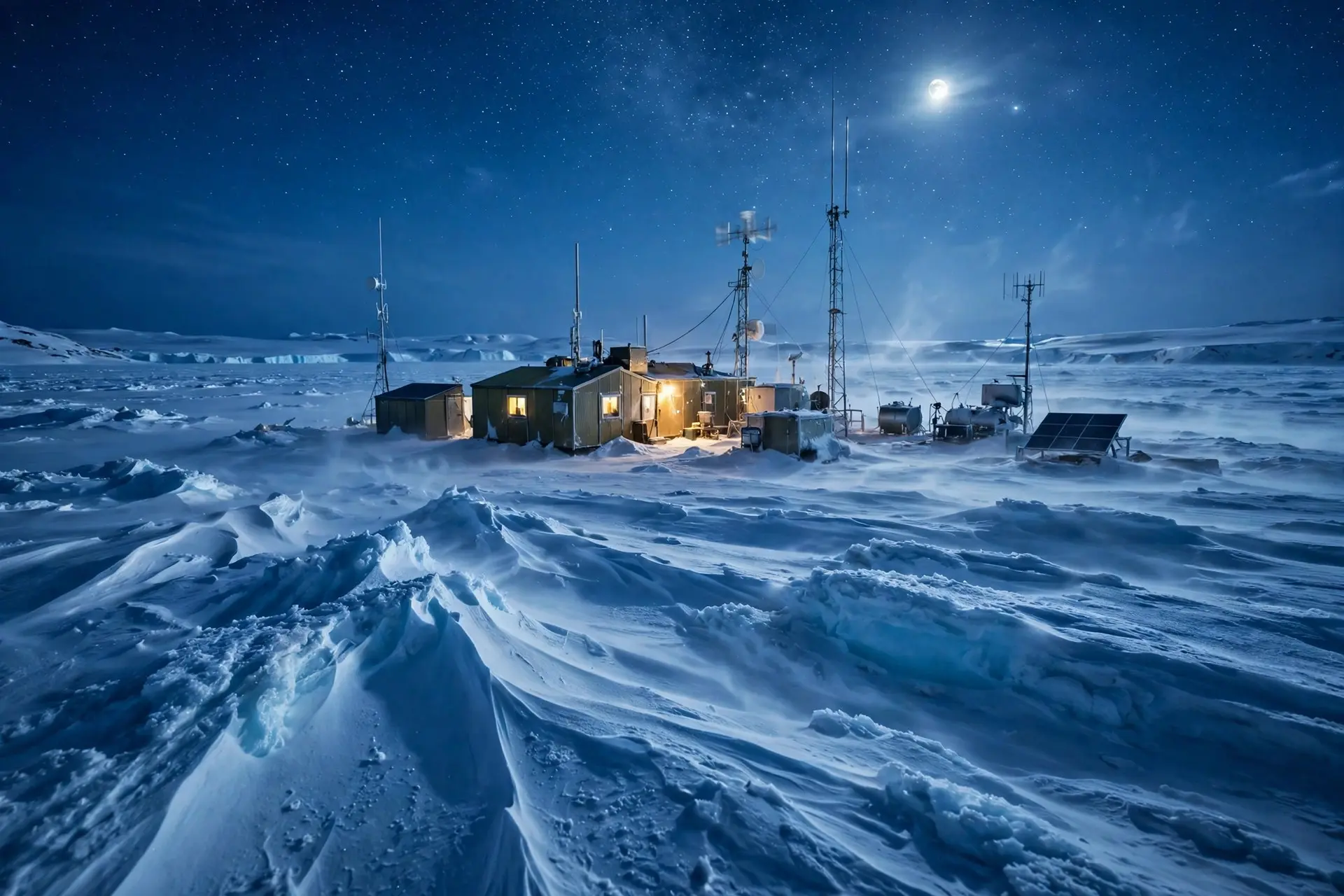
Cape Denison sits at the top of Commonwealth Bay, on the coast of George V Land in East Antarctica. It is a rugged point about 1.5 km (just under a mile) wide, a tongue of ice, snow, rock and moraine jutting out from the steeply rising Antarctic ice cap. On approach, the most striking feature is the towering ice cap behind the cape, stretching as far as the eye can see up and down the bay and breaking off into icebergs at the cliffs. The cape was found in 1912 by the Australasian Antarctic Expedition of 1911-14, led by the British-Australian geologist and explorer Douglas Mawson. The expedition made it their main base, building four huts in the largest valley, and Mawson named the point for Sir Hugh Denison of Sydney, a businessman who helped fund the expedition. The ground plan is simple and severe: four rocky ridges separated by three valleys of ice, snow and glacial moraine. It was Mawson himself who gave the place its reputation, calling it "the windiest place on Earth" and titling his 1915 account of the expedition The Home of the Blizzard.
Why is Cape Denison so windy?
The answer is a type of wind called katabatic, literally "going downhill." Cold, dense air builds up high on the Antarctic ice cap, then flows downhill under the force of gravity, accelerating as it races toward the coast. Cape Denison sits exactly where that downhill river of air slams into the sea.
What makes the cape's wind so punishing is not just its speed but its character. The Australian Antarctic Program notes that people there feel it as a constant force rather than the eddies and gusts most of us associate with wind. It always comes from the south. Blizzards are frequent and gusts routinely pass 100 km/h (62 mph). The wind carries enormous loads of drifting snow and ice, turning ordinary days into whiteouts, and it whips the sea into a chop topped with spume only meters from shore. Surface temperatures, not counting wind chill, generally range from -21°C (-6°F) and lower in winter to -3°C (27°F) in summer. Bitter, but the wind is what defines the place. Sun, cloud and the cycle of daylight and darkness are, in the program's words, largely irrelevant compared with the cycle of the wind. The phenomenon is not limited to one headland. A French expedition that wintered at Port Martin, about 60 km (37 miles) west of Cape Denison in 1950-52, confirmed the whole stretch of coast shares the same ferocity: the Polar Record analysis notes winds there run about 70 percent stronger than at other Antarctic stations at the foot of the same ice escarpment.
What was it like to winter there?
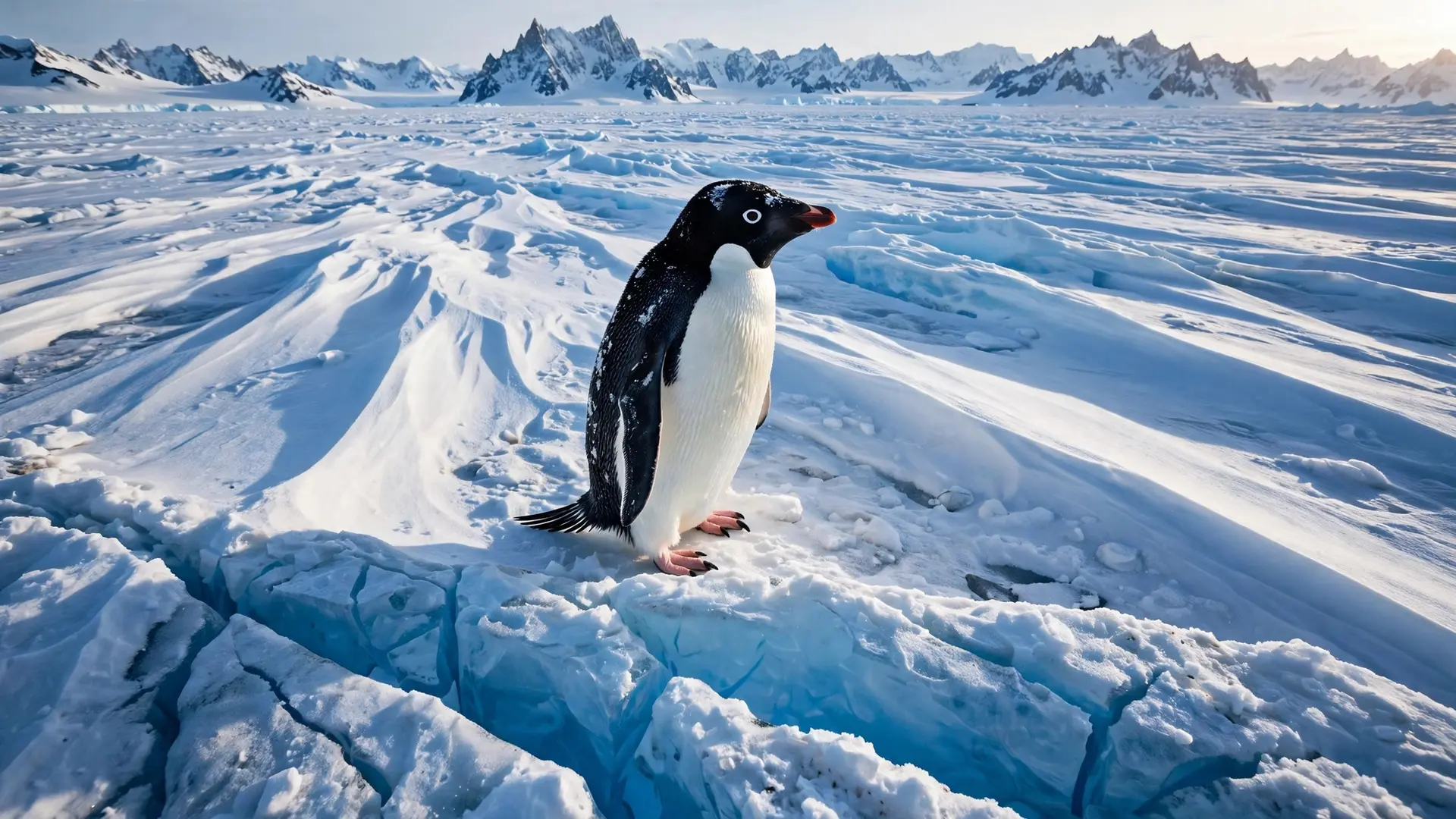
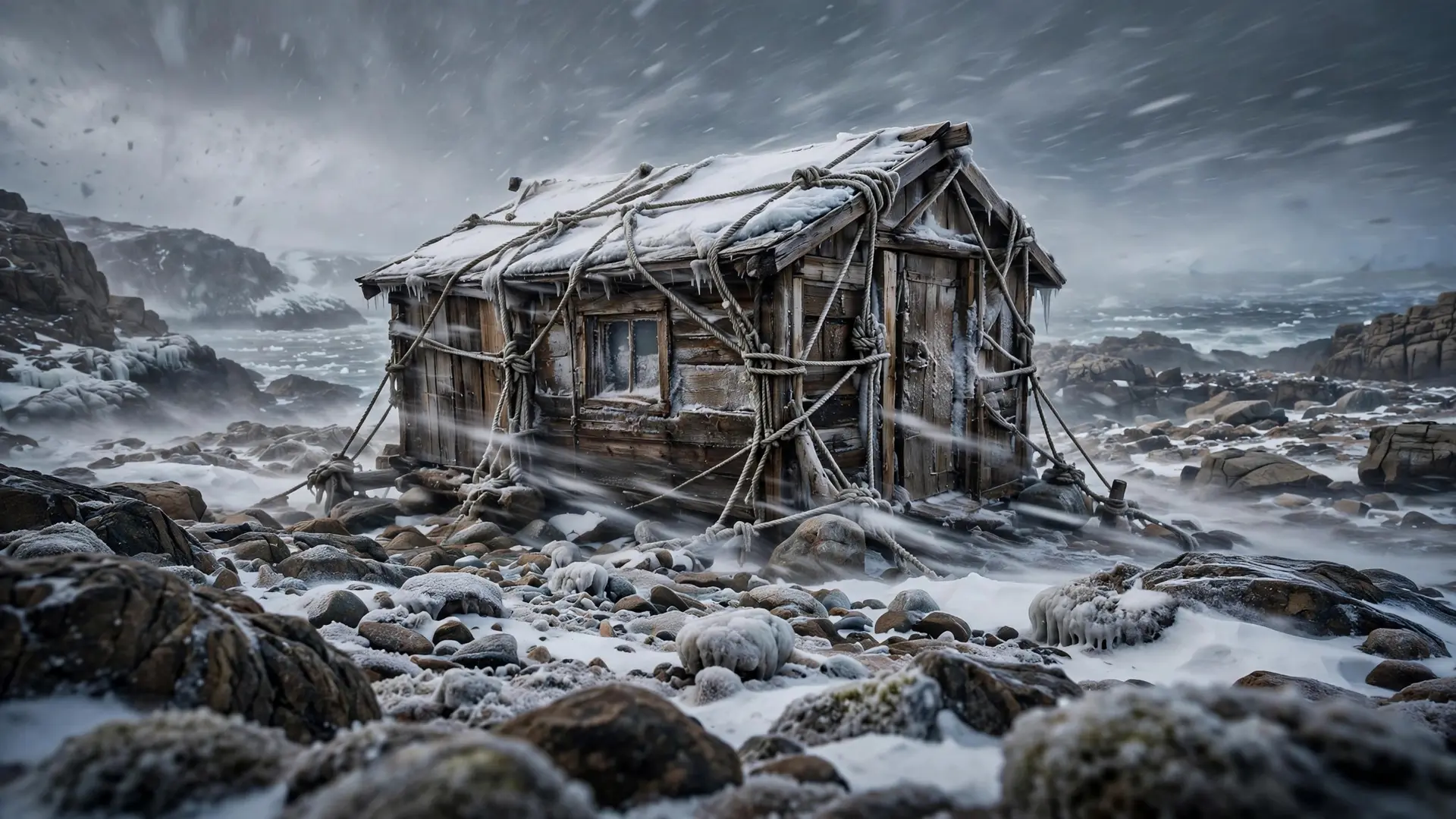
The men of Mawson's expedition endured it for two winters. Cecil Madigan, the expedition's meteorologist, wrote in the scientific reports that "the average wind at Commonwealth Bay is thus a gale" and marveled at its steadiness: "After some practice the members of the expedition were able to abandon crawling, and walked on their feet in these 90-mile torrents of air, 'leaning on the wind.'" Ninety miles an hour is about 145 km/h: a lean, not a walk. Everything about life at the cape bent around the wind. The four huts (the main hut, the magnetograph house, the transit hut and the absolute magnetic hut) were lashed and anchored against it. Today those huts survive as Historic Site or Monument 77, protected under the Antarctic Treaty and cared for by the Australian Antarctic Program, one of only a handful of surviving complexes from the Heroic Era of Antarctic exploration. Wildlife persists in the teeth of it. Adélie penguins breed at the cape's eastern and western edges, guarded by scavenging south polar skuas, with snow petrels and Wilson's storm petrels nesting nearby and Weddell seals resting around Boat Harbour, a 400 m (1,312 ft) indent in the coast. Colorful lichen, the only plant life on the cape, coats the boulder fields, and six meltwater lakes dot the valleys.
What do the wind records actually show?
The expedition's instruments, primitive by today's standards, kept meticulous records. Later science confirmed them. Here is the cape's wind history in numbers, all from the sources listed above:
| Period | Measurement | How it was recorded |
|---|---|---|
| 1912-14 | Mean 19.3 m/s (69.5 km/h; 43.2 mph) | Expedition anemometers; the mean "far surpassed all previous surface wind records" (Polar Record) |
| March 24, 1912 | Hourly 48.9 m/s (176 km/h; 109 mph), later revised to 41.6 m/s (149 km/h; 93 mph) | Mawson's log, reanalyzed by later studies (Guinness) |
| 1913 | 143 km/h sustained for 12 continuous hours | Expedition instruments (Australian Antarctic Program) |
| 1913 | Estimated instantaneous gusts above 75 m/s (270 km/h; 168 mph) | Mawson's estimate in The Home of the Blizzard (Guinness) |
| Annual | Average daily maximum 71 km/h (44 mph) | Long-term station data (Australian Antarctic Program) |
| 1995 | Gusts above 57 m/s (205 km/h; 127.5 mph) | Automatic weather station, 10-minute averages (Guinness) |
| The method matters: Mawson's 270 km/h figure is an estimate from a man watching his world come apart, while the 1995 figure comes from calibrated sensors averaging over ten minutes. Both point the same way: no other place at sea level has numbers like these. Even the expedition's hourly readings needed later correction: Mawson's log for March 24, 1912 claimed 48.9 m/s (176 km/h), but modern reanalysis puts it closer to 41.6 m/s (149 km/h). Still a full gale by any standard, just an honest one. |
What do people get wrong about the windiest place?
First, people hear "windiest" and picture a single freak gust, a tornado's tantrum. Cape Denison's claim is the opposite: it is about the average. The program's "windiest place on Earth at sea level" rests on the annual average daily maximum of 71 km/h, a figure no other sea-level station touches. A place can have one wild gust and still be calm the other 364 days; the cape is simply never calm. Second, people assume the wind comes and goes like weather. At Cape Denison it barely goes: the wind is a geographic fixture, as permanent as the ice cap that feeds it. Third, people assume nothing could live through it. Yet Adélie penguins breed there, seals haul out on its shores, and a century ago men chose to winter there on purpose, in wooden huts, with 1912 technology. The expedition's scientists still ran a full program of meteorology, geology and magnetic observations between blizzards. The cape also settles a quiet debate about how "windiest" should be measured. A single freak gust can outrun anything Cape Denison has recorded. But those are instants. The cape's title rests on the opposite: the grinding, day-after-day average. It is the difference between the loudest single shout and the loudest room. Antarctica is also the coldest desert on Earth, and its interior holds the coldest place on Earth, but for sheer, relentless, knock-you-sideways wind, the coast at Cape Denison stands alone. At the other extreme of the planet's moods sits Dallol, the hottest inhabited place, where the problem is heat that never leaves. Cape Denison is its mirror: cold that never stops moving. The wind at Cape Denison is not weather. It is the place itself: a river of air pouring off a continent, measured for over a century and never once found wanting. Mawson's expedition came to describe and map an unknown stretch of coast; what it found instead was a natural wind tunnel, and Mawson had the honesty to name it exactly what it was. How we made this article: FactSpire researched and drafted it with AI assistance and checked every fact against the sources listed above.
Frequently asked questions
Where is the windiest place on Earth?
Cape Denison, a rocky point at the head of Commonwealth Bay in George V Land, Antarctica. Explorer Douglas Mawson's Australasian Antarctic Expedition made it their main base in 1912, and Mawson himself called it 'the windiest place on Earth' in his book The Home of the Blizzard.
How strong are the winds at Cape Denison?
The average daily maximum is 71 km/h (44 mph), with frequent gusts above 100 km/h. In 1913 instruments recorded 143 km/h sustained for 12 hours, and Mawson estimated instantaneous gusts above 270 km/h (168 mph). A 1995 automatic weather station logged gusts above 205 km/h (127.5 mph).
What causes the extreme winds at Cape Denison?
They are katabatic winds: cold, dense air high on the Antarctic ice cap flows downhill under gravity and accelerates toward the coast. The flow is remarkably steady and always comes from the south, which is why the cape takes the full force day after day.
Did anyone live at Cape Denison?
Yes. Douglas Mawson's Australasian Antarctic Expedition (1911-14) built four huts there and wintered through the blizzards. The main hut and its companions survive today as a protected historic site, HSM 77, maintained by the Australian Antarctic Program. They are still standing where the wind rarely stops.
Sources
- Cape Denison landscape — Home of the Blizzard, Australian Antarctic Program
- Fastest katabatic wind, Guinness World Records
- The katabatic winds of Cape Denison and Port Martin, Polar Record (Cambridge University Press)