Is Perth Really the World's Most Isolated Major City?
Perth sits 2,100 km from the next major Australian city, but whether it is the world’s most isolated city depends on how isolation is measured.
Key takeaways
- Perth is frequently called the world's most isolated major city; its nearest major city, Adelaide, is about 2,100 km (1,300 miles) away.
- The claim depends on the measure: Honolulu is 3,858 km from San Francisco, and Iquitos in Peru has no road access at all.
- Geographically, Perth sits closer to Southeast Asia than to any other large Australian city.
- Greater Perth reached 2,452,800 people at 30 June 2025, the fastest-growing Australian capital at 2.4%.
- Australia's remoteness index gives Perth a score of 0 out of 15, suggesting its isolation is more perception than separation.
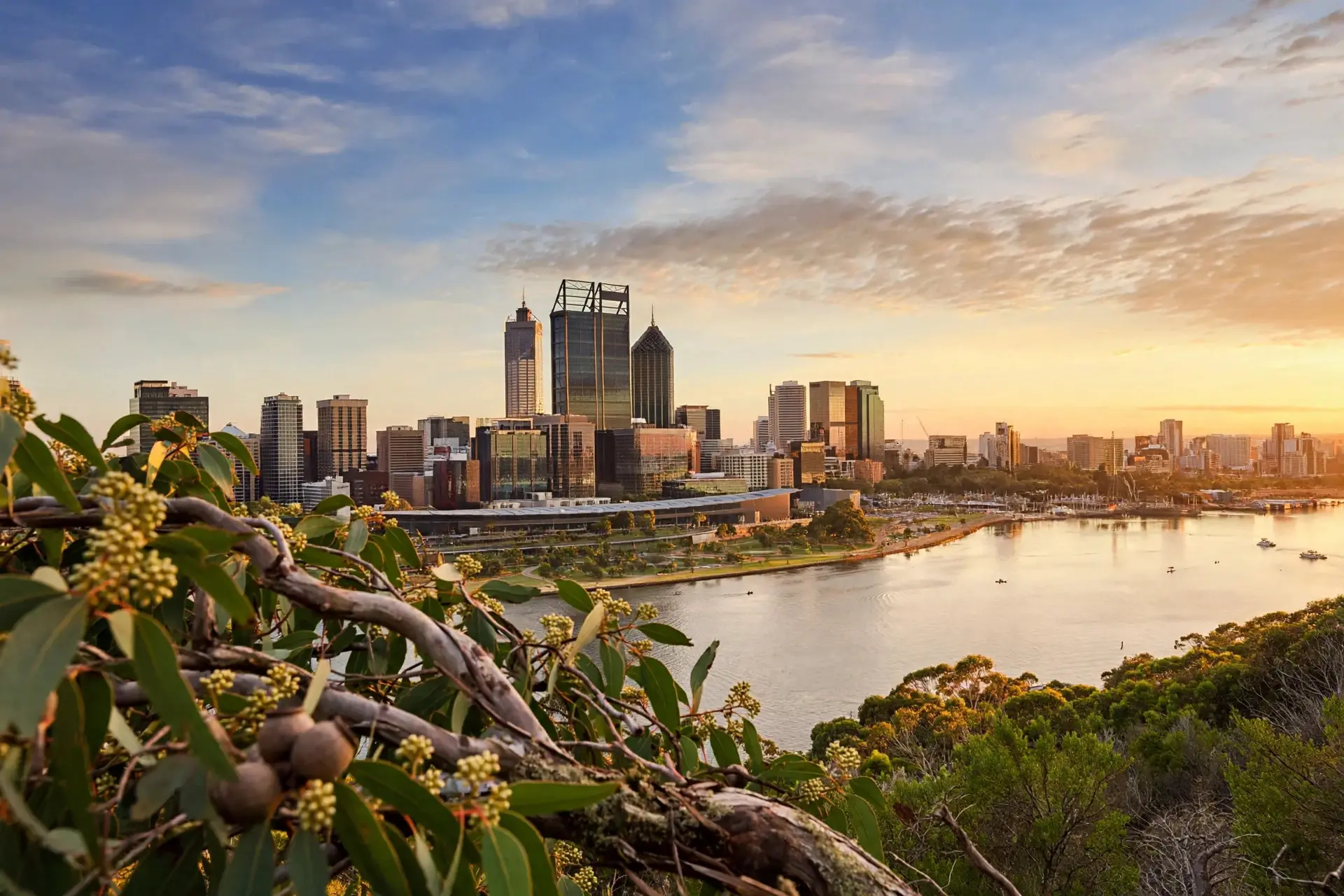
Perth, the capital of Western Australia, is frequently described as the most isolated major city on Earth. The nearest major city, Adelaide, sits about 2,100 kilometers (1,300 miles) away across the Nullarbor Plain, roughly the distance from London to Casablanca. But the title only survives under a narrow definition: Honolulu and Iquitos both have stronger claims by other measures.
- Perth is often considered one of the most isolated major cities globally, with Adelaide, the nearest major city, a staggering 2,100 kilometers away. (Travel And Tour World)
- Geographically, Perth is located closer to Southeast Asia than to any other large city in Australia. (Travel And Tour World)
- The claim can be questioned: Iquitos in Peru has no road access and can only be reached by air or river, and Honolulu lies 3,858 kilometers from San Francisco. (Travel And Tour World)
- Local guides in Perth concede that Honolulu, in the middle of an ocean, is the more isolated of the two. (Two Feet & a Heartbeat)
- Greater Perth reached 2,452,800 people at 30 June 2025, growing 58,100 people (2.4%), the highest growth rate of all Australian capitals. (Australian Bureau of Statistics)
- On Australia's ARIA+ remoteness index, Perth scores 0 out of 15, suggesting its isolation is more about perception than actual physical separation. (Travel And Tour World)
How did Perth end up so far from everything?
Perth was proclaimed a city on August 12, 1829, by Captain James Stirling, as the administrative hub of the Swan River Colony, planted on Australia's far western edge to keep the French from claiming the coast. The colony grew up facing the Indian Ocean, with desert to the north and east and ocean to the west and south. Two centuries later, the geography has not changed: to the east lies the vast, near-empty Nullarbor Plain, and the next big city is Adelaide, three hours by plane and a serious road trip by car. Isolation shaped the city's character. Perthites will tell you about the laid-back lifestyle, the beaches, and the consistent sunshine, and about the flip side: the 17-hour flight to London for British expats, the tours that skip the city, and a job market where many vie for limited specialized roles. The city sprawls over 2,478 square miles, comparable in area to London with roughly a quarter of the population, which gives it a secluded feel even as it bustles. History explains the geography. Perth was proclaimed a city on August 12, 1829, by Captain James Stirling, to coincide with King George IV's birthday, as the administrative hub of the Swan River Colony. The colony's purpose was strategic: to make sure the French did not claim Australia's west coast. Stirling placed the capital up the Swan River rather than on the exposed coastline, with the port settlement at the river's mouth later named Fremantle. The colony's isolation was a feature from the start: far from the eastern settlements, hard to reach, and all the more its own place for it.
Who else claims the title?
| City | Claim | Nearest major city | Distance |
|---|---|---|---|
| Perth, Australia | most isolated major city on a continent | Adelaide | ~2,100 km (1,300 mi) |
| Honolulu, USA | most isolated capital city | San Francisco | 3,858 km (2,397 mi) |
| Iquitos, Peru | most disconnected by transport | road network | none; air or river only |
| Auckland, New Zealand | remote Southern Hemisphere city | Sydney | 2,168 km (1,347 mi) |
| The table shows why the argument never ends. By raw distance to the nearest major city, Honolulu wins comfortably. By transportation isolation, Iquitos wins: no roads at all. Perth's claim rests on being the most isolated major city on a continent, a definition its own tour guides treat with a wink. One local operator's myth-busting page puts it plainly: sorry, but Perth is not the most isolated capital city in the world; Honolulu is, because it sits in the middle of an ocean. |
Does the isolation actually matter?
Less than the legend suggests. On the ARIA+ index, Australia's official scale for measuring remoteness, Perth scores 0 out of 15, the best possible accessibility rating. Fremantle, sometimes called a separate city, is a 40-minute drive away and functions as Perth's port suburb. The "isolation" is really a measure of distance to other big cities, not of disconnection: Perth has international flights, a modern port, and all the infrastructure of a thriving city. And the city is growing into its remoteness. The Australian Bureau of Statistics puts Greater Perth at 2,452,800 people, and in 2024-25 it grew faster than any other Australian capital, driven mostly by overseas migration. Far from withering at the edge of the map, Perth is booming.
What do people get wrong about the world's most isolated city?
First, that there is one answer. "Most isolated" bundles at least three different questions: farthest from the next big city (Honolulu), hardest to reach (Iquitos), and farthest big city on a continent (Perth). Ask the question precisely and the answer changes. Second, that isolation means disconnection. Perth is distant, not cut off. Its airport, port, and undersea cables tie it to the world; what it lacks is neighbors, not access. Third, that the record is lonely. Geography is full of isolation superlatives: the most remote inhabited island is Tristan da Cunha, the Eurasian Pole of Inaccessibility is the farthest point from any ocean, and the most isolated tree stands alone on Campbell Island. Cities join the club with their own extremes: Arica is among the driest cities, La Paz the highest seat of government, Baku the lowest capital, and Ushuaia the farthest south. Perth's real distinction is subtler than the slogan: it is a big, fast-growing, thoroughly modern city that happens to sit 2,100 kilometers from the next one, closer to Jakarta's neighborhood than to Sydney's. That is not isolation. That is just Australia. How we made this article: FactSpire researched and drafted it with AI assistance and checked every fact against the sources listed above.
Frequently asked questions
Why is Perth called the most isolated city in the world?
Because the nearest major city, Adelaide, is roughly 2,100 kilometers away across the Nullarbor Plain, about the distance from London to Casablanca. Perth is also closer to Southeast Asia than to any other large Australian city. The nickname stuck as a point of local pride, repeated on tours and souvenir magnets across Western Australia.
Is Honolulu more isolated than Perth?
By distance to the nearest major city, yes: Honolulu sits 3,858 kilometers from San Francisco, far more than Perth's 2,100 kilometers to Adelaide. Local guides in Perth concede the point, noting that Honolulu sits in the middle of an ocean. Perth's title only holds under narrower definitions, such as the most isolated major city on a continent.
What is the most isolated city with no road access?
Iquitos in Peru, which can only be reached by air or river, is often raised as a stronger claim than Perth's. It is arguably more disconnected in terms of transportation, even though its distances to other cities are smaller. The debate shows that 'most isolated' is really several different questions wearing one name.
How big is Perth?
Greater Perth reached 2,452,800 people at 30 June 2025, according to the Australian Bureau of Statistics, and it added 58,100 people in 2024-25, a 2.4% growth rate, the fastest of any Australian capital. Isolation has not stopped growth: overseas migration drove most of the increase.
Sources
- Perth Unlock the Hidden Wonders of Australia's Most Remote Metropolis. A Must-Visit for Adventurous Tourists, Travel And Tour World
- Capital city growth slows, Australian Bureau of Statistics
- Correcting Some Mistruths About Perth, Two Feet & a Heartbeat