
The Archives
397 enduring inquiries, newest first. Browse by topic or explore chronologically.
Page 11 of 17
 curiosities7 min read
Why Do Cats Knead? The Science of Making Biscuits
From nursing instinct to affectionate ritual, kneading carries a cat from kittenhood into adulthood. Here is what science knows about 'making biscuits'.
Read Article curiosities6 min read
Why Leap Years Exist: The Calendar's Hidden Math
Earth's orbit doesn't fit into 365 days, so we add February 29 almost every four years. The 2,000-year story of leap years includes days deleted from history.
Read Article technology7 min read
How Digital Cameras Turn Light Into Photos
Your camera's sensor is colorblind — it only counts photons. Discover how the Bayer mosaic, demosaicing, and clever math turn raw light into full-color photos.
Read Article history8 min read
How Göbekli Tepe Rewrote the Story of Civilization
Hunter-gatherers raised Göbekli Tepe's carved pillars around 9600 BCE, before farming. Finds of houses and landslide debris now complicate the temple story.
Read Article geography6 min read
How River Deltas Build New Land From River Sediment
Where rivers meet the sea, dying currents drop their cargo of mud and sand — and new land rises from the water. Inside Earth's greatest land-building machines.
Read Article discoveries6 min read
How the Structure of the Atom Was Discovered
From Dalton's solid balls to Rutherford's empty-space atom: how Thomson's electron, a gold-foil experiment, and Bohr's orbits revealed what matter is made of.
Read Article science6 min read
How Vaccines Train Your Immune System to Remember
Vaccines stage a safe dress rehearsal for your immune system: harmless antigens trigger memory B and T cells, so the real infection is stopped before it starts.
Read Article technology6 min read
How Wi-Fi Actually Works: Radio, Rules, and Speed
Wi-Fi stands for nothing — it's a marketing pun on Hi-Fi. Under the hood: radio waves, the IEEE 802.11 rulebook, and a polite listen-before-talking protocol.
Read Article discoveries6 min read
The Discovery of CRISPR: From Salt Marsh to Nobel Prize
Nobody invented CRISPR. Odd DNA repeats in a salt-marsh microbe and a yogurt-culture firm's virus problem led to the 2012 gene editor that won a Nobel Prize.
Read Article history6 min read
The Library of Timbuktu: Africa's Medieval Manuscripts
Timbuktu's medieval manuscripts — hundreds of thousands of pages on astronomy, law, and medicine — survived nine centuries and a daring 2012 smuggling rescue.
Read Article curiosities6 min read
Why Do We Say 'Break a Leg' Before a Performance?
Actors never wish each other 'good luck' — it's considered a jinx. Instead they say 'break a leg,' a century-old theater ritual whose origin is still debated.
Read Article science6 min read
Why Does Ice Float on Water? The Physics Behind It
Ice floats because frozen water expands into an open hexagonal lattice, making it 9% less dense than liquid water. Here is the anomaly that keeps lakes alive.
Read Article geography6 min read
Why Is the Equator the Hottest Place on Earth?
The equator gets Earth's most direct sunlight, yet the hottest temperatures come from deserts far away. The culprit is a giant loop of rising and sinking air.
Read Article curiosities6 min read
Why Music Gives Us Goosebumps: The Science of Frisson
That shiver when a song peaks has a name — frisson — and a measurable cause. Here's how music hijacks the brain's reward circuit, and why only some feel it.
Read Article technology7 min read
How Autocorrect Knows What You Meant to Type
Your phone guesses words with language models weighing key geometry, word frequency, and your habits. This is how autocorrect learned to finish sentences.
Read Article technology6 min read
How Contactless Payments Complete in Half a Second
A tap hides a full cryptographic handshake: NFC radio, an EMV chip, a one-time cryptogram, and tokenization. The half-second journey of a contactless payment.
Read Article history6 min read
How the Meiji Restoration Turned Japan Into a Modern Power
In 1868 Japan's samurai elite dismantled their own feudal order, and the Iwakura Mission's two-year world tour gave them the blueprint for an industrial empire.
Read Article history7 min read
How the Panama Canal Finally Conquered the Jungle
Ships crossing Panama climb 85 feet over a jungle ridge via locks, a man-made lake, and a mountain cut. Here is how engineering beat a doomed French dream.
Read Article geography6 min read
Lena Pillars: Siberia's Ancient Stone Cathedrals
Along Siberia's Lena River stand limestone towers up to 300 metres tall, the fossilized remains of a Cambrian reef. Ice, water and eons made them.
Read Article discoveries6 min read
The Glue That Failed: How the Post-it Note Was Born
In 1968, 3M chemist Spencer Silver made a glue that wouldn't stick — and five years later a church-choir frustration turned that failure into the Post-it Note.
Read Article curiosities7 min read
The Lead Masks Case: Brazil's 1966 Unsolved Hill Deaths
Two technicians in lead eye masks, a cryptic schedule for capsules, a hilltop rendezvous kept in 1966. Inside Brazil's strangest unsolved death case.
Read Article science6 min read
What Causes Ocean Tides: The Moon's Double Pull
The Moon doesn't lift the sea — it stretches Earth and ocean into twin bulges. Discover the tidal force, spring and neap tides, and Fundy's 16-meter giants.
Read Article geography6 min read
Why Australia Is a Country AND a Continent (Not an Island)
Australia is the only landmass that's both a continent and a country. Discover the ice-age supercontinent Sahul — and why it's not counted as an island.
Read Article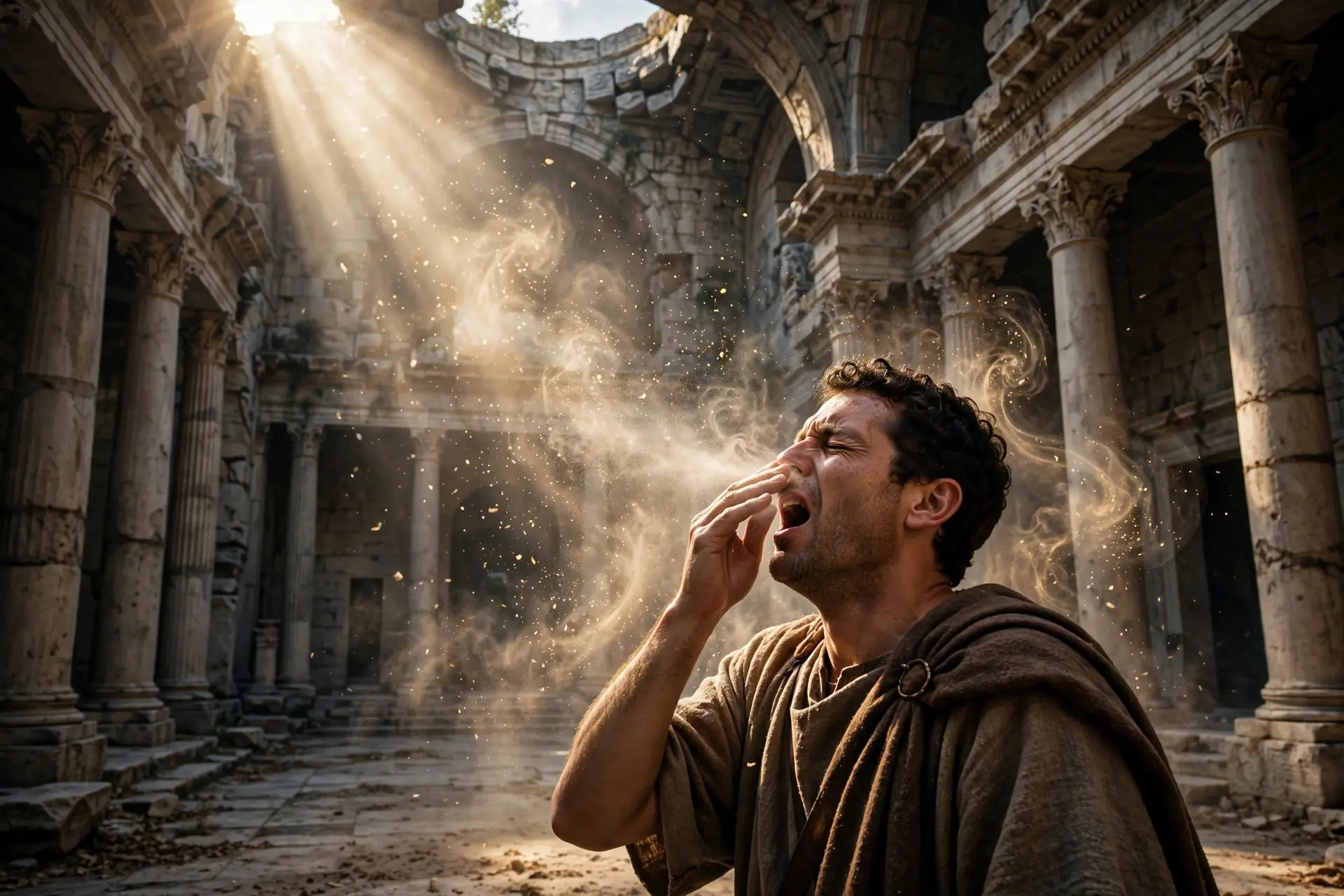 curiosities6 min read
Why Do We Say 'Bless You' When Someone Sneezes?
People have blessed sneezers for 2,000 years, from Roman rituals to a sixth-century plague decree. Here is why the habit survived after we forgot what it meant.
Read Article